
Patent CN114515078B
Updated November 1, 2026Motorized Combined Folding Table and Chair for Smart Home
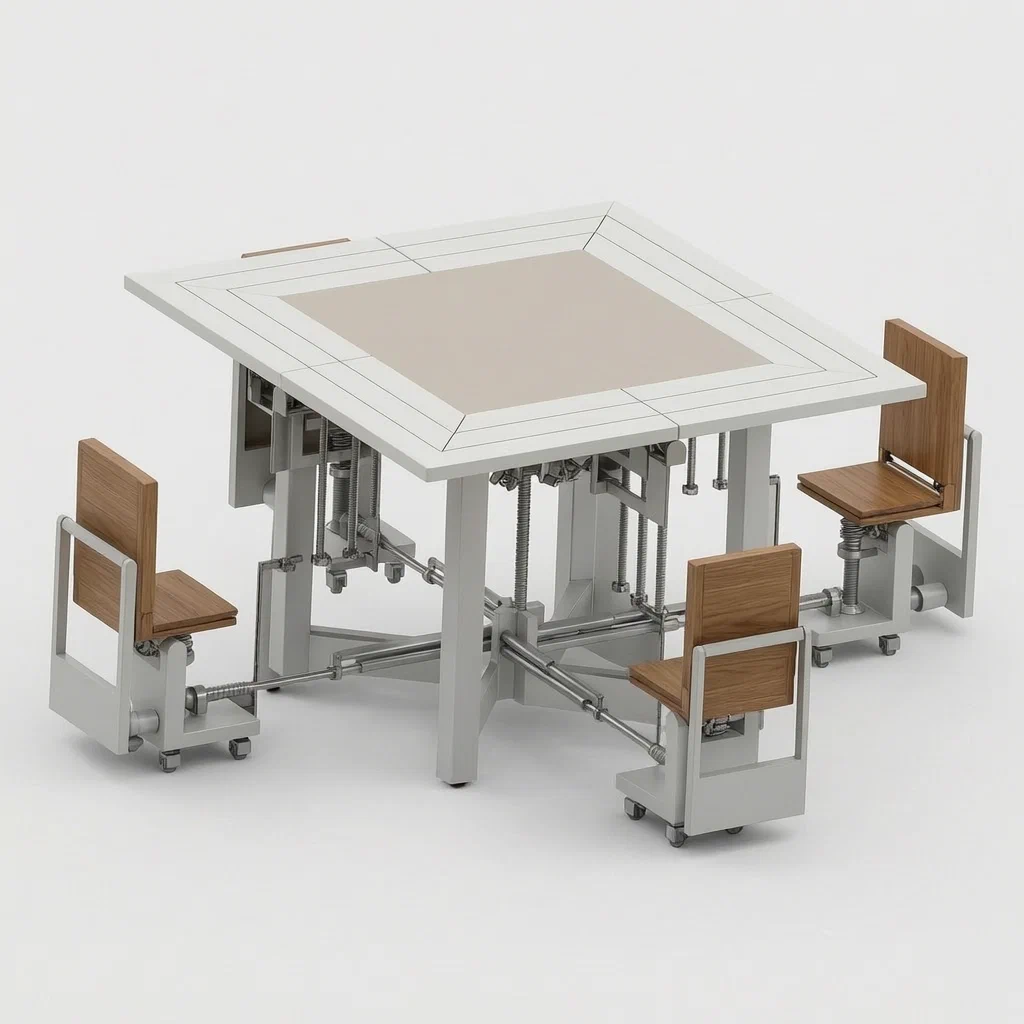
Standard furniture wastes space when not in use but lacks flexibility when needed. This design integrates a table and chairs into a single compact unit. When closed, it is a small footprint object. When opened, a motor drives side panels out from the center while simultaneously pushing the attached seats outward. The result is a larger working area without the user having to stand up or reposition themselves manually. It solves the conflict between saving floor space and needing a wide desk.
- China invention patent - in force
- No filings outside China
- Smart home furniture
- Motorized gear and worm drive mechanisms
Splat! What let you down?
🔄
Synchronized expansion
Seats move outward automatically as the table panels unfold.
⚙️
Motor-driven gears
Bevel gears and threaded rods drive the four-way panel extension.
🪑
Integrated seating
Chairs fold into the base structure, hiding when not in use.
🏠
Space-saving design
Compact footprint when closed; large workspace when open.
Bring this product to market
- ✓ Patent vetted China-only family and legal status checked
- 2 Product brief · now How it works, uses and options written up
- 3 Prototype First samples for buyers to review
- 4 Pilot run Small first batch for launch customers
- 5 Volume production Repeat orders at scale
Buyer interest
– of 100 buyers needed to start prototyping
One click, no sign-up. Each vote is one real visitor, and products with the most interest go to prototyping first.
Build team: no members yet. Need a partner, co-funding or skills to build this? Join and we introduce the team once it forms.
The problem
In modern apartments and home offices, floor space is limited. Traditional desks and chairs occupy room even when not in use. Foldable furniture exists, but usually requires manual effort to set up each time, and the chair must often be moved separately from the table. Users want a solution that maximizes utility per square foot without complex setup. They need a system where expanding the work surface naturally accommodates the user’s seating position without requiring them to adjust their chair manually.
The solution
The patent describes a combined folding table and chair device housed within a support frame.
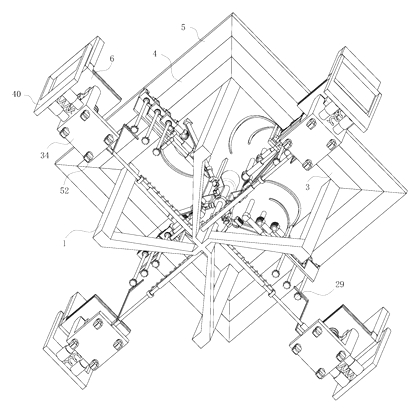
- Support Frame (1) acts as the base structure.
- Table Plate (2) is fixed to the upper end of the frame.
- Folding Plates (3, 4, 5) are stored inside the frame. There are multiple sets: First, Second, and Third folding plates.
- Seats (6) are also folded and stored within the support frame.
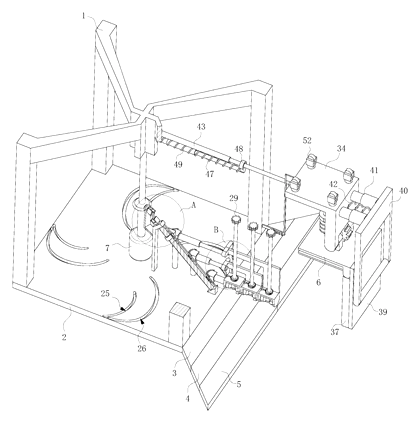
- First Folding Mechanism unfolds the plates. It uses a Motor (7) connected to a First Bevel Gear (8). Through universal joints and threaded rods, this mechanism pushes the plates out in four directions (front, back, left, right) so they become flush with the main table plate.
- Second Folding Mechanism deploys the seats. It uses a Worm (35) and Worm Wheel (36) system. Crucially, as the plates unfold, this mechanism pushes the unfolded seats outward by equal distances. This ensures the seat remains aligned with the new edge of the expanded table.
Who it is for
- Smart Home Integrators: Companies building automated living spaces who need furniture that responds to digital commands or occupancy sensors.
- Urban Apartment Developers: Builders looking to furnish small units with convertible furniture that saves square footage.
- Home Office Furniture Brands: Manufacturers targeting remote workers who need a large desk during the day but a compact footprint at night.
- Educational Facility Suppliers: Schools or libraries needing flexible study pods that can expand for group work and collapse for individual storage.
How it works
The main parts
| No. | Part | What it does |
|---|---|---|
| 1 | Support Frame | Houses the internal mechanisms and folded components. |
| 2 | Table Plate | The central fixed surface. |
| 3, 4, 5 | Folding Plates | Expandable sections that unfold to increase surface area. |
| 6 | Seats | Foldable chairs integrated into the base. |
| 7 | Motor | Powers the unfolding process. |
| 8, 14 | Bevel Gears | Transfer power from the motor to the horizontal axes. |
| 10 | Threaded Rods | Self-locking rods that push the racks/plates outward. |
| 12 | Racks | Engage with the threaded rods to move the plates. |
| 35, 36 | Worm and Wheel | Drives the seat deployment mechanism. |
| 38 | Torsion Spring | Assists in the backrest positioning. |
Operating Steps
- Activation: The user triggers the system (via switch or automation).
- Plate Unfolding: The Motor (7) rotates the First Bevel Gear (8). Power is transmitted via Universal Joints (13) to Second Bevel Gears (14) on four sides. These turn the Threaded Rods (10). Because the rods are self-locking and mesh with Racks (12), the Folding Plates (3, 4, 5) slide out smoothly from the frame.
- Seat Deployment: Simultaneously, the Second Folding Mechanism engages. The Worm (35) turns the Worm Wheel (36), which is connected to the Seat (6).
- Alignment: As the plates extend, the seats are pushed outward by an equal distance. This keeps the user seated correctly at the edge of the newly expanded table surface.
- Retraction: Reversing the motor folds the plates back into the frame and pulls the seats inward, restoring the compact footprint.
Applications
Small Studio Apartments
In a studio, a standard desk might block movement. This unit collapses into a narrow cabinet-like profile when not in use, freeing up floor space for walking or other activities.
Shared Home Offices
Two users can share one unit if configured appropriately, or a single user can expand the surface for spreading out documents and monitors. The synchronized seat movement means no fumbling with chair adjustments after opening the desk.
Educational Study Pods
Libraries and schools can install these in corners. Students can expand the table for group projects and collapse it for individual reading, maximizing the utility of limited classroom space.
Retail Display Units
Stores can use these as interactive demo stations. When a customer approaches, the staff or sensor can trigger the expansion, revealing a larger surface for product display or consultation, then retracting it when idle.
Where it is less suitable
- Heavy Industrial Use: The plastic or light metal gears and threaded rods are designed for household loads, not heavy machinery or constant rough handling.
- Fixed High-Load Desks: If the table needs to support very heavy equipment permanently, a static solid-core desk is more stable than a mechanical unfolding system.
- Outdoor Environments: The motor and exposed mechanical linkages require protection from dust and moisture, making them unsuitable for unsheltered patios.
Frequently asked questions
How do the seats know when to move?
The seats are mechanically linked to the table expansion system. When the motor drives the folding plates outward via threaded rods, a separate worm-and-wheel mechanism simultaneously pushes the seats out. This ensures the seat stays aligned with the edge of the table as it grows.
Is it difficult to operate?
No. It is designed for smart home integration. You can control it via a simple button, a smartphone app, or voice assistant if you integrate the appropriate controller module. The mechanical action is automatic once triggered.
What happens if the power goes out?
The threaded rods used in the first mechanism have self-locking properties. This means the table plates will stay in their current position (either fully open or closed) without sliding back due to gravity. The seats may need manual assistance to reset depending on the specific friction settings, but they won’t drop unexpectedly.
Can I customize the size?
Yes. The core mechanism scales. We can adjust the length of the threaded rods and the size of the folding plates to fit different desktop widths. The number of seats can also be increased if the frame is widened.
Is it safe for children?
Like any motorized furniture, it has moving parts. The design includes baffles and enclosed gears to minimize pinch points. However, adult supervision is recommended during operation. Specific safety certifications (like BIFMA) should be obtained for commercial use in schools or childcare centers.
How much weight can the table hold?
The patent does not specify a maximum load rating. The capacity depends on the material of the plates and the strength of the threaded rods. For standard office use, it supports typical laptop and monitor weights. Heavy-duty versions require reinforced steel plates and motors.
Can this design be made and sold in the US?
The patent is currently in force in China but has no US counterpart. Therefore, manufacturing or selling this design in the United States does not infringe this specific Chinese patent. However, because smart furniture is a competitive field, we strongly recommend a freedom-to-operate (FTO) review to check for other active US patents covering similar motorized table mechanisms.
Are you affiliated with the patent owner?
No. IP2M is an independent design and manufacturing service working from the public patent document.
Request a quote
Click Request a Quote below to see our email address - copy it, or open your email app with a ready-made message. Please mention patent CN114515078B in the subject.
Helpful details to include:
- Your company and channel (smart home integrator, furniture brand, educational supplier)
- Target dimensions (closed size and max expanded size)
- Control preference (button, app, voice)
- Material choices (wood, metal, plastic types)
- Estimated quantity and target price
- Timeline - when you would like samples and the first shipment
You can also reach us at (332) 203-9997.
Explore this product
Interested in building this?
Tell us your target market, quantity and timeline. We reply with options for prototyping, small-batch runs or volume production.
Send your inquiry to
Please put CN114515078B in the subject line and tell us your company, country, estimated quantity and timeline.
Prefer to talk? Call (332) 203-9997.
More product-ready patents
All Furniture, Bedding & Storage patents →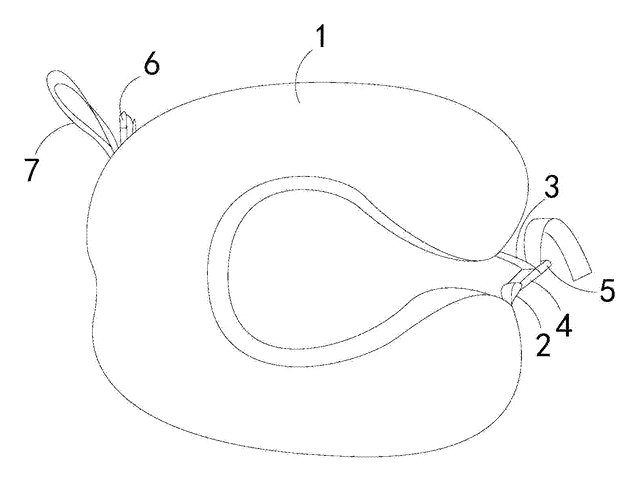
Furniture, Bedding & Storage
Roll-Up Travel Neck Pillow with Buckles
U-shaped travel pillow with a front buckle and a back buckle that holds it rolled up for carrying.
Patent CN206543091U
Furniture, Bedding & Storage
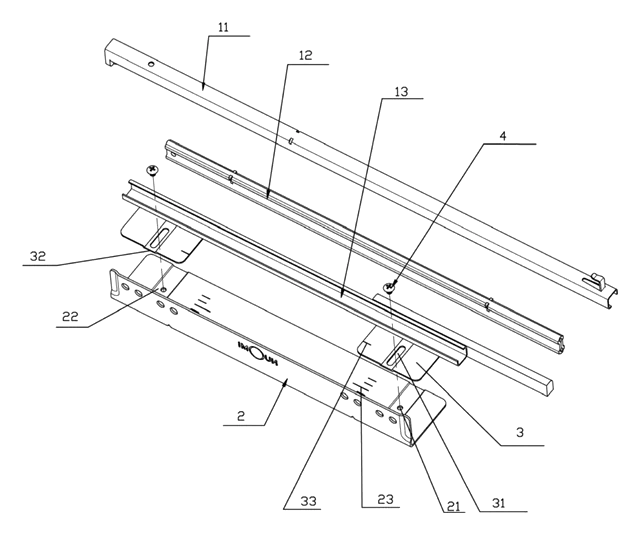
Width-Adjustable Slide Rail for Pull-Out Baskets
Basket slide rail on a slotted, scaled adjusting plate, so one pull-out basket fits several cabinet widths.
Patent CN208909382U
Furniture, Bedding & Storage
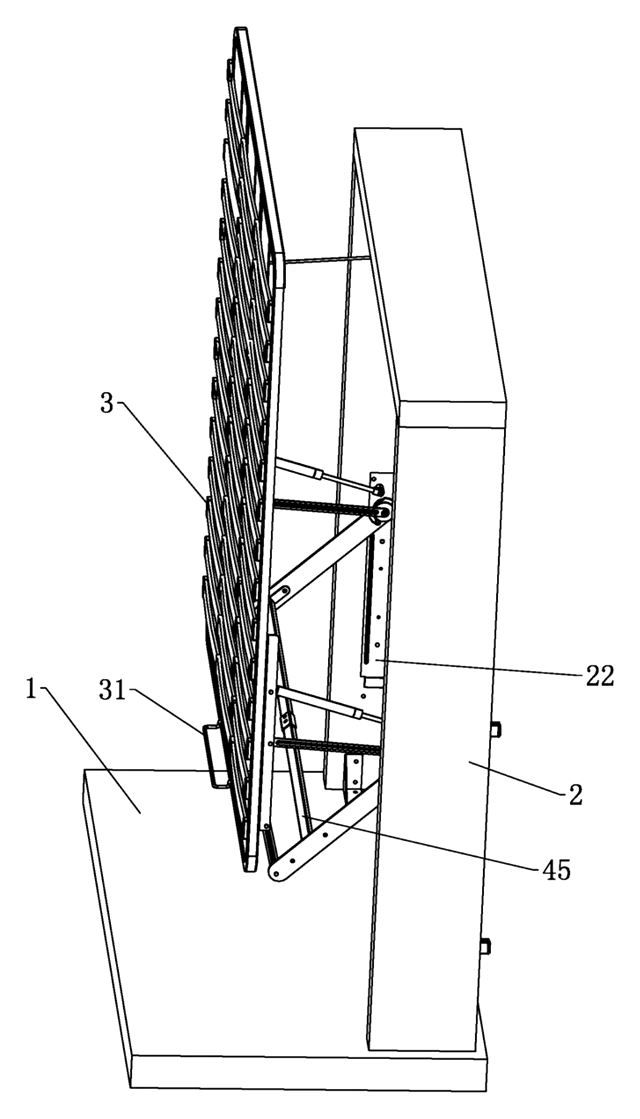
Lift-Up Storage Bed with Four-Bar Linkage That Slides the Deck Away from the Headboard
Storage bed deck that rises on four-bar linkages and gas springs, clearing the headboard as it opens.
Patent CN210870645U
Furniture, Bedding & Storage
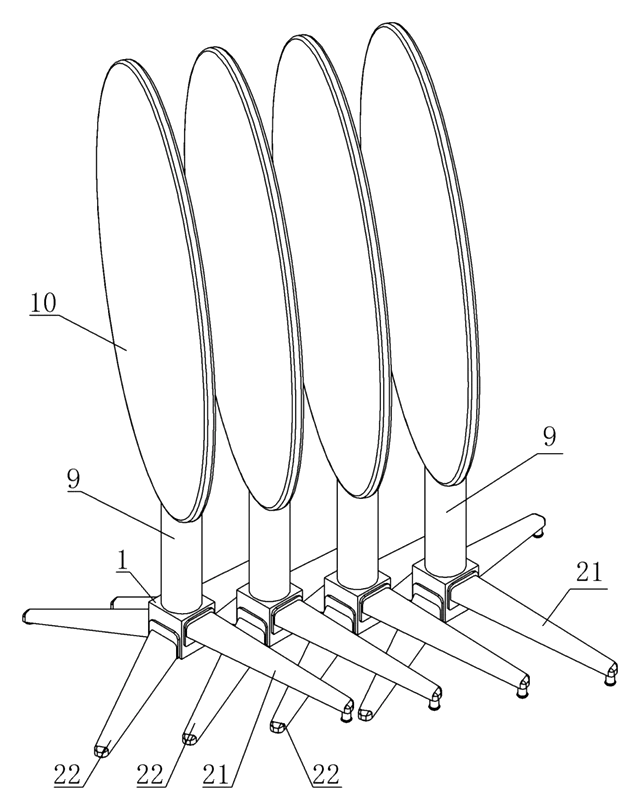
Self-Leveling, Nesting Table Base with a Torsion-Ring Leg Hub
Four-leg base that self-levels through a torsion-ring hub and nests sideways with flip-top tables.
Patent CN211483640U
Furniture, Bedding & Storage
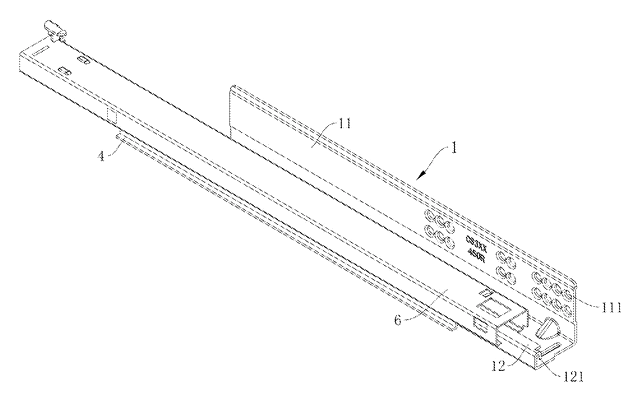
Rack-and-Pinion Synchronized Drawer Slide with a Folded-In Fixed Rail
Full-extension drawer slide: a pinion between two racks keeps the rails moving in step.
Patent CN206314843U
Furniture & Bedding
Dual-Zone Split-Spring Mattress with Removable Fabric Cover
Half-pocket, half-standard spring mattress sharing one base plate, with a removable cover.
Patent CN208355064U
Browse by category
- Apparel & Accessories (25)
- Baby & Kids (19)
- Bags & Luggage (12)
- Bath & Personal Care (19)
- Car Accessories (14)
- Furniture, Bedding & Storage (14)
- Garden & Outdoor (21)
- Health & Wellness (9)
- Home, Kitchen & Cleaning (31)
- Lighting (14)
- Packaging & Containers (7)
- Pet Products (7)
- Phone & Camera Accessories (5)
- Retail Display (15)
- School, Office & Art (21)
- Sports & Recreation (28)
- Tools & Workshop (33)
- Toys & Games (15)
This page is based on the public patent document CN114515078B, assigned to Zhejiang Feiyi Intelligent Equipment Co ltd. IP2M is an independent manufacturing service and is not affiliated with, endorsed by or licensed by the patent owner. Images marked as concept renderings are illustrations, not photos of an existing product. Patent status information is provided for reference only and is not legal advice; confirm freedom to operate for your market before production. Full disclaimer.