
Patent CN114537017B
Updated November 6, 2026Bullet-Type PET Fiber Pen Tip with Glue-Free Assembly and Dust-Cleaning Cap
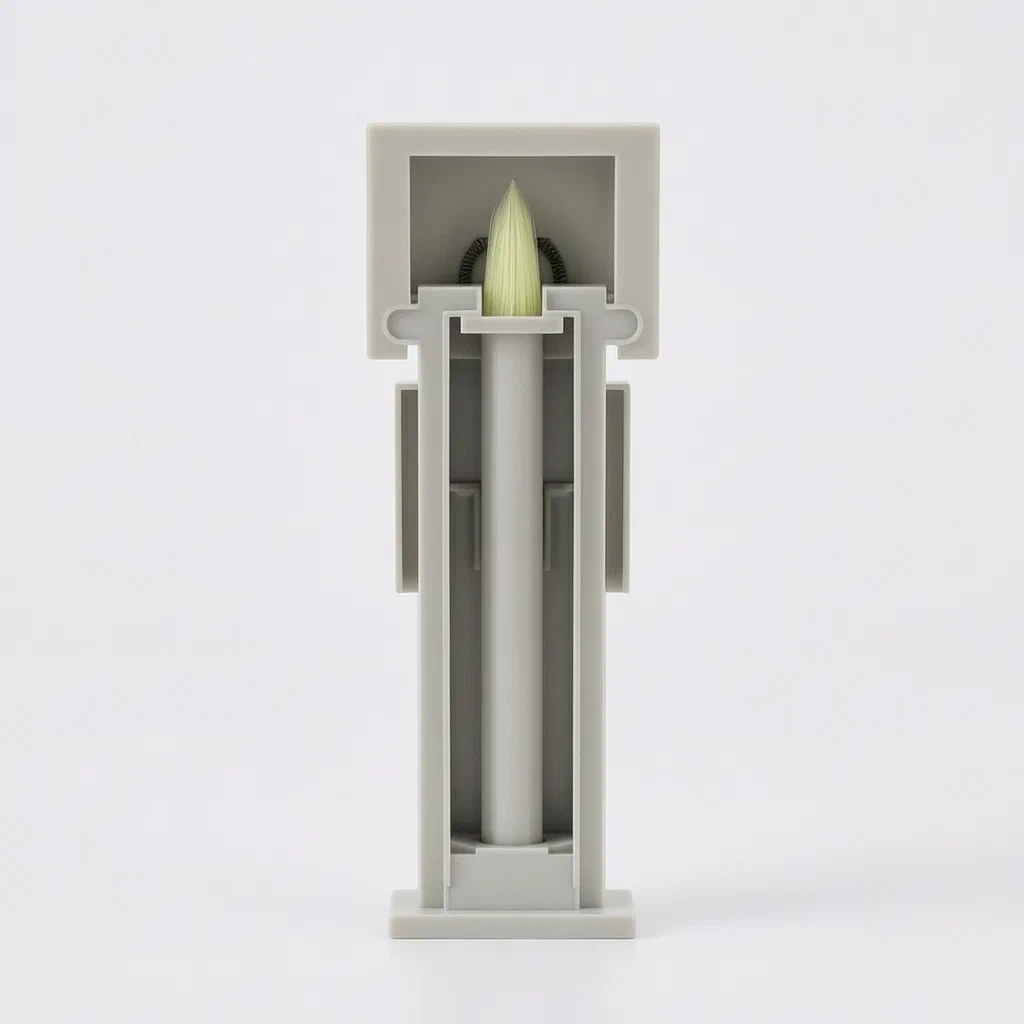
Traditional glued pen tips often fail when adhesive degrades, causing the tip to loosen or leak, and dust accumulation on exposed fiber nibs ruins the writing experience. This patent describes a bullet-shaped PET fiber pen tip that uses no glue. Instead, it relies on a precision snap-fit and a multi-layer elastic locking mechanism within the pen holder to secure the refill and tip. To keep the fiber clean, the included pen cap features an integrated 'dust cleaning plate' with rotating scrapers and a chemical fiber net. When the user twists the cap, the scrapers gently brush away dust and small particles from the bullet-shaped tip, dropping them into a filter net inside the cap. This combination of glue-free durability and active self-cleaning ensures consistent ink flow and a longer lifespan for the writing instrument.
- China invention patent - In force
- No filings outside China
- Writing instruments & accessories
- PET fiber, ABS/PP plastics, elastic components
Splat! What let you down?
🚫
Glue-Free Assembly
Uses mechanical snap-fits and elastic locks instead of adhesives, reducing environmental impact and failure points.
🧹
Self-Cleaning Cap
The pen cap contains rotating scrapers and a filter net to remove dust from the fiber tip during capping.
🔒
Multi-Stage Locking
An intricate system of elastic balls, shells, and spike blocks securely holds the refill and tip in place.
💎
Bullet-Shaped Fiber
PET fiber construction offers durability and consistent ink delivery for gel and water-based inks.
Bring this product to market
- ✓ Patent review Patent family and legal status reviewed in the relevant jurisdictions.
- 2 Product brief · now How it works, uses and options written up
- 3 Prototype First samples for buyers to review
- 4 Pilot run Small first batch for launch customers
- 5 Volume production Repeat orders at scale
Buyer interest
– of 100 buyers needed to start prototyping
One click, no sign-up. Each vote is one real visitor, and products with the most interest go to prototyping first.
Build team: no members yet. Need a partner, co-funding or skills to build this? Join and we introduce the team once it forms.
Patent Rights & Team Participation
Before joining a development team, participants should ensure they have the necessary rights or authorization to participate in the project.
Participation is generally appropriate where:
- You own the relevant patent rights or have obtained permission or a license from the rights holder.
- The relevant patent rights have expired or have been legally invalidated in the jurisdictions where the planned activities will take place.
- The planned development, manufacturing, and commercialization activities have been independently assessed and do not infringe applicable patent rights in the relevant jurisdictions.
Important: Being located outside a country where a patent is protected does not automatically exempt you from patent infringement risks. Patent rights may apply based on where development, manufacturing, use, sale, or import activities take place.
IP2M does not grant any patent license or authorization through team participation. Joining a project does not provide permission to use, manufacture, or commercialize patented technology.
The problem
Most modern pen tips use adhesives to bond the metal or plastic socket to the writing point. Over time, solvents in the ink or environmental changes can degrade this glue, leading to leaks, loose tips, or inconsistent ink flow. Additionally, exposed fiber tips accumulate dust and lint from pockets and bags, which clogs the fibers and causes skipping. Existing cleaning solutions are rare, and users typically have to wipe the tip manually, which is ineffective for deep-seated particles. There is a need for a robust, glue-free connection that maintains structural integrity and a method to keep the writing surface clean automatically.
The solution
- Bullet-Shaped Fiber Tip: The core component is a conical (bullet-shaped) tip made of PET fibers, chosen for their durability and compatibility with various inks.
- Glue-Free Mechanical Fit: The tip and refill are secured within the pen holder using a complex arrangement of elastic components rather than glue. This includes an extrusion shell, elastic spike blocks, and elastic balls that create tension against the refill.
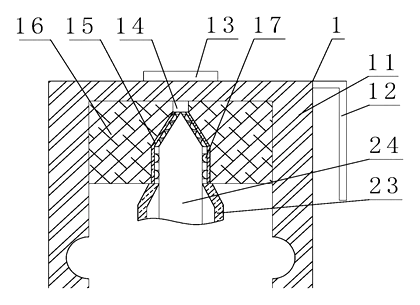
- Cleaning Cap Mechanism: The pen cap is not just a cover; it houses a “dust cleaning plate.” This plate includes a scraper blade attached to a chemical fiber net.
- Rotating Action: When the cap is twisted onto the pen, the internal scrapers rotate against the bullet-shaped tip, brushing off dust and small particles.
- Filtration: The scraped debris falls into a groove and is caught by the chemical fiber net inside the cap, preventing it from re-contaminating the tip or the pen body.
- Secure Locking: A threaded ring column and positioning rod ensure the cap aligns correctly, while internal limit plates prevent the refill from shifting during writing.
Who it is for
- Stationery Brands looking for eco-friendly product lines that avoid adhesives and reduce waste.
- Office Supply Manufacturers needing durable pen tips that resist clogging from pocket lint and dust.
- Educational Suppliers providing students with pens that are easier to maintain and less prone to leaking.
- Promotional Product Companies seeking unique selling points like “self-cleaning” mechanisms for branded giveaways.
How it works
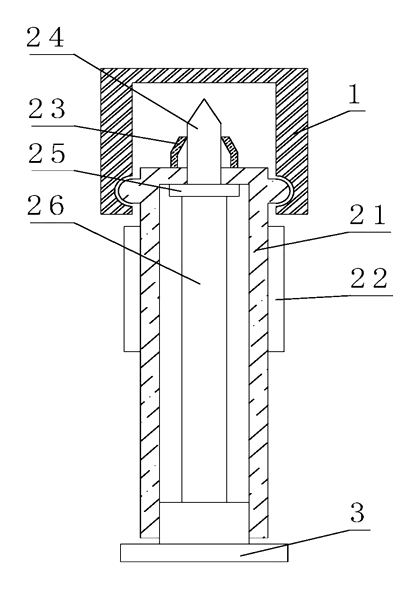
The main parts
| No. | Part | What it does |
|---|---|---|
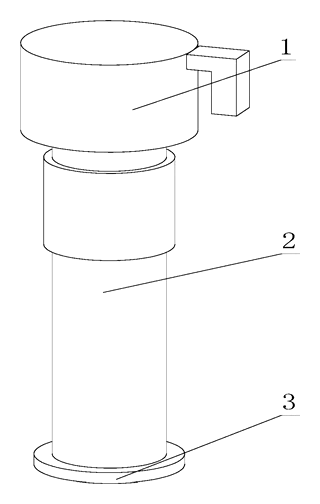
| 1 | Pen Cover | Houses the cleaning mechanism and protects the tip. |
| 11 | Cover Body | Main structure of the cap. |
| 15 | Chemical Fiber Pad | Filter material that catches dust. |
| 17 | Dust Cleaning Plate | Rotating component with scrapers. |
| 2 | Fiber Pen | The main body holding the refill and tip. |
| 21 | Pen Holder | Contains the locking mechanism and refill. |
| 24 | Bullet-Shaped Fiber Tip | The writing surface made of PET fibers. |
| 3 | Plugging Mechanism | Internal assembly securing the refill. |
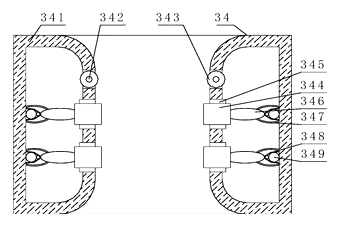
| 34 | Limit Plate | Elastic system that grips the refill. |
| 348 | Elastic Poking Piece | Spring-like element providing tension. |
| 349 | Elastic Ball | Component that aids in locking stability. |
Opening and closing
- Uncap the Pen: Twisting the cap releases the magnetic or threaded engagement, pulling the cleaning plate away from the tip.
- Write: The bullet-shaped PET fiber tip delivers ink smoothly. The internal elastic locks hold the refill firmly in place, preventing wobble.
- Cap the Pen: As the cap is twisted back on, the dust cleaning plate rotates.
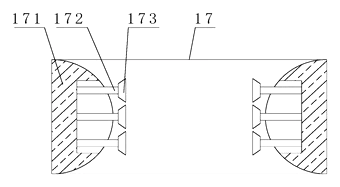
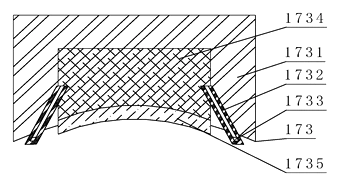
- Scrape and Filter: The scraper blades (1733) brush against the fiber tip, knocking loose dust into the inclined groove. The debris is then trapped by the chemical fiber net (1734) inside the cap.
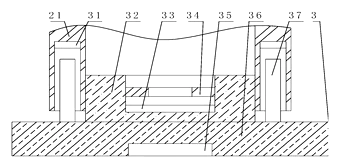
- Lock: The positioning rod (37) and threaded ring column (32) align the cap securely, ensuring the cleaning mechanism resets for the next use.
Applications
Daily Office Use
Professionals who carry pens in shirt pockets or bags benefit from the self-cleaning feature, which prevents lint buildup that causes skipping during important meetings or note-taking sessions.
Student Supplies
Students often lose or damage pen tips through rough handling. The glue-free mechanical lock reduces the chance of the tip falling out, and the cleaning cap helps maintain performance despite dusty classroom environments.
Promotional Merchandise
Companies distributing branded pens as gifts value the novelty of a “self-cleaning” mechanism. It provides a memorable interaction and suggests a higher quality product compared to standard disposable pens.
Technical Drawing and Sketching
Artists and draftsmen require consistent line widths. By keeping the fiber tip clean of contaminants, this design helps prevent unexpected ink blotting or thinning, crucial for precise work.
Where it is less suitable
- Extreme Pressure Writing: While durable, PET fibers may wear faster than tungsten carbide ballpoints under very heavy pressure used by some calligraphers.
- Viscous Oil-Based Inks: The design focuses on gel and water-based inks typical for fiber tips; thick oil-based inks might clog the fiber pores regardless of cleaning.
- Low-Cost Disposable Pens: The complexity of the cleaning cap and elastic locking system adds manufacturing cost, making it unsuitable for ultra-cheap single-use products.
Patent & Production
At a glance
| Patent number | CN114537017B (application CN202210237640) |
| Type | China invention patent (发明专利) - protects new technical solutions |
| Original title | Bullet shaped environmentally friendly and durable adhesive free PET fiber pen tip (子弹头型环保耐用无胶PET纤维笔尖) |
| Patent owner | Deqing Yangye Pen Making Co ltd |
| Inventors | Chen Jianqiang, Cao Hongfei, Sun Jianguo |
| Filing date | 2022-03-11 |
| Grant date | 2023-04-25 |
| Status (China) | In force - valid until at most 2042-03-11, provided annual fees are paid |
| Patent family | Public record shows Chinese filings only - no US, European, Japanese, PCT or other filings listed |
| Cited by | 0 later documents |
| Source | Google Patents (search for CN114537017B) |
What the claims cover, in plain language
Claim 1 defines a bullet-shaped PET fiber pen tip assembly comprising a fiber pen (2) and a plugging mechanism (3). Key features include a pen cover (1) with an internal protection block (16) and chemical fiber pad (15) for cleaning. The plugging mechanism uses a fixing bottom plate (36) with a threaded ring column (32) and positioning rod (37). It employs a limit plate (34) containing elastic components (elastic poking piece 348, elastic ball 349, elastic shell 347) to secure the refill without glue.
Claim 2 specifies the pen cover details, including a flower-shaped fixing block (13) and a sealing clamp (12). The dust cleaning plate (17) has a groove with a connecting rod (172).
Claim 3 details the dirt scraping piece (173), which includes a fixed shell (1731), chemical fiber net (1734), elastic pad (1735), and an inclined plate (1732) with a scraper blade (1733) to direct dust into the net.
Claim 4 describes the fiber pen (2) structure, featuring a pen holder (21) with a ring groove, magnet block (31), threaded ring column (32), and elastic anti-slip pad (22).
Claim 5 covers the assembly chuck (25) and bullet-shaped fiber pen point (24), secured by a limiting shell (23) and protected by pads (14, 33) to prevent damage during locking.
This is a simplified reading for orientation only. The legal scope is defined by the exact claim wording in the official Chinese document.
What this means for US production
This patent was filed in China and is currently in force. The public record shows no US or other foreign counterpart. Therefore, the specific design described in this Chinese patent does not restrict manufacturing or sales in the United States based on this document alone.
Two points to settle early:
- Other patents may exist. Pen mechanisms are heavily patented globally. Notably, Zebra Corporation (Japan) has cited this patent in a Japanese application (JP2023159614A), indicating activity in this field. A freedom-to-operate (FTO) review is essential to check for existing US patents covering similar glue-free fiber tips or cleaning caps.
- Material Compliance. Since the design uses PET fibers and various plastics, ensure materials meet US safety standards for children’s products if marketed to schools or kids.
Customization and manufacturing
What can be customized
| Area | Options |
|---|---|
| Tip Material | Different grades of PET fiber for varying ink viscosity (gel, water-based). |
| Color | Cap and body colors via plastic pigmentation or painting. |
| Locking Strength | Adjust elastic stiffness of the poke pieces and balls for different refill diameters. |
| Cleaning Efficiency | Density of the chemical fiber net and angle of the scraper blades. |
| Grip | Texture and hardness of the elastic anti-slip pad (22). |
Things to plan for (US market)
- ASTM F963 - Standard Consumer Safety Specification for Toy Safety, applicable if the pen is marketed to children under 14.
- CPSC Requirements - General product safety rules regarding sharp edges and small parts (choking hazards for caps if separated).
- California Prop 65 - Screening for chemicals in plastics and inks.
How a project runs
- Inquiry - Define target market, refill compatibility, and aesthetic preferences.
- Design - Finalize mold designs for the cap, body, and internal elastic components.
- Prototype - 3D-printed samples for fit testing; injection molded prototypes for function tests.
- Pilot Run - Cycle testing for the cleaning mechanism and locking durability.
- Production - Injection molding of ABS/PP parts, assembly of springs/elastic parts, packaging.
Quantities & timeline
The design requires multiple molds: one for the cap assembly, one for the pen body, and separate tools for the small elastic components. Tooling lead times depend on the complexity of the internal locking mechanism. Send us your volume estimates, color specifications, and refill requirements and we will reply with options.
Patent drawings
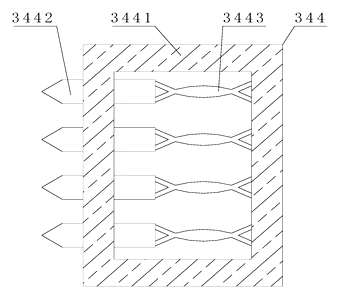
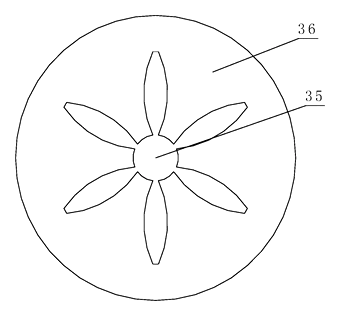
Drawings reproduced from the public patent document for reference.
Production notes
Tooling and process
ABS or PP injection molding is likely required for the cap, body, and internal housing components due to the geometric complexity. Stamping may be used for any metal threads if present, though the patent emphasizes plastic elastic parts. Printing will handle branding on the outer surfaces.
Cost drivers
The number of molds is typically a primary cost driver because the elastic locking system involves several small, distinct parts (poking pieces, balls, shells). Assembly steps are also significant, as the elastic components must be carefully inserted into the limit plate. Spring and clip quality directly impacts the longevity of the glue-free lock.
Prototyping path
Start with a 3D-printed sample to verify the fit of the cleaning mechanism and the alignment of the scrapers. Off-the-shelf springs or elastic materials can be used initially to test the locking force. Follow this with a print trial to check ink compatibility with the PET fibers. Finally, proceed to tooling once the functional prototype passes cycle tests.
What we would change before tooling
We would likely adjust the geometry of the elastic poking pieces to balance retention force with ease of assembly. The scraper angle might need tweaking to ensure dust effectively falls into the net without jamming. Magnet grade and retention should be tested if magnetic closure is added for premium versions.
Common failure points
Clip spring loss could occur if the elastic components fatigue over repeated uncapping cycles. Sharp edges on the molded plastic parts might cause injury or snagging. Ink compatibility issues could arise if the PET fibers react poorly with certain solvent-based inks. Cover cracking is a risk if the plastic resin is too brittle for the stress of twisting the cap.
Frequently asked questions
How does the self-cleaning cap work?
The cap contains a rotating dust cleaning plate with scraper blades. When you twist the cap onto the pen, these blades brush against the bullet-shaped fiber tip, sweeping away dust and lint. The debris falls into a groove and is caught by a chemical fiber net inside the cap, keeping the tip clean for the next use.
Why is a glue-free design better?
Glues can degrade over time due to ink solvents or temperature changes, causing the tip to loosen or leak. This design uses mechanical elastic locks to hold the refill and tip in place. This makes the pen more durable, easier to recycle, and eliminates the risk of adhesive failure.
Is the PET fiber tip durable?
Yes, PET fibers are known for their strength and resistance to wear. The bullet shape distributes pressure evenly. However, extreme pressure or abrasive surfaces can still wear down any fiber tip over time. Durability depends on the specific grade of PET used and the ink type.
Can I replace the refill easily?
The patent describes a locking mechanism that secures the refill. Depending on the final design implementation, refills may be replaceable by disassembling the pen holder. The glue-free nature facilitates this, but specific instructions would depend on the manufacturer’s final product design.
Does it work with all types of ink?
The design is optimized for gel and water-based inks, which are common with fiber tips. Highly viscous oil-based inks might clog the fibers regardless of the cleaning mechanism. Compatibility should be confirmed during the prototyping phase.
Is the pen safe for children?
The patent does not specify age ratings. If marketed to children, the product must comply with ASTM F963 and CPSC regulations regarding small parts (like the cap) and toxic materials. The absence of glue removes one potential hazard, but sharp edges or choking risks must be managed in design.
Can this design be made and sold in the US?
The patent is in force in China, but the public record shows no US counterpart. This means this specific Chinese patent does not restrict manufacturing or selling in the US. However, other US patents may exist in the pen industry. We recommend a freedom-to-operate check to ensure no other IP conflicts before launching in the US market.
Are you affiliated with the patent owner?
No. IP2M is an independent design and manufacturing service working from the public patent document.
Request a quote
Click Request a Quote below to see our email address - copy it, or open your email app with a ready-made message. Please mention patent CN114537017B in the subject.
Helpful details to include:
- Your company and channel (stationery brand, office supplier, promo goods distributor)
- Target market (general office, school, kids, premium)
- Refill specifications (ink type, diameter)
- Color and finish preferences for the cap and body
- Estimated quantity and target price
- Timeline - when you would like samples and the first shipment
You can also reach us at (332) 203-9997.
Page editor: Emily Zhang, Product Editor · IP2M
Last updated November 6, 2026. If something on this page looks wrong, email [email protected] and we will check it against the patent.
Interested in building this?
Tell us your target market, quantity and timeline. We reply with options for prototyping, small-batch runs or volume production.
Send your inquiry to
Please put CN114537017B in the subject line and tell us your company, country, estimated quantity and timeline.
Prefer to talk? Call (332) 203-9997.
More product-ready patents
All School, Office & Art patents →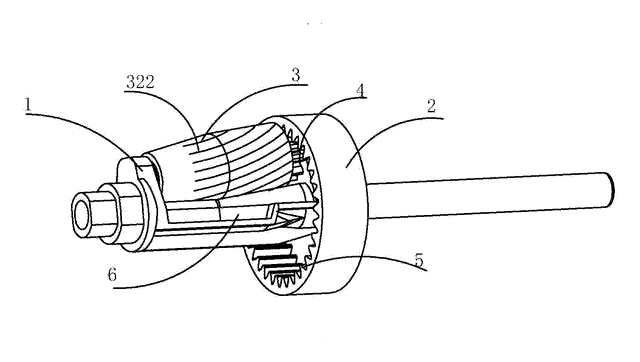
School, Office & Art
Long-Point Sketch Pencil Sharpener
Crank sharpener that cuts only the wood of sketch pencils, leaving a long, round lead about 30 mm long.
Patent CN207241257U
School, Office & Art
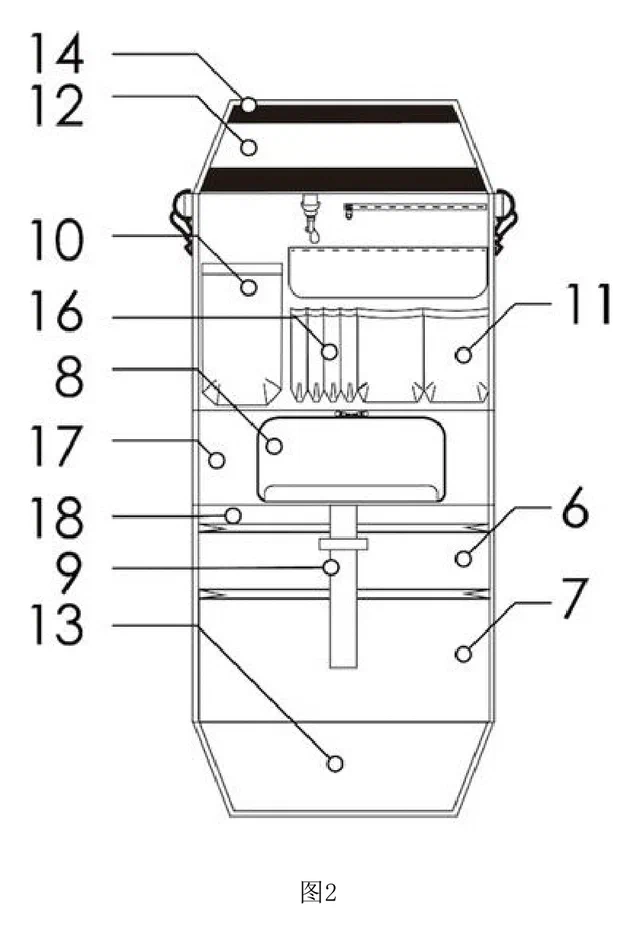
Fold-Out Desk Organizer Insert for School Backpacks
Backpack insert that unfolds into a hanging desk organizer for workbooks, stationery and a water bottle.
Patent CN209436546U
School, Office & Art
Smart Pencil Cap That Checks the Point with a Camera
Electronic pencil cap that photographs the point, measures it and reminds you to sharpen.
Patent CN106427302B
School, Office & Art
Expanding Clipboard Folder with Spring-Mounted Hinge and Catch
Hard folder whose spring-mounted hinge and catch let the cover clamp any thickness of paper.
Patent CN105667120B
School, Office & Art
Slide-Action Retractable Pen with a Friction-Loaded Cam That Ignores Gravity
Slide-action retractable pen whose spring-pressed cam latch stays put whichever way the pen is held.
Patent CN217671900U
School, Office & Art
Carousel Business Card Holder with Rolling Card Trays on Twin Ring Tracks
Desk card holder: angled card trays roll on wheels around two concentric ring tracks and lift out.
Patent CN105774300B
Browse by category
- Apparel & Accessories (43)
- Baby & Kids (28)
- Bags & Luggage (16)
- Bath & Personal Care (29)
- Car Accessories (23)
- Furniture, Bedding & Storage (22)
- Garden & Outdoor (29)
- Health & Wellness (13)
- Home, Kitchen & Cleaning (46)
- Lighting (22)
- Packaging & Containers (11)
- Pet Products (10)
- Phone & Camera Accessories (9)
- Retail Display (23)
- School, Office & Art (33)
- Sports & Recreation (41)
- Tools & Workshop (50)
- Toys & Games (21)
This page is based on the public patent document CN114537017B, assigned to Deqing Yangye Pen Making Co ltd. IP2M is an independent manufacturing service and is not affiliated with, endorsed by or licensed by the patent owner. Images marked as concept renderings are illustrations, not photos of an existing product. Patent status information is provided for reference only and is not legal advice; confirm freedom to operate for your market before production. Full disclaimer.