
Patent CN114631666B
Updated November 3, 2026Modular Rock Climbing Shoe Cover with Rotating Spikes and Strap System
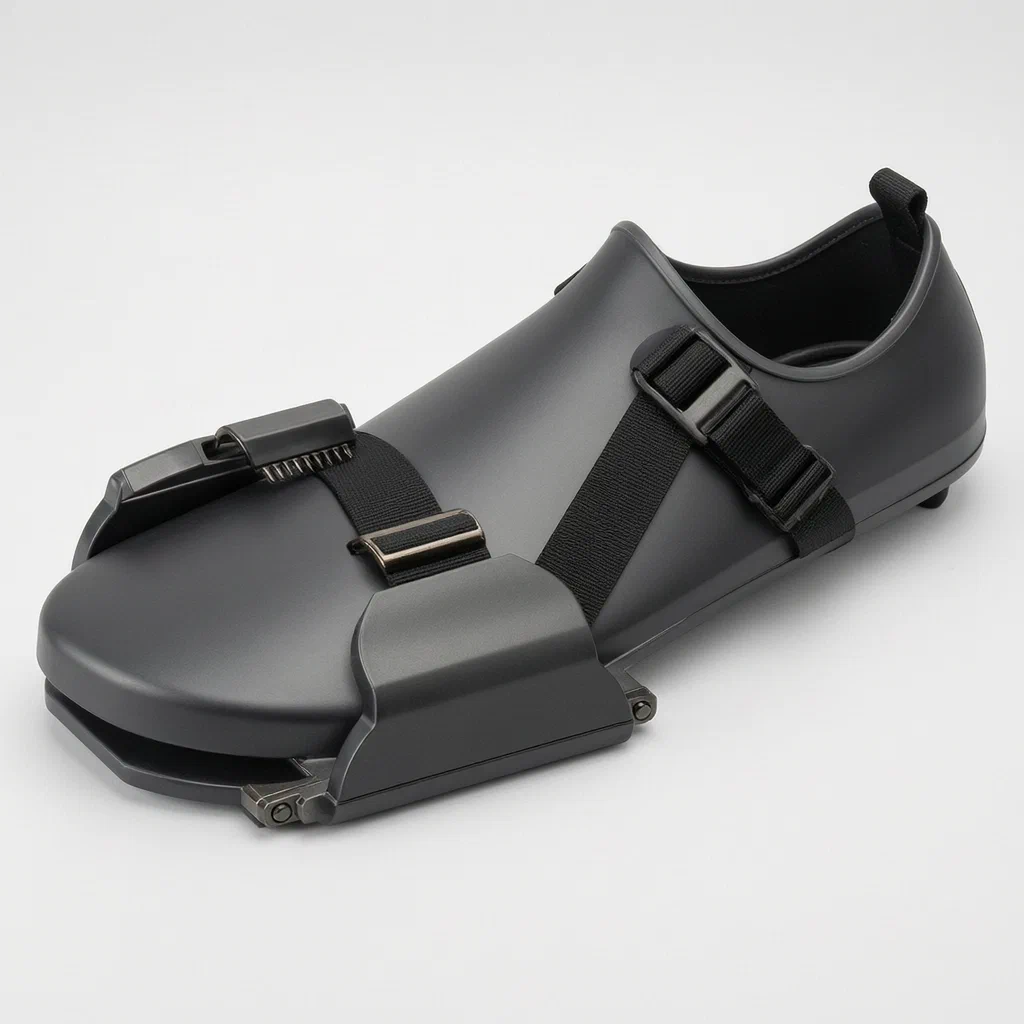
Standard climbing shoes have rigid soles with permanent protrusions that cause discomfort when walking on flat ground. This cover separates the traction elements from the shoe body. By using three articulated base plates, the cover bends naturally with the foot. The bottom surface uses rotating plates equipped with hook claws. When climbing, these claws grip rock faces; when walking back to the trailhead, the user can rotate the plates to present the smooth lapping surface, reducing impact on the feet. The unit attaches via adjustable straps and rubber mounts.
- China invention patent - active
- No filings outside China
- Outdoor footwear accessories
- Articulated base plates, rotating claw mechanisms
Splat! What let you down?
🧗
Rotating Claws
Bottom plates feature rotating parts with hook claws for grip and lapping surfaces for comfort.
🦶
Three-Section Design
Base plates A, B, and C move independently to follow the natural flex of the foot.
🔗
Secure Straps
Rubber blocks and mounting blocks hold fastening belts that clamp the cover to the shoe.
⚡
Elastic Coupling
Central elastic bands connect the plates, maintaining structural integrity while allowing movement.
Bring this product to market
- ✓ Patent vetted China-only family and legal status checked
- 2 Product brief · now How it works, uses and options written up
- 3 Prototype First samples for buyers to review
- 4 Pilot run Small first batch for launch customers
- 5 Volume production Repeat orders at scale
Buyer interest
– of 100 buyers needed to start prototyping
One click, no sign-up. Each vote is one real visitor, and products with the most interest go to prototyping first.
Build team: no members yet. Need a partner, co-funding or skills to build this? Join and we introduce the team once it forms.
The problem
Professional rock climbing shoes are designed for precision on small holds, often featuring stiff soles with permanent nail-shaped protrusions. While effective on vertical rock faces, these hard contact points create significant compression and tingling sensations on the sole when the climber walks on flat terrain or trails. This leads to rapid leg fatigue and drains physical energy before the actual climb begins. Existing solutions either require carrying two pairs of shoes or suffer from poor stability if the attachment is loose. There is a need for a device that provides aggressive traction for climbing but allows for comfortable walking without removing the gear.
The solution
The patent describes a modular shoe cover that attaches directly over standard climbing shoes. It solves the comfort issue through articulation and switchable traction.
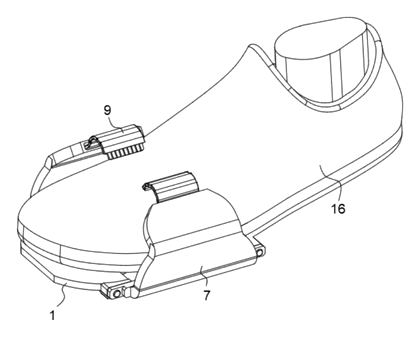
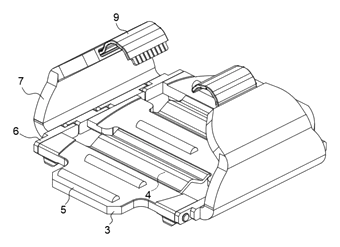
- Three Articulated Base Plates: The core structure consists of Base Plate A (1), Base Plate B (2), and Base Plate C (3). These are movably connected, allowing the sole to bend naturally at the toe and heel areas during walking.
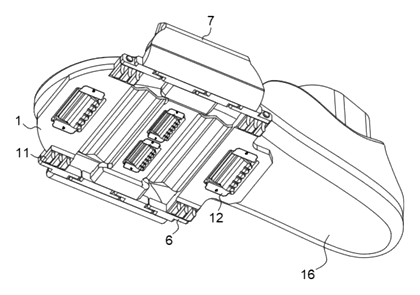
- Rotating Traction Mechanism: Uniformly arranged on the bottom surfaces of these plates are rotating parts (14). Each part includes a rotating plate (1401) with two distinct ends: one end has fixed hook claws (1402) for gripping rock, and the other end has lapping plates (1403) for smooth contact with flat ground.
- Side Connection Assembly: Two groups of connecting components (6) are symmetrically distributed on the sides. These use a chain of pieces (A, B, C) rotationally connected via shafts and blocks, ensuring the base plates stay aligned while moving.
- Strap Attachment System: Clamping pieces are located on the side edges. A rubber block (7) serves as a mount for a belt (9). The belt slides within a mounting block (8) and locks via buckles (10), securing the entire assembly tightly around the midfoot.
- Shoe Interface: The top surface of each base plate has a clamping groove (5) sized to fit the specific contour of the climbing shoe (16), preventing lateral slippage.
Who it is for
- Outdoor Gear Brands: Companies looking to expand their climbing accessory lines with functional footwear add-ons that address common pain points.
- Wholesale Distributors: Sellers targeting alpine clubs and adventure tour operators who need durable, multi-use equipment for clients transitioning between trail and wall.
- Amazon FBA Sellers: Niche product sellers focusing on specialized sports accessories where differentiation lies in solving the “walking vs. climbing” comfort trade-off.
- Industrial Footwear Manufacturers: Factories capable of producing complex molded plastics and metal hardware seeking new product categories beyond standard safety boots.
How it works
The main parts
The mechanism relies on the interaction between the static base plates and the dynamic rotating elements underneath them.
| No. | Part | What it does |
|---|---|---|
| 1, 2, 3 | Base Plates A, B, C | Form the sole structure; articulate to match foot movement. |
| 5 | Clamping Grooves | Top-side indentations that hold the climbing shoe securely. |
| 6 | Connecting Components | Side assemblies linking the plates via rotational joints. |
| 7, 8 | Rubber Block & Mounting Block | Anchors the strap system to the side of the cover. |
| 9, 10 | Fastening Belt & Buckle | Adjustable straps that lock the cover onto the wearer’s foot. |
| 14 | Rotating Parts | Sub-assemblies on the bottom face that switch between grip modes. |
| 1401 | Rotating Plate | The pivot point for the traction elements. |
| 1402 | Hook Claws | Protrusions for engaging rock surfaces. |
| 1403 | Lapping Plates | Smooth surfaces for walking on flat ground. |
Operating Steps
- Attachment: The user places the shoe into the clamping grooves (5) on the top of the base plates. The fastening belts (9) are pulled tight and locked using the connecting buckles (10).
- Walking Mode: Before reaching the crag, the rotating plates (1401) are turned so that the lapping plates (1403) face downward. This presents a smoother, less aggressive surface to the ground, reducing pressure on the foot.
- Climbing Mode: Upon arrival at the rock face, the user rotates the plates (1401) so that the hook claws (1402) extend outward. These claws provide the necessary friction and bite against the stone.
- Flexion: As the foot moves, the elastic bands (4) and rotational connections allow Base Plates A, B, and C to hinge relative to each other, mimicking the natural motion of the shoe.
Applications
Alpine Approach Trails
Climbers often hike long distances to reach remote crags. Using this cover allows them to keep their climbing shoes protected and attached while walking comfortably on rocky paths, avoiding the need to carry heavy spare footwear.
Multi-Pitch Routes
On long routes with traverses or ledges, climbers may need to walk on mixed terrain. The ability to quickly flip the rotating plates from claws to lapping surfaces helps maintain balance and reduces foot strain during transitions between difficult climbing sections.
Training Gyms with Outdoor Access
Facilities that offer both indoor walls and outdoor bouldering pads benefit from gear that adapts to different surfaces. Users can adjust the sole profile to suit the specific texture of the training area without changing shoes.
Rescue and Inspection Teams
Professionals who must climb structures but also traverse rough ground can utilize the dual-mode sole to maintain agility on obstacles while protecting their feet during transit across debris or uneven terrain.
Where it is less suitable
- Indoor Gym Climbing: Standard climbing shoes are optimized for volume and sensitivity on artificial holds; adding an external cover may alter the fit and feel undesirably for precise indoor movements.
- Extreme Ice Climbing: The patent describes hook claws for rock; specialized crampons are required for ice, which this device does not replace.
- Minimalist Runners: Athletes preferring barefoot-style shoes may find the added bulk and mechanical complexity unnecessary for short approaches.
Frequently asked questions
How does the rotating spike mechanism work?
The bottom of the shoe cover has multiple independent rotating plates. Each plate has sharp hook claws on one side and a smooth lapping surface on the other. By manually turning these plates, you switch between aggressive grip for climbing and a flatter profile for walking, reducing foot fatigue.
Will this fit my climbing shoe?
The design includes clamping grooves on the top surface intended to match the contour of standard climbing shoes. However, exact compatibility depends on the specific last shape of your shoes. Custom sizing ranges can be manufactured based on common shoe dimensions.
Is it heavy?
The weight depends on the materials chosen for production. The patent describes plastic base plates and rubber components. Using lightweight nylon or carbon fiber reinforcements can minimize added bulk compared to steel-based alternatives.
Can I run in these covers?
The three-section articulated design allows the foot to flex naturally, which supports running motions better than rigid solid soles. However, they are primarily designed for approach hiking and climbing transitions rather than high-speed trail running.
Do the claws wear out?
The hook claws are fixed to the rotating plates. Durability depends on the hardness of the material used (e.g., hardened steel or reinforced polymer). Replacement of individual rotating units may be possible depending on the final manufacturing design.
Can this design be made and sold in the US?
Yes. The patent CN114631666B is filed only in China and has no US counterpart. Therefore, this specific patent does not restrict manufacturing or sales in the United States. We recommend a freedom-to-operate check to ensure no other US patents cover similar interchangeable sole technologies.
Are you affiliated with the patent owner?
No. IP2M is an independent design and manufacturing service working from the public patent document.
Request a quote
Click Request a Quote below to see our email address - copy it, or open your email app with a ready-made message. Please mention patent CN114631666B in the subject.
Helpful details to include:
- Your company and channel (outdoor brand, distributor, e-commerce seller)
- Target shoe sizes and compatibility requirements
- Material preferences (plastic, metal, composite)
- Estimated quantity and target price
- Timeline - when you would like samples and the first shipment
You can also reach us at (332) 203-9997.
Explore this product
Interested in building this?
Tell us your target market, quantity and timeline. We reply with options for prototyping, small-batch runs or volume production.
Send your inquiry to
Please put CN114631666B in the subject line and tell us your company, country, estimated quantity and timeline.
Prefer to talk? Call (332) 203-9997.
More product-ready patents
All Apparel & Accessories patents →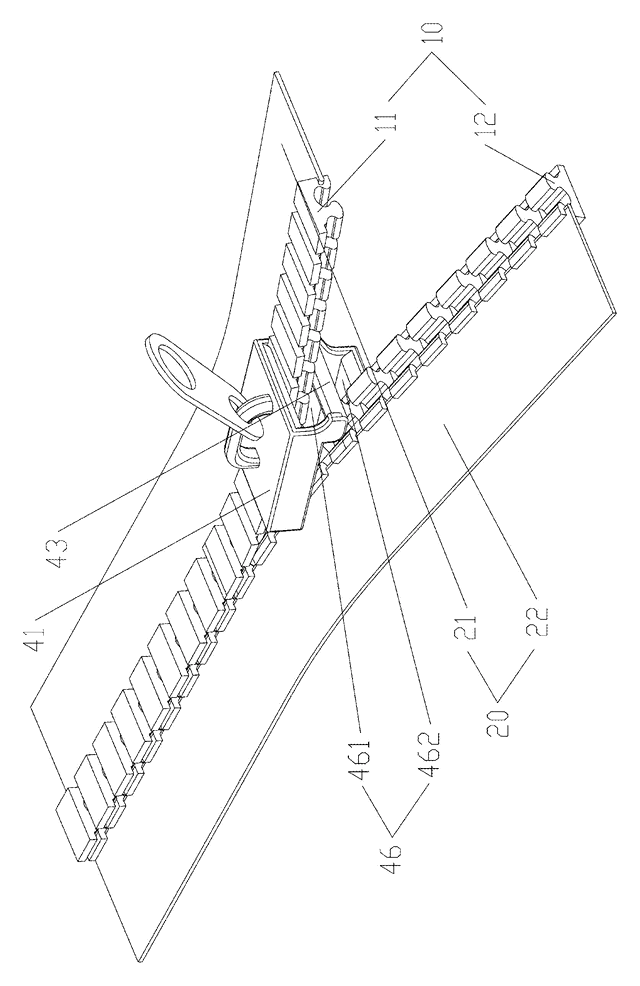
Apparel & Accessories
Stacked Zipper with Teeth That Mesh Top-to-Bottom
Zipper whose two identical tooth rows mesh on top of each other, closed by a simplified slider.
Patent CN205795062U
Apparel & Accessories
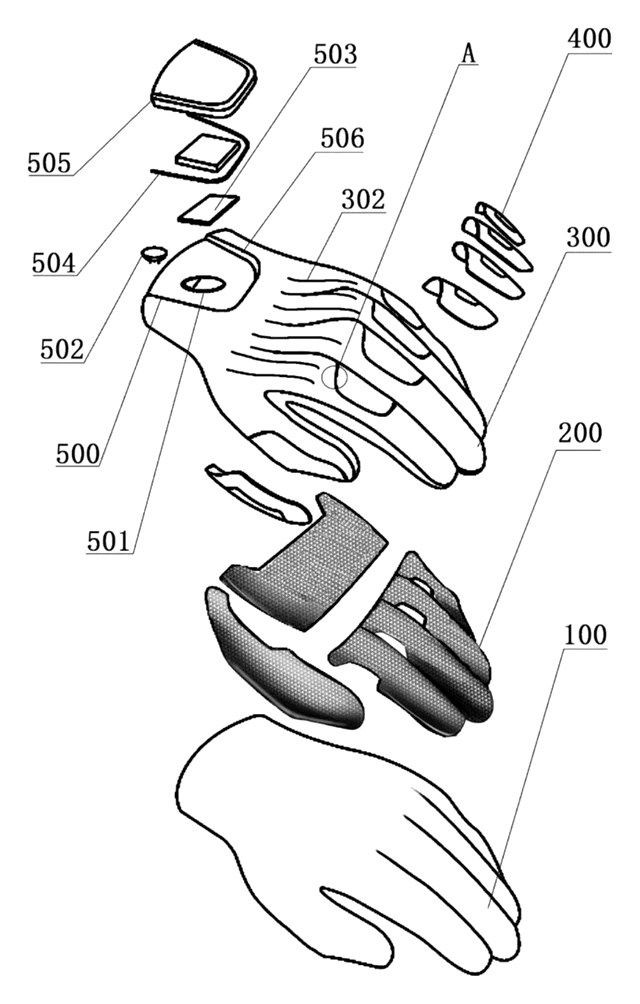
Impact-Resistant Glove with a 3D-Printed Lattice Layer
Work glove with a 3D-printed lattice impact layer, TPU knuckle guards and a light mounting area.
Patent CN213785583U
Apparel & Accessories
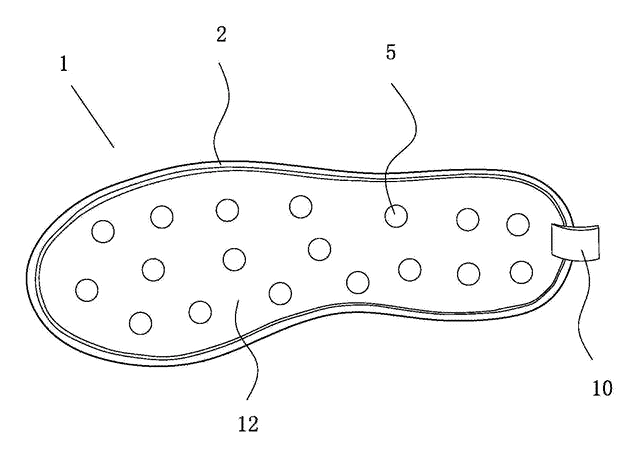
Massage Insole with Spring-Back Silicone Nubs and a Removable Top Layer
Layered insole: silicone nubs rise through a removable perforated top sheet and sink under each step.
Patent CN208286505U
Apparel & Accessories
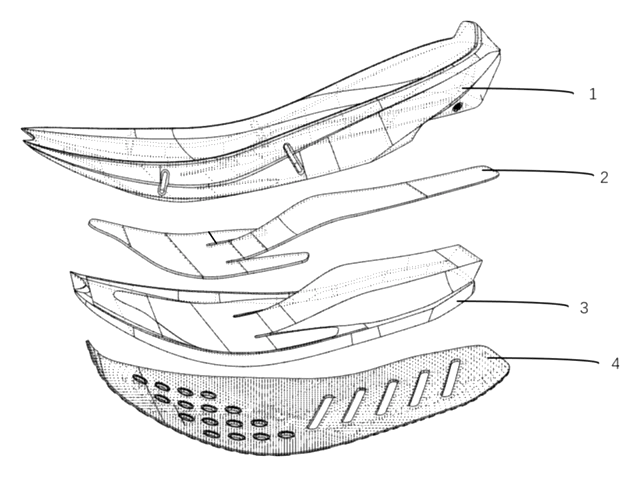
Heel-Less Carbon Plate Running Shoe Sole for Forefoot Strikers
Running sole for forefoot strikers: no ground-touching heel, winged carbon plate between two midsoles.
Patent CN216723354U
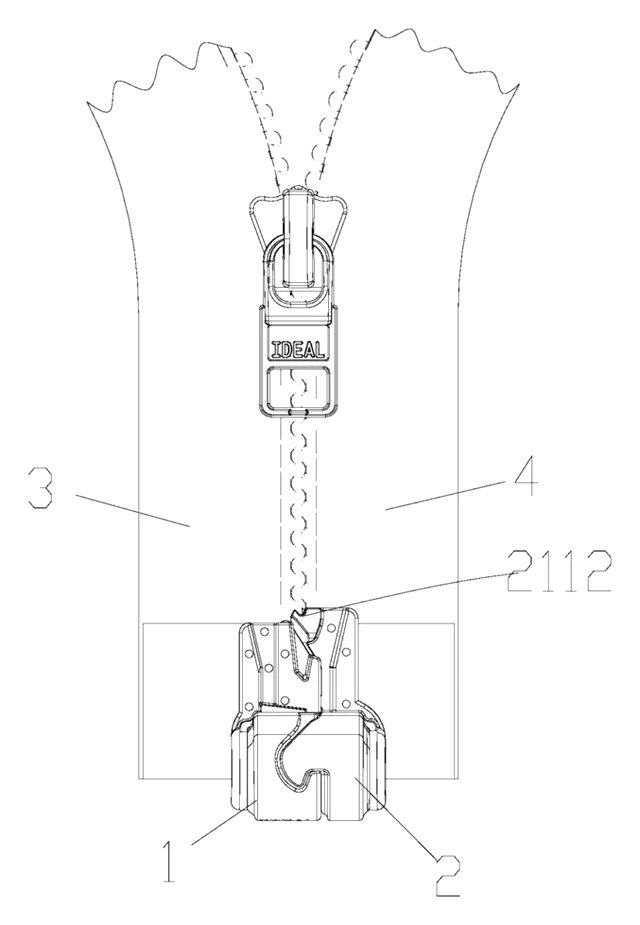
Apparel & Accessories
Waterproof Magnetic Zipper Stop That Snaps the Two Halves Together
Separating-zipper stop with sealed magnets: pin and box snap together one-handed, safe in rain and wash.
Patent CN215075936U
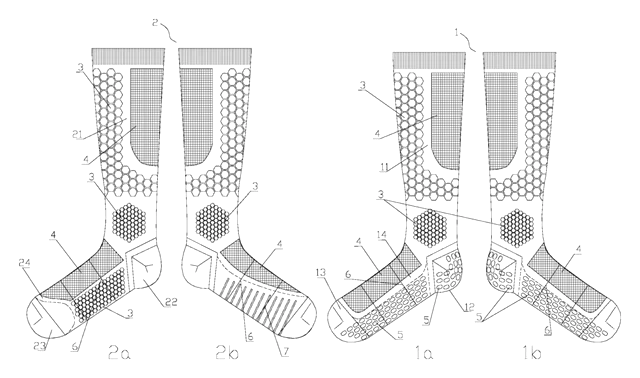
Apparel & Accessories
Left-Right Specific Soccer Socks: Grip for the Plant Foot, Touch Pads for the Kicking Foot
Soccer socks knitted as a left-right pair: grip zones for the plant foot, pads for the kicking foot.
Patent CN212728807U
Browse by category
- Apparel & Accessories (33)
- Baby & Kids (24)
- Bags & Luggage (14)
- Bath & Personal Care (24)
- Car Accessories (19)
- Furniture, Bedding & Storage (18)
- Garden & Outdoor (26)
- Health & Wellness (11)
- Home, Kitchen & Cleaning (39)
- Lighting (18)
- Packaging & Containers (9)
- Pet Products (8)
- Phone & Camera Accessories (7)
- Retail Display (19)
- School, Office & Art (27)
- Sports & Recreation (33)
- Tools & Workshop (42)
- Toys & Games (18)
This page is based on the public patent document CN114631666B, assigned to CAPITAL UNIVERSITY OF ECONOMICS AND BUSINESS. IP2M is an independent manufacturing service and is not affiliated with, endorsed by or licensed by the patent owner. Images marked as concept renderings are illustrations, not photos of an existing product. Patent status information is provided for reference only and is not legal advice; confirm freedom to operate for your market before production. Full disclaimer.