At a glance
| Patent number | CN114631666B (application CN202210241761) |
| Type | China invention patent (发明专利) - protects method and structure |
| Original title | Outdoor mountain climbing shoe cover (一种户外登山攀岩用鞋套) |
| Patent owner | CAPITAL UNIVERSITY OF ECONOMICS AND BUSINESS |
| Inventors | Liu Zhenhua |
| Filing date | 2022-03-13 |
| Grant date | 2023-06-30 |
| Status (China) | In force - valid until at most 2042-03-13, provided annual maintenance fees are paid |
| Patent family | Chinese filings only - no US, European, Japanese, PCT or other filings listed |
| Cited by | 0 later documents |
| Source | Google Patents (search for CN114631666B) |
What the claims cover, in plain language
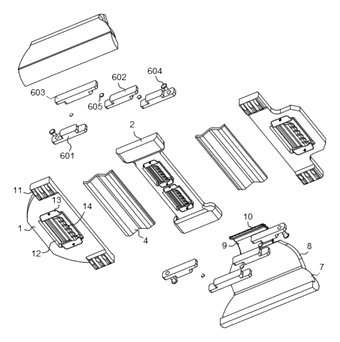
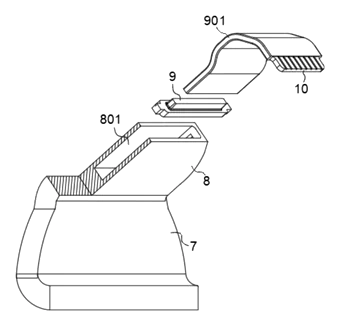
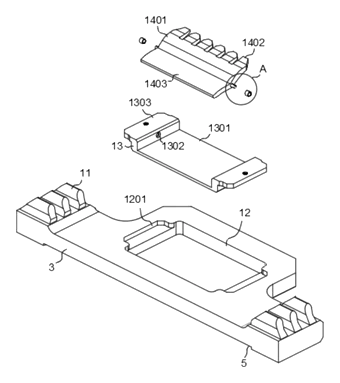
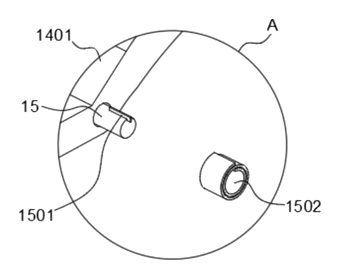
Claim 1 defines an outdoor climbing shoe cover comprising three movably connected base plates (A, B, C). It specifies two symmetrical groups of connecting components (6) on the sides, each consisting of linked pieces (A, B, C) that rotate against one another. A clamping piece includes a rubber block (7) topped by a mounting block (8) holding a fastening belt (9). Crucially, the bottom surfaces of all three base plates feature uniformly arranged rotating parts (14). These parts consist of a rotating plate (1401) with hook claws (1402) on one end and lapping plates (1403) on the other, connected via shafts (15).
Dependent Claims elaborate on the connection methods. They describe how the middle parts of the base plates are fixed by elastic bands (4) and how the top surfaces contain clamping grooves (5) matched to the shoe size. The claims further detail the internal sliding fits of the belts within the mounting blocks and the specific rotational axes (604, 605) that link the side connecting pieces to the outer walls of the base plates.
This is a simplified reading for orientation only. The legal scope is defined by the exact claim wording in the official Chinese document.
What this means for US production
This patent was filed only in China and is currently in force. Making or selling this specific design in China requires permission from the patent owner. Since there are no corresponding US patents, the design itself is not restricted by this specific patent number in the United States.
Two points to settle early:
- Other patents may exist. Footwear attachments and crampon-like devices are a competitive field with many existing utility patents in the US. While no foreign patents cite this specific Chinese document, a freedom-to-operate (FTO) review is recommended to ensure the rotating claw mechanism does not infringe on broader US patents regarding interchangeable sole systems.
- Material Safety. The design involves plastic plates and rubber components that contact skin and potentially harsh environments. Ensuring materials meet US consumer safety standards for durability and chemical composition is essential.
Customization and manufacturing
What can be customized
| Area | Options |
|---|---|
| Plate Material | High-impact ABS, Nylon, or Carbon Fiber composites for weight reduction. |
| Claw Geometry | Hook depth and spacing can be adjusted for specific rock types (granite vs. sandstone). |
| Strap System | Velcro, quick-release buckles, or traditional lace integration. |
| Fitment | Adjustable sizing ranges to accommodate various climbing shoe lasts. |
| Color/Finish | Anodized aluminum accents or colored plastic molding for brand visibility. |
Things to plan for (US market)
- CPSC General Requirements: Consumer products must comply with general safety rules. If marketed to children, strict ASTM F963 toy safety standards would apply, though this is primarily adult sporting goods.
- California Prop 65: Warning labels may be required if materials contain certain chemicals known to cause cancer or reproductive harm.
- Durability Testing: While no specific federal regulation governs climbing accessories like helmets do, industry-standard cyclic testing for breakage under load is critical for liability protection.
How a project runs
- Inquiry - Define target shoe sizes, material preferences, and estimated volumes.
- Design Refinement - CAD modeling of the rotating mechanism to ensure smooth transition between claws and lapping plates.
- Prototyping - 3D printed or CNC machined samples to test fit and ergonomics.
- Tooling - Injection molds for base plates and rotating parts; stamping dies for metal shafts.
- Production - Assembly of plates, insertion of bearings/shafts, strapping installation, and quality control checks.
Quantities & timeline
Manufacturing requires precision injection molds for the three-part base assembly and the rotating sub-components. The rotational tolerance is key to preventing wobble during use. Lead times depend on mold complexity and material sourcing. Send us your target price, quantity, and desired material specs and we will reply with options.
Patent drawings
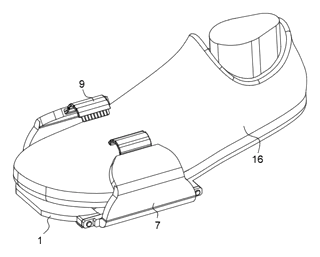
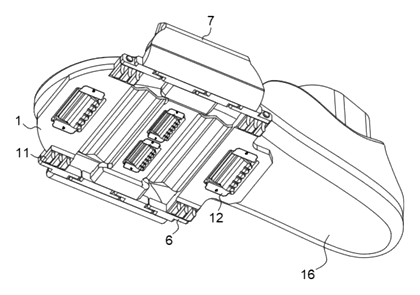
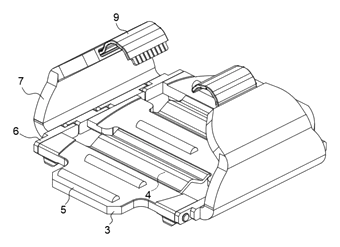
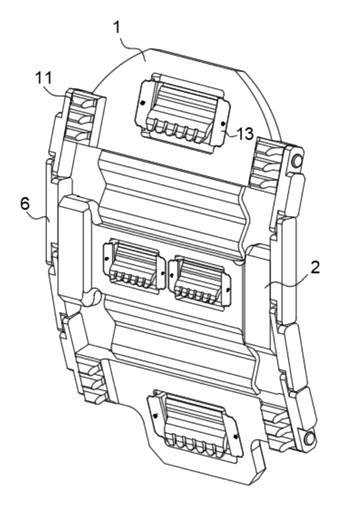
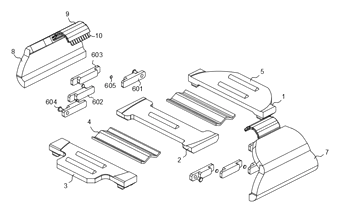
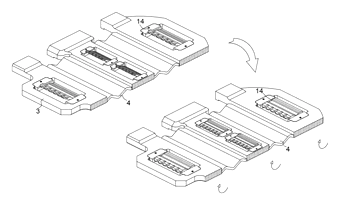
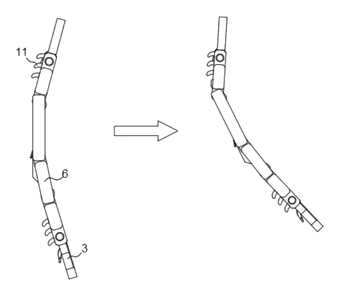
Drawings reproduced from the public patent document for reference.