At a glance
| Patent number | CN114680528B (application CN202111416071) |
| Type | China invention patent (发明专利) - protects product shape, structure and method |
| Original title | Folding clothing show shelf (一种折叠服装展示架) |
| Patent owner | Yichun Kujia Sporting Goods Co ltd |
| Inventors | Tu Xiaoyu |
| Filing date | 2022-04-29 |
| Grant date | 2023-04-18 |
| Status (China) | In force in China until at most 2042-04-29 (if annual fees are paid) |
| Patent family | Chinese filings only - no US, European, Japanese, PCT or other filings listed |
| Cited by | 0 later documents |
| Source | Google Patents (search for CN114680528B) |
What the claims cover, in plain language
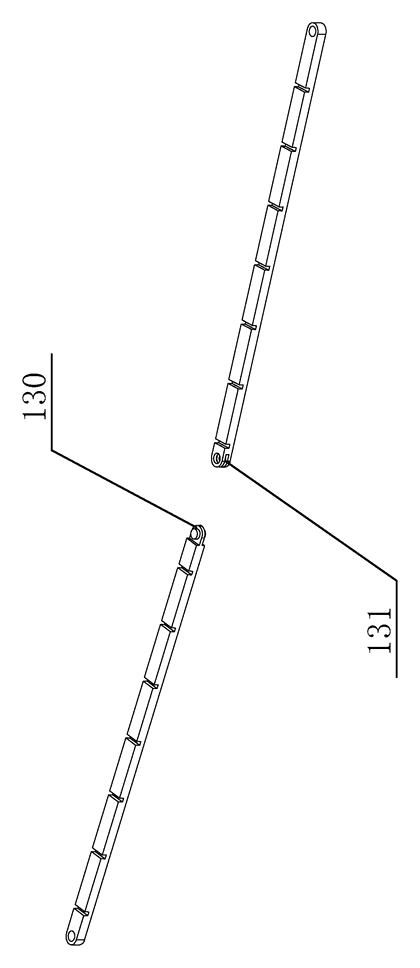
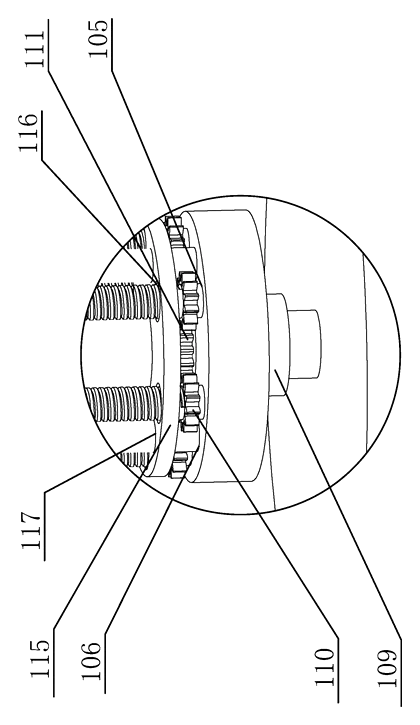
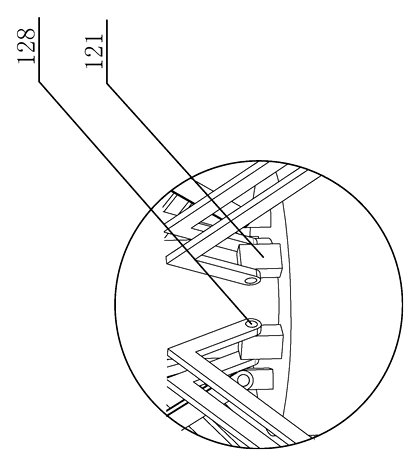
Claim 1 covers a folding clothes display stand with a base and a folding clothes hanger mechanism rotatably connected to the base’s upper end. The mechanism includes a threaded rod mounting seat with threaded rod mounting holes and supporting rod mounting holes. Threaded rods sit in the holes with unthreaded bottoms that rotate in the seat. Supporting rods fix into the supporting holes. A rotating shaft passes through the seat and connects to a motor. Driven gears on the threaded rods mesh with a driving gear on the shaft. A limiting plate sits above the gears, with holes for the threaded rods to pass through. A lifting block threads onto the rods and has a first connecting handle and a rotating arm rod. The arm rod connects via third connecting keys to L-shaped connecting rods, which in turn pivot on first connecting keys of fixing seats on an end cover capping the rods. The arm rods connect to first and second clothes hanging rods.
Claim 2 adds that the base has sliding holes containing extension rods with internal springs between them and the holes. The mounting seat has open abutting grooves where the extension rods press under spring force to position the seat during gear rotation.
This is a simplified reading for orientation only. The legal scope is defined by the exact claim wording in the official Chinese document.
What this means for US production
This patent was filed only in China and is currently in force there. Making or selling this specific folding clothing display stand design in China needs the owner’s permission. It has no US or other foreign counterpart.
Two points to settle early:
- Other patents may exist. Motorized display racks and folding retail fixtures are covered by various utility patents globally, so a freedom-to-operate (FTO) review focusing on the gear-driven threaded rod folding mechanism and the dummy display mounting system is recommended before tooling.
- Motor and electrical safety. Because the stand relies on a motor to drive the gears, the electrical components must be selected and tested for the target market’s voltage and safety standards.
Customization and manufacturing
What can be customized
| Area | Options |
|---|---|
| Dimensions | Overall height, arm length and base footprint to be confirmed in design |
| Motor specs | Voltage, torque and speed matched to the load of the hanging garments |
| Materials | Steel or aluminum for rods and base; plastic or metal for gears and connecting keys |
| Wheels | Size and material of the universal wheels for different floor types |
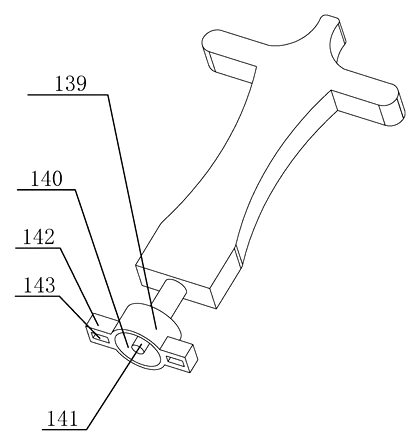
| Dummy mechanism | Shape and locking style of the limiting fixing seat, limiting module and fixing baffle |
| Finish | Powder coating, plating or paint colors for retail branding |
Things to plan for (US market)
- UL 962 - standard for household and commercial furnishings, covering motorized display units to prevent fire and shock hazards.
- FCC Part 15 - if the motor controller emits radio frequency energy, it must comply with FCC limits for unintentional radiators.
- California Prop 65 - materials used in the base, wheels, coatings and plastics must be screened for listed chemicals.
- Stability check - the stand is tested on prototypes for tip-over with garments loaded and the hanger mechanism unfolded, and the base and wheel locks are sized from those results.
How a project runs
- Inquiry - define dimensions, motor requirements, load capacity and quantity.
- Design - engineer the gear ratios, threaded rod pitch, linkage geometry and base structure.
- Prototype - build samples to test the folding motion, motor torque, spring-loaded extension rod engagement and wheel mobility.
- Pilot run - produce a small batch for cycle testing the gears and safety certification submissions.
- Production - stamp or machine the base and rods, mold or cut the gears, assemble the linkage, wire the motor and attach the wheels.
Quantities & timeline
The base and mounting seat require stamping dies or machining fixtures, the threaded rods and supporting rods need threading and cutting processes, and the gears require precision molding or hobbing. The motor and wiring harness add assembly steps, and safety certification tests for motorized retail fixtures take additional time. Send us your dimensions, motor requirements, load capacity, finish, quantity and target price and we will reply with options.
Patent drawings
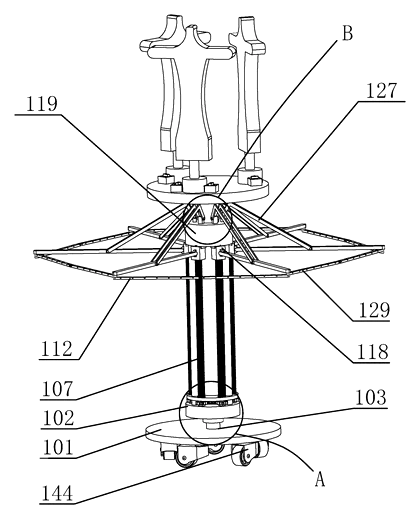
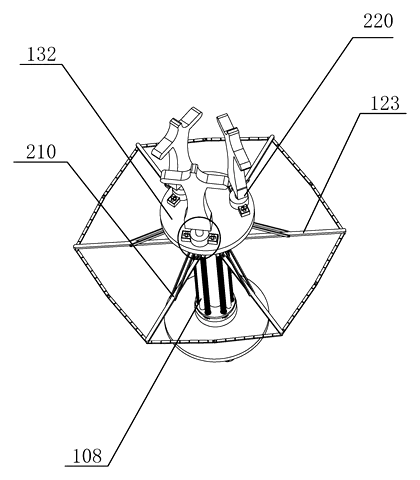
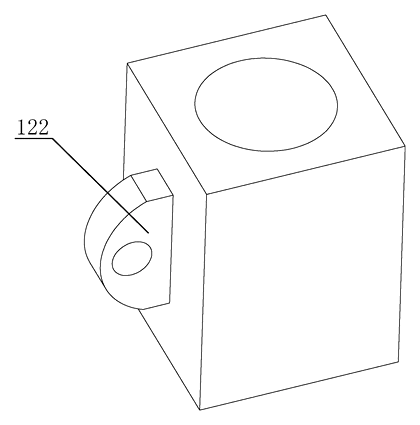
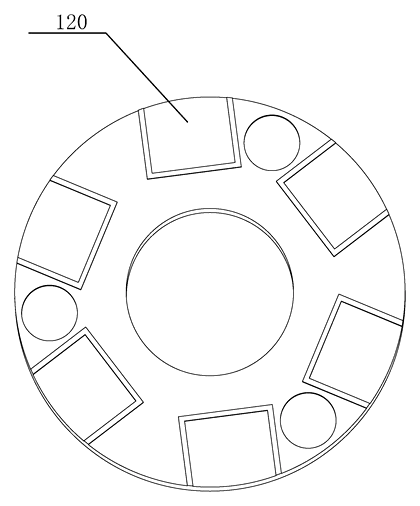
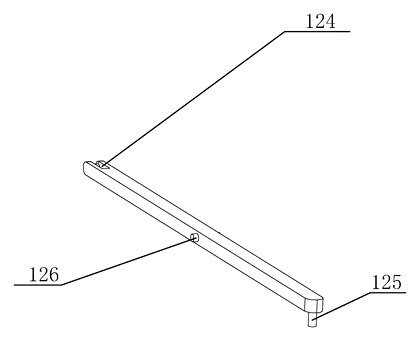
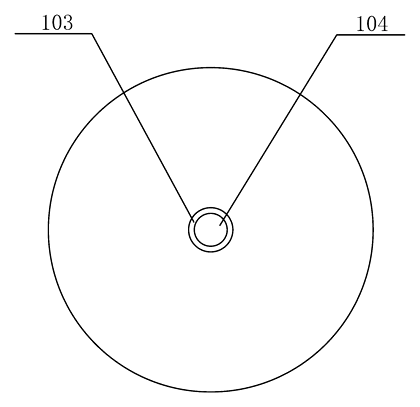
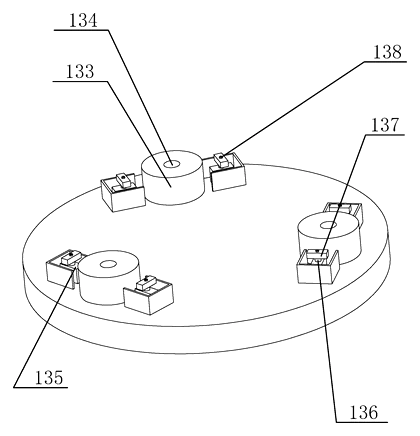
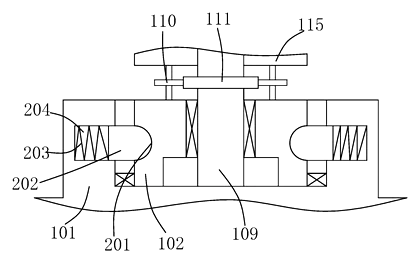
Drawings reproduced from the public patent document for reference.