
Patent CN114699724B
Updated October 27, 2026Back Muscle Trainer with Even-Force Weight Feedback
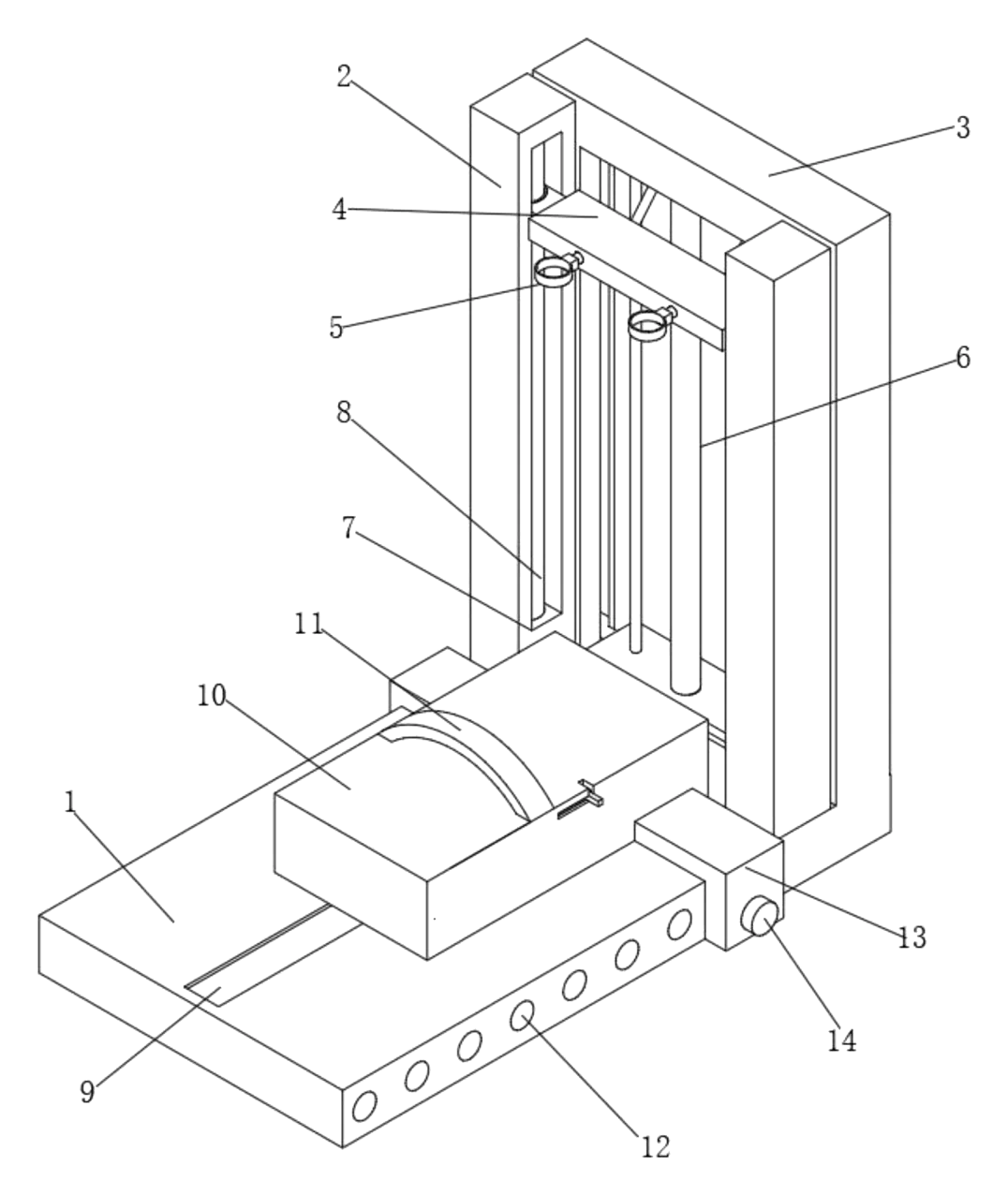
Training the back evenly is difficult because users often favor their stronger side without noticing. This trainer addresses that problem mechanically. The user lies or sits against a long board on the base, secured by a bandage, and pulls two rings attached to a cross bar. The pull ropes lift a counterweight whose side bumps travel inside a moving groove on the base. If the left and right pulls differ, the counterweight tilts. One of the bumps then catches inside a slot, preventing the weight from rising further. The movement stops until the user corrects their posture and applies equal force. This immediate mechanical feedback trains both sides of the back evenly.
- China invention patent - lapsed
- No filings outside China
- Sports & fitness equipment
- Steel frame, pull ropes, counterweight
Splat! What let you down?
⚖️
Even-force feedback
The counterweight tilts and jams in a slot when pulled unevenly, forcing balanced effort.
🏗️
Sturdy frame
A base, rear shelf, cross bar and vertical rods with lifting grooves form the structure.
🔩
Adjustable components
Screw rods in the lifting grooves and threaded rods allow positioning of parts.
🛑
Mechanical stop
Side bumps on the weight catch in slots to halt the lift until force is corrected.
Bring this product to market
- ✓ Patent vetted China-only family and legal status checked
- 2 Product brief · now How it works, uses and options written up
- 3 Prototype First samples for buyers to review
- 4 Pilot run Small first batch for launch customers
- 5 Volume production Repeat orders at scale
Buyer interest
– of 100 buyers needed to start prototyping
One click, no sign-up. Each vote is one real visitor, and products with the most interest go to prototyping first.
Build team: no members yet. Need a partner, co-funding or skills to build this? Join and we introduce the team once it forms.
The problem
When athletes or fitness users train their back muscles with standard cable machines, they rarely apply exactly the same force with their left and right arms. The dominant side takes over, leading to uneven muscle development and potential strain on the weaker side. Standard machines offer no immediate feedback when this happens. The user continues the repetition unaware that the load has shifted entirely to one side, which defeats the purpose of symmetrical back training.
The solution
This trainer introduces a mechanical feedback system directly into the weight path.
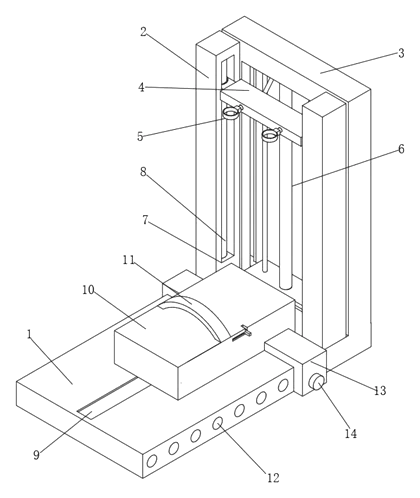
- The user is secured on a long board (10) fitted with a bandage (11), positioned on the base (1).
- The user grips two pull rings (5) located on either side of the horizontal pole (4), which is supported by vertical rods (2).
- Pulling the rings draws a rope that lifts a counterweight (19) housed inside the shelf (3) at the rear.
- The counterweight has bumps on both sides that travel inside a moving groove (9) on the upper end of the base.
- If the user pulls harder on one side, the counterweight tilts. The tilt forces one of the bumps to catch inside a slot within the groove.
- Once caught, the counterweight cannot rise. The movement halts, providing instant physical feedback that the pulling force is unbalanced.
- The user must release tension, correct their posture, and pull evenly again to free the bump and continue the lift.
Who it is for
- Commercial gym equipment brands looking to add a specialized back-training station that offers mechanical form correction without electronic sensors.
- University and institutional athletic departments that need durable, straightforward training tools for student athletes focusing on symmetrical strength.
- Physical therapy clinics requiring a controlled environment where patients can rebuild back strength evenly under mechanical supervision rather than relying solely on verbal cues.
- Home gym equipment manufacturers targeting serious users who want dedicated, feedback-driven machines for balanced muscle development.
How it works
The main parts
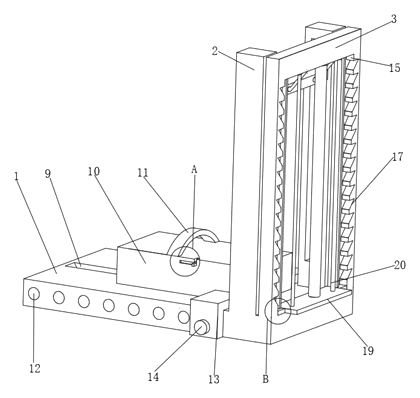
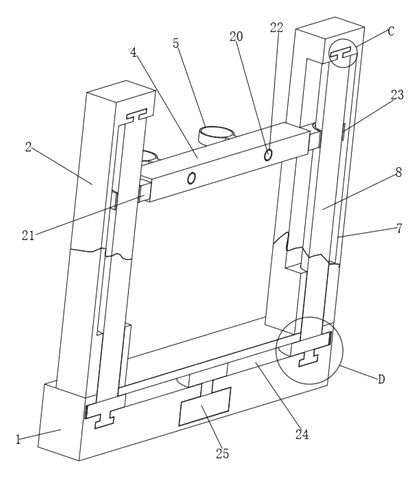
| No. | Part | What it does |
|---|---|---|
| 1 | Base | Supports the entire assembly; contains the moving groove. |
| 2 | Vertical rod | Fixed to the base; supports the horizontal pole. |
| 3 | Shelf | Mounted on the rear side of the base; houses the counterweight. |
| 4 | Horizontal pole | Connects the vertical rods; holds the pull rings. |
| 5 | Pull ring | Gripped by the user to pull the rope. |
| 7 | Lifting groove | Cut into the vertical rod to guide vertical movement. |
| 8 | Screw rod | Placed inside the lifting groove for rotation and adjustment. |
| 9 | Slide groove / Moving groove | On the upper end of the base; guides the counterweight’s bumps. |
| 10 | Long board | Rests on the base for the user to lie or sit against. |
| 11 | Bandage | Attached to the long board to secure the user. |
| 13 | Push block / Impeller | Positioned on the sides of the long board for spacing. |
| 14 | Threaded rod | Connects the push block to the base for positional locking. |
| 19 | Counterweight | Lifted by the pull rope; features side bumps. |
| 20 | Stay cord / Pull rope | Connects the pull rings to the counterweight. |
| 23 | Swivel nut | Meshes with the screw rod inside the lifting groove. |
Operating steps
- Positioning - The user lies or sits on the long board (10) and fastens the bandage (11) to remain stable during the exercise.
- Gripping - The user reaches up and grasps the pull rings (5) on both ends of the horizontal pole (4).
- Pulling - The user pulls downward evenly. The stay cords (20) transfer this force to lift the counterweight (19) inside the shelf (3).
- Feedback - As the counterweight rises, its side bumps travel along the slide groove (9). If the left and right pulls are unequal, the counterweight tilts.
- Stopping - The tilt causes one bump to jam into a fixed slot inside the groove. The weight stops rising immediately.
- Correction - The user feels the sudden stop, releases the uneven tension, realigns their shoulders, and pulls evenly again to dislodge the bump and complete the repetition.
Applications
Athletic training centers
Strength coaches working with rowers, swimmers, or gymnasts use this trainer to ensure athletes build symmetrical back strength. Uneven back muscles often lead to rotational imbalances in the water or on the mat. The mechanical stop forces the athlete to self-correct every repetition without constant verbal intervention from the coach.
University sports programs
Collegiate weight rooms can install this unit for general conditioning. Student athletes frequently develop dominance on one side due to their specific sport mechanics. This machine provides a dedicated station where they can isolate the back and learn to engage both sides equally before moving to heavier compound lifts.
Rehabilitation facilities
Therapists guiding patients through post-injury recovery need tools that prevent compensatory movements. When a patient favors an uninjured side, recovery stalls. The tilting counterweight acts as a physical limit, ensuring the patient only progresses when applying balanced, safe force across the recovering muscles.
Commercial fitness clubs
Gyms seeking distinct stations beyond standard cable crossovers can offer this as a specialized back developer. Members interested in posture correction and balanced aesthetics will find the mechanical feedback loop engaging. It removes the guesswork from isolation exercises.
Home gyms
Serious home users with space for a dedicated frame benefit from the standalone nature of this design. Without a spotter or coach present, the machine itself acts as the supervisor. The user receives immediate tactile feedback if their form degrades during a solo session.
Where it is less suitable
- High-speed dynamic training - the mechanical catching system requires controlled, deliberate movements rather than explosive pulls.
- Multi-angle cable work - this is a dedicated back trainer with a fixed path, not a versatile functional trainer for chest or arm exercises.
- Light cardio warm-ups - the resistance and feedback mechanism are designed for strength conditioning, not continuous aerobic motion.
Frequently asked questions
How does the even-force feedback actually work?
The counterweight has bumps on its sides that ride inside a groove on the base. When you pull the rings evenly, the weight rises straight up. If you pull harder on one side, the weight tilts. That tilt forces one of the bumps to catch inside a slot in the groove, physically stopping the weight from going higher until you balance your pull.
Is this an electronic or smart machine?
No. The feedback is entirely mechanical. There are no sensors, screens or motors. The tilt-and-catch action relies purely on the geometry of the counterweight, the bumps and the slide groove.
What is the maximum weight capacity?
The patent does not list a specific load rating or maximum user weight. The total counterweight mass and the structural limits of the base and vertical rods are set in design and confirmed on prototypes based on the intended user group.
Can the sensitivity of the tilt be adjusted?
The patent describes the bump and groove interaction but does not detail an adjustable sensitivity dial. Changing how easily the weight tilts would involve altering the groove width or bump profile during the manufacturing design phase.
How is the user secured?
The user lies or sits on a long board mounted on the base. A bandage attached to the long board is used to fix the user in place so they do not shift while pulling the rings.
Does it take up much floor space?
The footprint depends on the final dimensions chosen for production. The patent shows a base supporting a rear shelf and front vertical rods. Exact measurements are to be confirmed in design based on whether it is built for commercial or home use.
Can this design be made and sold in the US?
The patent was filed only in China and is currently lapsed due to non-payment of annual fees, so it does not restrict the design in the US or in China. Strength training equipment may be covered by other US patents - see Patent & Production - so we recommend a freedom-to-operate check before volume production.
Are you affiliated with the patent owner?
No. IP2M is an independent design and manufacturing service working from the public patent document.
Request a quote
Click Request a Quote below to see our email address - copy it, or open your email app with a ready-made message. Please mention patent CN114699724B in the subject.
Helpful details to include:
- Your company and channel (gym equipment brand, university buyer, rehabilitation clinic, home gym distributor)
- Target user size and intended setting (commercial or home)
- Counterweight range required (total mass and increments)
- Frame finish and upholstery preferences
- Estimated quantity and target price
- Timeline - when you would like samples and the first shipment
You can also reach us at (332) 203-9997.
Explore this product
Interested in building this?
Tell us your target market, quantity and timeline. We reply with options for prototyping, small-batch runs or volume production.
Send your inquiry to
Please put CN114699724B in the subject line and tell us your company, country, estimated quantity and timeline.
Prefer to talk? Call (332) 203-9997.
More product-ready patents
All Sports & Recreation patents →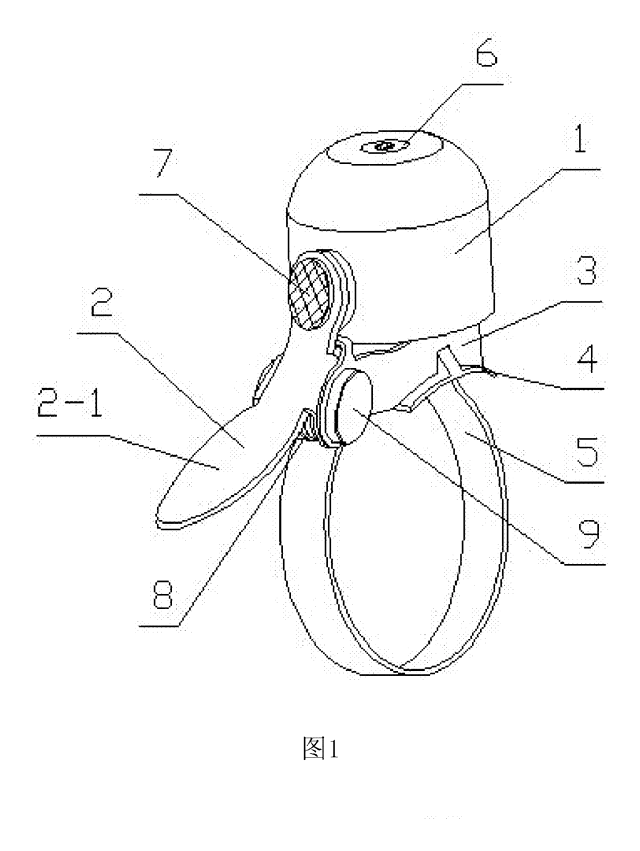
Sports & Recreation
Compact Torsion-Spring Bike Bell
Mini bike bell with a standard torsion spring and a rubber-floated dome - small size, clear tone, quick strap mount.
Patent CN205819384U
Sports & Recreation
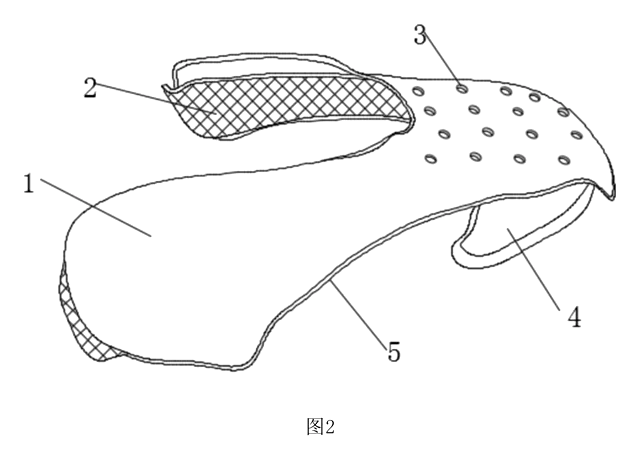
Padded Toe-Box Shield for Sneakers
Ventilated, silicone-lined toe-box insert that supports the front of a sneaker and cushions the toes.
Patent CN209473731U
Sports & Recreation
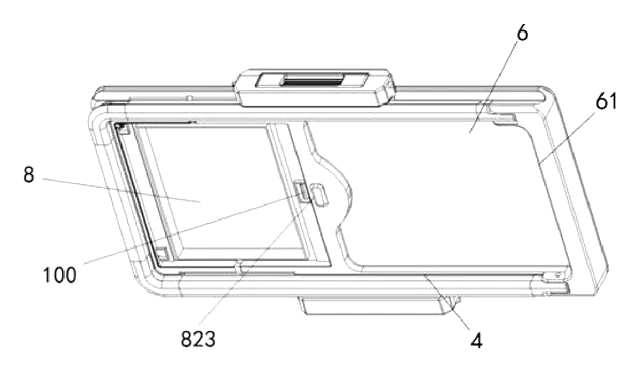
Reversible Fishing Seat-Box Lid with Backrest
Fishing seat-box lid that flips on removable hinge pins: cushion, backrest and storage on one face.
Patent CN208624426U
Sports & Recreation
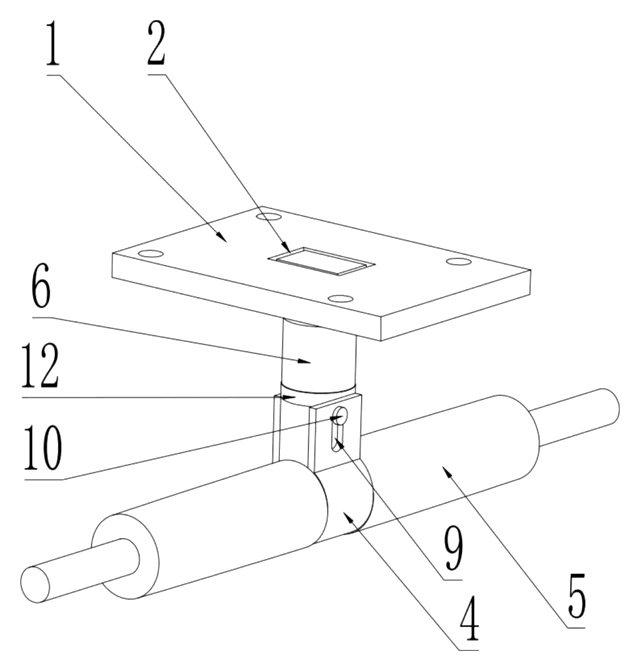
Swivel-Pin Skateboard Truck with Rubber Sleeve
Skateboard truck with a turning center pin, a tilting axle clamp and a rubber sleeve that centers it.
Patent CN216777880U
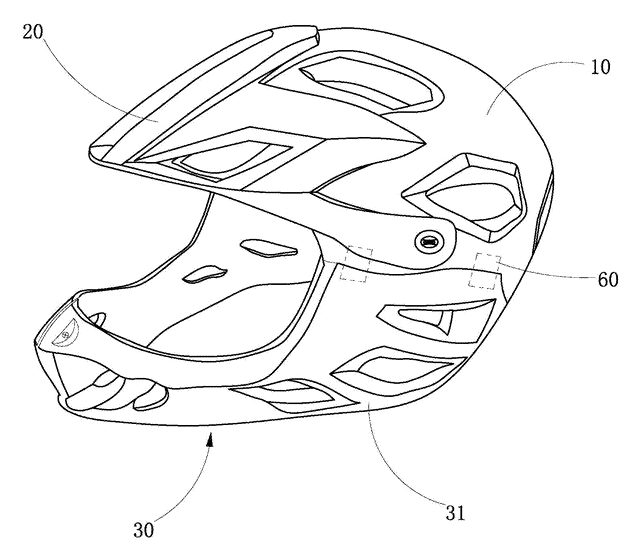
Sports & Recreation
Full-Face Bike Helmet with Magnetic Detachable Chin Bar
Full-face cycling helmet whose chin bar clips on and off with magnetic, latching side connectors.
Patent CN206630067U
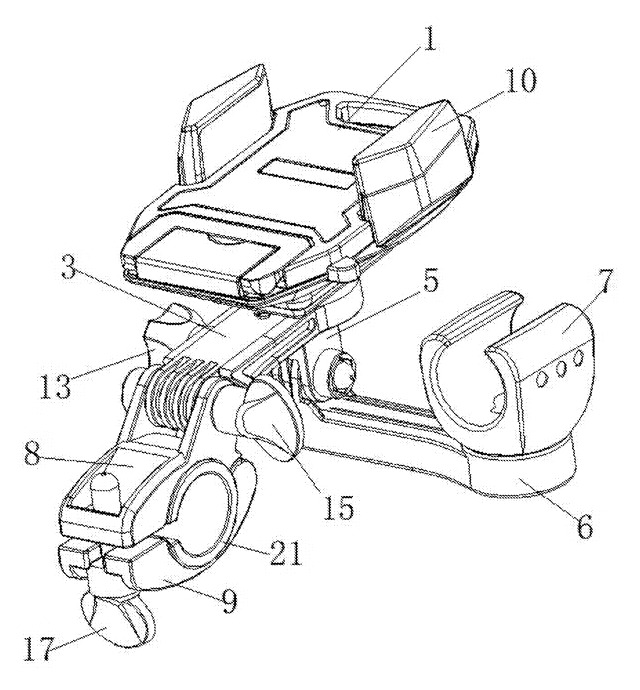
Sports & Recreation
Bike Phone Holder with Built-In Flashlight Clamp
Handlebar mount with a phone cradle on top and a flashlight clamp below, on one arm.
Patent CN206077485U
Browse by category
- Apparel & Accessories (22)
- Baby & Kids (16)
- Bags & Luggage (9)
- Bath & Personal Care (16)
- Car Accessories (10)
- Furniture, Bedding & Storage (12)
- Garden & Outdoor (18)
- Health & Wellness (8)
- Home, Kitchen & Cleaning (24)
- Lighting (12)
- Packaging & Containers (6)
- Pet Products (6)
- Phone & Camera Accessories (4)
- Retail Display (13)
- School, Office & Art (19)
- Sports & Recreation (25)
- Tools & Workshop (27)
- Toys & Games (12)
This page is based on the public patent document CN114699724B, assigned to Jilin Agricultural Science and Technology University. IP2M is an independent manufacturing service and is not affiliated with, endorsed by or licensed by the patent owner. Images marked as concept renderings are illustrations, not photos of an existing product. Patent status information is provided for reference only and is not legal advice; confirm freedom to operate for your market before production. Full disclaimer.