At a glance
| Patent number | CN114699724B (application CN202210556317) |
| Type | China invention patent (发明专利) - protects product shape, structure and method |
| Original title | Dorsum muscle trainer for physical training (一种体育训练用背肌训练器) |
| Patent owner | Jilin Agricultural Science and Technology University |
| Inventors | Yang Ailin |
| Filing date | 2022-05-20 |
| Grant date | 2023-04-25 |
| Status (China) | Lapsed - terminated for non-payment of annual fees (recorded 2026-05-22) |
| Patent family | Chinese filings only - no US, European, Japanese, PCT or other filings listed |
| Cited by | 0 later documents |
| Source | Google Patents (search for CN114699724B) |
What the claims cover, in plain language
Claim 1 - a dorsum muscle trainer comprising a base (1) with a shelf (3) on its rear upper side and a horizontal pole (4) on its upper end. Vertical rods (2) fix the horizontal pole, each having a lifting groove (7) containing a rotating screw rod (8). Pull rings (5) are on both sides of the horizontal pole. Inside the shelf is a stand (6). A slide groove (9) is on the upper end of the base, which also holds a long board (10) with a bandage (11). Push blocks (13) on the long board’s sides connect via threaded rods (14) to screws (12) on the base. The shelf contains lugs (19) connected to a counterweight (19), moving inside a rack system with gears and sliders guided by the slide groove.
Claim 2 - the vertical rod is fixed to the base; the long board connects via clamping; the threaded rod connects the push block to the base. Claim 3 - the stay cord connects to the counterweight; the swivel nut meshes with the screw rod and connects to a connecting block. Claim 4 - a round rod connects to the long board via clamping, holding a pull block. Claim 5 - the lug connects to the shelf via clamping, fixing the counterweight. Claim 6 - a second limiting block connects to the vertical rod via clamping. Claim 7 - a rack meshes with a gear.
This is a simplified reading for orientation only. The legal scope is defined by the exact claim wording in the official Chinese document.
What this means for US production
This patent was filed only in China and is currently lapsed due to non-payment of annual fees, so it no longer restricts anyone in China either. It has no US or other foreign counterpart.
Two points to settle early:
- Other patents may exist. Strength training equipment with cable-and-weight mechanisms is a broad field with many active US patents covering resistance paths, safety catches and feedback systems, so a freedom-to-operate (FTO) review of the tilting counterweight and groove-catching mechanism is needed before tooling.
- Weight stack dimensions. The size of the counterweight, the depth of the slide groove and the profile of the bumps must be calculated together so the tilt engages reliably at the intended force differential; these tolerances are set in design and confirmed on prototypes.
Customization and manufacturing
What can be customized
| Area | Options |
|---|---|
| Frame size | Overall footprint and height of the vertical rods to suit different user sizes |
| Counterweight mass | Total weight and individual plate increments to be confirmed in design |
| Upholstery | Padding thickness and vinyl grade for the long board and bandage |
| Finish | Powder coating colors, anti-corrosion treatments for the base and shelf |
| Groove geometry | Profile of the slide groove and bump shape to adjust sensitivity of the tilt catch |
| Pull handles | Ring diameter, grip material or substitution with standard D-handles |
Things to plan for (US market)
- ASTM F3021 - standard specification for consumer safety of home-use exercise equipment, covering stability and pinch points.
- EN ISO 20957 / ASTM F3120 - standards for stationary training equipment used in commercial settings, addressing structural integrity and entrapment hazards.
- California Prop 65 - powder coat powders, vinyl upholstery and plated hardware require screening for listed substances.
- CPSC general requirements - sharp edges, pinch points in the lifting grooves and moving counterweight must be guarded or labeled.
How a project runs
- Inquiry - target user size, weight range, frame finish and quantity.
- Design - engineering the base, shelf, groove profiles, counterweight bumps and linkage geometry.
- Prototype - fabricating a sample frame to test the tilt-and-catch sensitivity under varying pull imbalances.
- Pilot run - cycle testing the ropes, verifying weld strength and checking the bandage securing mechanism.
- Production - tube cutting, welding, machining the grooves, powder coating, assembling the weight stack and rigging the pull ropes.
Quantities & timeline
The frame requires steel tube cutting, welding fixtures and machining for the lifting grooves and slide grooves. The counterweight needs casting or plate stacking with machined side bumps. Powder coating follows metal fabrication. Assembly includes rigging the stay cords and fitting the bandage. Tooling for the specific groove-and-bump geometry takes the most initial setup time. Send us your target user size, weight range, frame finish, estimated quantity and timeline and we will reply with options.
Patent drawings
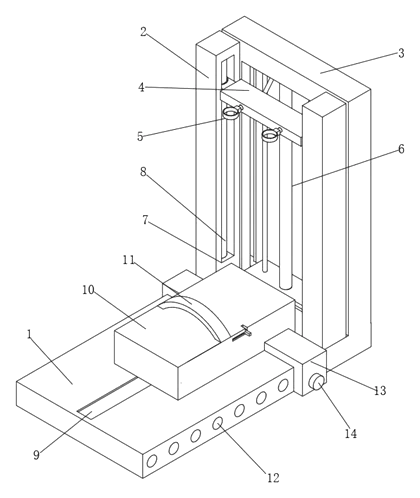
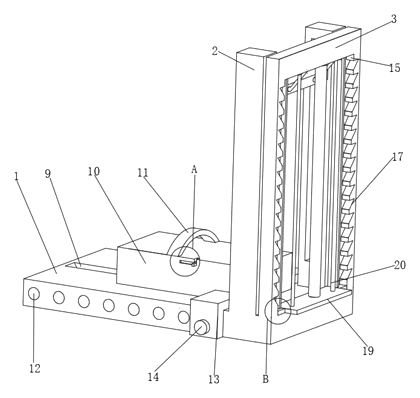
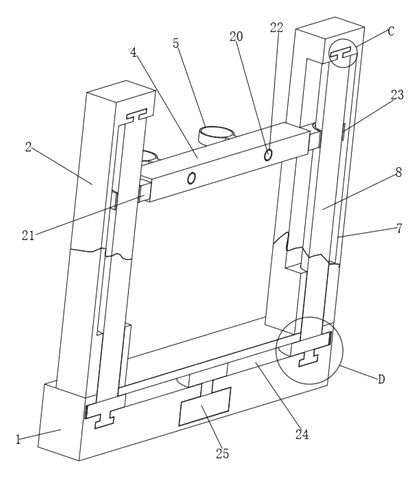
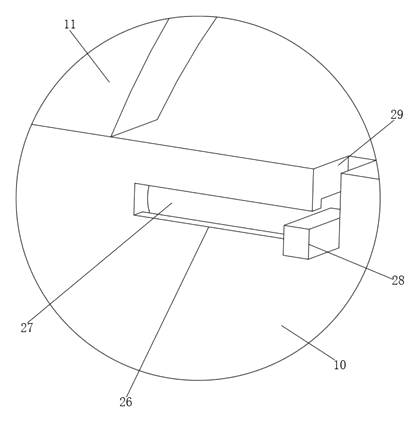
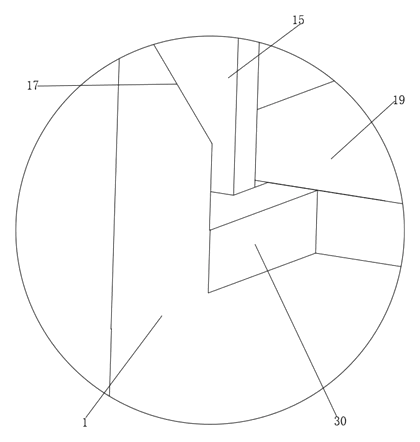
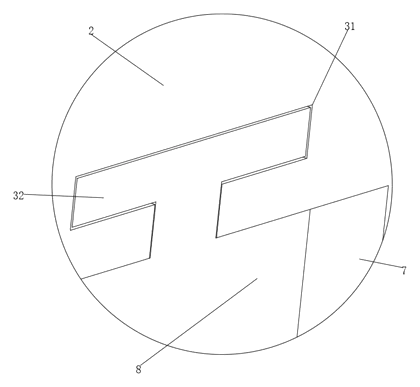
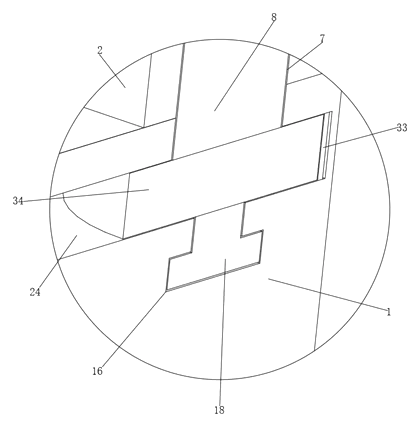
Drawings reproduced from the public patent document for reference.