
Patent CN114701411B
Updated November 2, 2026Triangular Belt Connecting Hook for Child Safety Seats
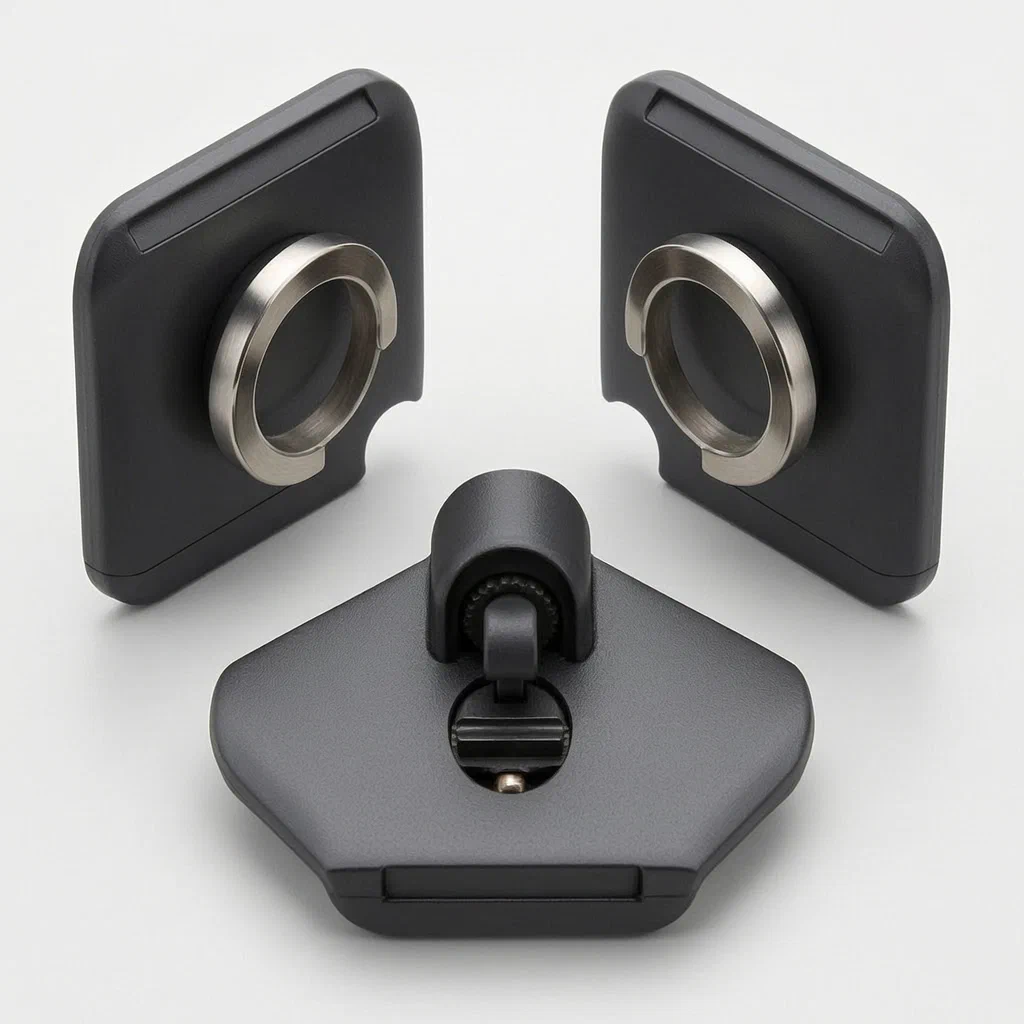
Standard belt hooks often rely on single-point latches that can be fiddly or prone to accidental release. This design uses a triangular arrangement of three hook units, each containing dual arc-shaped lock tongues. A central gear drives the inner and outer tongues to rotate in opposite directions. When the three units are snapped together, their tongues align to form two continuous rings. Activating the drive mechanism rotates these rings by a small angle, causing the tongues to overlap and lock the units securely. This creates a robust, multi-point connection for child safety seat harnesses.
- China invention patent - active
- No filings outside China
- Child safety seat components
- Mechanical interlocking via gears and arc-tongues
Splat! What let you down?
🔺
Triangular Assembly
Three independent hook units snap together to form a stable triangular connection point.
⚙️
Opposing Arc Locks
Coaxial inner and outer tongues rotate in opposite directions to interlock securely.
🔄
Gear-Driven Mechanism
A central gear translates simple rotation into the precise locking motion of the rings.
🛡️
Multi-Point Security
The design distributes load across three units, reducing stress on individual latch points.
Bring this product to market
- ✓ Patent vetted China-only family and legal status checked
- 2 Product brief · now How it works, uses and options written up
- 3 Prototype First samples for buyers to review
- 4 Pilot run Small first batch for launch customers
- 5 Volume production Repeat orders at scale
Buyer interest
– of 100 buyers needed to start prototyping
One click, no sign-up. Each vote is one real visitor, and products with the most interest go to prototyping first.
Build team: no members yet. Need a partner, co-funding or skills to build this? Join and we introduce the team once it forms.
The problem
Child safety seats require reliable belt connections to keep harnesses secure during travel. Traditional single-hook designs often suffer from accidental disengagement if the latch is not fully closed or if vibration loosens the mechanism over time. Additionally, connecting multiple belt straps can lead to tangling or uneven load distribution, where one strap bears more tension than others, potentially compromising the structural integrity of the restraint system. Manufacturers need a solution that ensures positive mechanical locking without relying solely on friction or simple spring-loaded clips, while also allowing for easy assembly and disassembly by caregivers.
The solution
- Three Hook Units: The device consists of three identical hook units (1). Each unit has a shell (1.1) containing two coaxial, arc-shaped lock tongues: an inner tongue (1.2) and an outer tongue (1.3).
- Gear Interaction: A gear (1.4) is rotatably mounted in the shell. It meshes simultaneously with gear teeth on the facing surfaces of both the inner and outer tongues. Rotating the gear causes the two tongues to move in opposite directions.
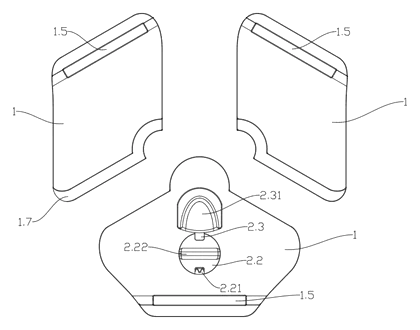
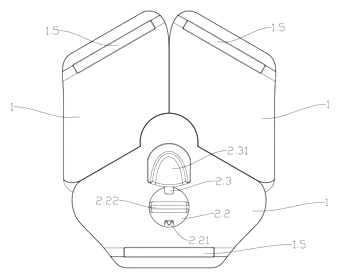
- Pre-Connection: The three units are designed to connect together before locking. They use snap-fit grooves (1.6) and protrusions (1.7) or magnetic attraction parts to hold them in a triangular configuration.
- Ring Formation: When pre-connected, the three inner tongues align to form a complete first circular ring, and the three outer tongues align to form a complete second circular ring.
- Locking Action: A driving mechanism (2) activates the gear in any one of the units. This rotates both rings by a preset angle (typically 10-30 degrees) in opposite directions. Because the tongues are curved and overlapping, this rotation causes them to interlock pairwise, preventing the units from separating.
Who it is for
- Child Safety Seat Manufacturers looking for specialized internal hardware to differentiate their products from standard buckle systems.
- Automotive Interior Suppliers who provide custom restraint solutions for OEM vehicle platforms.
- Aftermarket Accessory Brands creating add-on harness connectors for strollers or specialized seating.
- Industrial Designers seeking compact, mechanically locked connection points for safety-critical applications.
How it works
The main parts
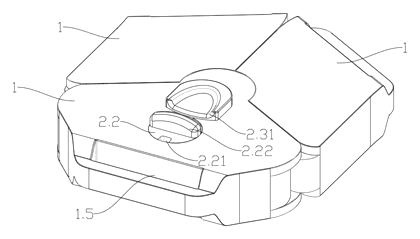
| No. | Part | What it does |
|---|---|---|
| 1 | Hook Unit | The primary housing component; there are three per assembly. |
| 1.1 | Shell | Holds the moving parts and provides mounting points. |
| 1.2 | First Arc Tongue | Inner locking element; forms part of the inner ring. |
| 1.3 | Second Arc Tongue | Outer locking element; forms part of the outer ring. |
| 1.4 | Gear | Central drive wheel that meshes with both tongues. |
| 1.5 | Connecting Groove | Slot where the safety belt strap attaches. |
| 1.6, 1.7 | Snap-Fit Elements | Grooves and protrusions that hold the three units together initially. |
| 2 | Driving Mechanism | System (spring/cam/rope) that rotates the gear to lock the tongues. |
Operating Steps
- Assembly: Snap the three hook units together using the side grooves and protrusions. The belt straps are threaded into the connecting grooves (1.5).
- Alignment: In the unlocked state, the arc tongues are retracted within the shells. The units sit adjacent to each other.
- Activation: Engage the driving mechanism (2). This could be a pull cord, a push button, or a lever depending on the specific implementation variant described in the claims.
- Rotation: The mechanism rotates the gear (1.4). The gear teeth drive the inner tongue (1.2) clockwise and the outer tongue (1.3) counter-clockwise (or vice versa).
- Interlocking: As the tongues rotate out of the shell by the preset angle, they slide past each other’s ends. The curvature ensures that once rotated, the tongues physically block the separation of the units. To unlock, the process is reversed, returning the tongues to the recessed position.
Applications
Infant Car Seat Harnesses
This hook assembly serves as a central junction for five-point harness systems. By grouping the shoulder and crotch straps into a single, rigid triangular node, it prevents strap twisting and ensures that crash forces are distributed evenly across the seat structure rather than pulling on individual anchor points.
Toddler Booster Integration
For convertible seats, the hook can act as a quick-release connector for booster mode adjustments. Caregivers can attach or detach the harness assembly with a single action, simplifying the transition between car seat modes while maintaining a high level of security against accidental opening by children.
Stroller and Travel Systems
Adapted for lightweight materials, the mechanism can be used in premium strollers to secure baby carriers or infant inserts to the frame. The compact size allows for sleeker designs compared to bulky plastic buckles, appealing to brands focused on aesthetics and ease of cleaning.
Specialized Medical Transport Seating
While not a medical device itself, the robust locking nature makes it suitable for transport chairs or hospital gurney restraints where patient security is paramount. The ability to visually confirm the locked state through the tongue positions adds a layer of safety protocol compliance.
Where it is less suitable
- High-Vibration Industrial Environments: Without additional damping, the mechanical springs might fatigue faster than solid-state electronic locks in extreme conditions.
- Single-Strap Applications: The design inherently requires three connection points; it is over-engineered for simple two-point lap belts.
- Cost-Sensitive Budget Models: The complexity of the gear and triple-shell molding increases part count and tooling costs compared to standard injection-molded buckles.
Frequently asked questions
How does this hook lock?
It uses a mechanical interference principle. Three units snap together to form a triangle. Inside each unit, two curved “tongues” are driven by a central gear. When activated, the gear rotates the inner and outer tongues in opposite directions. This rotation slides the tongues so they overlap and block the units from separating, creating a rigid, locked assembly.
Is it difficult for parents to use?
No. The design aims for simplicity. The units usually click together magnetically or via snap-fits. A single action—such as pulling a cord or pushing a button—engages the locking mechanism. Unlocking typically involves reversing that action, which returns the tongues to a recessed position, allowing the units to separate easily.
Can it handle crash forces?
The patent describes the mechanical structure, but performance depends on materials and manufacturing quality. For use in child seats, the hook must be made from high-strength polymers or metals and must pass dynamic crash tests required by regulations like FMVSS 213. The triangular distribution helps spread load across three connection points rather than concentrating stress on one.
What materials are used?
Typical implementations use glass-filled nylon (PA6+GF30) or acetal (POM) for the shells and tongues due to their wear resistance and strength. Gears may be molded plastic or machined metal. The specific material choice affects cost, weight, and durability, and should be confirmed in the final design phase.
Why three units instead of one big buckle?
A three-unit modular design offers flexibility. It allows for different harness configurations (e.g., 5-point vs. 3-point) and can be scaled for different seat sizes. It also reduces the risk of total failure; if one latch point were compromised in a traditional buckle, the whole system fails. Here, the interlocking geometry provides redundancy.
Does it work with all belt types?
The connecting grooves are designed to accept standard safety webbing. The width of the groove can be customized to match common belt widths (e.g., 2 inches or 3 inches). It is not intended for round cords or non-standard fasteners unless specifically modified.
Can this design be made and sold in the US?
Yes. The patent CN114701411B is filed only in China and has no US counterpart. Therefore, this specific patent does not restrict manufacturing or sales in the United States. However, you must ensure your product complies with US safety regulations (FMVSS 213) and conduct a freedom-to-operate search to check for other relevant US patents in the child safety hardware field.
Are you affiliated with the patent owner?
No. IP2M is an independent design and manufacturing service working from the public patent document. We do not represent Anhui Hongbei Intelligent Technology Co ltd.
Request a quote
Click Request a Quote below to see our email address - copy it, or open your email app with a ready-made message. Please mention patent CN114701411B in the subject.
Helpful details to include:
- Your company and channel (seat manufacturer, accessory brand, industrial designer)
- Target application (infant seat, booster, stroller, etc.)
- Belt width and material preferences
- Actuation style (pull cord, button, manual twist)
- Estimated quantity and target price
- Timeline - when you would like prototypes and the first shipment
You can also reach us at (332) 203-9997.
Explore this product
Interested in building this?
Tell us your target market, quantity and timeline. We reply with options for prototyping, small-batch runs or volume production.
Send your inquiry to
Please put CN114701411B in the subject line and tell us your company, country, estimated quantity and timeline.
Prefer to talk? Call (332) 203-9997.
More product-ready patents
All Car Accessories patents →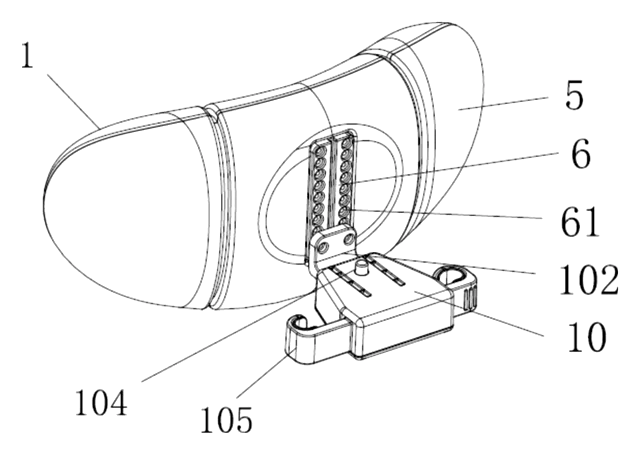
Car Accessories
Car Headrest Pillow with Ratchet Side Wings and Push-Button Reach
Post-mounted car headrest pillow with ratchet side wings and a push-button forward adjustment.
Patent CN212195197U
Car Accessories
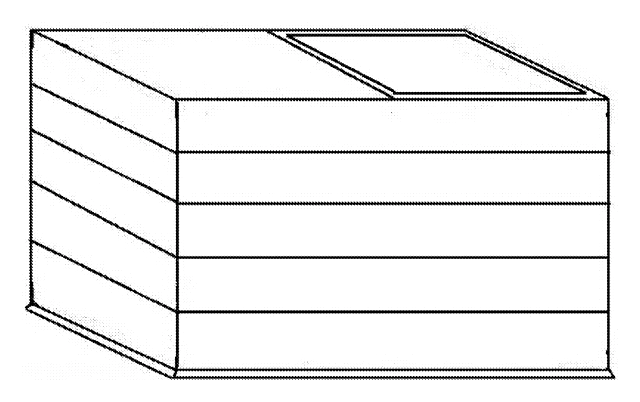
Hard-Shell Rooftop Tent That Doubles as a Cargo Box
Roof box whose hard frames lift on gas struts into a tent with door and skylight, and fold back for luggage.
Patent CN206327275U
Car Accessories
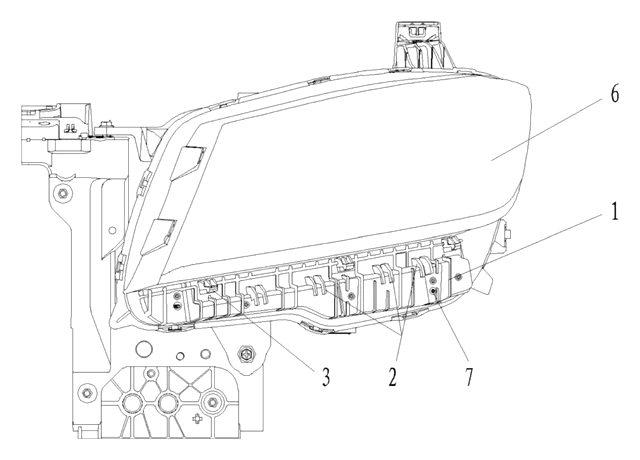
Headlamp-to-Bumper Adapter Bracket That Sets Gap and Flush in Three Directions
Molded bracket under the headlamp: support blocks and snap teeth locate the bumper flange for an even gap.
Patent CN216580316U
Car Accessories
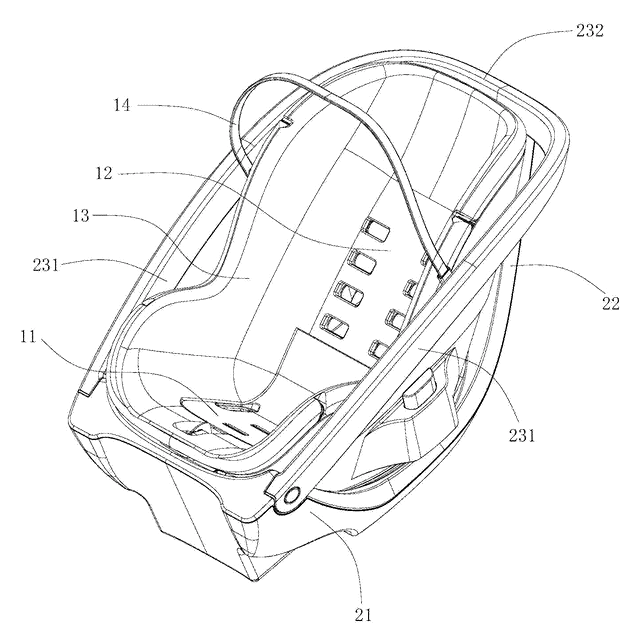
Infant Car Seat with a Load-Bearing Base That Wraps the Carrier
Infant car seat whose base has a backrest and swing-up side rails, so the carrier can be lighter.
Patent CN206383856U
Car Accessories
Retractable Side Impact Protection Block for Child Car Seats
Retractable side-impact block for child seats: springs out to provide side-impact buffering, folds flat.
Patent CN207028930U
Car Accessories
Rain-Deflecting Side Mirror with a Pivoting Air-Guide Plate
Side mirror with a top air duct and folding guide plate that directs airflow across the glass.
Patent CN207345672U
Browse by category
- Apparel & Accessories (31)
- Baby & Kids (22)
- Bags & Luggage (13)
- Bath & Personal Care (22)
- Car Accessories (17)
- Furniture, Bedding & Storage (17)
- Garden & Outdoor (25)
- Health & Wellness (10)
- Home, Kitchen & Cleaning (35)
- Lighting (16)
- Packaging & Containers (8)
- Pet Products (8)
- Phone & Camera Accessories (6)
- Retail Display (18)
- School, Office & Art (24)
- Sports & Recreation (32)
- Tools & Workshop (38)
- Toys & Games (17)
This page is based on the public patent document CN114701411B, assigned to Anhui Hongbei Intelligent Technology Co ltd. IP2M is an independent manufacturing service and is not affiliated with, endorsed by or licensed by the patent owner. Images marked as concept renderings are illustrations, not photos of an existing product. Patent status information is provided for reference only and is not legal advice; confirm freedom to operate for your market before production. Full disclaimer.