At a glance
| Patent number | CN114701411B (application CN202210263195) |
| Type | China invention patent (发明专利) - protects product shape, structure, and method |
| Original title | Protective belt connecting hook piece for child seat (一种儿童座椅用保护带连接勾件) |
| Patent owner | Anhui Hongbei Intelligent Technology Co ltd |
| Inventors | Wang Yuhao, Huang Yong, Tu Liyang |
| Filing date | 2022-03-17 |
| Grant date | 2023-06-20 |
| Status (China) | Active - In force in China until at most 2042-03-17 (if annual fees are paid) |
| Patent family | Chinese filings only - no US, European, Japanese, PCT or other filings listed |
| Cited by | 0 later documents |
| Source | Google Patents (search for CN114701411B) |
What the claims cover, in plain language
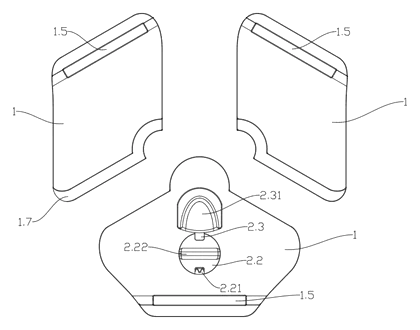
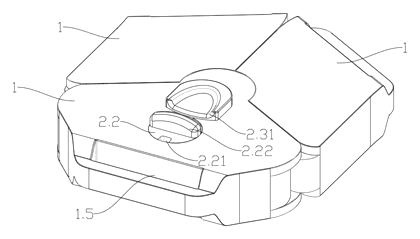
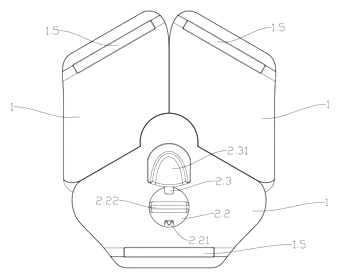
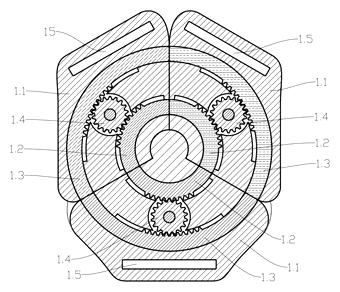
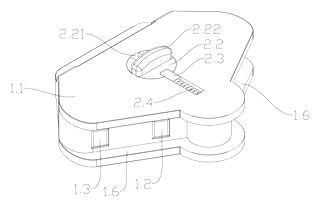
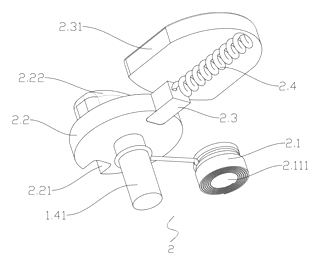
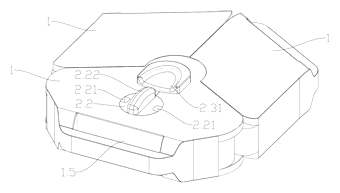
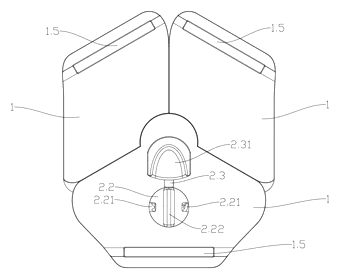
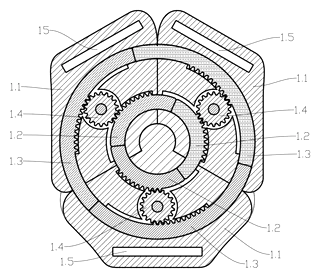
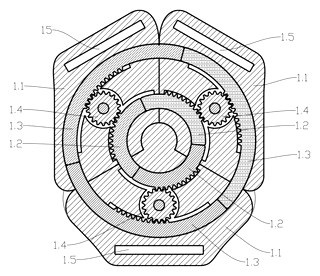
Claim 1 defines a protective belt connecting hook for a child seat comprising three hook units and a driving mechanism. Each unit has a shell, a first arc-shaped lock tongue, and a second arc-shaped lock tongue. These tongues are coaxially arranged and movable within the shell. Gear teeth on the opposing faces of the tongues mesh with a central gear. When the three units are pre-connected, the tongues form two complete circular rings. The driving mechanism rotates the gear to turn these rings by a preset angle, causing the tongues to interlock pairwise.
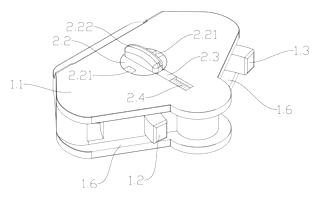
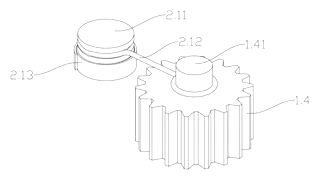
Claim 2 specifies that the shell has coaxial arc grooves guiding the movement of the tongues. Claim 3 states the pre-connection uses snap-fits and/or magnetic connections. Claim 4 includes connecting grooves for attaching the protective tape/belt. Claim 5 limits the preset rotation angle to 10-30 degrees. Claims 6-8 describe variations of the driving mechanism, including elastic units like spool-and-rope systems or cam-groove-and-slide-lever setups. Claims 9-10 describe a rotating member attached to the gear shaft to manually drive the unlocking motion.
This is a simplified reading for orientation only. The legal scope is defined by the exact claim wording in the official Chinese document.
What this means for US production
This patent was filed only in China and is currently active in that jurisdiction. Making or selling this specific mechanical configuration in China would require permission from the patent owner. However, since there are no US patents in this family, the design itself is not restricted by this specific patent document in the United States.
Two points to settle early:
- Other patents may exist. Child safety seat hardware is a densely patented field globally. Major manufacturers and safety standards bodies have extensive portfolios covering belt retention mechanisms, quick-release buckles, and harness geometries. A freedom-to-operate (FTO) review is strongly recommended to ensure your specific implementation does not infringe on existing US or international patents unrelated to CN114701411B.
- Safety Standards Compliance. Regardless of patent status, any component used in a child restraint system must meet rigorous federal safety standards. The mechanical design must pass dynamic crash tests and durability requirements mandated by FMVSS 213.
Customization and manufacturing
What can be customized
| Area | Options |
|---|---|
| Material | High-strength engineering plastics (PA6+GF30), POM, or metal alloys for gears/tongues. |
| Drive Type | Pull-cord release, push-button actuation, or manual twist-lock variants based on Claims 6-9. |
| Connection Method | Magnetic snap-fit vs. mechanical clip-in for the initial triangular assembly. |
| Color & Finish | Matte black, white, or custom brand colors; UV-resistant additives for automotive interiors. |
| Belt Width | Groove dimensions adjusted for 2-inch, 3-inch, or custom webbing widths. |
| Size | Scaled down for lighter duty (strollers) or reinforced for heavy-duty commercial seats. |
Things to plan for (US market)
- FMVSS 213 - Federal Motor Vehicle Safety Standard for Child Restraint Systems. Components must not compromise the seat’s certification.
- ASTM F2670 - Standard Practice for Qualification of Child Restraints for Use in Airplanes (if applicable).
- California Prop 65 - Screening of plasticizers and colorants used in the shell and tongues.
- REACH / RoHS - While primarily EU-focused, many US buyers request compliance documentation for chemical substances in electronics or plastics.
How a project runs
- Inquiry - Define belt width, load requirements, and preferred actuation method.
- Design - Finalize gear ratios, tongue curvature, and shell geometry for moldability.
- Prototype - 3D printed or soft-tool samples for fit-check and basic torque testing.
- Validation - Cycle life testing (open/close thousands of times) and static load verification.
- Production - Injection molding of shells and tongues, gear machining/molding, assembly line integration.
Quantities & timeline
Precision molds are required for the arc-shaped tongues and gear teeth to ensure smooth rotation without binding. Tooling lead time typically ranges from 8-12 weeks depending on complexity. Certification testing for child safety components can add significant time to the launch schedule. Send us your target belt width, material preference, actuation style, estimated quantity and target price and we will reply with options.
Patent drawings
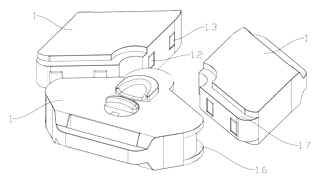
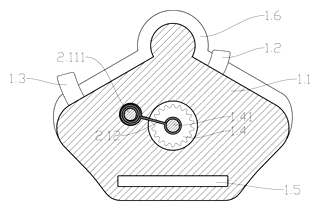
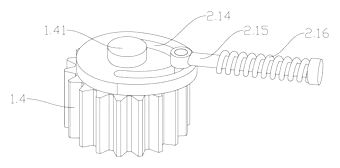
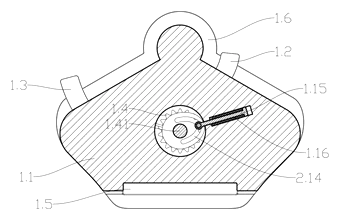
Drawings reproduced from the public patent document for reference.