
Patent CN114731996B
Updated October 30, 2026Electric Garden Insect Trap with Attractant Dispenser and Auto-Cleaning Cylinder
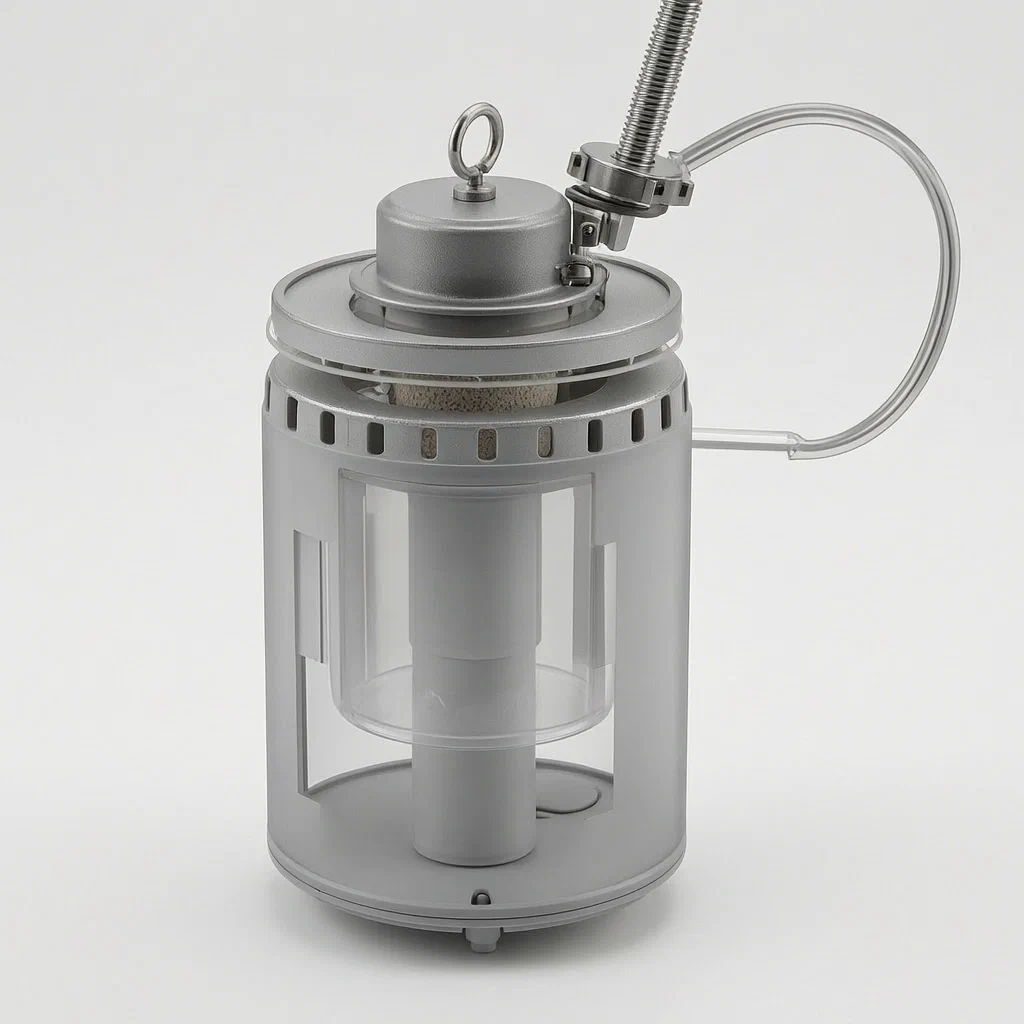
Standard insect traps require frequent manual emptying and rely on a single lure method. This garden insect trap combines an attractant storage tank with an electric lifting mechanism to automate collection and disposal. An annular seat at the top of the housing features evenly distributed insect inlet holes. Below it, a conical guide sleeve narrows into a guide pipe that directs trapped insects into a sliding insect storage cylinder. A gas guide pipe connects the attractant tank to an isolation sleeve fitted with a microporous ceramic membrane, releasing scent steadily through the inlet holes. When the storage cylinder fills, a motor turns a screw rod to lower the cylinder until its side discharge notches align with the open bottom of the connecting cylinder, letting dead insects drop out. The bottom surface of the storage cylinder is shaped as a cone with a high middle part and low edges to direct debris outward. Optional trap lamps sit in cavities on the housing wall, and detachable support rods with ground pins allow the unit to stand independently or hang from a tree trunk via a lifting ring on the end cover.
- China invention patent - in force
- No filings outside China
- Garden & outdoor pest control
- Motorized lifting, attractant diffusion, trap lamps
Splat! What let you down?
⚙️
Electric lifting mechanism
A motor and screw rod raise and lower the insect storage cylinder to align discharge notches for clearing.
💨
Attractant diffusion
A storage tank feeds scent through a gas pipe to a microporous ceramic membrane inside the isolation sleeve.
🔦
Optional trap lamps
Cavities in the housing hold trap lamps behind light-transmitting plates to draw insects at night.
🌲
Flexible mounting
Hangs from a tree trunk via a lifting ring or stands on detachable support rods with ground pins.
Bring this product to market
- ✓ Patent vetted China-only family and legal status checked
- 2 Product brief · now How it works, uses and options written up
- 3 Prototype First samples for buyers to review
- 4 Pilot run Small first batch for launch customers
- 5 Volume production Repeat orders at scale
Buyer interest
– of 100 buyers needed to start prototyping
One click, no sign-up. Each vote is one real visitor, and products with the most interest go to prototyping first.
Build team: no members yet. Need a partner, co-funding or skills to build this? Join and we introduce the team once it forms.
The problem
Outdoor pest management in parks, gardens, and orchards relies heavily on traps that catch insects but require constant manual attention. Maintenance crews must climb ladders or reach into devices to remove dead insects, which interrupts operations and exposes workers to decomposing material. Many traps also depend on a single lure method, such as light alone or a static chemical pad, limiting their effectiveness across different times of day or target species. Without a way to clear the collection chamber mechanically, traps fill up quickly, blocking entry points and reducing capture rates.
The solution
This device addresses these issues by combining an attractant delivery system with a motorized clearing mechanism inside a sealed housing.
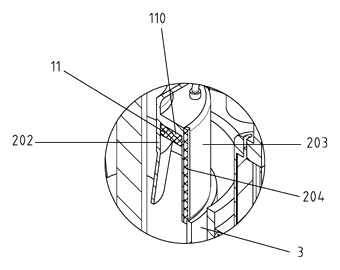
- Attractant delivery: A pesticide storage tank holds an insect attractant. A gas guide pipe routes the vapor to an annular microporous ceramic membrane seated in an annular groove inside an isolation sleeve. The scent exits uniformly through insect inlet holes arranged around the circumferential surface of an annular seat at the top of the housing.
- Guided entry: A conical guide sleeve extends downward from the inner diameter of the annular seat, narrowing into a guide pipe that reaches into the insect storage cylinder. Insects drawn by the scent or optional trap lamps pass through the inlet holes and slide down the conical path into the cylinder.
- Automated clearing: An electric lifting mechanism, consisting of a motor and a screw rod connected by a coupler, drives the insect storage cylinder up and down. The cylinder slides on the outer side of the isolation sleeve. Damping strips fixed on the isolation sleeve provide friction greater than the threaded connection between the screw rod and the cylinder’s central hole, ensuring controlled movement.
- Discharge: The side surface of the insect storage cylinder has multiple insect discharging notches. When the motor lowers the cylinder to its limit position—stopped by a limiting block on the screw rod hitting a plug in the central hole—the notches align with a connecting cylinder at the center of the housing’s bottom surface. The bottom surface of the storage cylinder is a conical surface with a high middle part and a low edge, directing dead insects out through the notches and the open bottom of the connecting cylinder.
Who it is for
- Municipal park departments maintaining public green spaces who need to reduce the labor hours spent manually emptying static traps across large areas.
- Commercial orchard and nursery operators managing crop pests who benefit from a device that can run continuously without daily intervention.
- Landscape maintenance contractors offering pest control services to residential or commercial properties who require durable, mountable equipment.
- Pest control product brands looking to add an automated, dual-lure outdoor trap to their catalog for B2B distribution.
How it works
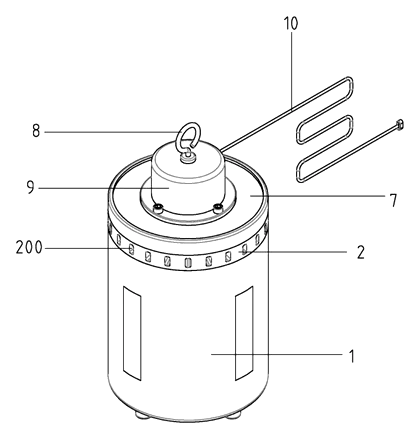
The main parts
| No. | Part | What it does |
|---|---|---|
| 1 | Housing | Main shell enclosing the internal components. |
| 2 | Annular seat | Sits at the upper end of the housing; contains the insect inlet holes (200). |
| 3 | Insect storage cylinder | Slides vertically to collect insects; features discharge notches (300) and a conical bottom. |
| 4 | Pesticide storage tank | Annular tank holding the insect attractant, secured by limiting grooves (400) against limiting ribs (101). |
| 5 | Gas guide pipe | Connects the storage tank to the isolation sleeve. |
| 6 | Electric lifting mechanism | Motor (60), screw rod (61), and coupler (62) driving the storage cylinder. |
| 7 | End cover | Closes the top of the annular seat. |
| 8 | Lifting ring | Attached to the end cover or protective cover (9) for hanging. |
| 11 | Microporous ceramic membrane | Annular membrane inside the isolation sleeve (203) for scent diffusion. |
| 12 | Trap lamp | Optional light source housed in a cavity (102) behind a light-transmitting plate (13). |
| 14 | Support rods | Detachable legs threaded into connecting seats (103), ending in ground pins (140). |
| 201 | Conical guide sleeve | Directs insects from the annular seat downward. |
| 202 | Guide pipe | Extends from the conical guide sleeve into the storage cylinder. |
| 203 | Isolation sleeve | Surrounds the guide pipe; carries damping strips (204). |
| 301 | Connecting column | Center post of the storage cylinder containing the central hole (302) and threaded hole. |
Operating steps
- Deployment: The unit is hung from a tree trunk via the lifting ring (8) or placed on the ground using the support rods (14) and pins (140). Power is supplied via the power cord (10).
- Luring: The attractant in the pesticide storage tank (4) volatilizes. Vapor travels through the gas guide pipe (5) to the annular groove (110) of the microporous ceramic membrane (11), diffusing out through the insect inlet holes (200). If equipped, trap lamps (12) illuminate through the light-transmitting plates (13).
- Trapping: Insects enter the holes (200), slide down the conical guide sleeve (201) and guide pipe (202), and fall into the insect storage cylinder (3).
- Clearing: The motor (60) turns the screw rod (61). Because the friction between the isolation sleeve (203) and the storage cylinder (3) exceeds the thread friction, the cylinder moves downward. The limiting block (610) meets the plug (303) at the lowest point. The discharge notches (300) align with the connecting cylinder (100), and the conical bottom pushes dead insects out.
- Reset: The motor reverses, raising the storage cylinder back into the housing (1) to resume collection.
Applications
Public parks and botanical gardens
Park maintenance teams manage large areas where manual trap checking consumes significant time. This device hangs from trees or stands on paths, automating the clearing process so staff only need to refill the attractant tank periodically rather than emptying dead insects daily.
Commercial fruit orchards
Orchard operators target specific pests during growing seasons. By selecting an appropriate attractant for the target species, the trap operates continuously among the rows. The automated discharge prevents the collection chamber from overflowing during peak insect activity periods.
Plant nurseries and greenhouses
Nurseries require strict pest control to protect young stock. The combination of scent lures and optional trap lamps provides coverage both day and night. The sealed housing and guided entry prevent trapped insects from escaping back into the growing area.
Golf courses and resorts
Groundskeepers need pest control that does not disrupt visitors. The device can be mounted discreetly on trees along fairways or perimeter fences. The electric clearing cycle runs quietly, avoiding the visual disruption of maintenance crews constantly servicing standard traps.
Where it is less suitable
- Indoor home use: The device is designed for garden and outdoor environments, relying on attractants and support rods or hanging rings suited for exterior settings.
- Areas without power access: The electric lifting mechanism requires a power connection via the power cord, making it unsuitable for deep wilderness locations without electrical infrastructure.
Frequently asked questions
How does the automatic clearing work?
A motor turns a screw rod threaded into the center of the insect storage cylinder. Because the friction between the cylinder and the isolation sleeve is greater than the thread friction, the cylinder moves down instead of spinning. When it reaches the bottom limit, side notches align with the open base of the housing, and the conical bottom pushes dead insects out. The motor then reverses to lift the cylinder back up.
What kind of attractant does it use?
The patent describes a pesticide storage tank designed to hold an insect attractant, which may be mixed with an insecticide. The specific chemical is chosen by the user based on the target garden insects. The vapor travels through a gas guide pipe to a microporous ceramic membrane that diffuses the scent out through holes in the top seat.
Does it need to be plugged in?
The patent describes a power cord connected to the protective cover of the motor. For production, the power architecture can be adapted to include battery packs or solar panels depending on the deployment site, though the original design references a wired connection.
Can it be mounted in different ways?
Yes. The end cover or motor protective cover features a lifting ring for hanging the device from a tree trunk. Alternatively, the bottom of the housing has connecting seats where detachable support rods can be threaded in. These rods end in pins that anchor into the ground.
Are lights included for nighttime trapping?
The design allows for it. Cavities are formed on the housing surface where trap lamps can be installed. Each cavity is covered by a light-transmitting plate, allowing light to escape while protecting the bulb from weather and insects.
What keeps the cylinder from falling out when it lowers?
A limiting block is fixed at the lower end of the screw rod, and a plug is fixed at the lower end of the central hole in the cylinder. When the cylinder descends to its limit position, these two parts meet, stopping the travel exactly where the discharge notches align with the exit.
Can this design be made and sold in the US?
The patent was filed only in China and is currently in force there, but it has no US counterpart. Therefore, this specific Chinese patent does not restrict manufacturing or selling the device in the United States. However, other US patents may cover similar automated traps or lure mechanisms, so a freedom-to-operate review is recommended before production.
Are you affiliated with the patent owner?
No. IP2M is an independent design and manufacturing service working from the public patent document.
Request a quote
Click Request a Quote below to see our email address - copy it, or open your email app with a ready-made message. Please mention patent CN114731996B in the subject.
Helpful details to include:
- Your company and channel (municipal buyer, pest control brand, landscape contractor, agricultural distributor)
- Target environment (orchard, public park, greenhouse, resort)
- Power preference (AC cord, battery, solar)
- Attractant strategy (scent only, light only, or both)
- Estimated quantity and target price
- Timeline - when you would like prototypes and the first shipment
You can also reach us at (332) 203-9997.
Explore this product
Interested in building this?
Tell us your target market, quantity and timeline. We reply with options for prototyping, small-batch runs or volume production.
Send your inquiry to
Please put CN114731996B in the subject line and tell us your company, country, estimated quantity and timeline.
Prefer to talk? Call (332) 203-9997.
More product-ready patents
All Garden & Outdoor patents →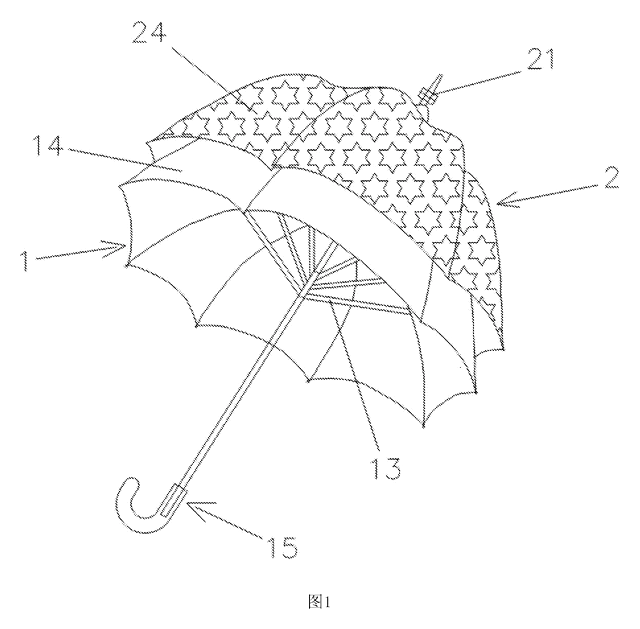
Garden & Outdoor
2-in-1 Parent & Child Umbrella
Full-size umbrella with a nested smaller umbrella on top - a rotating decorative layer that detaches into a kid-size umbrella.
Patent CN205611962U
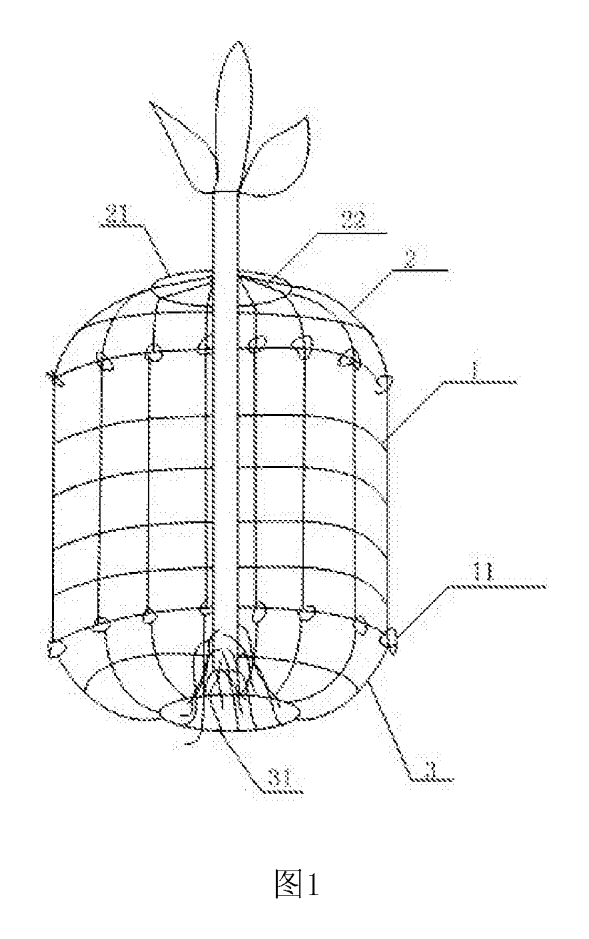
Garden & Outdoor
Wire-Mesh Tree Root & Trunk Guard Against Rodents
Three-part wire-mesh guard that protects the roots and lower trunk of young trees from burrowing and gnawing animals.
Patent CN206808261U
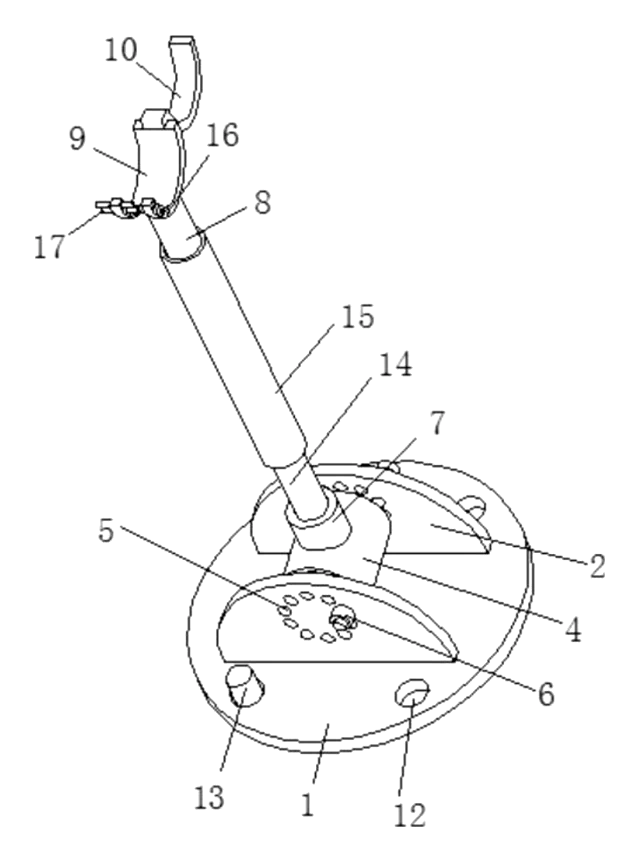
Garden & Outdoor
Adjustable-Angle Tree Support Prop
Tree prop with a pinned base, angle-locking hinge, twist-adjust tube and a locking trunk ring.
Patent CN208370491U
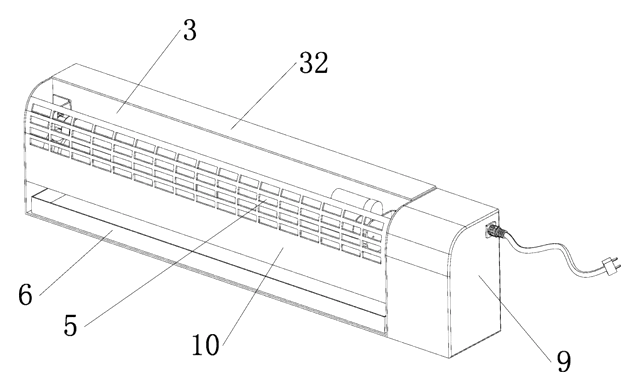
Garden & Outdoor
Self-Renewing Glue-Roller Mosquito Trap
UV insect trap with a glue roller that re-coats itself and scrapes the catch into a tray - no glue boards.
Patent CN217038569U
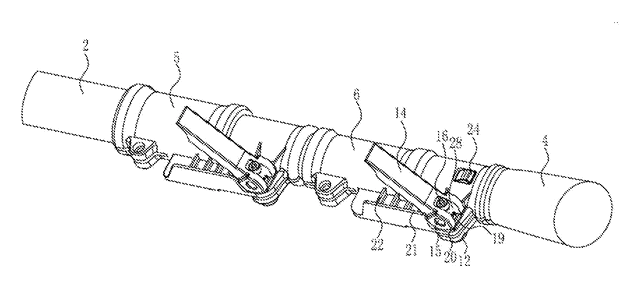
Garden & Outdoor
Cam-Lock Telescopic Pole for Garden Power Tools
Telescopic pole for garden power tools with cam-lever locks and a spring-button, tear-drop head socket.
Patent CN205812889U
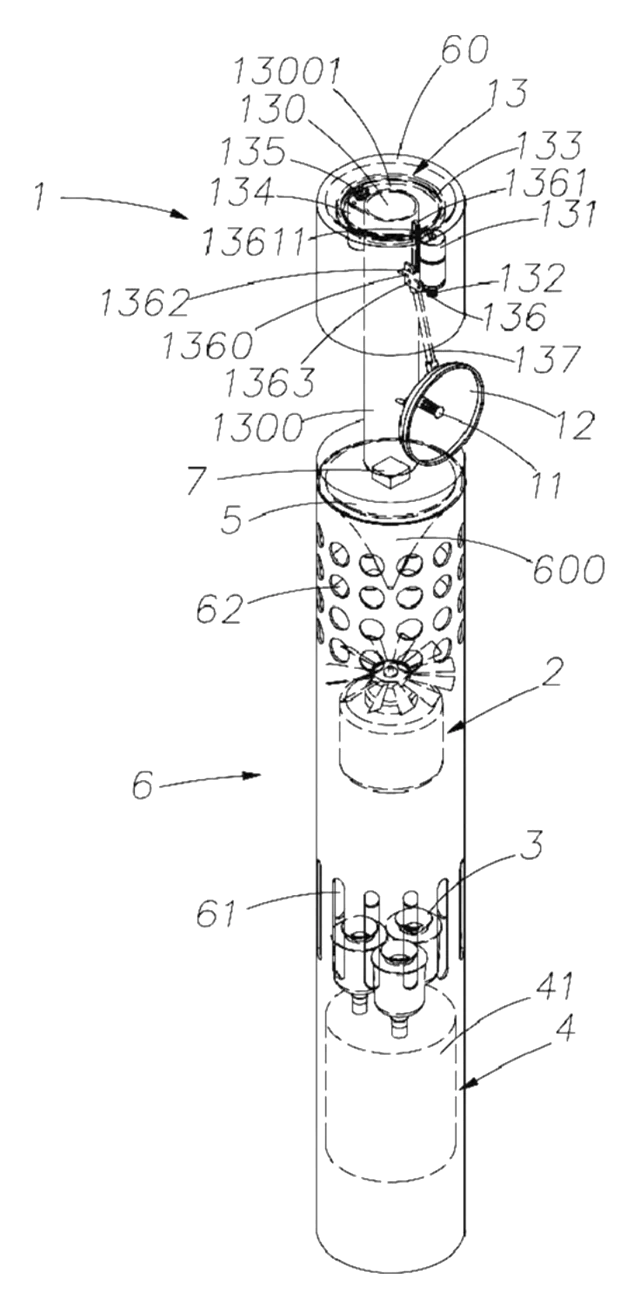
Garden & Outdoor
Mosquito Fan That Listens for Mosquitoes Before It Sprays
Fan with a scanning microphone dish that mists repellent only when it hears mosquitoes.
Patent CN208708542U
Browse by category
- Apparel & Accessories (22)
- Baby & Kids (16)
- Bags & Luggage (9)
- Bath & Personal Care (16)
- Car Accessories (10)
- Furniture, Bedding & Storage (12)
- Garden & Outdoor (18)
- Health & Wellness (8)
- Home, Kitchen & Cleaning (24)
- Lighting (12)
- Packaging & Containers (6)
- Pet Products (6)
- Phone & Camera Accessories (4)
- Retail Display (13)
- School, Office & Art (19)
- Sports & Recreation (25)
- Tools & Workshop (27)
- Toys & Games (12)
This page is based on the public patent document CN114731996B, assigned to Hangzhou West Lake Water Area Management Office. IP2M is an independent manufacturing service and is not affiliated with, endorsed by or licensed by the patent owner. Images marked as concept renderings are illustrations, not photos of an existing product. Patent status information is provided for reference only and is not legal advice; confirm freedom to operate for your market before production. Full disclaimer.