
Patent CN114869025B
Updated October 31, 2026Automobile Safety Belt Lock Tongue with Self-Locking Slider
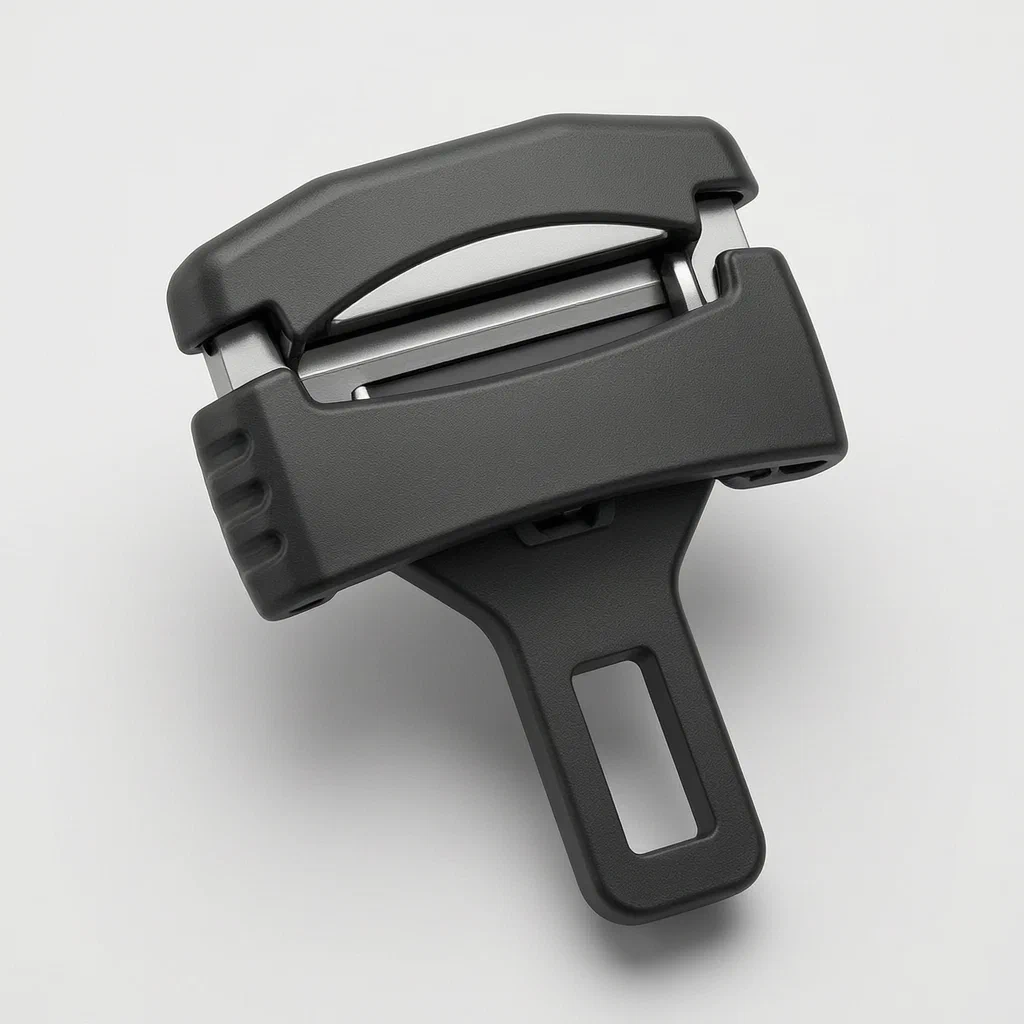
Standard seat belt tongues rely on friction alone, which can allow webbing slip under extreme load. This design adds a self-locking slide block to the tongue body. The block sits between the holding part and an engagement surface. As tension increases in the webbing, the force pushes the slide block along the body toward the holding part. A stop block guides the webbing back through a narrowing gap. Once the gap closes, interlocking structures mesh the webbing firmly against the holding part, enhancing restraint security during high-impact events.
- China invention patent - active
- No filings outside China
- Automotive restraint systems
- Self-locking slider mechanism
Splat! What let you down?
🔒
Self-locking action
Tension in the webbing drives the slider to engage and secure the belt.
⚙️
Interlocking surfaces
Tooth-like and honeycomb structures mesh to hold the webbing firmly.
🛡️
Impact protection
Enhanced locking reduces slip, helping protect chest and shoulder areas.
🧩
Guided movement
Limit ribs and inclined bosses control the travel path of the slider.
Bring this product to market
- ✓ Patent vetted China-only family and legal status checked
- 2 Product brief · now How it works, uses and options written up
- 3 Prototype First samples for buyers to review
- 4 Pilot run Small first batch for launch customers
- 5 Volume production Repeat orders at scale
Buyer interest
– of 100 buyers needed to start prototyping
One click, no sign-up. Each vote is one real visitor, and products with the most interest go to prototyping first.
Build team: no members yet. Need a partner, co-funding or skills to build this? Join and we introduce the team once it forms.
The problem
Conventional safety belt lock tongues secure the webbing primarily through friction and mechanical retention at the holding part. During severe collisions, extreme forces can cause the webbing to slip slightly within the tongue before the retractor locks fully. Even minor slippage can increase the distance the occupant moves forward, potentially aggravating injuries to the chest and shoulder area. There is a need for a tongue design that actively engages the webbing more securely as tension increases, without requiring additional complex mechanisms or external power sources.
The solution
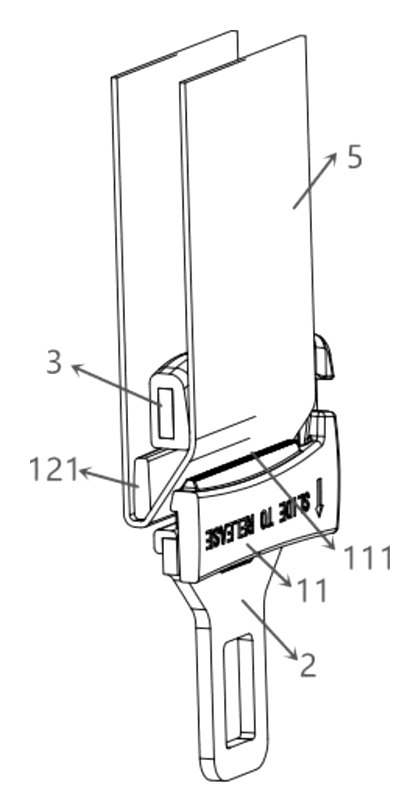
The patent describes a lock tongue body fitted with a self-locking slide block. This block slides along the body toward the holding part where the webbing is normally retained. An engagement part is located on the end surface of the slide block opposite the holding part, creating a first gap between them. The slide block includes a stop block around which the safety belt webbing passes and turns back.
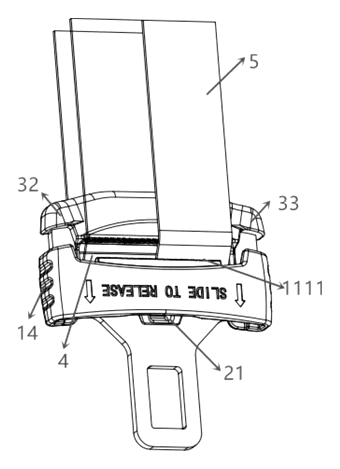
As the webbing is drawn tightly—such as during a sudden deceleration—the tension pulls the webbing against the stop block. This force drives the self-locking slide block to slide toward the holding part. The first gap narrows until the engagement part meshes directly with the webbing pressed against the holding part. This interlocking action enhances the locking function, securing the webbing more effectively than friction alone.
Who it is for
- Automotive Tier-1 suppliers seeking advanced restraint components that improve passive safety metrics without increasing system complexity.
- Seat belt manufacturers looking to differentiate their product lines with enhanced anti-slip mechanisms for high-performance or heavy-duty vehicles.
- Commercial vehicle fleets prioritizing occupant safety in trucks and buses where higher masses generate greater inertial forces during braking or impacts.
- Aftermarket safety upgrade providers offering retrofit solutions for older vehicles lacking modern pretensioner technologies.
How it works
The main parts
| No. | Part | What it does |
|---|---|---|
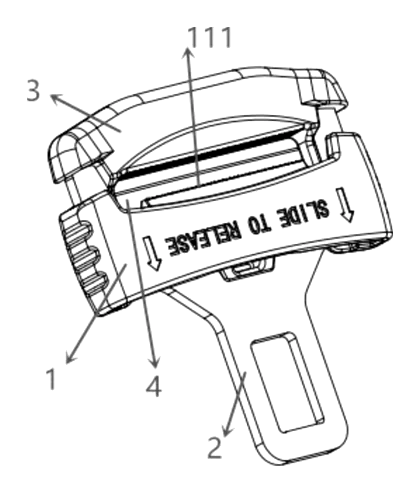
| Body | Lock Tongue Body | The main frame holding the webbing; contains the holding part and inclined bosses. |
| Block | Self-Locking Slide Block | Slides along the body; comprises first and second side plates buckled together. |
| Eng | Engagement Part | Located on the upper end of the first side plate; meshes with the webbing. |
| Stop | Stop Block | On the second side plate; guides the webbing turn-back and transfers tension to the block. |
| Gap | First Gap | The space between the holding part and engagement part that closes under load. |
| Rib | Limit Rib | Inner structure matching the body to limit the slide block’s travel range. |
| Boss | Inclined Boss | Feature on the bolt body interacting with the limit rib to control movement. |
| Grip | Gripping Ribs | Outer surfaces on the side plates providing manual grip for installation/removal. |
Operating steps
- Normal State: The webbing passes through the first gap, bypasses the stop block, and turns back. The slide block rests near its starting position.
- Tension Applied: When the belt is pulled tight, the webbing exerts force on the stop block.
- Sliding Action: This force drives the self-locking slide block to move along the lock tongue body toward the holding part.
- Gap Closure: The first gap decreases as the block advances.
- Engagement: The engagement part meshes with the webbing against the holding part. Interlocking structures (tooth-like/honeycomb) secure the webbing, preventing further slip.
Applications
Passenger cars
In standard sedans and SUVs, this tongue provides added security during emergency braking or moderate collisions, reducing webbing slip that could compromise airbag effectiveness.
Commercial trucks
Heavy-duty vehicles generate significant momentum. The self-locking feature ensures the driver remains firmly restrained during abrupt stops, protecting the spine and shoulders from excessive forward movement.
School buses
Frequent hard braking requires reliable restraint systems. The passive engagement mechanism activates automatically under load, ensuring consistent protection for passengers without relying on electronic sensors.
Construction equipment
Off-road vehicles experience rough terrain and sudden jolts. The robust interlocking design maintains belt integrity even when subjected to vibration and unexpected shifts in load.
Where it is less suitable
- Low-speed urban shuttles: Vehicles operating exclusively below 20 mph may not generate sufficient tension to trigger the full benefit of the self-locking mechanism compared to standard tongues.
- Legacy retrofit markets: Older vehicle frames may require specific bracket modifications to accommodate the new slide block geometry if original tongues were designed for simple friction fit.
Frequently asked questions
How does the self-locking mechanism work?
The design uses a slide block that moves along the tongue body. When the seat belt webbing is pulled tight, the tension pushes the block toward the holding part. As the gap closes, interlocking structures (teeth and honeycomb patterns) mesh with the webbing, physically blocking it from slipping out.
Is this different from a pretensioner?
Yes. A pretensioner is an active device triggered by sensors to retract slack instantly. This tongue is a passive mechanical component that engages only when high tension is already present, such as during a crash or hard braking.
What materials are used?
The patent mentions metal components but does not specify exact alloys. Typically, these tongues are made from high-strength steel or durable engineering plastics. Material selection depends on the required load rating and weight targets.
Can it be retrofitted into older vehicles?
Retrofitting requires careful verification. The tongue must match the specific latch receiver geometry of the vehicle model. Additionally, any change to restraint components usually voids existing certifications and requires new safety testing.
Does it affect comfort?
The mechanism is internal to the tongue. During normal driving, there is minimal tension, so the block stays in place without engaging. Users should not feel difference unless the belt is pulled sharply.
What are the key dimensions?
Dimensions vary by application. The patent focuses on the structural relationship between the slide block and the body rather than fixed measurements. Specific sizes are confirmed in design based on the target webbing width (usually 48mm).
Can this design be made and sold in the US?
The patent is currently in force in China and has no US counterpart. You cannot manufacture or sell this exact design in China without permission. For the US market, you must conduct a freedom-to-operate (FTO) review because other companies may hold patents on similar self-locking or active restraint mechanisms.
Are you affiliated with the patent owner?
No. IP2M is an independent design and manufacturing service working from the public patent document.
Request a quote
Click Request a Quote below to see our email address - copy it, or open your email app with a ready-made message. Please mention patent CN114869025B in the subject.
Helpful details to include:
- Your company and channel (Tier-1 supplier, aftermarket brand, commercial fleet operator)
- Target vehicle type and expected load requirements
- Webbing width and material preferences
- Certification needs (FMVSS, SAE, etc.)
- Estimated quantity and target price
- Timeline - when you would like prototypes and initial testing reports
You can also reach us at (332) 203-9997.
Explore this product
Interested in building this?
Tell us your target market, quantity and timeline. We reply with options for prototyping, small-batch runs or volume production.
Send your inquiry to
Please put CN114869025B in the subject line and tell us your company, country, estimated quantity and timeline.
Prefer to talk? Call (332) 203-9997.
More product-ready patents
All Car Accessories patents →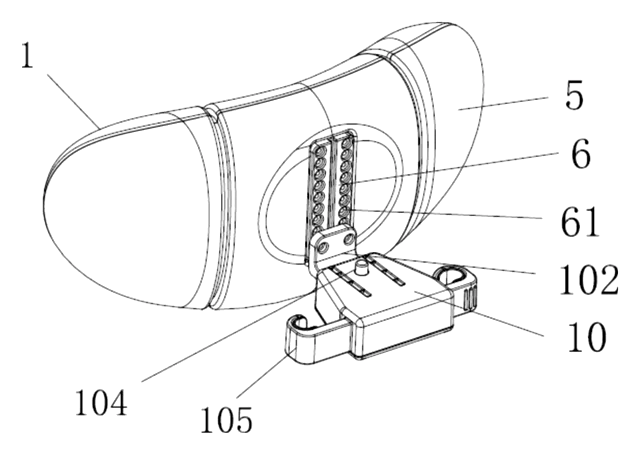
Car Accessories
Car Headrest Pillow with Ratchet Side Wings and Push-Button Reach
Post-mounted car headrest pillow with ratchet side wings and a push-button forward adjustment.
Patent CN212195197U
Car Accessories
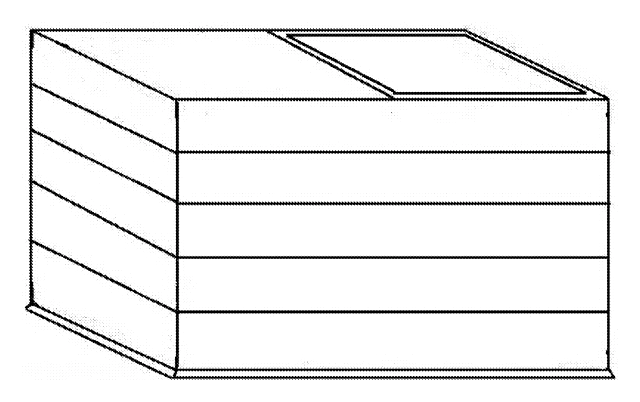
Hard-Shell Rooftop Tent That Doubles as a Cargo Box
Roof box whose hard frames lift on gas struts into a tent with door and skylight, and fold back for luggage.
Patent CN206327275U
Car Accessories
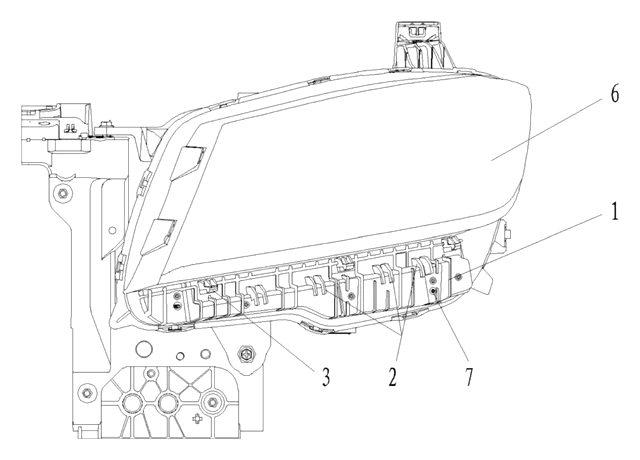
Headlamp-to-Bumper Adapter Bracket That Sets Gap and Flush in Three Directions
Molded bracket under the headlamp: support blocks and snap teeth locate the bumper flange for an even gap.
Patent CN216580316U
Car Accessories
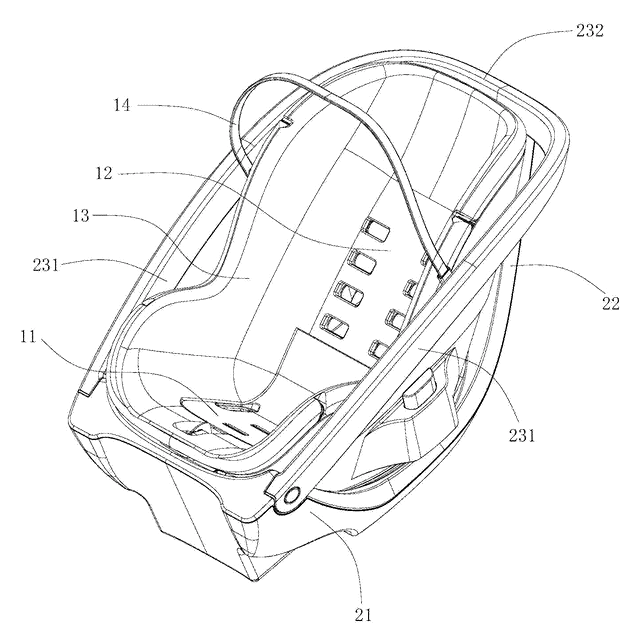
Infant Car Seat with a Load-Bearing Base That Wraps the Carrier
Infant car seat whose base has a backrest and swing-up side rails, so the carrier can be lighter.
Patent CN206383856U
Car Accessories
Retractable Side Impact Protection Block for Child Car Seats
Retractable side-impact block for child seats: springs out to provide side-impact buffering, folds flat.
Patent CN207028930U
Car Accessories
Rain-Deflecting Side Mirror with a Pivoting Air-Guide Plate
Side mirror with a top air duct and folding guide plate that directs airflow across the glass.
Patent CN207345672U
Browse by category
- Apparel & Accessories (23)
- Baby & Kids (18)
- Bags & Luggage (12)
- Bath & Personal Care (18)
- Car Accessories (14)
- Furniture, Bedding & Storage (13)
- Garden & Outdoor (19)
- Health & Wellness (9)
- Home, Kitchen & Cleaning (27)
- Lighting (13)
- Packaging & Containers (7)
- Pet Products (6)
- Phone & Camera Accessories (4)
- Retail Display (15)
- School, Office & Art (20)
- Sports & Recreation (26)
- Tools & Workshop (32)
- Toys & Games (13)
This page is based on the public patent document CN114869025B, assigned to Zhejiang Songyuan Automotive Safety Systems Co ltd. IP2M is an independent manufacturing service and is not affiliated with, endorsed by or licensed by the patent owner. Images marked as concept renderings are illustrations, not photos of an existing product. Patent status information is provided for reference only and is not legal advice; confirm freedom to operate for your market before production. Full disclaimer.