
Patent CN115005552B
Updated November 4, 2026Game Simulation Running Shoe with Sole-Mounted GPS Tracker
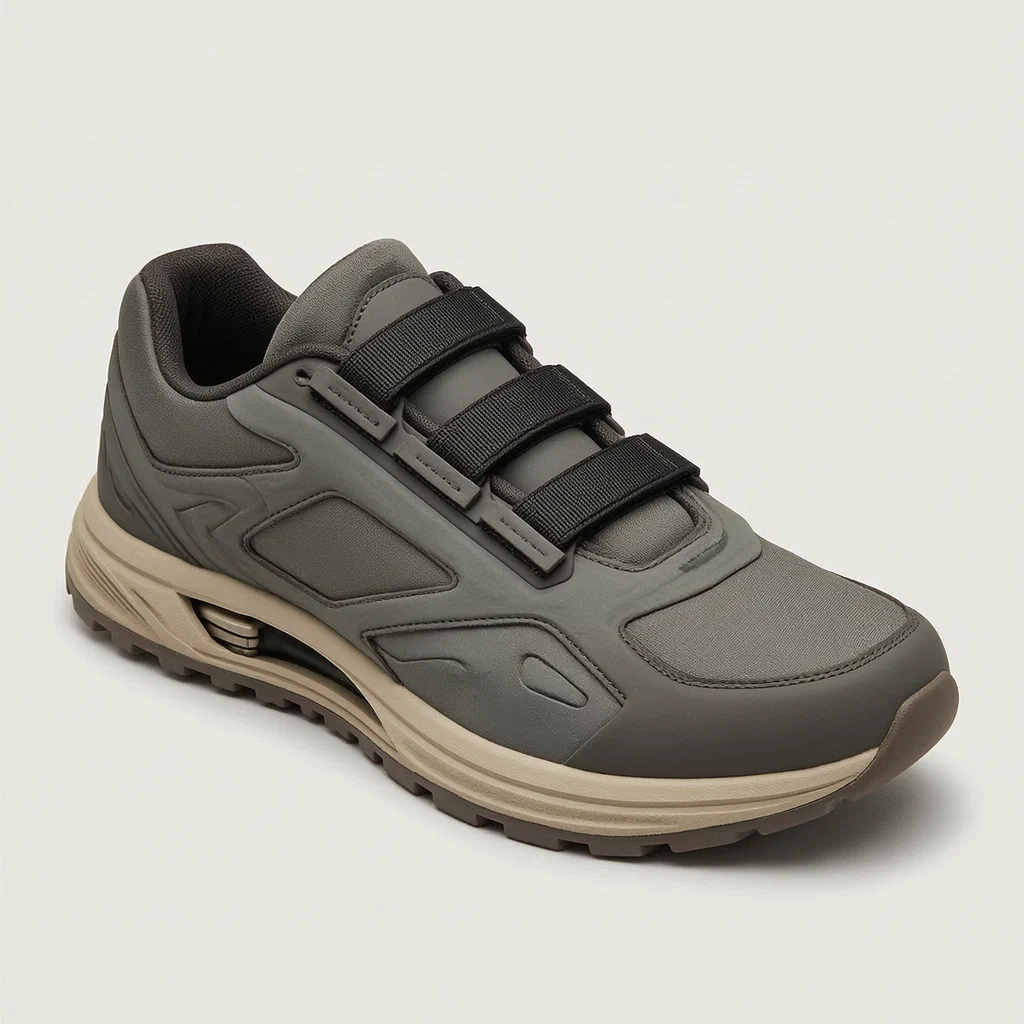
Standard running shoes lack interactive feedback and often allow water splash onto the upper. This design integrates a GPS tracking chip into the sole to enable game-based exercise simulations on mobile devices. It also employs a specialized sole geometry with arc-shaped and U-shaped baffles to channel water downward, keeping the shoe body dry. A secondary sole layer with springs creates an air-pumping effect for ventilation, while a multi-point Velcro binding system ensures a secure, adjustable fit.
- China invention patent - active
- No filings outside China
- GPS & Bluetooth integration
- Water-deflecting sole structure
Splat! What let you down?
📱
Game Simulation Chip
Sole-mounted GPS chip sends step data to mobile apps for interactive exercise games.
💧
Splash Deflection
Arc-shaped and U-shaped water baffles channel rain and puddle splashes away from the upper.
🌬️
Air-Pumping Ventilation
Dual-sole system with springs pumps air through vents during walking or running.
🔒
Adjustable Fit System
C-shaped binding sheets with multiple Velcro patches allow precise tension adjustment.
Bring this product to market
- ✓ Patent review Patent family and legal status reviewed in the relevant jurisdictions.
- 2 Product brief · now How it works, uses and options written up
- 3 Prototype First samples for buyers to review
- 4 Pilot run Small first batch for launch customers
- 5 Volume production Repeat orders at scale
Buyer interest
– of 100 buyers needed to start prototyping
One click, no sign-up. Each vote is one real visitor, and products with the most interest go to prototyping first.
Build team: no members yet. Need a partner, co-funding or skills to build this? Join and we introduce the team once it forms.
Patent Rights & Team Participation
Before joining a development team, participants should ensure they have the necessary rights or authorization to participate in the project.
Participation is generally appropriate where:
- You own the relevant patent rights or have obtained permission or a license from the rights holder.
- The relevant patent rights have expired or have been legally invalidated in the jurisdictions where the planned activities will take place.
- The planned development, manufacturing, and commercialization activities have been independently assessed and do not infringe applicable patent rights in the relevant jurisdictions.
Important: Being located outside a country where a patent is protected does not automatically exempt you from patent infringement risks. Patent rights may apply based on where development, manufacturing, use, sale, or import activities take place.
IP2M does not grant any patent license or authorization through team participation. Joining a project does not provide permission to use, manufacture, or commercialize patented technology.
The problem
Traditional running shoes provide basic protection but lack interactive elements for gamified fitness. Users often struggle to maintain motivation without engaging feedback loops. Additionally, standard soles do not effectively prevent water from splashing up onto the shoe’s upper material during wet conditions, leading to discomfort and potential damage to the fabric. Ventilation is another common issue; many athletic shoes trap heat and moisture, creating an unfavorable internal environment for the foot during intense activity. Finally, fitting systems often rely on simple laces that can loosen or require frequent re-tightening, lacking the stability needed for dynamic movement.
The solution
This patent describes a running shoe that addresses these issues through three main structural innovations. First, it integrates a tracking module directly into the sole. Second, it redesigns the outsole geometry to manage water flow. Third, it implements a mechanical ventilation system using the natural motion of the foot.
- Tracking Integration: A chip is mounted on the inner wall of the first sole. This chip uses GPS positioning and communicates with a mobile phone via Bluetooth. The data allows an associated application to display the user’s movement parameters (distance, direction) as a character model in a game simulation, enhancing engagement.
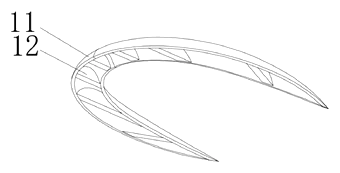
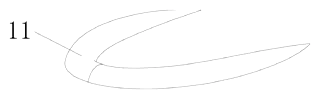
- Water Management: The first sole features two distinct water baffle blocks. The front block is arc-shaped with seven splitter plates arranged non-parallelly. The rear block is U-shaped with seven splitter plates where the distance between them decreases toward the middle. These structures guide splashed water downwards along their surfaces, preventing it from throwing back onto the shoe body.
- Ventilation Mechanism: A second sole is movably sleeved over the first sole. Between them lies a movable sleeve block and a spring. When the wearer steps down, pressure compresses the spring and sleeve, forcing air from the space between the soles out through penetrating air vents. When the foot lifts, the spring expands, drawing fresh air back in through the vents.
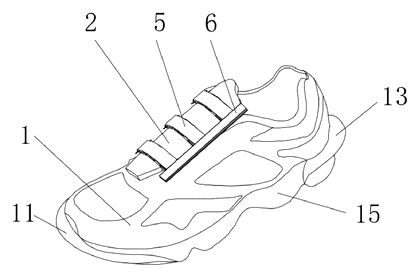
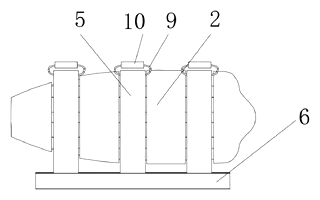
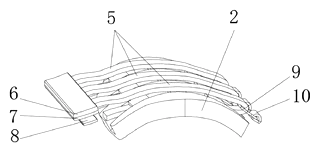
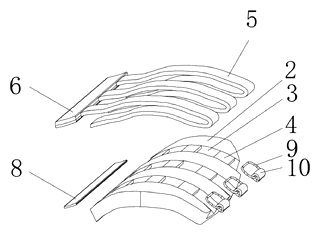
- Fit Adjustment: The tongue has a placing groove and connecting sheets. Three C-shaped binding sheets are attached to the back of a central connecting block. These sheets use a system of male and female Velcro patches (magic sub-patches and female patches). By separating and re-attaching the Velcro points across gaps in the connecting sheets, the width and tension of the shoe can be adjusted securely without traditional lacing complexity.
Who it is for
- Fitness App Developers: Brands seeking hardware-software bundles to create immersive, location-based running games.
- Outdoor Gear Manufacturers: Companies looking to differentiate their footwear with integrated electronics and weather-resistant designs.
- School Sports Suppliers: Institutions needing durable, easy-to-adjust shoes for children who may struggle with complex lacing systems.
- E-commerce Retailers: Sellers targeting tech-savvy consumers interested in wearable technology beyond wristbands.
How it works
The main parts
The shoe consists of several key components identified in the drawings:
| No. | Part | Function |
|---|---|---|
| 1 | Shoe Body | Main upper structure housing the foot. |
| 2 | Tongue | Covers the instep; includes the binding system base. |
| 5 | Binding Sheets | C-shaped straps with Velcro for adjustable fit. |
| 7, 8 | Velcro Patches | Male and female fasteners for securing the binding sheets. |
| 11 | First Water Baffle | Arc-shaped front sole component with splitter plates. |
| 13 | Second Water Baffle | U-shaped rear sole component with converging splitter plates. |
| 15 | First Sole | Base layer containing the GPS/Bluetooth chip. |
| 16 | Second Sole | Top layer that moves relative to the first sole. |
| 19 | Spring | Provides the return force for the ventilation pump. |
| 17 | Air Vents | Openings allowing air exchange between the sole layers. |
Operating Steps
- Donning the Shoe: The user separates the Velcro patches on the binding sheets, slides the shoe on, and adjusts the tension by pulling the C-shaped sheets through the connecting grooves before re-securing the Velcro.
- Walking/Running: As the foot strikes the ground, the second sole compresses against the first sole. This action squeezes the air trapped between the movable sleeve block and the spring, expelling it through the air vents.
- Lifting the Foot: Upon toe-off, the spring expands, returning the second sole to its original position. This creates negative pressure, drawing cool air back in through the vents.
- Data Transmission: Throughout the activity, the embedded chip records GPS coordinates and movement metrics, transmitting this data via Bluetooth to the paired smartphone app for real-time game visualization.
- Water Interaction: If the user steps in water, the arc-shaped and U-shaped baffles direct the liquid downwards along the splitter plates, ensuring it falls away from the shoe body rather than splashing upwards.
Applications
Gamified Fitness Training
Users connect the shoe to a mobile app where their physical movements control an on-screen character. This turns routine jogging into an interactive experience, potentially increasing adherence to exercise routines by adding a competitive or exploratory element.
Wet Condition Commuting
The specialized sole geometry is particularly useful for urban commuters who encounter puddles and rain. The water baffles actively deflect splashback, keeping the shoe’s upper dry and reducing the weight and discomfort associated with soaked footwear during travel.
Youth Sports Programs
The simplified Velcro-based binding system makes the shoe easier for younger users to put on and adjust independently compared to traditional lace-up models. This feature supports school sports teams where quick changes and consistent fit are required.
Wearable Tech Integration
Developers of health and fitness applications can utilize the standardized data format provided by the embedded chip. This allows for seamless integration with existing platforms that track distance, pace, and route history without requiring separate handheld devices.
Where it is less suitable
- Professional Competitive Athletics: The added weight of the electronic module and complex sole mechanism may hinder performance for elite sprinters or marathon runners seeking minimal mass.
- Extreme Trail Running: While the water management is effective for shallow puddles, deep mud or rocky terrain could damage the exposed vents or interfere with the moving sole components.
- Cold Weather Use: The ventilation system, which relies on air exchange, might allow too much cold air circulation in winter conditions unless insulated variants are developed.
Patent & Production
At a glance
| Patent number | CN115005552B (application CN202210759723) |
| Type | China invention patent (发明专利) - protects product method and structure |
| Original title | A Game Simulation Type Running Shoe (一种游戏模拟型跑鞋) |
| Patent owner | Shenzhen Meiye Data Technology Co ltd |
| Inventors | Yang Shuhua |
| Filing date | 2022-06-30 |
| Grant date | 2024-01-26 |
| Status (China) | Active - In force in China until at most 2042-06-30 (if annual fees are paid) |
| Patent family | Public record shows Chinese filings only - no US, European, Japanese, PCT or other filings listed |
| Cited by | 0 later documents |
| Source | Google Patents (search for CN115005552B) |
What the claims cover, in plain language
Claim 1 defines a running shoe comprising a shoe body, a tongue with a placing groove, and a binding sheet system using C-shaped straps with Velcro patches (male and female) for adjustable fit. The sole structure includes a first sole with arc-shaped and U-shaped water baffle blocks equipped with splitter plates to deflect water. A second sole is movably positioned above the first sole, featuring a spring and movable sleeve block to create a pumping action for ventilation through air vents.
Claim 2 specifies that there are three placing grooves on the tongue, each with a connecting piece, and gaps between adjacent pieces for non-contact separation of the binding sheets.
Claim 3 details the first water baffle block as arc-shaped with seven non-parallel splitter plates that do not contact the ground.
Claim 4 describes the second water baffle block as U-shaped with seven splitter plates where the distance between adjacent plates decreases from the ends toward the middle.
Claim 5 states that the inner wall of the first sole contains a chip capable of GPS positioning and Bluetooth data transmission to a mobile phone.
This is a simplified reading for orientation only. The legal scope is defined by the exact claim wording in the official Chinese document.
What this means for US production
This patent was filed in China and is currently active. Making or selling this specific design in China requires the owner’s permission. However, the public record shows no US counterpart or foreign family members. Therefore, based on the patent family alone, this document does not restrict manufacturing or sales in the United States.
Two points to settle early:
- Other patents may exist. Smart footwear and wearable technology fields have numerous active patents held by various companies. A freedom-to-operate (FTO) review is essential to ensure the GPS integration, Bluetooth protocols, or sole mechanisms do not infringe on other US intellectual property rights.
- Electronic Component Compliance. Integrating a battery-powered device into footwear introduces specific regulatory requirements regarding wireless emissions and battery safety that must be addressed separately from the mechanical design.
Customization and manufacturing
What can be customized
| Area | Options |
|---|---|
| Upper Material | Mesh, synthetic leather, or knit fabrics depending on breathability needs. |
| Sole Compound | EVA foam density, rubber hardness for traction and durability. |
| Electronics | Chipset selection (GPS/Bluetooth versions), battery capacity, enclosure sealing rating (IPX). |
| Fit System | Number of binding sheets, Velcro strength, color matching. |
| Ventilation | Size and placement of air vents, spring stiffness. |
Things to plan for (US market)
- FCC Certification: Any device emitting radio frequency signals (Bluetooth/GPS) must comply with FCC Part 15 rules for unintentional radiators or intentional radiators.
- UN 38.3: Lithium-ion batteries used in the shoe must pass UN Transport Regulations for safe shipping.
- CPSC Guidelines: General consumer product safety rules apply to footwear sold in the US.
- California Prop 65: Warning labels may be required if materials contain certain chemicals known to cause cancer or reproductive harm.
How a project runs
- Inquiry - Define target demographics, technical specs for the chip, and aesthetic preferences.
- Design - Develop CAD models for the sole mechanism, electrical layout, and upper pattern.
- Prototype - Create functional samples testing the ventilation pump, water deflection, and Bluetooth connectivity.
- Pilot Run - Small batch production to validate assembly processes and quality control checks.
- Production - Mass manufacturing involving injection molding, PCB assembly, sewing, and final assembly.
Quantities & timeline
Molds for the sole components and upper patterns need to be created. Electronic components require sourcing lead times. Testing for FCC and battery safety adds time to the development cycle. Send us your target price, quantity, and technical specifications and we will reply with options.
Production notes
Tooling and process
Injection molds for the TPU/EVA sole components and cutting dies for the upper fabric are typically required. PCB assembly involves surface-mount technology (SMT) lines. Sewing and adhesive bonding are standard for assembling the upper to the sole unit.
Cost drivers
Fabric grade typically has the biggest effect on upper cost. Sole mold complexity usually raises tooling expenses. The number of sizes produced affects inventory and setup costs. Packaging requirements for electronics add minor costs.
Prototyping path
A sewn first sample typically validates fit and appearance. 3D-printed or cast components test the sole mechanism. Wear trials assess comfort and durability. Fit grading confirms size consistency across the range, and production patterns finalize the cutting layout.
What we would change before tooling
We would likely refine the spring rate consistency to ensure uniform ventilation. Wire routing and strain relief within the sole need careful design to prevent failure. Wall thickness of the electronic enclosure should be optimized for impact resistance.
Common failure points
Sole delamination is a risk if adhesive bonding is poor. Seam slippage can occur in high-stress areas of the upper. Hardware corrosion may affect metal rings or contacts. Spring fatigue could reduce ventilation efficiency over time. Color fading might affect the aesthetic appeal after UV exposure.
Patent drawings
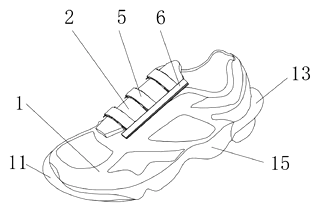
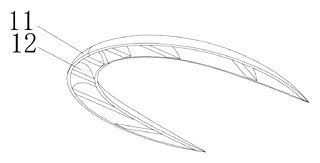
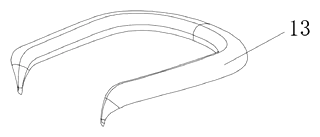
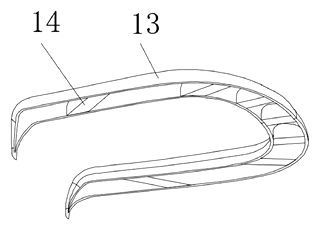
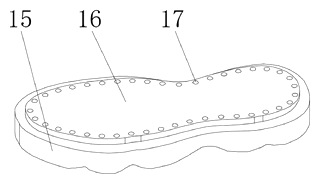
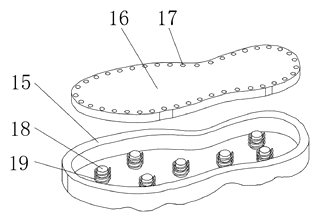
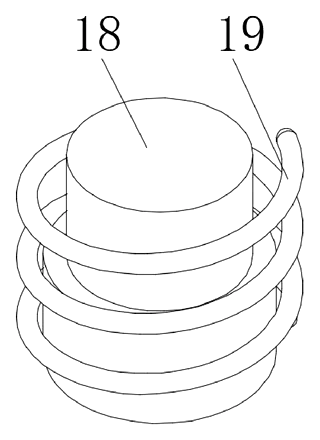
Drawings reproduced from the public patent document for reference.
Frequently asked questions
How does the game simulation work?
The shoe contains a chip that tracks your position using GPS and sends data via Bluetooth to a companion mobile app. The app translates your real-world movement into actions for a character in a virtual game, allowing you to run or walk to progress in the game.
Does the shoe need charging?
Yes. Since it contains a GPS and Bluetooth module, it requires a rechargeable battery. Battery life depends on usage intensity and signal strength, typically lasting several days per charge under normal training conditions.
Is the shoe waterproof?
The patent describes water-deflecting sole structures to keep the upper dry when stepping in puddles. However, the electronic components inside the sole require proper sealing. Specific IP ratings (e.g., IPX4 or IPX7) would be set in design and confirmed on prototypes.
Can I use it without the app?
Yes. The shoe functions as a standard running shoe even if the app is not active. The GPS and Bluetooth modules simply operate in the background or remain idle if not connected.
How do I clean the shoe?
Cleaning methods depend on the final materials chosen. Generally, removable insoles and gentle hand washing are recommended to avoid damaging the electronic housing. Detailed care instructions will be provided with the final product.
Is the ventilation system noisy?
The mechanism uses a spring and air pumping action. Noise levels are typically low and comparable to standard cushioning compression, but acoustic tuning is part of the prototype phase.
Can this design be made and sold in the US?
The patent is active in China, but the public record shows no US counterpart. Therefore, this specific patent does not restrict manufacturing or sales in the US. However, other patents in the smart wearables field may apply, so a freedom-to-operate check is recommended.
Are you affiliated with the patent owner?
No. IP2M is an independent design and manufacturing service working from the public patent document.
Request a quote
Click Request a Quote below to see our email address - copy it, or open your email app with a ready-made message. Please mention patent CN115005552B in the subject.
Helpful details to include:
- Your company and channel (fitness brand, tech startup, outdoor retailer)
- Target audience (adults, children, professional athletes)
- Technical specs (battery life, IP rating, Bluetooth version)
- Quantity and estimated order volume
- Timeline - when you would like samples and the first shipment
You can also reach us at (332) 203-9997.
Page editor: Daniel Chen, Product Research Editor · IP2M
Last updated November 4, 2026. If something on this page looks wrong, email [email protected] and we will check it against the patent.
Interested in building this?
Tell us your target market, quantity and timeline. We reply with options for prototyping, small-batch runs or volume production.
Send your inquiry to
Please put CN115005552B in the subject line and tell us your company, country, estimated quantity and timeline.
Prefer to talk? Call (332) 203-9997.
More product-ready patents
All Apparel & Accessories patents →
Apparel & Accessories
Stacked Zipper with Teeth That Mesh Top-to-Bottom
Zipper whose two identical tooth rows mesh on top of each other, closed by a simplified slider.
Patent CN205795062U
Apparel & Accessories
Impact-Resistant Glove with a 3D-Printed Lattice Layer
Work glove with a 3D-printed lattice impact layer, TPU knuckle guards and a light mounting area.
Patent CN213785583U
Apparel & Accessories
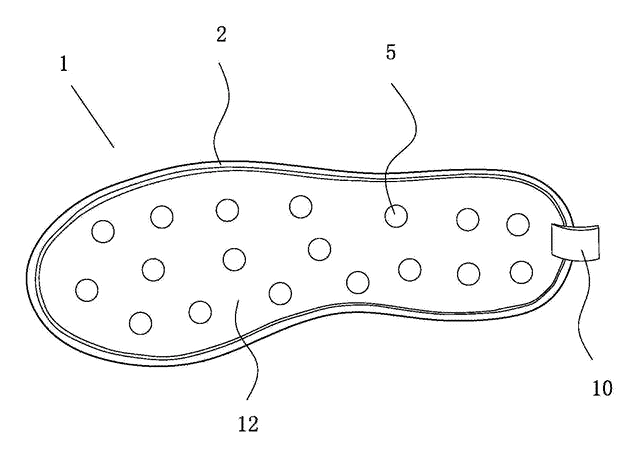
Massage Insole with Spring-Back Silicone Nubs and a Removable Top Layer
Layered insole: silicone nubs rise through a removable perforated top sheet and sink under each step.
Patent CN208286505U
Apparel & Accessories
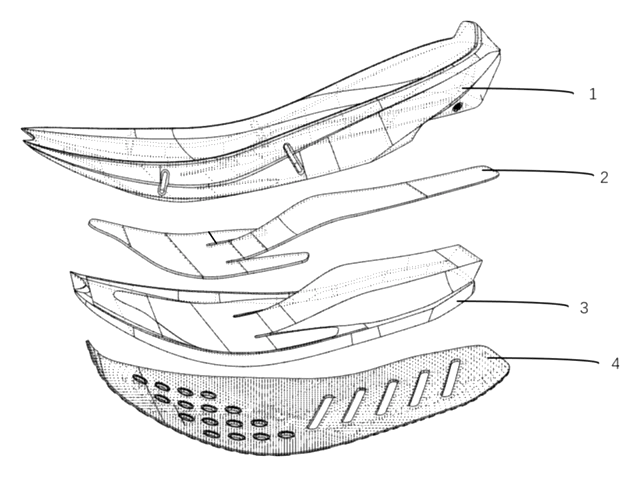
Heel-Less Carbon Plate Running Shoe Sole for Forefoot Strikers
Running sole for forefoot strikers: no ground-touching heel, winged carbon plate between two midsoles.
Patent CN216723354U
Apparel & Accessories
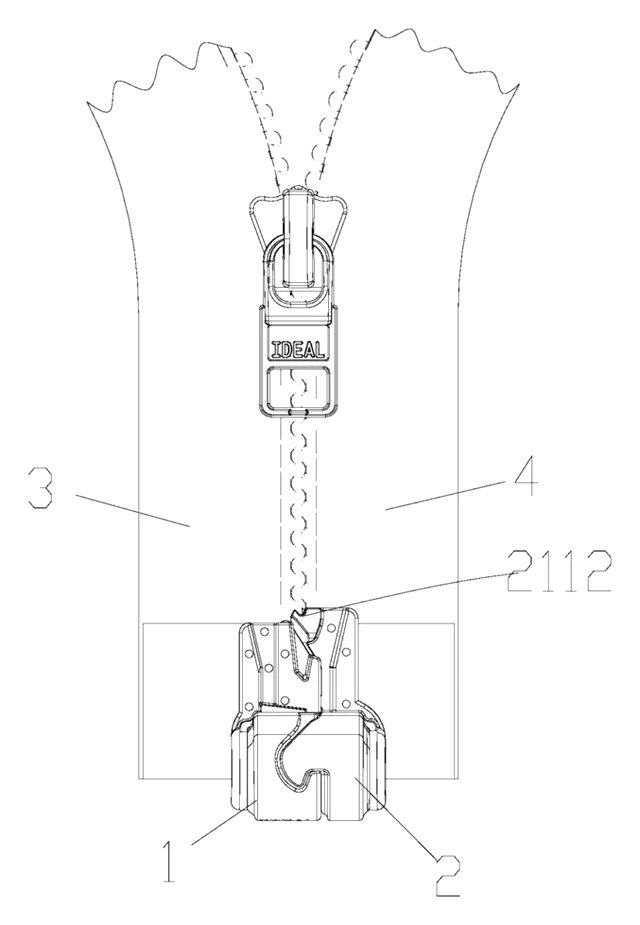
Waterproof Magnetic Zipper Stop That Snaps the Two Halves Together
Separating-zipper stop with sealed magnets: pin and box snap together one-handed, safe in rain and wash.
Patent CN215075936U
Apparel & Accessories
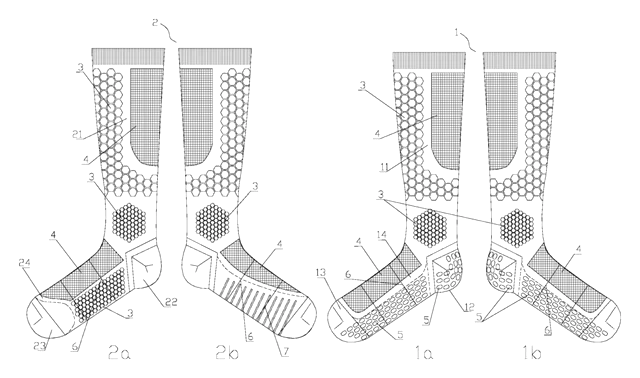
Left-Right Specific Soccer Socks: Grip for the Plant Foot, Touch Pads for the Kicking Foot
Soccer socks knitted as a left-right pair: grip zones for the plant foot, pads for the kicking foot.
Patent CN212728807U
Browse by category
- Apparel & Accessories (38)
- Baby & Kids (26)
- Bags & Luggage (15)
- Bath & Personal Care (26)
- Car Accessories (21)
- Furniture, Bedding & Storage (20)
- Garden & Outdoor (28)
- Health & Wellness (12)
- Home, Kitchen & Cleaning (43)
- Lighting (20)
- Packaging & Containers (10)
- Pet Products (9)
- Phone & Camera Accessories (8)
- Retail Display (21)
- School, Office & Art (30)
- Sports & Recreation (37)
- Tools & Workshop (46)
- Toys & Games (19)
This page is based on the public patent document CN115005552B, assigned to Shenzhen Meiye Data Technology Co ltd. IP2M is an independent manufacturing service and is not affiliated with, endorsed by or licensed by the patent owner. Images marked as concept renderings are illustrations, not photos of an existing product. Patent status information is provided for reference only and is not legal advice; confirm freedom to operate for your market before production. Full disclaimer.