
At a glance
| Patent number | CN115005651B (application CN202210636690) |
| Type | China invention patent (发明专利) - protects product structure and method |
| Original title | Flip-top cup lid and container using the same (一种掀盖式杯盖及应用该杯盖的容器) |
| Patent owner | Youzhi Technology Shenzhen Co ltd |
| Inventors | Sang Yunchao, Zhou Han, Peng Jianjian |
| Filing date | 2022-06-07 |
| Grant date | 2024-01-23 |
| Status (China) | Active - In force in China until at most 2042-06-07 (if annual fees are paid) |
| Patent family | Public record shows Chinese filings only - no US, European, Japanese, PCT or other filings listed |
| Cited by | 0 later documents |
| Source | Google Patents (search for CN115005651B) |
What the claims cover, in plain language
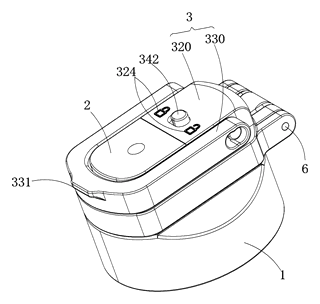
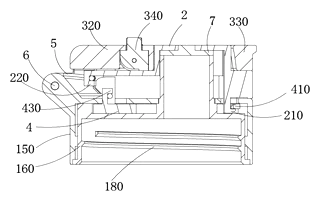
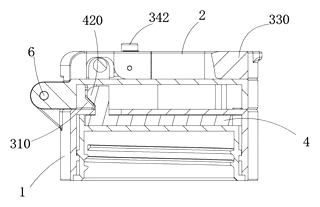
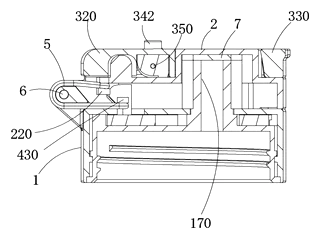
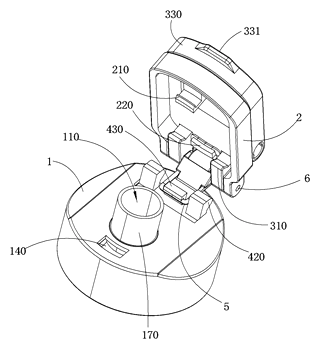
Claim 1 defines a flip-top cup lid comprising a bottom cover, a top cover, an opening/closing mechanism, a sliding locking piece, and an elastic member. The top cover and opening mechanism share a hinge shaft with the bottom cover. The bottom cover contains a movable cavity for the sliding locking piece. The top cover has a first hook; the sliding piece has a second hook and a locking bulge. The opening mechanism has a pushing protrusion aligned with the bulge. The elastic member connects the top cover and sliding piece, keeping the hooks engaged (closed). Pressing the protrusion moves the sliding piece, disengaging the hooks, allowing the elastic member to rotate the top cover open. The bottom cover has avoidance holes for the hooks and the top cover’s rotation path.
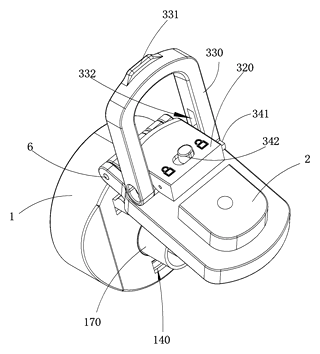
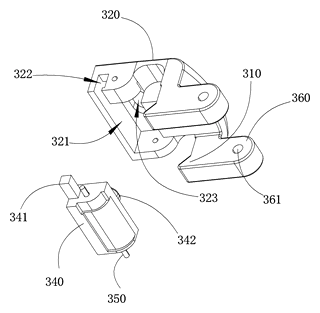
Claim 2 specifies the elastic member is made of silica gel (silicone). Claims 3-6 describe an optional child-safety lock involving a rotary cover plate, handle, guide rod, and a locking piece with a pin that slides into a hole in the handle to block operation. Claims 7-9 detail the bottom cover structure (upper/lower shells forming the cavity), the drinking nozzle, and the sealing gasket on the top cover. Claim 10 covers a container (cup) fitted with this lid.
This is a simplified reading for orientation only. The legal scope is defined by the exact claim wording in the official Chinese document.
The solution
The patented design introduces a sliding locking piece housed within a movable cavity in the bottom cover.
- Latching: One end of the top cover has a first hook; the sliding piece has a second hook. An elastic member (silicone) connects the top cover and the sliding piece, pulling them together so the hooks engage.
- Opening: The opening mechanism (handle assembly) sits above the top cover. It has a pushing protrusion. When pressed, this protrusion hits a locking bulge on the sliding piece, forcing the sliding piece to move laterally. This disengages the hooks.
- Auto-Open: Once unhooked, the tension in the elastic member rotates the top cover around the shared hinge shaft, flipping it open automatically.
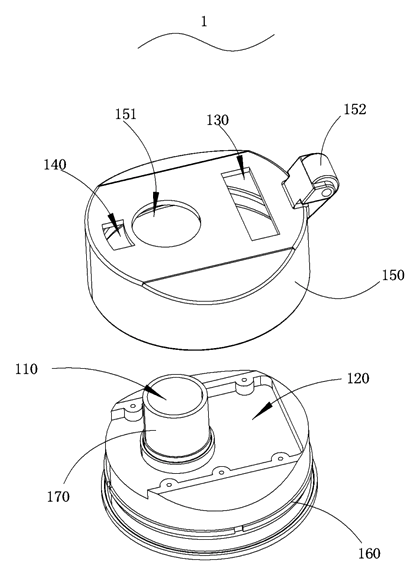
- Sealing: The top cover carries a gasket that aligns with the drinking nozzle extending from the base, ensuring a tight seal when closed.
How it works
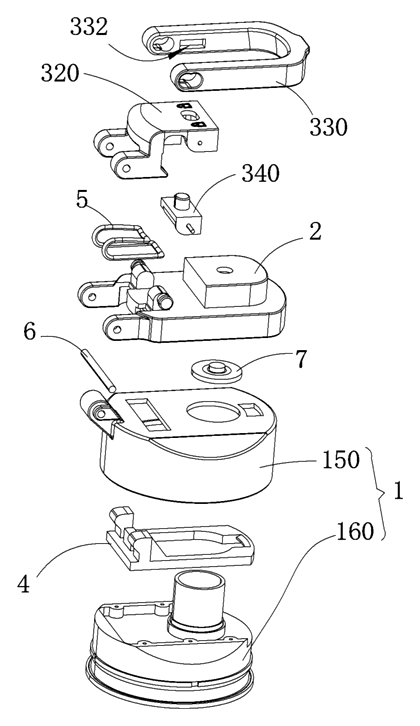
The main parts
| No. | Part | What it does |
|---|---|---|
| 1 | Bottom Cover | Houses the water outlet, nozzle, and the movable cavity for the slider. |
| 2 | Top Cover | Flips open; carries the first hook and the sealing gasket. |
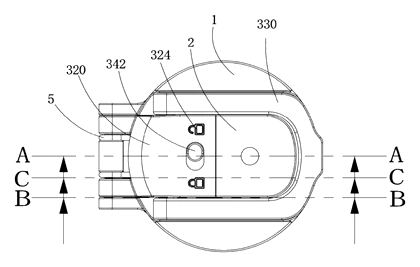
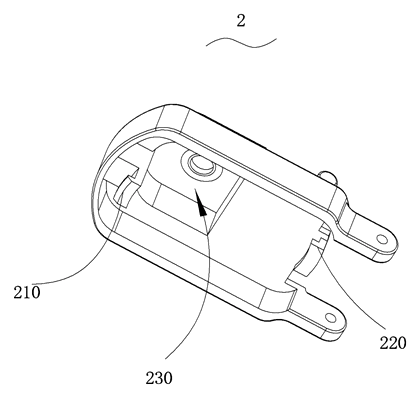
| 3 | Opening Mechanism | Includes the rotary cover plate and handle; applies force to unlock. |
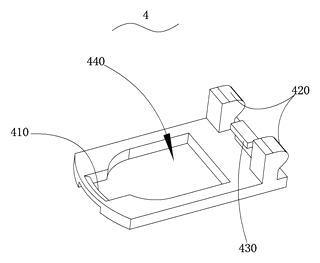
| 4 | Sliding Locking Piece | Moves laterally in the cavity; has the second hook and locking bulge. |
| 5 | Elastic Member | Silicone strip connecting the top cover and slider; provides return force. |
| 6 | Hinge Shaft | Shared axis for the top cover and opening mechanism. |
| 340 | Locking Pin/Slide | Optional safety lock on the handle assembly. |
Operating Steps
- Closed State: The elastic member pulls the sliding locking piece (4) so its second hook engages the top cover’s first hook. The pushing protrusion rests against the locking bulge but doesn’t move it yet.
- Unlock Action: User pushes the lifting protrusion on the handle. This transfers force to the locking bulge on the sliding piece.
- Release: The sliding piece moves sideways within the movable cavity. The hooks disengage.
- Open: With the latch released, the stored energy in the elastic member rotates the top cover upward along the hinge shaft.
- Reset: Closing the lid manually re-engages the hooks as the sliding piece returns to position under elastic tension.
Patent drawings
Drawings reproduced from the public patent document for reference.