At a glance
| Patent number | CN115039716B (application CN202210750235) |
| Type | China invention patent (发明专利) - protects product structure and method |
| Original title | Pet hair-sucking brush head for dust collector and cleaning mode thereof (一种吸尘器用宠物吸毛刷头及其清理方式) |
| Patent owner | Shenzhen Yinshe Intelligent Technology Co ltd |
| Inventors | Li Jianhai, Zhao Wei |
| Filing date | 2022-06-28 |
| Grant date | 2024-05-03 |
| Status (China) | Active - In force in China until at most 2042-06-28 (if annual fees are paid) |
| Patent family | Chinese filings only - no US, European, Japanese, PCT or other filings listed |
| Cited by | 1 later document |
| Source | Google Patents (search for CN115039716B) |
What the claims cover, in plain language
Claim 1 - A pet brush head for a vacuum comprising a brush head assembly and a hair removal assembly. The brush head has a suction end with a brush plate. The hair removal assembly has a scraping plate. The two plates are rotatably connected via a clamping groove module consisting of side-end fixings and a middle arc clamp. Both plates are arc-shaped. The scraping plate can reciprocate (move back and forth/rotate) on the brush plate. When brushing, tilting the tool causes one end of the scraper to lift (exposing bristles) and the other to press (scraping hair), directing hair to the suction port.
Claim 2 - The brush plate has bristles, and the scraping plate has a grid allowing bristles to pass through. The grid has fine cavities.
Claim 3 - The clamping module details: the brush plate side has a convex clamp with a cylindrical groove; the scraping plate side has a buckle with a cylindrical bulge.
Claim 4 - The brush head assembly includes a handle on the other end, with a buckle inside the handle.
Claim 5 - Describes the cleaning mode/method: Mounting the head, contacting the surface, tilting to lift the scraper to expose bristles, moving to scrape hair off, and repeating the cycle to suck hair away.
This is a simplified reading for orientation only. The legal scope is defined by the exact claim wording in the official Chinese document.
What this means for US production
This patent was filed only in China and is currently active. Making or selling this specific design in China requires the owner’s permission. However, since there are no US or other foreign patents in this family, the patent itself does not restrict manufacturing or selling in the United States based on this document alone.
Two points to settle early:
- Other patents may exist. Vacuum attachments and pet grooming tools are competitive fields. Large appliance manufacturers (e.g., Dyson, Shark, Hoover) and pet care brands hold numerous patents on brush designs, cyclonic separators, and attachment mechanisms. A freedom-to-operate (FTO) review is essential to ensure your specific implementation of the arc-plate scraper does not infringe on existing US utility or design patents.
- Design Variations. The patent specifies an “arc-shaped” interaction. If your production version uses flat plates, different hinge types, or magnetic connections instead of the described clamping grooves, the infringement risk profile changes significantly.
Customization and manufacturing
What can be customized
| Area | Options |
|---|---|
| Material | ABS, PP, or nylon for the plates; silicone or natural bristles for the brush. |
| Connection Type | Universal clip-on, screw-on adapter, or custom fit for specific vacuum models (Dyson, Shark, etc.). |
| Scraper Geometry | Adjust the arc radius and grid density to suit different hair lengths (long vs. short coats). |
| Color & Finish | Brand-specific colors; matte or glossy finishes. |
| Handle Ergonomics | Shape and grip texture modifications for comfort during extended use. |
Things to plan for (US market)
- UL 1082 / IEC 60335 - Safety standards for household electrical appliances. While the brush head itself is passive, if integrated into an electrically powered unit, it must meet these standards. For standalone attachments, mechanical safety is key.
- CPSC Regulations - General consumer product safety rules apply. Ensure no sharp edges or small parts that could pose choking hazards for children or pets.
- California Prop 65 - Screening for chemicals in plastics and coatings used in the mold process.
- ASTM F963 - If marketed as a toy or for child-related contexts (unlikely here, but relevant if packaging appeals to kids), toy safety standards apply. Otherwise, general consumer goods rules govern.
How a project runs
- Inquiry - Define target vacuum compatibility, material preferences, and volume.
- Design - CAD modeling of the arc plates, clamping mechanism, and suction port alignment.
- Prototype - 3D printed or soft-tool samples to test the scraping action and suction efficiency.
- Tooling - Injection molds for the brush plate, scraper, and housing.
- Production - Molding, assembly, quality control, and packaging.
Quantities & timeline
Injection molding tools for complex interlocking arcs require precision engineering to prevent binding. Lead times depend on the number of cavities per mold and the availability of compatible vacuum adapters. Testing for suction seal integrity and durability of the rotating joint is critical. Send us your target vacuum models, material specs, estimated quantity and desired launch date and we will reply with options.
Patent drawings
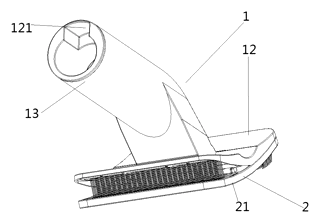
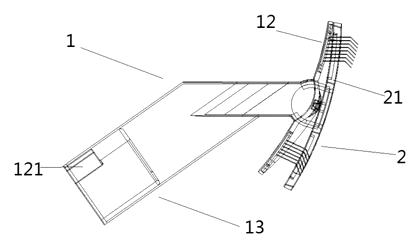
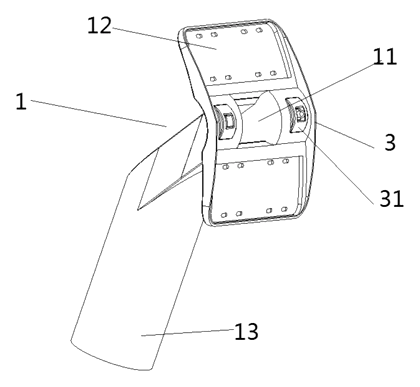
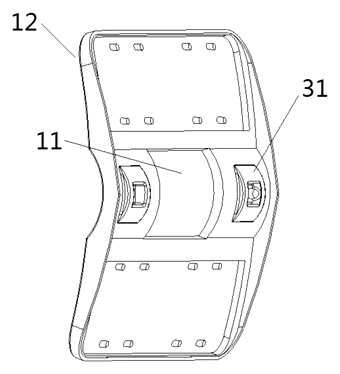
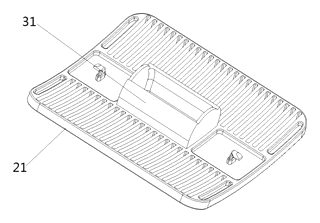
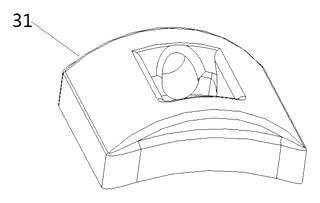
Drawings reproduced from the public patent document for reference.