
Patent CN115088910B
Updated November 2, 2026Ultralight Sole and Shoe with Sealed Internal Cavity
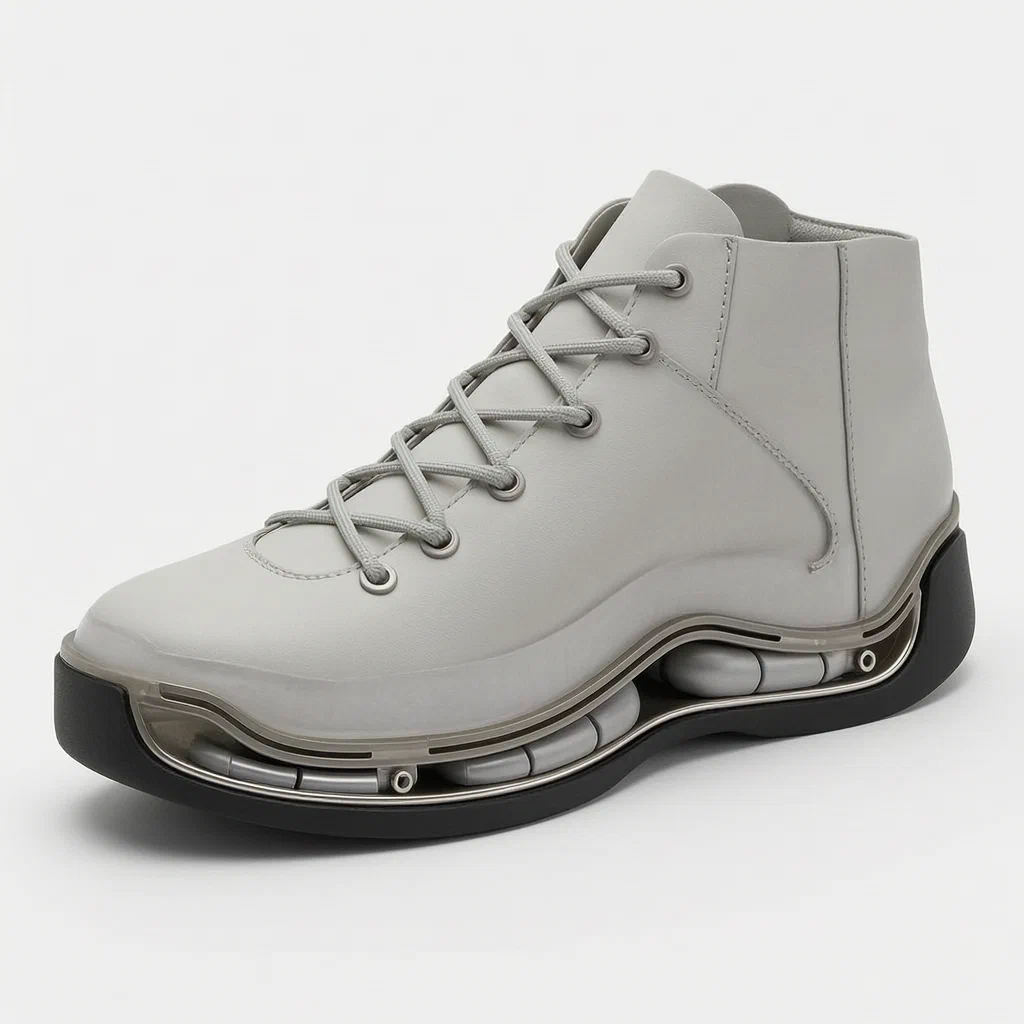
Traditional thick soles add weight, limiting agility in running and walking shoes. This design achieves high strength and wear resistance through a rigid outer shell while keeping mass low via a large internal cavity. The cavity is not empty; it is supported by adjustable elastic plates that absorb impact. To prevent debris or moisture from entering this space, the patent details a robust sealing interface using magnetic attraction between the upper frame and lower ring. Additionally, a dual-chamber air bag system embedded in the upper sole provides responsive cushioning, with springs regulating airflow between compartments.
- China invention patent - active
- No filings outside China
- Footwear technology
- Magnetic sealing, elastic plate support, air bag cushioning
Splat! What let you down?
🪶
Hollow Core Strength
High-strength lower sole maintains structural integrity while the internal cavity reduces overall weight.
🧲
Magnetic Seal Lock
First and second magnetic suction plates attract to compress the sealing ring, ensuring an airtight joint.
🛡️
Adjustable Buffering
Elastic plates inserted into grooves support the cavity floor, allowing customization of shock absorption.
💨
Dual-Chamber Air Bag
A middle plate divides the air bag into two cavities connected by channels and regulated by springs.
Bring this product to market
- ✓ Patent vetted China-only family and legal status checked
- 2 Product brief · now How it works, uses and options written up
- 3 Prototype First samples for buyers to review
- 4 Pilot run Small first batch for launch customers
- 5 Volume production Repeat orders at scale
Buyer interest
– of 100 buyers needed to start prototyping
One click, no sign-up. Each vote is one real visitor, and products with the most interest go to prototyping first.
Build team: no members yet. Need a partner, co-funding or skills to build this? Join and we introduce the team once it forms.
The problem
In footwear manufacturing, there is often a trade-off between durability and weight. A thick sole made of solid rubber or EVA foam provides necessary support and wear resistance but adds significant mass, which can hinder performance in running or long-distance walking. Conversely, thin soles reduce weight but may lack the structural rigidity needed to protect the foot and withstand ground impact. Furthermore, if a hollow design is used to save weight, maintaining a clean, dry internal environment is difficult; traditional adhesives or mechanical fasteners can fail over time, allowing dust or moisture to enter the cushioning chamber, degrading its properties.
The solution
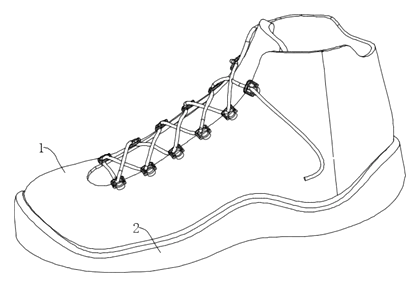
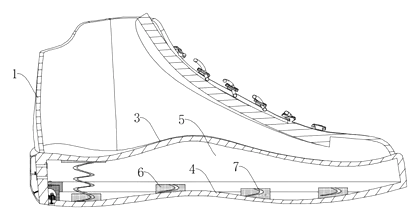
The patent describes a sole body composed of an upper sole (3) and a lower sole (4). Between these two layers lies an inner cavity (5). The lower sole is constructed from a material with higher strength, such as hard rubber, allowing the sole to remain thick enough for durability without being excessively heavy due to the hollow center.
To support this cavity, multiple groups of support blocks (6) are fixed on the surface of the lower sole facing the cavity. These blocks have connecting clamping grooves (7) where elastic plates (9) are inserted. The upper ends of these plates connect to bonding plates (8), which contact the inner wall of the upper sole. This arrangement distributes load across the cavity floor.
Sealing the gap between the upper and lower sole is critical. The design uses a connecting sealing structure involving an upper sealing frame (11) and a sealing ring (10). The upper sealing frame is L-shaped and fixed to the inner wall of the cavity. The sealing ring sits on the upper surface of the lower sole. Crucially, a first magnetic suction plate (12) is fixed on the upper sealing frame, and a second magnetic suction plate (13) is fixed inside the sealing ring. These magnets attract each other, pulling the sealing ring tightly against the frame to create a strong seal.
Cushioning is further enhanced by a rubber air bag (16) attached to the upper sole. A middle plate (17) divides the air bag into a first air cavity (18) and a second air cavity (19). Channels allow air to move between these cavities and the main inner cavity, while springs regulate pressure, providing dynamic response to foot movement.
Who it is for
- Running Shoe Brands: Manufacturers seeking to reduce midsole weight while maintaining high rebound and stability for athletic performance.
- Casual Lifestyle Footwear Lines: Companies needing durable, lightweight soles for daily wear shoes that resist water ingress through sealed components.
- Orthopedic Support Specialists: Designers who require adjustable internal structures, such as varying the number of elastic plates, to customize firmness levels for specific foot types.
- Industrial Safety Footwear Makers: Producers who need tough, wear-resistant outsoles that do not compromise comfort or agility for workers on their feet all day.
How it works
The main parts
| No. | Part | What it does |
|---|---|---|
| 2 | Sole Body | The complete assembly of upper and lower soles. |
| 3 | Upper Sole | Top layer containing the air bag system and inner cavity ceiling. |
| 4 | Lower Sole | Bottom layer made of high-strength material; forms the cavity floor. |
| 5 | Inner Cavity | Hollow space between upper and lower soles, reducing weight. |
| 6, 7 | Support Blocks & Grooves | Fixed points on the lower sole to hold elastic inserts. |
| 9 | Elastic Plates | Removable supports inside the cavity that absorb shock. |
| 10 | Sealing Ring | Flexible barrier preventing entry into the cavity. |
| 11 | Upper Sealing Frame | Rigid structure holding the first magnet and guiding the seal. |
| 12, 13 | Magnetic Suction Plates | Attract to each other to compress the sealing ring. |
| 16 | Rubber Air Bag | Cushioning element divided into two chambers. |
| 17 | Middle Plate | Divides the air bag into first and second cavities. |
| 18, 19 | Air Cavities | Chambers within the air bag that manage pressure. |
| 22, 21 | Air Channels | Passages connecting the air bag to the main inner cavity. |
Operating Steps
- Assembly: The lower sole is fitted with support blocks. Elastic plates are inserted into the grooves.
- Sealing: The upper sole is placed over the lower sole. The magnetic plates align and attract, forcing the sealing ring into the groove of the upper sealing frame, closing the inner cavity.
- Impact Absorption: When the foot strikes the ground, the lower sole flexes slightly. The elastic plates compress, absorbing energy.
- Air Regulation: Pressure changes in the inner cavity affect the air bag. Air moves between the first and second air cavities via channels, adjusting stiffness dynamically based on the step phase.
Applications
Performance Running Shoes
Runners benefit from the reduced mass of the hollow sole, which improves speed and reduces leg fatigue. The magnetic seal ensures that sweat or rain does not degrade the internal cushioning materials during intense activity.
Lightweight Walking Trainers
For daily walkers, the combination of high-strength rubber and internal elastic plates offers a balance of durability and comfort. The sealed cavity prevents dirt accumulation, extending the life of the shoe’s internal structure.
Customizable Orthotic Inserts
Brands offering customizable fit can vary the number or density of elastic plates in the cavity. This allows users to adjust the firmness of the midsole without changing the external shape of the shoe.
Wet Environment Work Boots
Workers in damp environments need soles that resist water penetration. The magnetic compression seal creates a tight barrier around the cavity, protecting the internal air bag and elastic supports from moisture damage.
Where it is less suitable
- Ultra-minimalist Barefoot Shoes: This design relies on a thick, structured sole with an internal cavity, making it unsuitable for shoes intended to mimic barefoot conditions with minimal material.
- Standard Slip-and-Cast Soles: Traditional injection-molded single-piece soles are cheaper and simpler to produce than this multi-component assembly with magnetic and mechanical locking features.
Frequently asked questions
How does the magnetic seal work?
The design uses two magnetic suction plates: one fixed on the upper sealing frame and one inside the sealing ring. When the sole is assembled, these magnets attract each other, pulling the flexible sealing ring tightly into the groove of the frame. This creates a physical barrier that keeps the internal cavity sealed against dust and moisture.
Why is the sole lighter than traditional ones?
Instead of filling the entire midsole with solid foam or rubber, this design creates a large inner cavity between the upper and lower sole layers. The lower sole uses high-strength material to handle ground impact, while the cavity reduces mass. Internal elastic plates provide support without adding the weight of solid material.
Can I adjust the cushioning feel?
Yes. The patent describes elastic plates that are inserted into support blocks within the cavity. By changing the number, thickness, or material of these plates, manufacturers can tune the firmness and shock absorption of the sole without altering the external shape.
What is the purpose of the air bag?
The rubber air bag is located in the upper sole and is divided by a middle plate into two chambers. These chambers connect to the main inner cavity via channels. This system helps distribute pressure and manage airflow, contributing to a responsive cushioning effect that adapts to the wearer’s movement.
Is the assembly difficult?
The assembly involves placing elastic plates into grooves, aligning the magnetic sealing components, and joining the upper and lower soles. The magnetic attraction simplifies the final lock, ensuring the seal is engaged correctly without complex mechanical fasteners visible on the exterior.
How durable is the lower sole?
The lower sole is specified to use materials with higher strength, such as hard rubber. This ensures that despite the hollow interior, the bottom of the shoe remains resistant to wear and tear from ground friction. The internal support blocks also help prevent the cavity walls from collapsing under load.
Can this design be made and sold in the US?
The patent was filed only in China and is currently in force there. It does not restrict manufacturing or sales in the United States, as there is no corresponding US patent. However, you should conduct a freedom-to-operate search to ensure no other existing US patents cover similar sole structures.
Are you affiliated with the patent owner?
No. IP2M is an independent design and manufacturing service working from the public patent document.
Request a quote
Click Request a Quote below to see our email address - copy it, or open your email app with a ready-made message. Please mention patent CN115088910B in the subject.
Helpful details to include:
- Your company and channel (athletic brand, casual footwear maker, orthopedic specialist)
- Target weight and size range
- Cushioning preference (soft, medium, firm) to guide elastic plate selection
- Quantity per model
- Timeline - when you would like prototypes and production samples
You can also reach us at (332) 203-9997.
Explore this product
Interested in building this?
Tell us your target market, quantity and timeline. We reply with options for prototyping, small-batch runs or volume production.
Send your inquiry to
Please put CN115088910B in the subject line and tell us your company, country, estimated quantity and timeline.
Prefer to talk? Call (332) 203-9997.
More product-ready patents
All Apparel & Accessories patents →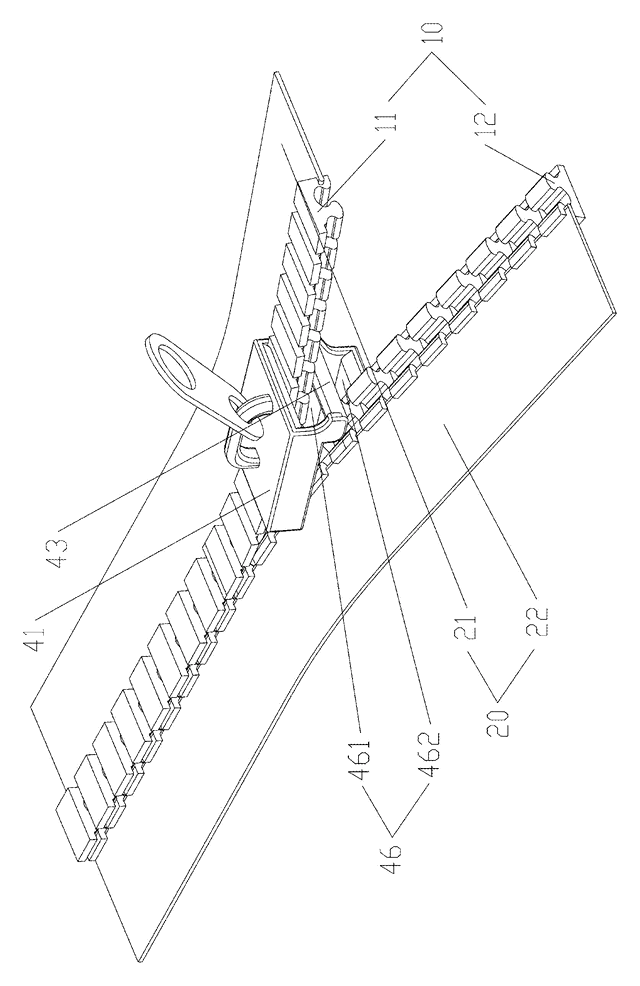
Apparel & Accessories
Stacked Zipper with Teeth That Mesh Top-to-Bottom
Zipper whose two identical tooth rows mesh on top of each other, closed by a simplified slider.
Patent CN205795062U
Apparel & Accessories
Impact-Resistant Glove with a 3D-Printed Lattice Layer
Work glove with a 3D-printed lattice impact layer, TPU knuckle guards and a light mounting area.
Patent CN213785583U
Apparel & Accessories
Massage Insole with Spring-Back Silicone Nubs and a Removable Top Layer
Layered insole: silicone nubs rise through a removable perforated top sheet and sink under each step.
Patent CN208286505U
Apparel & Accessories
Heel-Less Carbon Plate Running Shoe Sole for Forefoot Strikers
Running sole for forefoot strikers: no ground-touching heel, winged carbon plate between two midsoles.
Patent CN216723354U
Apparel & Accessories
Waterproof Magnetic Zipper Stop That Snaps the Two Halves Together
Separating-zipper stop with sealed magnets: pin and box snap together one-handed, safe in rain and wash.
Patent CN215075936U
Apparel & Accessories
Left-Right Specific Soccer Socks: Grip for the Plant Foot, Touch Pads for the Kicking Foot
Soccer socks knitted as a left-right pair: grip zones for the plant foot, pads for the kicking foot.
Patent CN212728807U
Browse by category
- Apparel & Accessories (30)
- Baby & Kids (20)
- Bags & Luggage (13)
- Bath & Personal Care (21)
- Car Accessories (16)
- Furniture, Bedding & Storage (15)
- Garden & Outdoor (21)
- Health & Wellness (10)
- Home, Kitchen & Cleaning (32)
- Lighting (16)
- Packaging & Containers (8)
- Pet Products (7)
- Phone & Camera Accessories (6)
- Retail Display (17)
- School, Office & Art (24)
- Sports & Recreation (31)
- Tools & Workshop (36)
- Toys & Games (16)
This page is based on the public patent document CN115088910B, assigned to Fujian Hongxing Erke Sports Goods Co ltd. IP2M is an independent manufacturing service and is not affiliated with, endorsed by or licensed by the patent owner. Images marked as concept renderings are illustrations, not photos of an existing product. Patent status information is provided for reference only and is not legal advice; confirm freedom to operate for your market before production. Full disclaimer.