At a glance
| Patent number | CN115088910B (application CN202210907862) |
| Type | China invention patent (发明专利) - protects product structure and method |
| Original title | Ultralight sole and shoe (一种超轻鞋底及鞋) |
| Patent owner | Fujian Hongxing Erke Sports Goods Co ltd |
| Inventors | Wu Rongzhao, Huang Maosheng, Yuan Xiongwen, Wen Ming |
| Filing date | 2022-07-29 |
| Grant date | 2023-06-20 |
| Status (China) | In force - valid until at most 2042-07-29, subject to payment of annual fees |
| Patent family | Chinese filings only - no US, European, Japanese, PCT or other filings listed |
| Cited by | 0 later documents |
| Source | Google Patents (search for CN115088910B) |
What the claims cover, in plain language
Claim 1 defines an ultra-light sole comprising a sole body with an upper sole and a lower sole. An inner cavity is formed between them. The end part of the lower sole connects to the inner wall of the cavity via a connecting sealing structure. This structure includes an upper sealing frame, a sealing washer, a positioning cardboard (plate), and a cardboard (clamp plate). Specific mechanical details include a lower groove on the sole, a cap end of the clamp plate fitting into it, and a positioning fixture block with a jack (hole) receiving a telescopic pin. The pin has a protruding plate and a second spring, creating a latch mechanism. The upper sealing frame is L-shaped, forming a groove for the sealing ring. Magnetic suction plates (first and second) are positioned to attract each other, securing the seal. A rubber air bag with a middle plate divides it into two cavities connected by air channels to the main inner cavity. Support blocks with elastic plates reinforce the cavity floor.
This is a simplified reading for orientation only. The legal scope is defined by the exact claim wording in the official Chinese document.
What this means for US production
This patent was filed only in China and is currently in force. Making or selling products covered by this specific structure in China requires the owner’s permission. However, since there are no corresponding patents in the United States or Europe, the design itself is not restricted by this specific document in those markets.
Two points to settle early:
- Other patents may exist. Footwear cushioning technologies, particularly those involving sealed air bags and magnetic closures, are a competitive field. While this specific combination appears unique to the filing, a freedom-to-operate (FTO) review is recommended to check for broader utility patents covering similar hollow-sole mechanisms or magnetic fastening systems in the target market.
- Material Compliance. The use of magnets and specific rubber compounds must be screened for chemical safety regulations relevant to the destination country, especially for children’s footwear or products sold in regions with strict substance restrictions.
Customization and manufacturing
What can be customized
| Area | Options |
|---|---|
| Cavity Volume | Depth of the inner cavity to adjust weight vs. cushioning ratio |
| Elastic Plate Density | Number and spacing of support blocks to tune firmness |
| Magnet Strength | Grade of magnetic plates to control sealing pressure and ease of disassembly |
| Air Bag Geometry | Shape of the middle plate to alter air flow dynamics between chambers |
| Outsole Tread | Pattern on the lower sole for traction requirements |
| Upper Material | Compatibility with various upper sole materials (PU, EVA, Rubber) |
Things to plan for (US market)
- CPSC Regulations: If marketed as children’s footwear, strict limits on lead, phthalates, and small parts apply. Magnets must be securely encapsulated to prevent ingestion hazards.
- ASTM F2413: If used in safety footwear, the sole construction must meet impact and compression resistance standards.
- California Prop 65: Screening for chemicals in rubber compounds, adhesives, and magnetic coatings is required for sales in California.
- REACH (EU Export): If exporting to Europe, compliance with REACH SVHC lists for plastics and rubbers is mandatory.
How a project runs
- Inquiry - Define target weight, cushioning level, and size range.
- Design - CAD modeling of the cavity, sealing interface, and air bag channels.
- Prototype - 3D printed or soft-tool molds to test magnetic seal integrity and elastic plate insertion.
- Pilot Run - Injection molding trials to verify cycle times and defect rates in the complex sole geometry.
- Production - Full-scale tooling, assembly of magnetic components, and quality testing of seal tightness.
Quantities & timeline
Manufacturing involves precision injection molding for the upper and lower sole components, requiring complex molds to accommodate the internal cavity and sealing grooves. Assembly of the magnetic plates and elastic inserts adds labor steps. Tooling development typically takes 8-12 weeks depending on complexity. Send us your target weight, size range, and estimated volume and we will reply with options.
Patent drawings
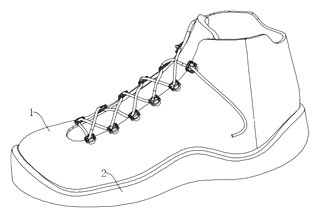
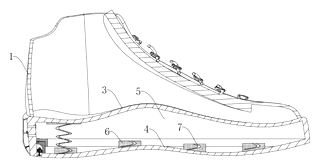
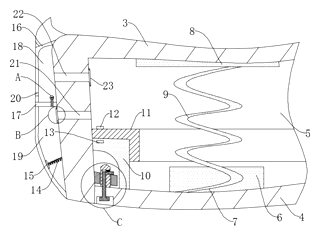
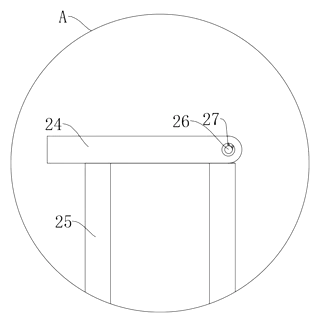
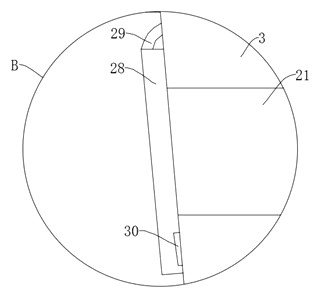
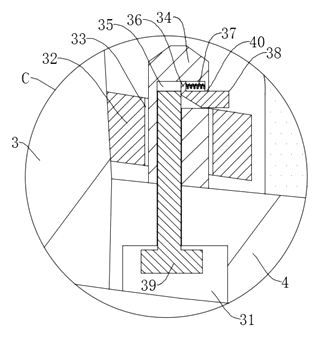
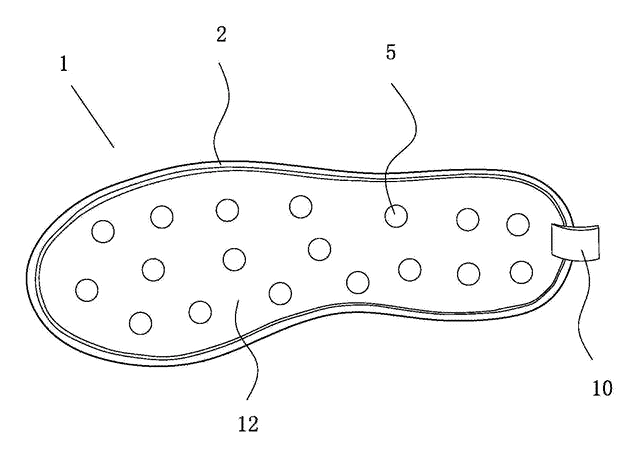
Drawings reproduced from the public patent document for reference.