At a glance
| Patent number | CN115127051B (application CN202210879568) |
| Type | China invention patent (发明专利) - protects product shape, structure and method |
| Original title | Truss type foldable energy-saving desk lamp convenient to adjust (一种便于调整的桁架式可折叠节能台灯) |
| Patent owner | Walsun Lighting Huizhou Co ltd |
| Inventors | Li Jiahang, Zhang Yongjun |
| Filing date | 2022-07-25 |
| Grant date | 2023-04-07 |
| Status (China) | In force until at most 2042-07-25 (if annual fees are paid) |
| Patent family | Chinese filings only - no US, European, Japanese, PCT or other filings listed |
| Cited by | 0 later documents |
| Source | Google Patents (search for CN115127051B) |
What the claims cover, in plain language
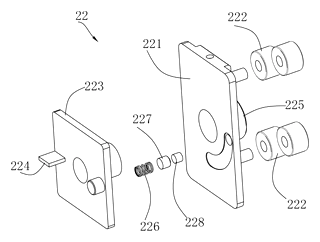
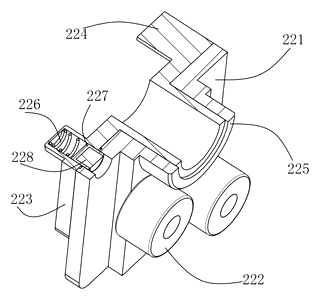
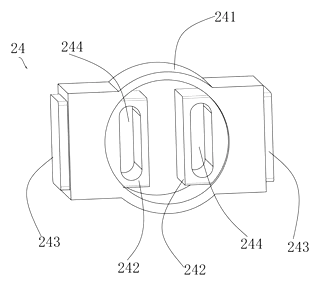
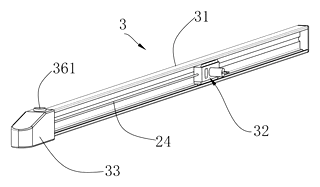
Claim 1 describes a foldable desk lamp comprising a base, a longitudinal guide device, and a transverse guiding device. The longitudinal guide device has a first support rod pivoting on the base, a first sliding assembly on one side, and a counterweight assembly on the other, linked by a traction rope. A longitudinal locking mechanism fixed to the first sliding assembly grips the first support rod. A first boss protrudes from the first sliding assembly. The transverse guiding device includes a second support rod, a second sliding assembly that slides along it and rotates on the first sliding assembly, a lampshade fixed to the rod’s end, and a telescopic connecting pipe. The second sliding assembly contains an isosceles trapezoid-shaped avoidance hole with first springs pressing against the upper and lower surfaces of the first boss. Tilting the second sliding assembly drives shifting shafts into strip-shaped holes of the locking mechanism to release the vertical lock. A pneumatic transverse locking mechanism on the second sliding assembly locks the horizontal position, operated by a pneumatic unlocking driving mechanism on the lampshade via the telescopic pipe.
Claim 2 specifies that the pneumatic transverse locking mechanism includes a first piston, a sealing ring, a second friction block, and a second spring housed in a first counter bore on the second sliding assembly.
This is a simplified reading for orientation only. The legal scope is defined by the exact claim wording in the official Chinese document.
What this means for US production
This patent was filed only in China and is currently in force there. Making or selling this exact lamp design in China needs the owner’s permission. Because no counterpart was filed in the United States or elsewhere, the Chinese patent alone does not restrict manufacturing or sales in the US.
Two points to settle early:
- Other patents may exist. Adjustable desk lamps and articulated lighting arms are heavily patented globally, covering friction locks, pneumatic controls, and counterweight linkages. Even though no foreign patents cite this specific Chinese document, established lighting companies hold numerous US patents in this field. A freedom-to-operate (FTO) review of the sliding guides, pneumatic locking, and linked unlocking mechanism is recommended before tooling.
- Pneumatic component sourcing. The telescopic connecting pipe and pneumatic seals must withstand repeated actuation without leaking. Selecting reliable miniature pneumatic parts is essential for long-term function.
Customization and manufacturing
What can be customized
| Area | Options |
|---|---|
| Dimensions | Length of the first and second support rods to set maximum height and reach |
| Materials | Aluminum or steel for the rods and base; plastics or metal for the sliding assemblies |
| Finish | Powder coating, anodizing, or painted finishes for the frame |
| Lampshade | Shape, size, and material of the shade; integration of LED modules |
| Counterweight | Mass adjusted to match the final weight of the horizontal arm and lampshade |
| Pneumatic parts | Tube routing, valve placement on the lampshade, and seal materials |
Things to plan for (US market)
- UL 153 - Standard for Portable Electric Luminaires; required by most US retailers for plug-in or battery-powered desk lamps.
- FCC Part 15 - Applies if the lamp incorporates LED drivers, dimmers, or any electronic circuitry that could emit radio frequency interference.
- California Title 20 - Appliance efficiency regulations that apply to LED lamps sold in California, requiring specific efficacy levels and certification.
- California Prop 65 - Materials used in the frame, cables, and pneumatic seals must be screened for listed chemicals.
How a project runs
- Inquiry - Define target dimensions, light source type, material preferences, and order volume.
- Design - Engineer the rod profiles, sliding assemblies, counterweight mass, pneumatic circuit, and spring rates based on the patent’s principles.
- Prototype - Machine or print initial samples to test the linked unlocking action, pneumatic lock engagement, and sliding smoothness.
- Pilot run - Produce a small batch for durability testing, cycle life verification of the friction blocks, and safety certification submissions.
- Production - Extrude or machine the rods, mold or cast the sliding assemblies, assemble the pneumatic lines, and install the electrical components.
Quantities & timeline
Manufacturing requires extrusion dies or machining fixtures for the support rods, injection molds or die-casting tools for the sliding assemblies and lampshade, and custom assembly jigs for the pneumatic tubing and traction ropes. Certification testing for UL and FCC adds time before volume shipments begin. Send us your target dimensions, material preferences, light source specifications, estimated quantity, and target price and we will reply with options.
Patent drawings
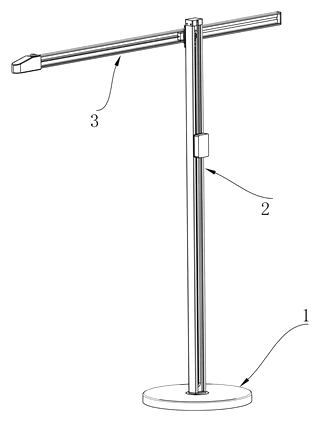
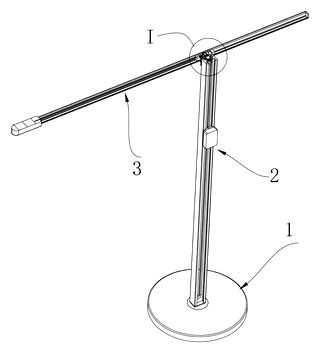
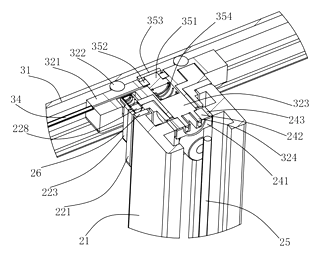
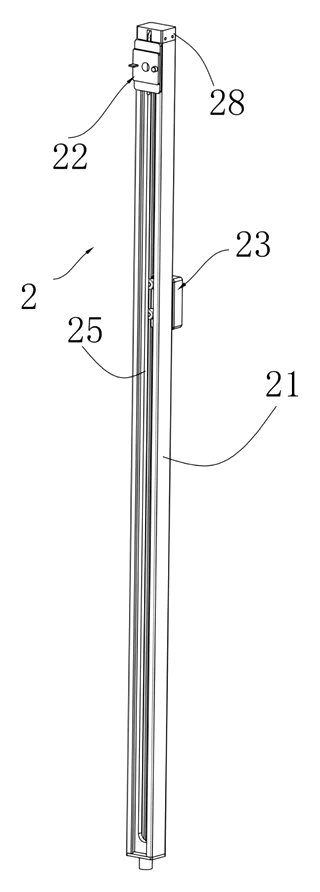
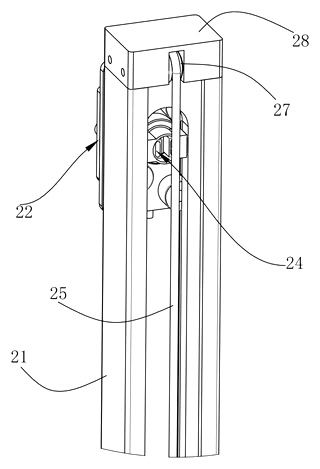
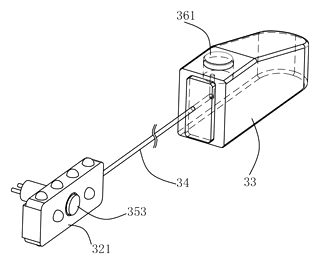
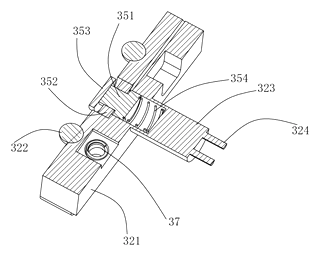
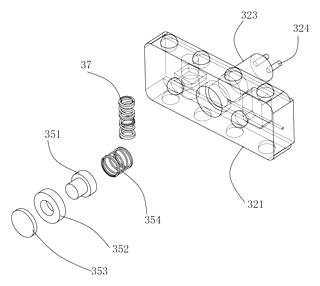
Drawings reproduced from the public patent document for reference.