
Patent CN115230365B
Updated November 7, 2026Plastic Soft Ring-Bound Loose-Leaf Booklet with Injection-Molded Binding Rings
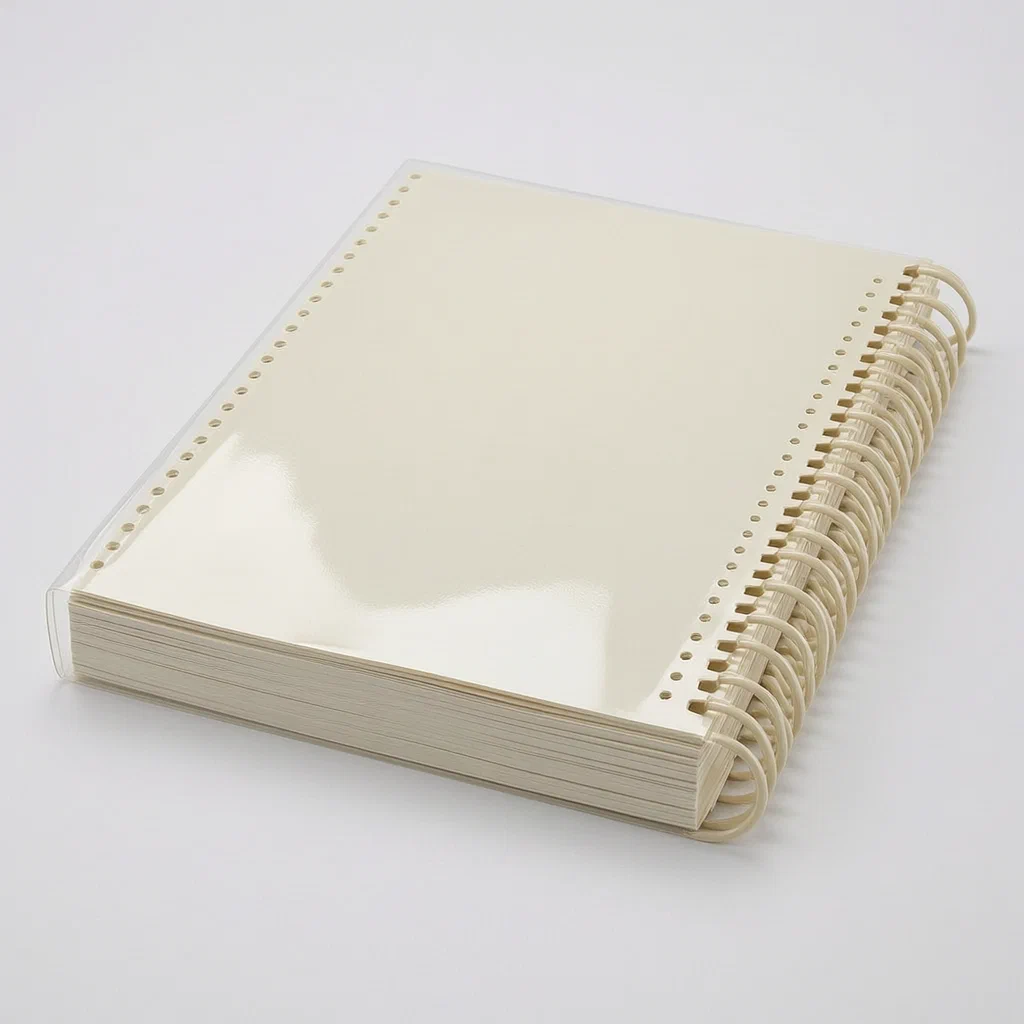
Traditional wire-o or spiral binding requires heavy machinery and fixed coil sizes. This patent describes a simpler alternative: soft plastic rings made from flat strips. A strip has a base band and tooth-like extensions. You align the pages, push the teeth through the holes, and weld the tip to the base. The result is a round, soft plastic ring that holds the book together. It’s scalable, uses standard injection molding for parts, and simplifies the binding process for brands and wholesalers.
- China invention patent - active
- No filings outside China
- Stationery & Binding
- LDPE rings, ultrasonic welding
Splat! What let you down?
📚
Flexible Binding
Rings are formed during assembly, allowing custom page counts per book.
🔗
Welded Loop
Comb-like teeth pass through holes and weld to the base band to close the ring.
🏭
Simple Manufacturing
Consumables are injection-molded; assembly requires only alignment and ultrasonic welding.
💎
Soft & Durable
Uses Low-Density Polyethylene (LDPE) for high gloss and elastic recovery.
Bring this product to market
- ✓ Patent review Patent family and legal status reviewed in the relevant jurisdictions.
- 2 Product brief · now How it works, uses and options written up
- 3 Prototype First samples for buyers to review
- 4 Pilot run Small first batch for launch customers
- 5 Volume production Repeat orders at scale
Buyer interest
– of 100 buyers needed to start prototyping
One click, no sign-up. Each vote is one real visitor, and products with the most interest go to prototyping first.
Build team: no members yet. Need a partner, co-funding or skills to build this? Join and we introduce the team once it forms.
Patent Rights & Team Participation
Before joining a development team, participants should ensure they have the necessary rights or authorization to participate in the project.
Participation is generally appropriate where:
- You own the relevant patent rights or have obtained permission or a license from the rights holder.
- The relevant patent rights have expired or have been legally invalidated in the jurisdictions where the planned activities will take place.
- The planned development, manufacturing, and commercialization activities have been independently assessed and do not infringe applicable patent rights in the relevant jurisdictions.
Important: Being located outside a country where a patent is protected does not automatically exempt you from patent infringement risks. Patent rights may apply based on where development, manufacturing, use, sale, or import activities take place.
IP2M does not grant any patent license or authorization through team participation. Joining a project does not provide permission to use, manufacture, or commercialize patented technology.
The problem
Standard loose-leaf binders often use metal wires or rigid plastic coils that require specialized opening/closing tools or large machinery to install. For manufacturers producing custom notebooks, journals, or educational kits, this creates bottlenecks: you must stock many different coil sizes to match varying page counts, and the installation equipment is expensive and bulky. Additionally, rigid coils can snag clothing or feel harsh against the hand when reading. There is a need for a binding method that is simple to execute, adaptable to variable thicknesses, and uses softer, safer materials.
The solution
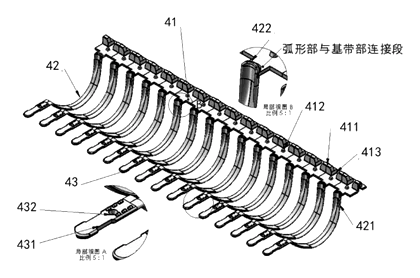
The patent introduces a “binding ring consumable”—a flat strip of plastic with two distinct zones: a base belt part (flat backing) and an arc part connected to tooth tips. These teeth are arranged like a comb.
- Preparation: Pages are punched with rectangular or square holes along one edge.
- Insertion: The tooth tips of the consumable are pushed through the aligned holes of the stacked pages.
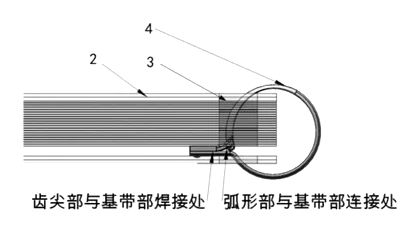
- Formation: The arc part bends around to form a near-circular loop. The tooth tip overlaps the base belt part.
- Fixation: Ultrasonic welding joins the tooth tip to the base belt. After welding, excess positioning bosses may be trimmed off.
This creates a closed, soft plastic ring that holds the pages securely. Because the ring is formed around the pages, it naturally accommodates the exact thickness of the stack, eliminating the need for multiple pre-sized coil diameters.
Who it is for
- Notebook and Journal Brands: Companies launching new product lines who want to offer customizable page counts without stocking dozens of coil sizes.
- Educational Kit Manufacturers: Producers of workbooks or student journals where page numbers vary by subject or grade level; this system simplifies assembly.
- Promotional Product Suppliers: Agencies creating branded notebooks for events; the simple assembly line allows for quick turnaround on custom orders.
- Office Supply Wholesalers: Distributors looking for a differentiated, softer-touch alternative to standard wire-o or spiral bindings for corporate clients.
How it works
The main parts
| No. | Part | What it does |
|---|---|---|
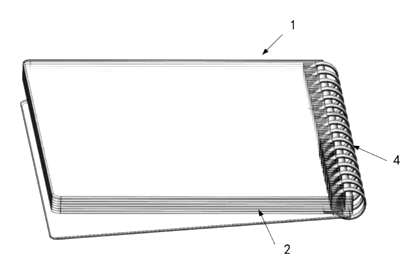
| 1 | Booklet Assembly | The final product consisting of pages and rings. |
| 2 | Loose Leaves | Paper, fabric, or leather sheets with punched holes. |
| 3 | Through Holes | Rectangular/square openings in the pages for the ring teeth. |
| 4 | Binding Ring | The final circular loop holding the pages. |
| 41 | Base Belt Part | Flat strip section; includes positioning features. |
| 42 | Arc Part | Curved section that forms the body of the ring. |
| 43 | Tooth Tip | Pointed end that passes through holes and welds to the base. |
| 411/412 | Positioning Bosses/Dots | Features on the base belt to align the tooth tip before welding. |
Operating steps
- Stack and Align: Gather the desired number of pages and align their punched holes.
- Thread: Insert the tooth tips (43) of the consumable strip through the holes (3).
- Wrap: Bend the arc part (42) so the tooth tip meets the base belt part (41).
- Weld: Use ultrasonic equipment to fuse the tooth tip to the base belt, closing the loop.
- Trim (Optional): Remove any protruding positioning bosses if specified in the design variant.
Applications
Student Workbooks
School supplies often require specific page counts for math or language exercises. This binding allows schools or publishers to print exactly the needed number of sheets and bind them quickly without adjusting machine settings for different coil diameters.
Corporate Journals
Businesses ordering branded notebooks for conferences benefit from the soft LDPE material, which feels premium and doesn’t snag on suit pockets or bags. The uniform look of the rings enhances brand presentation.
DIY Craft Kits
Craft sets for children or hobbyists often include varying amounts of paper or cardstock. The consumable strips can be sold as part of the kit, allowing users to assemble their own booklets with minimal tools (just an adhesive or simple press if adapted, though the patent specifies ultrasonic welding for factory use).
Archival Albums
For photo albums or document storage where the content thickness varies significantly between volumes, this system ensures a tight fit without gaps, protecting contents from shifting or falling out.
Where it is less suitable
- High-Security Documents: Unlike tamper-evident seals, these rings can potentially be cut or melted open if accessed with tools, making them unsuitable for confidential legal contracts requiring strict integrity.
- Very Heavy Loads: While LDPE is durable, extremely thick stacks of hardboard or metal sheets may exceed the tensile strength of the plastic ring compared to steel wire-o.
- Automated High-Speed Lines: If your facility already runs fully automated wire-binding machines, switching to this manual or semi-automatic welding step might slow down throughput unless dedicated ultrasonic stations are installed.
Patent & Production
At a glance
| Patent number | CN115230365B (application CN202210938179) |
| Type | China invention patent (发明专利) - protects product structure and method |
| Original title | Plastic soft ring-bound loose-leaf booklet (塑胶软性圈装活页本册) |
| Patent owner | Ningbo Chuangxin Binding Equipment Co., Ltd. |
| Inventors | Wang Weijun |
| Filing date | 2022-08-05 |
| Grant date | 2023-09-08 |
| Status (China) | In force until at most 2042-08-05 (if annual fees are paid) |
| Patent family | Public record shows Chinese filings only - no US, European, Japanese, PCT or other filings listed |
| Cited by | 0 later documents |
| Source | Google Patents (search for CN115230365B) |
What the claims cover, in plain language
Claim 1 defines a loose-leaf booklet where pages have holes, and a plastic soft binding ring passes through them. The ring is formed from a “binding ring consumable” consisting of three parts: a base belt part (flat), an arc part, and tooth tips. The arc and tooth tips form a comb-like rack. The tooth tip passes through the page hole and is welded to the base belt part to create a circular ring. The arc part has a specific bend (“second direction arc”) and an extension that rises above the base surface.
Claims 2-3 specify angles between the arc/base and arc/tooth tip sections. Claims 4-5 detail positioning features on the base belt (bosses and dots) and corresponding grooves/holes on the tooth tip to ensure accurate alignment before welding. Claim 6 mentions trimming the positioning bosses after welding. Claim 7 identifies Low-Density Polyethylene (LDPE) as the preferred material. Claim 8 states the consumables are made via injection molding. Claim 9 specifies ultrasonic welding as the joining method. Claims 10-11 describe the offset position of the weld and its placement relative to covers/pages. Claims 12-13 define sizing rules: starting inner diameter of 6.5mm, increasing by 1.5mm steps, and the relationship between ring diameter and leaf thickness. Claim 14 sets the height of the extension part at 0.5–1.2mm.
This is a simplified reading for orientation only. The legal scope is defined by the exact claim wording in the official Chinese document.
What this means for US production
This patent was filed in China and is currently in force. The public record shows no US or other foreign counterpart. Therefore, making or selling this specific configuration in China requires the owner’s permission. In the US, since there is no US patent counterpart, the design itself is not restricted by this specific patent. However, general freedom-to-operate analysis is still recommended.
Two points to settle early:
- Other patents may exist. The stationery and binding industry is competitive. While this specific mechanism appears unique in the public record for this patent, related mechanisms for plastic coil binding or ultrasonic welding of stationery items may be covered by other US patents. A freedom-to-operate (FTO) review is advised before mass production.
- Material Safety. The patent specifies LDPE. Ensure the resin used meets US standards for office supplies, particularly regarding phthalates or other additives if targeting school markets.
Customization and manufacturing
What can be customized
| Area | Options |
|---|---|
| Ring Diameter | Starting at ~6.5mm inner diameter, scalable in 1.5mm increments per Claim 12. |
| Page Thickness Capacity | Determined by ring size selection (Inner Dia = Leaf Thickness + 2.5-4mm). |
| Material | LDPE is preferred for gloss/elasticity; other plastics possible if they support ultrasonic welding. |
| Color | Pigments can be added during injection molding for brand matching. |
| Hole Shape | Rectangular or square holes (as described in the specification) to fit the tooth width. |
| Finish | High gloss (standard for LDPE) or matte finishes via mold texture. |
Things to plan for (US market)
- ASTM F963: Standard Consumer Safety Specification for Toy Safety (if marketed to children under 12). Small parts regulations apply to the rings and pages.
- California Prop 65: Screening of plastics and pigments for listed chemicals.
- General Product Safety: Ensuring edges are smooth (post-trimming) to prevent cuts, especially for school use.
How a project runs
- Design Validation: Confirm hole dimensions match tooth width; select ring size for target page count.
- Mold Making: Create injection molds for the “binding ring consumable” strips.
- Sample Run: Produce strips using LDPE; test ultrasonic welding parameters.
- Assembly Test: Verify ease of threading and ring closure; check aesthetic finish after boss trimming.
- Production Scale-up: Set up injection molding lines and ultrasonic welding stations.
Quantities & timeline
Injection molds for the consumable strips are the primary tooling cost. Ultrasonic welding requires calibrated generators and horns. Cycle times depend on wall thickness of the plastic. Send us your target page counts, color requirements, and estimated volume and we will reply with options.
Patent drawings
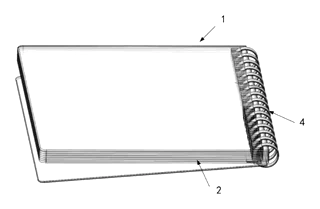
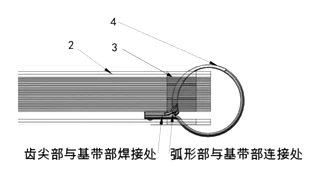
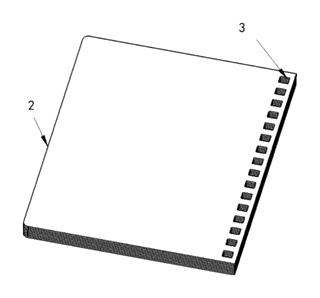
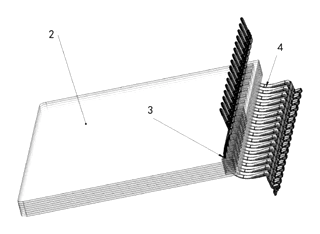
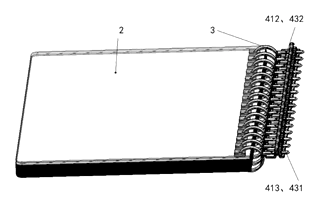
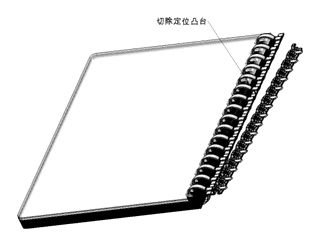
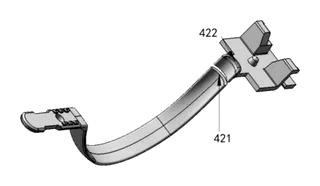
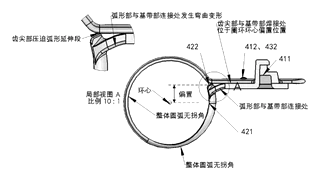
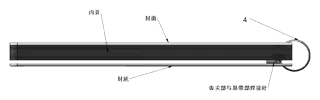
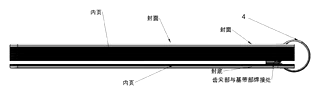
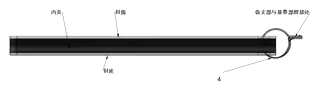
Drawings reproduced from the public patent document for reference.
Production notes
Tooling and process
Likely requires precision injection molds for the comb-like consumable strips. Heat staking or adhesive bonding stations are typically needed to fuse the tooth tip to the base band. Trimming dies may be necessary to remove positioning bosses after bonding.
Cost drivers
Number of molds depends on ring size variations. Print setup costs apply if branding is added directly to the pages or packaging. Spring and clip quality is not applicable here, but plastic resin consistency affects weld strength. Assembly steps (threading, welding, trimming) drive labor or automation costs.
Prototyping path
We would typically start with 3D-printed samples of the consumable geometry to verify fit. Conduct function and cycle tests on small batches. Perform a print trial for any decorative elements. Off-the-shelf springs are not relevant; focus on testing the plastic elasticity.
What we would change before tooling
We would likely verify the tolerance between the tooth width and the page hole size to prevent jamming. Adjust the ultrasonic welding energy settings to avoid melting through the thin LDPE. Ensure the trimming mechanism cleanly removes bosses without damaging the ring surface.
Common failure points
Hinge fatigue is unlikely in this static ring, but edge hardness and wear could cause tearing if the plastic is too brittle. Seam strength is critical; poor welding leads to ring failure. Ink compatibility matters if printing on the plastic. Cover cracking may occur if the ring is too tight for the page weight.
Frequently asked questions
How is the ring attached to the pages?
The ring is not a pre-made coil. It starts as a flat plastic strip with comb-like teeth. You push the teeth through the holes in your stacked pages, bend the strip into a circle, and then ultrasonically weld the tip of the tooth to the back of the strip. This closes the loop around the pages.
What material is used for the binding rings?
The patent specifically recommends Low-Density Polyethylene (LDPE). This material is chosen for its high gloss, flexibility, and ability to recover from deformation, making the rings durable and pleasant to handle.
Can I choose the size of the ring?
Yes. The design allows for scalability. The patent describes starting with an inner diameter of about 6.5mm and increasing in 1.5mm increments. The correct size is determined by the total thickness of your pages (inner diameter equals leaf thickness plus 2.5–4mm).
Is this binding method difficult to automate?
It involves several steps: punching, stacking, threading, bending, welding, and trimming. While the welding is fast, the threading and alignment can be automated with proper fixtures. It is generally simpler than installing rigid wire-o spines but more involved than dropping pages onto a pre-opened metal ring.
Do the rings leave sharp edges?
The patent includes a step to trim off the “positioning bosses” used for alignment during welding. When done correctly, this results in a smooth, continuous ring. Proper mold design and trimming processes are key to ensuring no sharp edges remain.
Can this design be made and sold in the US?
The patent is in force in China. However, the public record shows no US counterpart for this specific patent. This means this particular Chinese patent does not restrict sales in the US. Always conduct a broader freedom-to-operate search to ensure no other US patents cover similar binding mechanisms.
Are you affiliated with the patent owner?
No. IP2M is an independent design and manufacturing service working from the public patent document.
Request a quote
Click Request a Quote below to see our email address - copy it, or open your email app with a ready-made message. Please mention patent CN115230365B in the subject.
Helpful details to include:
- Your company and channel (notebook brand, educational publisher, promo supplier)
- Target page count or thickness range
- Ring colors and finish preferences
- Estimated quantity of consumable strips vs. finished booklets
- Timeline - when you would like samples and the first shipment
You can also reach us at (332) 203-9997.
Page editor: Daniel Chen, Product Research Editor · IP2M
Last updated November 7, 2026. If something on this page looks wrong, email [email protected] and we will check it against the patent.
Interested in building this?
Tell us your target market, quantity and timeline. We reply with options for prototyping, small-batch runs or volume production.
Send your inquiry to
Please put CN115230365B in the subject line and tell us your company, country, estimated quantity and timeline.
Prefer to talk? Call (332) 203-9997.
More product-ready patents
All School, Office & Art patents →
School, Office & Art
Long-Point Sketch Pencil Sharpener
Crank sharpener that cuts only the wood of sketch pencils, leaving a long, round lead about 30 mm long.
Patent CN207241257U
School, Office & Art
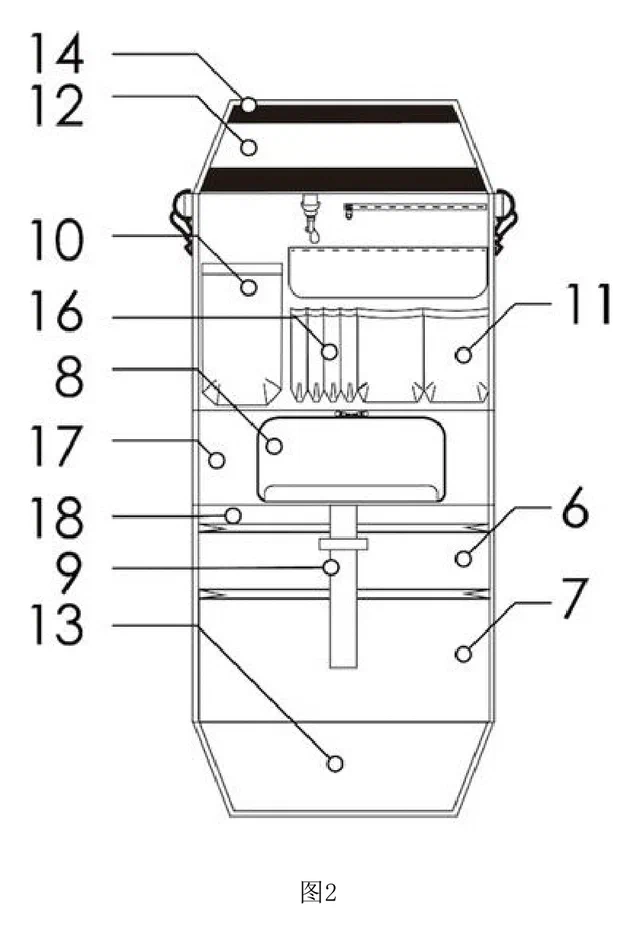
Fold-Out Desk Organizer Insert for School Backpacks
Backpack insert that unfolds into a hanging desk organizer for workbooks, stationery and a water bottle.
Patent CN209436546U
School, Office & Art
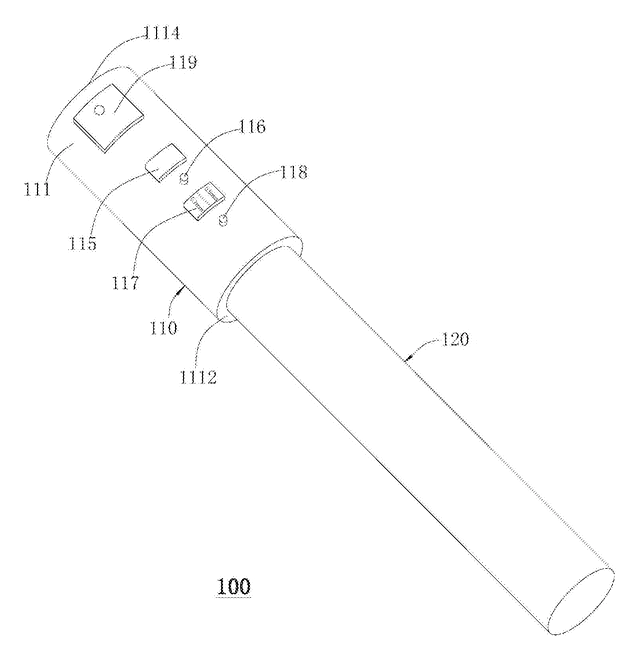
Smart Pencil Cap That Checks the Point with a Camera
Electronic pencil cap that photographs the point, measures it and reminds you to sharpen.
Patent CN106427302B
School, Office & Art
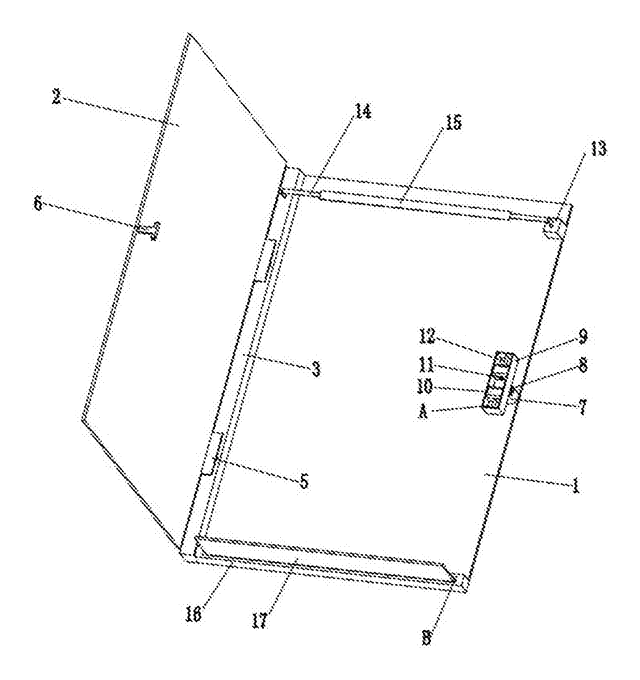
Expanding Clipboard Folder with Spring-Mounted Hinge and Catch
Hard folder whose spring-mounted hinge and catch let the cover clamp any thickness of paper.
Patent CN105667120B
School, Office & Art
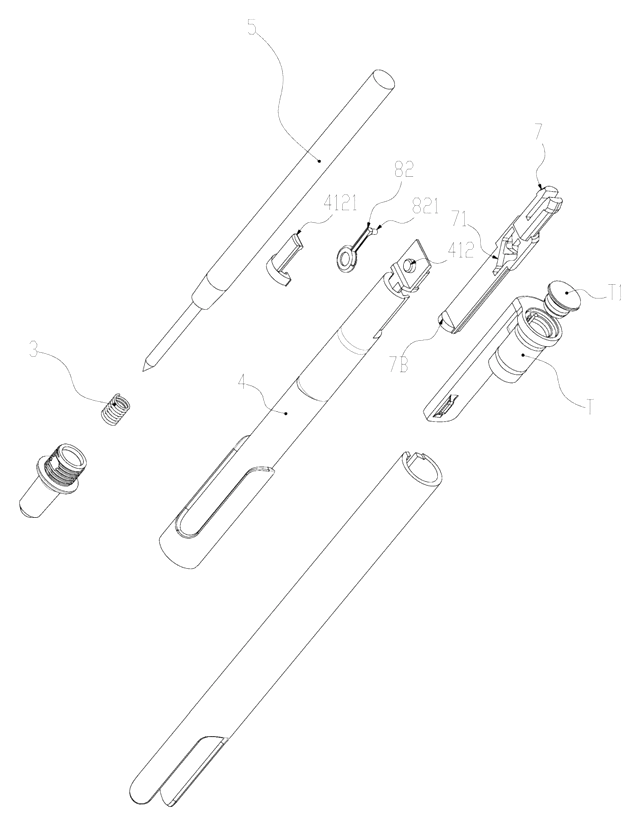
Slide-Action Retractable Pen with a Friction-Loaded Cam That Ignores Gravity
Slide-action retractable pen whose spring-pressed cam latch stays put whichever way the pen is held.
Patent CN217671900U
School, Office & Art
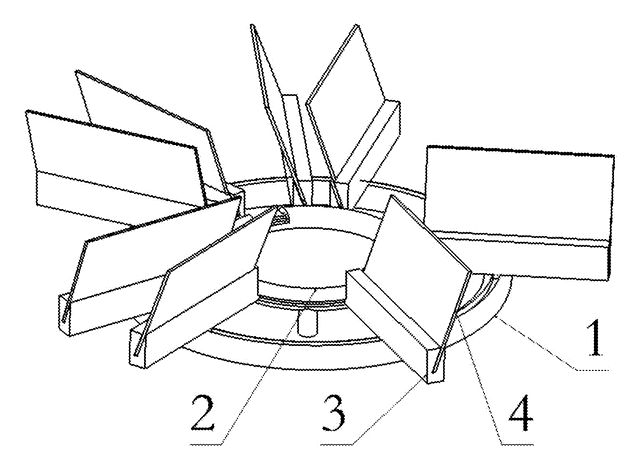
Carousel Business Card Holder with Rolling Card Trays on Twin Ring Tracks
Desk card holder: angled card trays roll on wheels around two concentric ring tracks and lift out.
Patent CN105774300B
Browse by category
- Apparel & Accessories (49)
- Baby & Kids (29)
- Bags & Luggage (17)
- Bath & Personal Care (32)
- Car Accessories (25)
- Furniture, Bedding & Storage (25)
- Garden & Outdoor (34)
- Health & Wellness (14)
- Home, Kitchen & Cleaning (51)
- Lighting (23)
- Packaging & Containers (12)
- Pet Products (12)
- Phone & Camera Accessories (9)
- Retail Display (25)
- School, Office & Art (37)
- Sports & Recreation (47)
- Tools & Workshop (55)
- Toys & Games (23)
This page is based on the public patent document CN115230365B, assigned to Ningbo Chuangxin Binding Equipment Co., Ltd.. IP2M is an independent manufacturing service and is not affiliated with, endorsed by or licensed by the patent owner. Images marked as concept renderings are illustrations, not photos of an existing product. Patent status information is provided for reference only and is not legal advice; confirm freedom to operate for your market before production. Full disclaimer.