
Patent CN115251607B
Updated November 4, 2026Smart Bathroom Mirror Cabinet with Automatic Cleaning and Sensor Lighting
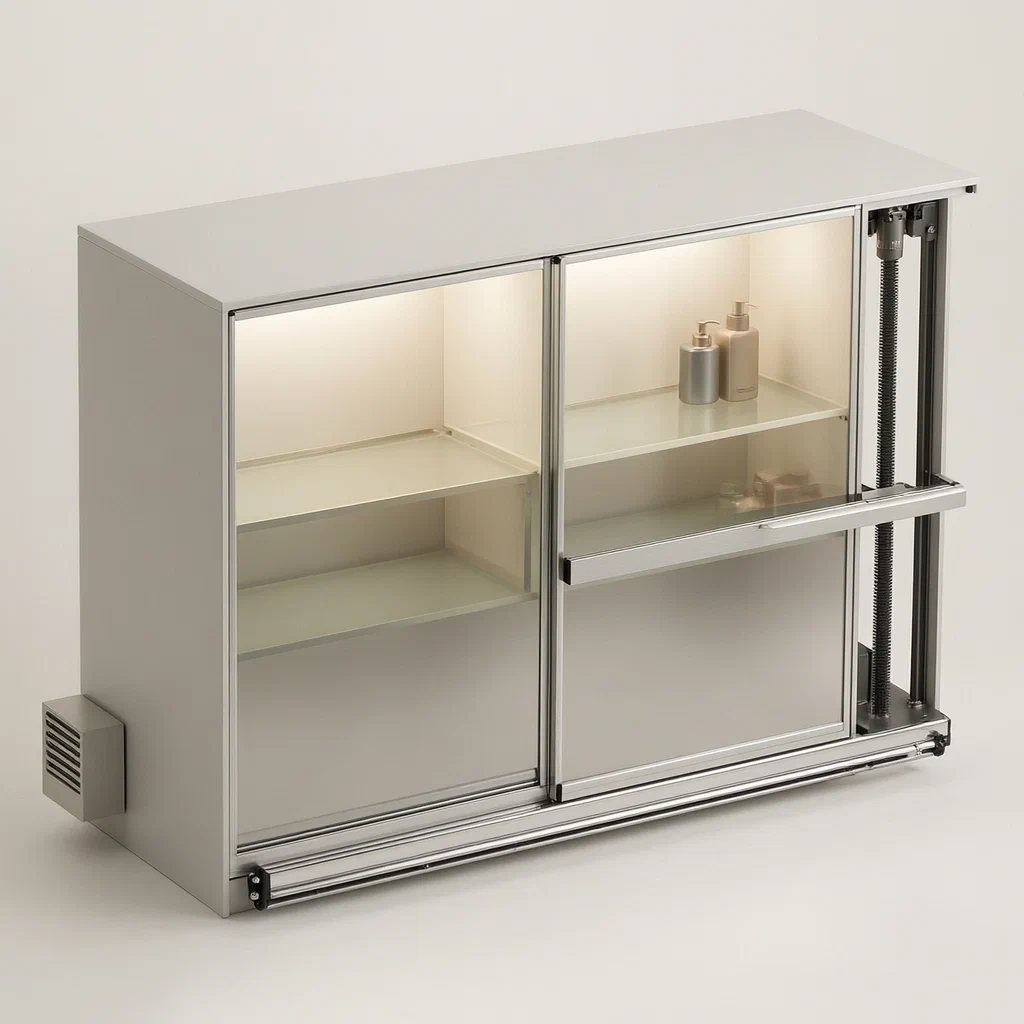
Steam and dust quickly obscure bathroom mirrors, requiring frequent manual wiping that is often messy or skipped entirely. This patent describes a smart mirror cabinet where the sliding doors themselves are cleaned by an automated mechanism. A motor drives a belt-and-screw assembly to move a hairbrush up and down across the glass surface. The doors slide horizontally on pulley tracks, positioning the dirty section directly under the brush. Inside, the cabinet offers three distinct storage zones with adjustable shelves, while external lights activate via infrared sensors for hands-free illumination.
- China invention patent - in force
- No filings outside China
- Bathroom furniture & smart home
- Motorized cleaning, sliding doors, sensor lighting
Splat! What let you down?
🧹
Automatic Cleaning
A motor-driven brush moves vertically to wipe steam and dust from the sliding mirror doors.
💡
Sensor Lighting
Three external lamps feature infrared sensors for hands-free activation when users approach.
📦
Adjustable Storage
Internal partitions create three zones; shelves slide out and lock into place via ejector rods.
🚪
Sliding Door Design
Mirror doors glide on pulley tracks, allowing specific panels to be positioned for cleaning.
Bring this product to market
- ✓ Patent review Patent family and legal status reviewed in the relevant jurisdictions.
- 2 Product brief · now How it works, uses and options written up
- 3 Prototype First samples for buyers to review
- 4 Pilot run Small first batch for launch customers
- 5 Volume production Repeat orders at scale
Buyer interest
– of 100 buyers needed to start prototyping
One click, no sign-up. Each vote is one real visitor, and products with the most interest go to prototyping first.
Build team: no members yet. Need a partner, co-funding or skills to build this? Join and we introduce the team once it forms.
Patent Rights & Team Participation
Before joining a development team, participants should ensure they have the necessary rights or authorization to participate in the project.
Participation is generally appropriate where:
- You own the relevant patent rights or have obtained permission or a license from the rights holder.
- The relevant patent rights have expired or have been legally invalidated in the jurisdictions where the planned activities will take place.
- The planned development, manufacturing, and commercialization activities have been independently assessed and do not infringe applicable patent rights in the relevant jurisdictions.
Important: Being located outside a country where a patent is protected does not automatically exempt you from patent infringement risks. Patent rights may apply based on where development, manufacturing, use, sale, or import activities take place.
IP2M does not grant any patent license or authorization through team participation. Joining a project does not provide permission to use, manufacture, or commercialize patented technology.
The problem
Standard bathroom mirrors fog up with steam after showers and accumulate dust over time, requiring frequent manual cleaning that users often neglect. Traditional medicine cabinets have fixed shelving that does not accommodate items of varying heights, leading to wasted space or cluttered arrangements. Furthermore, accessing dimly lit bathrooms usually requires fumbling for switches, which is inconvenient when hands are wet or occupied.
The solution
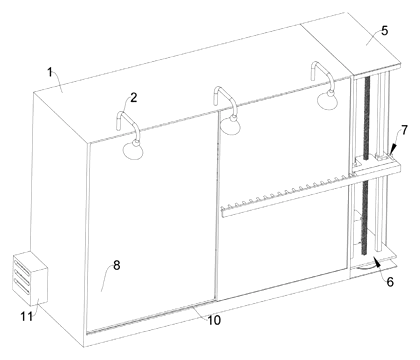
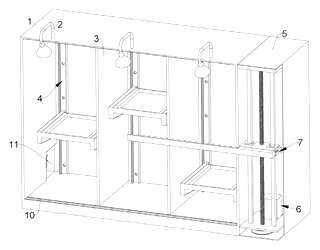
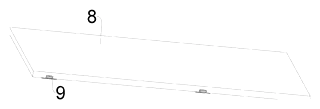
The patent describes a wall-mounted cabinet body (1) equipped with two sliding mirror pushing doors (8). These doors operate on lower pulleys (9) that ride within sliding grooves (10) cut into the cabinet’s bottom inner wall. This horizontal movement allows the user to position either door panel directly under the cleaning mechanism.
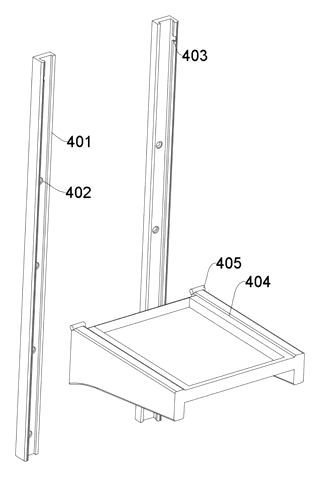
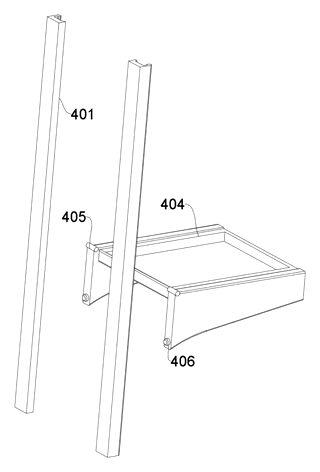
Inside the cabinet, partition boards (3) divide the interior into three storage chambers. Each chamber contains a containing mechanism (4) consisting of hanging plates (401) and placement frames (404). The frames can be removed or added through transfer grooves (403), and their position is secured by limiting blocks (406) engaging with limiting grooves (402) on the plates. Ejector rods (405) assist in locking the frames in place.
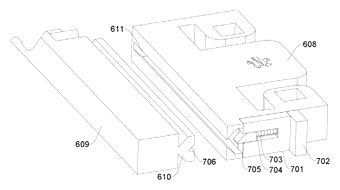
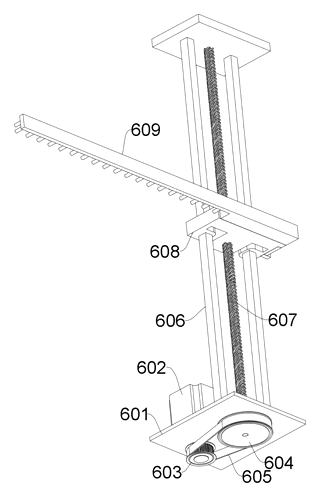
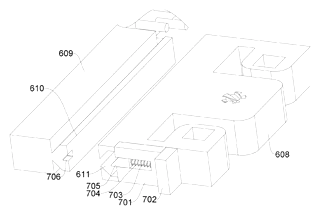
On the side end of the cabinet, a first fixing frame (5) houses the automatic cleaning mechanism (6). This mechanism uses a motor (602) to drive a first crawler wheel (603), which rotates a second crawler wheel (604) via a belt (605). The second wheel turns a screw rod (607). A slider block (608), threaded onto the screw and guided by vertical rods (606), moves up and down as the screw rotates. Attached to this slider is a hairbrush (609) held by a clamping block (610). As the slider moves, the brush wipes the surface of the mirror door.
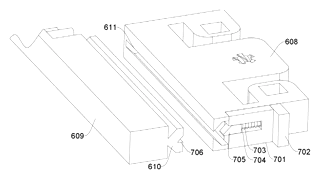
To facilitate maintenance, a replacing mechanism (7) is integrated. It features a pull block (702) connected to a connecting rod (703) and a clamping block (705). Pushing the pull block compresses a spring (704) and disengages the clamp, allowing the hairbrush (609) to be swapped for one with different specifications.
Exterior lighting is provided by three lamps (2) mounted on the upper end of the cabinet, each equipped with an infrared sensor. An optional exhaust fan (11) can be attached to the side for ventilation.
Who it is for
- Smart Home Integrators: Companies looking to add functional automation to bathroom fixtures without complex wiring for motion-activated cleaning cycles.
- High-End Bathroom Furniture Brands: Manufacturers targeting consumers who value low-maintenance surfaces and organized, adjustable storage solutions.
- Hotel and Hospitality Suppliers: Facilities managers seeking durable, self-cleaning mirror units that reduce housekeeping labor for common areas or guest suites.
- Elderly Care Facility Providers: Installations where hands-free lighting and easy-to-access storage improve safety and convenience for residents with limited mobility.
How it works
The main parts
| No. | Part | What it does |
|---|---|---|
| 1 | Cabinet Body | Main housing mounted on the wall. |
| 2 | Lamps | Three lights with infrared sensors for auto-on functionality. |
| 3 | Partition Boards | Divide the interior into three separate storage chambers. |
| 4 | Containing Mechanism | Adjustable shelf systems using hanging plates and sliding frames. |
| 5 | First Fixing Frame | Side housing for the cleaning motor and brush assembly. |
| 6 | Cleaning Mechanism | Motor, belts, screws, sliders, and brush for wiping mirrors. |
| 7 | Replacing Mechanism | Spring-loaded latch system for quick brush changes. |
| 8 | Mirror Pushing Doors | Two sliding glass panels that serve as the cabinet front. |
| 9 | Pulleys | Wheels on the bottom of the doors that roll in the tracks. |
| 10 | Sliding Grooves | Tracks in the cabinet base guiding the door movement. |
| 11 | Exhaust Fan | Optional ventilation unit mounted on the side. |
Operating steps
- Activation: When the user approaches, the infrared sensors trigger the lamps (2) to turn on.
- Door Positioning: The user slides one of the mirror doors (8) horizontally along the grooves (10) using the pulleys (9) until the panel is aligned under the cleaning mechanism (6).
- Cleaning Cycle: The motor (602) starts. Through the belt and gear system, the screw rod (607) rotates. This rotation forces the slider block (608) to move vertically along the guide rods (606).
- Wiping Action: The attached hairbrush (609) moves up and down across the mirror surface, removing water mist and dust.
- Maintenance: If the brush needs replacement, the user pushes the pull block (702). This action retracts the clamping block (705) against the spring (704), releasing the brush holder (610) so a new brush can be inserted.
- Storage Adjustment: To change shelf height, the placement frame (404) is lifted out via the transfer groove (403) and re-inserted at a different level, locking the limiting blocks (406) into the corresponding grooves (402).
Applications
Modern Residential Bathrooms
Homeowners use the sensor lights for nighttime visits without disturbing partners, while the auto-clean function maintains clarity after hot showers. The adjustable shelves allow families to store everything from tall shampoo bottles to small cosmetic jars efficiently.
Luxury Hotel Suites
Hotels install these units to provide a premium guest experience. The self-cleaning mirrors reduce housekeeping time spent on polishing glass, ensuring every room looks pristine upon entry. The quiet operation of the motor minimizes noise pollution in adjacent rooms.
Accessible Living Spaces
For elderly users or those with mobility issues, the hands-free lighting eliminates the need to reach for switches. The sliding doors open smoothly without swinging into the user’s path, and the high-contrast mirror remains clear without physical effort to clean.
Compact Urban Apartments
In small bathrooms, space optimization is critical. The vertical storage compartments utilize wall height effectively, and the sliding door mechanism requires no clearance for swing-out doors, making it ideal for tight layouts near sinks or toilets.
Commercial Spa Facilities
Day spas and wellness centers benefit from hygienic, touchless interfaces. Clients can access amenities without touching handles or switches, maintaining a sterile environment. The robust construction withstands high humidity and frequent usage cycles.
Where it is less suitable
- Extremely High Humidity Zones: While designed for bathrooms, direct exposure to constant heavy steam without adequate ventilation may accelerate wear on electronic components if the IP rating is not confirmed.
- Very Large Custom Mirrors: The mechanism is sized for standard sliding door widths; oversized custom glass panels may exceed the motor’s torque capacity or track load limits.
- Budget-Focused Renovations: The complexity of the motorized cleaning and sensor systems makes this significantly more expensive than standard manual medicine cabinets.
Patent & Production
At a glance
| Patent number | CN115251607B (application CN202210497679) |
| Type | China invention patent - protects product structure and method |
| Original title | Smart home induction lighted mirror case (一种智能家居用感应性带灯镜柜) |
| Patent owner | Shenzhen Macchi Information Technology Co., Ltd.; Shenzhen Meichi Smart Technology Co., Ltd. |
| Inventors | Shen Weimin, Liu Zufang, Ma Xuewen, Huang Meng, Wang Weilin, Liu Yi |
| Filing date | 2022-05-09 |
| Grant date | 2024-01-19 |
| Status (China) | In force until at most 2042-05-09 (if annual fees are paid) |
| Patent family | Public record shows Chinese filings only - no US, European, Japanese, PCT or other filings listed |
| Cited by | 0 later documents |
| Source | Google Patents (search for CN115251607B) |
What the claims cover, in plain language
Claim 1 defines a wall-mounted cabinet body with two sliding mirror doors running on pulleys in bottom grooves. The interior is divided by partitions into three chambers, each with an adjustable storage mechanism using hanging plates and removable frames locked by ejector rods and limiting blocks. A side-mounted cleaning mechanism uses a motor to drive a belt-and-screw system, moving a vertical slider that holds a hairbrush. A replacing mechanism with a spring-loaded latch allows the brush to be swapped.
Claim 2 adds three lamps with infrared sensors on the top of the cabinet. Claim 3 specifies an electrically connected exhaust fan on the side. Claim 4 details chamfered edges and placing grooves on the storage frames. Claim 5 describes a sloped lower inner wall for drainage. Claim 6 mentions drainage grooves within the sliding tracks.
This is a simplified reading for orientation only. The legal scope is defined by the exact claim wording in the official Chinese document.
What this means for US production
This patent was filed in China and is currently in force. The public record shows no US or other foreign counterpart. Making or selling this specific configuration in China requires the owner’s permission. For US production, the lack of a US patent means the design itself is not restricted by this specific document in the United States.
Two points to settle early:
- Other patents may exist. Smart bathroom fixtures and automated cleaning mechanisms are active fields. A freedom-to-operate (FTO) review is necessary to check for existing US patents covering similar sensor-triggered cleaning systems or sliding mirror assemblies before tooling.
- Component Sourcing. The motor, belt, and screw assembly require precise alignment. Confirming supplier availability for these specific mechanical parts in your target market is essential for consistent quality.
Customization and manufacturing
What can be customized
| Area | Options |
|---|---|
| Dimensions | Width, height, and depth of the cabinet body; door size. |
| Materials | Steel tube bending for frame; wood or MDF machining for panels; aluminum extrusion for rails. |
| Finish | Powder coating for metal parts; paint or laminate for wood components. |
| Electronics | Sensor sensitivity; LED color temperature; fan speed controls. |
| Brush Type | Material and stiffness of the hairbrush (609); interchangeable heads. |
| Storage Layout | Number and spacing of partition boards (3); shelf depths. |
Things to plan for (US market)
- UL Certification: Electrical components (motor, lights, fan) must meet UL standards for bathroom environments (damp/wet locations).
- FCC Compliance: Wireless modules (if added for app control) require FCC certification.
- ADA Accessibility: If installed in commercial spaces, ensure mirror height and control reach comply with Americans with Disabilities Act guidelines.
- Moisture Resistance: Materials must be rated for high-humidity environments to prevent warping or corrosion.
How a project runs
- Inquiry: Define dimensions, electrical specs, and material preferences.
- Design: CAD modeling of the mechanical linkage and electrical layout.
- Prototype: 3D-printed connectors and welded/bolted frame samples for fit checks.
- Testing: Load tests on shelves, cycle tests on the cleaning motor, and moisture resistance trials.
- Production: Injection molding for plastic parts, steel tube bending/welding for frames, powder coating, and final assembly.
Quantities & timeline
Tooling costs depend on the complexity of the injection molds for the brush holders and slider components. Steel frames require bending jigs and welding fixtures. Electronics sourcing can impact lead times. Send us your dimensions, electrical requirements, material choices, quantity and target price and we will reply with options.
Production notes
Tooling and process
Steel tube bending and welding are likely required for the main structural frame to support the sliding mechanisms. Injection molding is typically used for the plastic slider blocks and brush holders, depending on the final design volume. Powder coating is applied to metal surfaces for durability in humid conditions.
Cost drivers
Tube diameter and wall thickness typically affect the frame’s stability and cost. Connector and bracket count usually influences assembly time and part inventory. Packaging volume is significant due to the bulky nature of mirror cabinets. Surface finish quality impacts perceived value and protection against moisture.
Prototyping path
Prototyping usually starts with a 3D model and load path check to verify the mechanical advantage of the screw-driven brush. Create a welded or bolted frame sample to test door sliding smoothness. Use 3D-printed connectors for the initial brush mechanism assembly before committing to hard tooling.
What we would change before tooling
We would likely review the thread engagement and fastener torque specs for the vertical guide rods first to ensure they do not strip during repeated cleaning cycles. Verify shaft and bearing alignment in the motor assembly to prevent premature wear. Adjust edge hardness and wear properties of the sliding tracks based on prototype friction tests.
Common failure points
Loose joints after repeated load are a risk for the shelf supports. Tipping under uneven load could occur if the wall mounting brackets are insufficient. Motor mount cracking may happen if vibration is not dampened. Spring fatigue in the brush replacement mechanism could lead to inconsistent latching over time.
Patent drawings
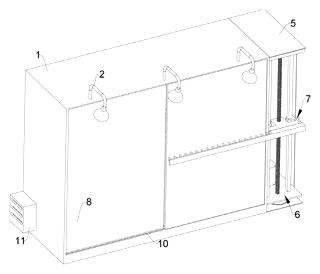
Drawings reproduced from the public patent document for reference.
Frequently asked questions
How does the automatic cleaning work?
A motor drives a screw rod that moves a slider up and down. A hairbrush is attached to this slider. When you slide the mirror door into position under the brush, the motor activates, and the brush wipes the glass surface vertically to remove steam and dust.
Do I need to connect it to water?
No. The cleaning mechanism uses a dry brush. There is no water supply line required for the wiping function, though the patent mentions drainage grooves which may relate to condensation management or potential future wet-cleaning variants not detailed in the core claims.
How do the lights turn on?
The three lamps on top have infrared sensors. They detect human presence or movement nearby and turn on automatically. You do not need to touch a switch, which is useful when your hands are wet or full.
Can I change the shelf height inside?
Yes. The internal storage frames slide out through special transfer grooves. You can lift them out and reinsert them at different heights, locking them in place with limiting blocks that engage with grooves on the side plates.
Is the brush easy to replace?
Yes. There is a spring-loaded latch mechanism. By pushing a pull block, the clamp releases, allowing you to swap the current hairbrush for a new one or one with different bristle specifications without tools.
Does it come with an exhaust fan?
The patent describes an optional exhaust fan mounted on the side, connected to an external power supply. This helps ventilate the bathroom area around the cabinet.
Can this design be made and sold in the US?
The patent is in force in China, but the public record shows no US counterpart. Therefore, this specific patent does not restrict manufacturing or selling this design in the US. However, other patents may exist in the field, so a freedom-to-operate check is recommended.
Are you affiliated with the patent owner?
No. IP2M is an independent design and manufacturing service working from the public patent document.
Request a quote
Click Request a Quote below to see our email address - copy it, or open your email app with a ready-made message. Please mention patent CN115251607B in the subject.
Helpful details to include:
- Your company and channel (bathroom furniture brand, hotel supplier, smart home integrator)
- Dimensions (width, height, depth) and door size
- Electrical specs (voltage, sensor type, fan inclusion)
- Material preferences (frame, panels, finish)
- Estimated quantity and target price
- Timeline - when you would like samples and the first shipment
You can also reach us at (332) 203-9997.
Page editor: Emily Zhang, Product Editor · IP2M
Last updated November 4, 2026. If something on this page looks wrong, email [email protected] and we will check it against the patent.
Interested in building this?
Tell us your target market, quantity and timeline. We reply with options for prototyping, small-batch runs or volume production.
Send your inquiry to
Please put CN115251607B in the subject line and tell us your company, country, estimated quantity and timeline.
Prefer to talk? Call (332) 203-9997.
More product-ready patents
All Furniture, Bedding & Storage patents →
Furniture, Bedding & Storage
Roll-Up Travel Neck Pillow with Buckles
U-shaped travel pillow with a front buckle and a back buckle that holds it rolled up for carrying.
Patent CN206543091U
Furniture, Bedding & Storage
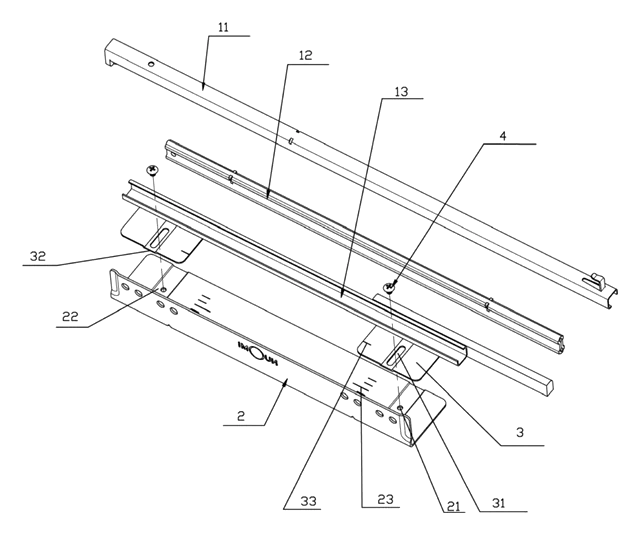
Width-Adjustable Slide Rail for Pull-Out Baskets
Basket slide rail on a slotted, scaled adjusting plate, so one pull-out basket fits several cabinet widths.
Patent CN208909382U
Furniture, Bedding & Storage
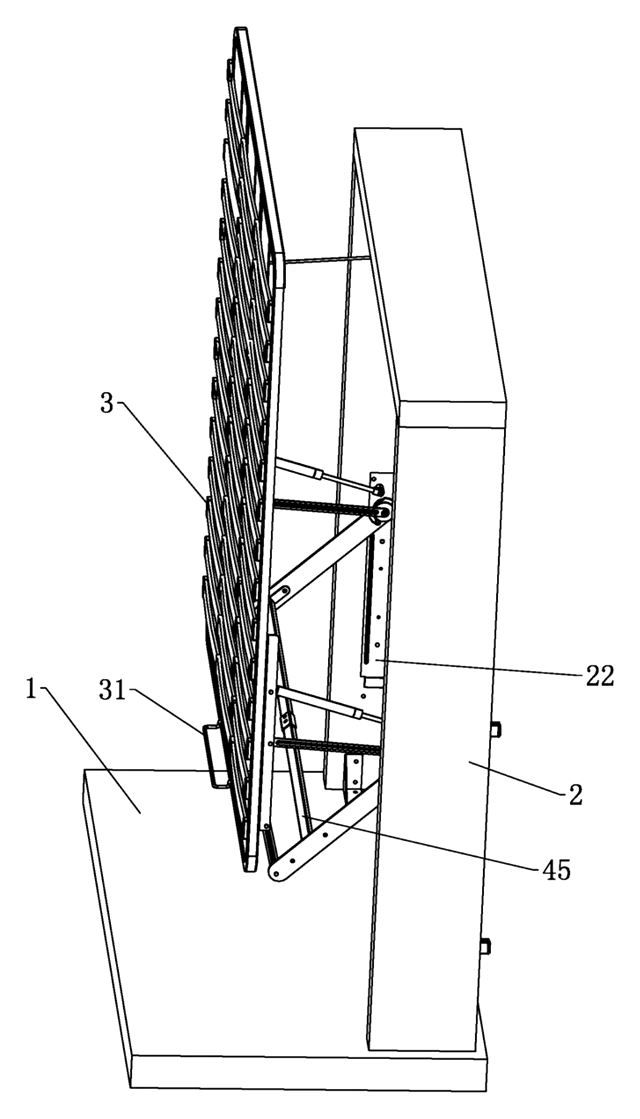
Lift-Up Storage Bed with Four-Bar Linkage That Slides the Deck Away from the Headboard
Storage bed deck that rises on four-bar linkages and gas springs, clearing the headboard as it opens.
Patent CN210870645U
Furniture, Bedding & Storage
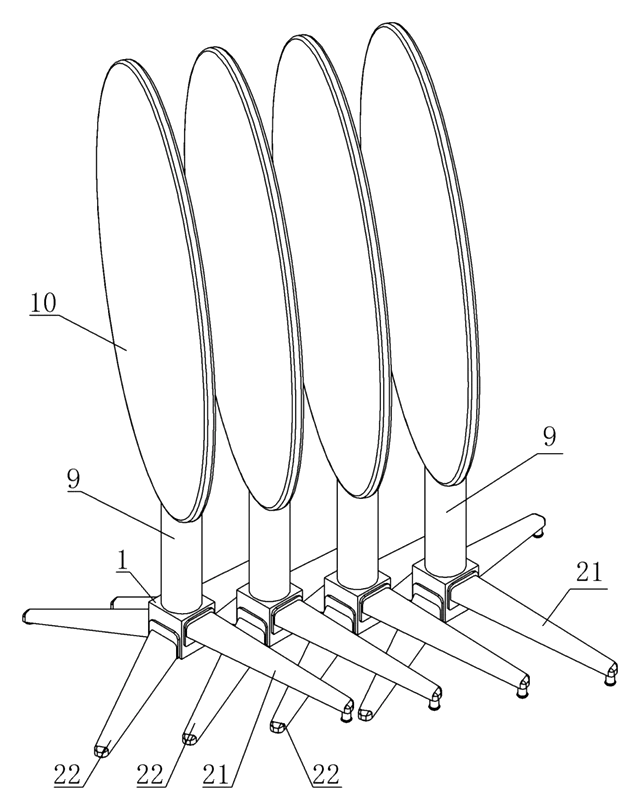
Self-Leveling, Nesting Table Base with a Torsion-Ring Leg Hub
Four-leg base that self-levels through a torsion-ring hub and nests sideways with flip-top tables.
Patent CN211483640U
Furniture, Bedding & Storage
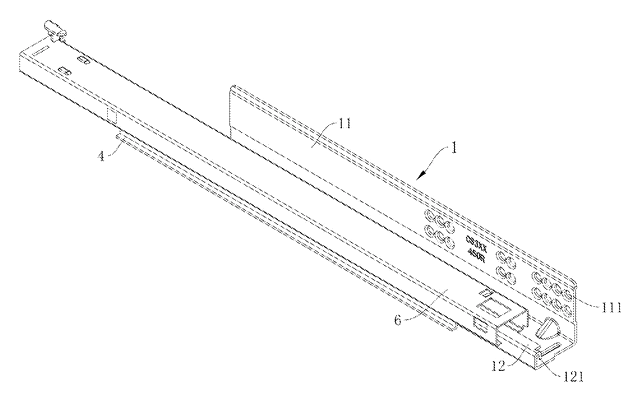
Rack-and-Pinion Synchronized Drawer Slide with a Folded-In Fixed Rail
Full-extension drawer slide: a pinion between two racks keeps the rails moving in step.
Patent CN206314843U
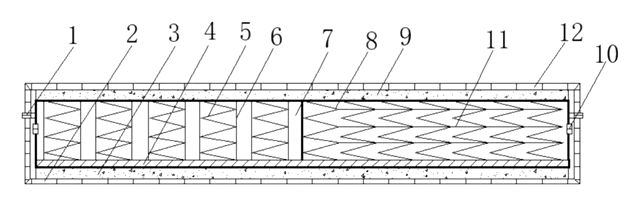
Furniture & Bedding
Dual-Zone Split-Spring Mattress with Removable Fabric Cover
Half-pocket, half-standard spring mattress sharing one base plate, with a removable cover.
Patent CN208355064U
Browse by category
- Apparel & Accessories (38)
- Baby & Kids (26)
- Bags & Luggage (15)
- Bath & Personal Care (26)
- Car Accessories (21)
- Furniture, Bedding & Storage (20)
- Garden & Outdoor (28)
- Health & Wellness (12)
- Home, Kitchen & Cleaning (43)
- Lighting (20)
- Packaging & Containers (10)
- Pet Products (9)
- Phone & Camera Accessories (8)
- Retail Display (21)
- School, Office & Art (30)
- Sports & Recreation (37)
- Tools & Workshop (46)
- Toys & Games (19)
This page is based on the public patent document CN115251607B, assigned to Shenzhen Macchi Information Technology Co., Ltd.; Shenzhen Meichi Smart Technology Co., Ltd.. IP2M is an independent manufacturing service and is not affiliated with, endorsed by or licensed by the patent owner. Images marked as concept renderings are illustrations, not photos of an existing product. Patent status information is provided for reference only and is not legal advice; confirm freedom to operate for your market before production. Full disclaimer.