
Patent CN115273697B
Updated November 5, 2026Rotating Exhibition Display Stand with Self-Cleaning Surface and Rainwater Cooling
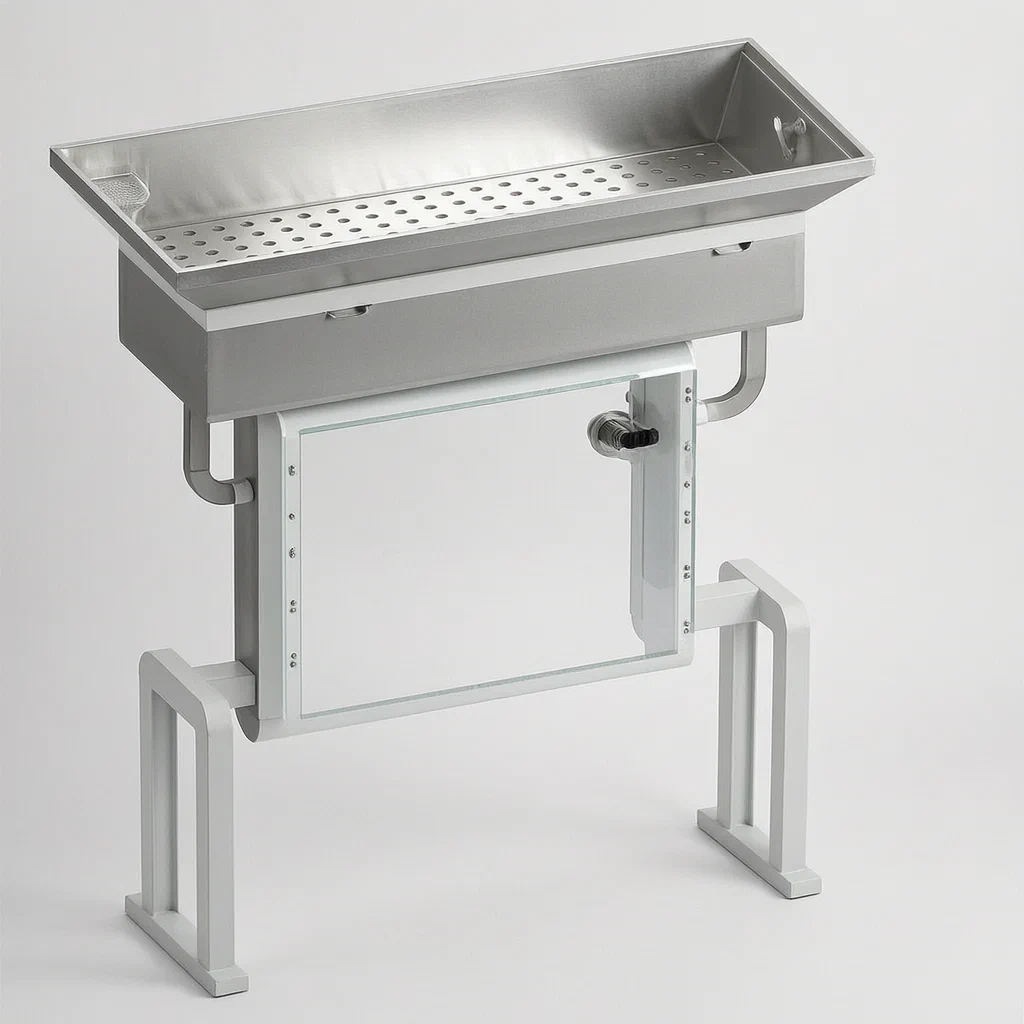
Outdoor digital signage often suffers from dust accumulation on protective covers and overheating in direct sunlight. This design addresses both by integrating mechanical cleaning and passive cooling into a single rotating structure. A transparent PVC soft crystal board protects the scrolling advertisement cloth. When the cloth rotates via servo-driven rollers, the attached board also moves relative to stationary brush strips, which physically wipe away surface impurities. Simultaneously, a roof-mounted tank collects rainwater, filters it, and sprays it internally to lower the temperature and rinse the rear surface, ensuring the display remains clear and operational in varied weather conditions.
- China invention patent - in force
- No filings outside China
- Retail & Exhibition Displays
- Servo-driven rotation, brush cleaning, rainwater cooling
Splat! What let you down?
🧹
Auto-cleaning cover
Brush strips sweep the moving PVC board as the ad cycles, keeping the view clear.
💧
Rainwater cooling
Collected rain is filtered and sprayed inside to cool the unit and wash the back panel.
⚙️
Servo-driven scroll
Upper and lower motors rotate the display cloth smoothly behind the protective shield.
🔍
Double-layer protection
Arc-shaped plates house the mechanism, protecting components from external elements.
Bring this product to market
- ✓ Patent review Patent family and legal status reviewed in the relevant jurisdictions.
- 2 Product brief · now How it works, uses and options written up
- 3 Prototype First samples for buyers to review
- 4 Pilot run Small first batch for launch customers
- 5 Volume production Repeat orders at scale
Buyer interest
– of 100 buyers needed to start prototyping
One click, no sign-up. Each vote is one real visitor, and products with the most interest go to prototyping first.
Build team: no members yet. Need a partner, co-funding or skills to build this? Join and we introduce the team once it forms.
Patent Rights & Team Participation
Before joining a development team, participants should ensure they have the necessary rights or authorization to participate in the project.
Participation is generally appropriate where:
- You own the relevant patent rights or have obtained permission or a license from the rights holder.
- The relevant patent rights have expired or have been legally invalidated in the jurisdictions where the planned activities will take place.
- The planned development, manufacturing, and commercialization activities have been independently assessed and do not infringe applicable patent rights in the relevant jurisdictions.
Important: Being located outside a country where a patent is protected does not automatically exempt you from patent infringement risks. Patent rights may apply based on where development, manufacturing, use, sale, or import activities take place.
IP2M does not grant any patent license or authorization through team participation. Joining a project does not provide permission to use, manufacture, or commercialize patented technology.
The problem
Outdoor and semi-outdoor advertising displays face two persistent issues: visibility degradation due to dust accumulation on protective covers, and thermal stress from direct sunlight. Traditional glass or acrylic panels require manual cleaning, which is labor-intensive and risky for high-mounted units. Furthermore, enclosed electronic components within display stands can overheat, reducing lifespan and performance. While some designs use fans for ventilation, they do not address the optical clarity of the front panel nor utilize available environmental resources like rain for cooling. Existing rotating signs often lack integrated maintenance systems, leading to frequent downtime for cleaning and repairs.
The solution
This patent describes an exhibition advertising frame that integrates mechanical self-cleaning and evaporative/rainwater cooling into a rotating display structure.
- Rotating Mechanism: An advertisement cloth is wound on rollers driven by upper and lower servo motors. These motors alternate forward and reverse rotations to cycle the content visibly.
- Self-Cleaning Cover: A transparent PVC soft crystal board sits in front of the cloth. It is connected to the rotating shafts such that when the cloth moves, the board also moves along an arc path. Fixed brush strips positioned at the top and bottom of the housing sweep against the moving board, removing dust and impurities without stopping the display.
- Cooling System: A water collecting component is mounted at the top. It captures rainwater, passes it through a filtering plate and drainage cotton, and stores it in a pump-equipped tank.
- Internal Spraying: The filtered water is pumped to nozzles located inside the main housing. These nozzles spray the water onto the inner surfaces, specifically targeting the back of the PVC board and the internal air space. This lowers the ambient temperature inside the device and rinses the rear surface of the display panel.
- Drainage: Excess water flows down to the bottom arc-shaped cover plate and exits through designated leakage holes, preventing pooling inside the unit.
Who it is for
- Outdoor Retail Brands: Companies needing durable, low-maintenance signage in plazas or storefronts where dust and heat are factors.
- Exhibition Booth Builders: Designers looking for novel display mechanisms that offer dynamic content cycling with built-in cleanliness features.
- Municipal Infrastructure Suppliers: Vendors providing smart city kiosks or bus stop ads that require resilience against weather and minimal service calls.
- Event Marketing Agencies: Firms deploying temporary high-visibility installations that need to look pristine throughout multi-day events.
How it works
The main parts
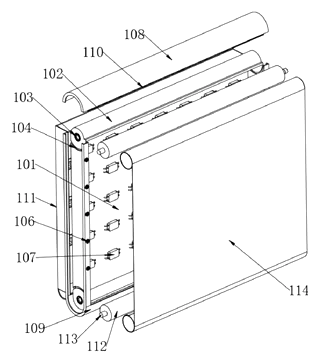
| No. | Part | What it does |
|---|---|---|
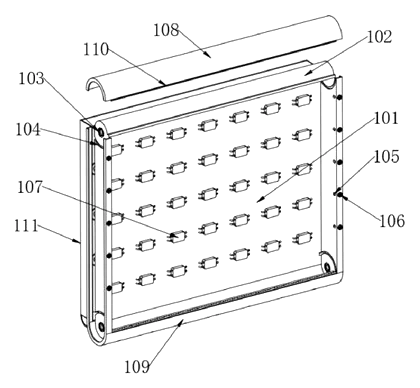
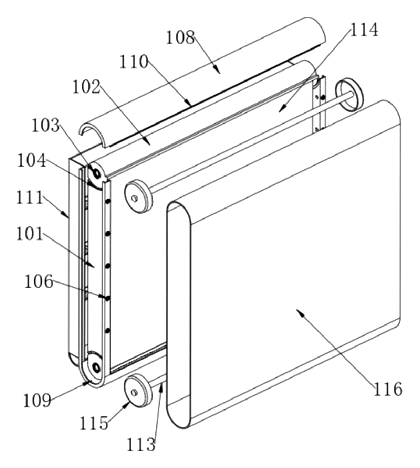
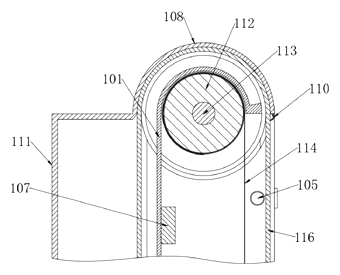
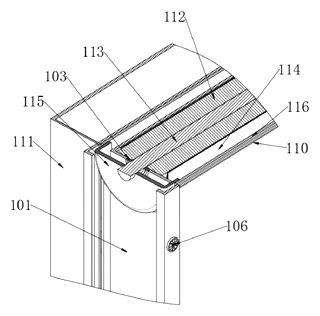
| 101 | Double-layer Mounting Plate | Main structural body with arc-shaped concave sections. |
| 102 | Arc-shaped Concave Parts | Housing areas containing bearings for the roller shafts. |
| 104 | Movable Arc Grooves | Tracks guiding the movement of the rotating discs. |
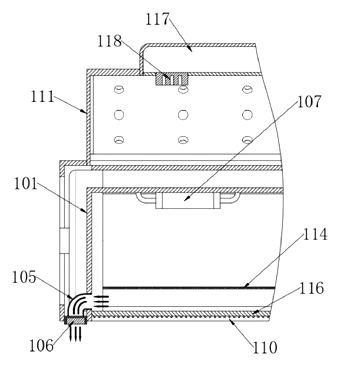
| 105 | Air Permeable Pipes | Ventilation channels distributed on the sides. |
| 106 | Fans | Mounted on pipe bodies to assist air circulation. |
| 107 | LED Lamps | Internal lighting to illuminate the advertisement cloth. |
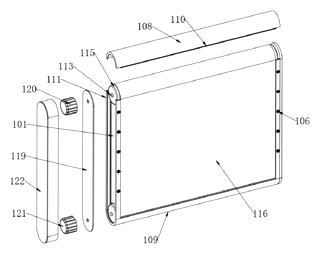
| 108/109 | Upper/Lower Arc Cover Plates | Top and bottom caps; hold the brush strips. |
| 110 | Brush Strips | Stationary brushes that contact the moving PVC board. |
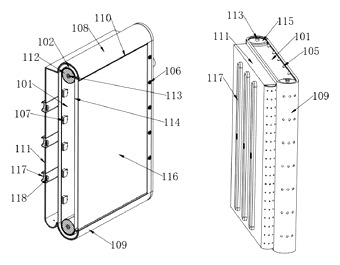
| 112 | Rollers | Wind and unwind the advertisement cloth. |
| 113 | Rotating Shaft | Connects rollers to motors and drives the discs. |
| 115 | Rotating Discs | Move along the arc grooves; carry the PVC board. |
| 116 | PVC Soft Crystal Board | Transparent front cover that moves and gets cleaned. |
| 117 | Water Box | Distributes pumped water to the nozzles. |
| 118 | Nozzles | Spray water internally for cooling and washing. |
| 120/121 | Upper/Lower Servo Motors | Drive the rotation of the display mechanism. |
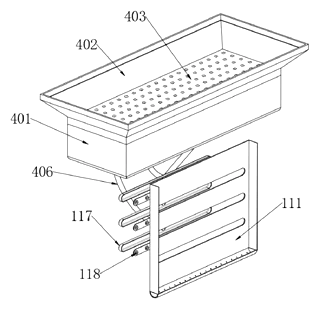
| 401 | Header Tank | Collects rainwater at the top of the support rod. |
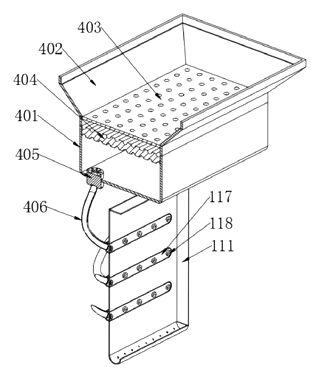
| 403/404 | Filter Plate/Cotton | Cleans collected rain before pumping. |
| 405 | Pump Machine | Moves filtered water to the internal nozzles. |
Operating steps
- Content Cycling: The control system activates the upper and lower servo motors (120, 121). They intermittently rotate the shafts (113) forward and reverse, causing the advertisement cloth (114) to scroll past the viewing window.
- Surface Cleaning: As the shafts turn, the rotating discs (115) move along the movable arc grooves (104). Since the PVC soft crystal board (116) is connected between these discs, the board travels in an arc. The stationary brush strips (110) on the upper and lower cover plates rub against the board’s surface, sweeping away accumulated dust.
- Lighting: LED lamps (117) remain on, illuminating the cloth so the content is visible through the clean PVC panel.
- Rain Collection: During rainfall, water enters the header tank (401) via the storage bin port (402). It passes through the water filtering plate (403) and drainage cotton (404) to remove debris.
- Cooling & Washing: The pump machine (405) draws the filtered water and sends it through the water pipe (406) to the water box (117). Nozzles (118) spray the water inside the housing. This cools the internal air and washes the back side of the PVC board.
- Drainage: Used water drains to the bottom arc cover plate (109) and exits through leakage holes, maintaining a dry internal base.
Applications
High-traffic retail entrances
Stores near busy streets suffer from airborne dust and exhaust residue. This stand’s automatic brushing keeps the front panel clear without staff intervention, ensuring promotions remain legible to passersby during peak hours.
Outdoor mall atriums
Enclosed but unconditioned spaces often experience temperature fluctuations. The rainwater cooling feature helps manage internal heat buildup from LEDs and motors, extending component life while maintaining a sleek appearance for shoppers.
Bus shelters and transit hubs
Exposed to constant weather and pollution, transit ads degrade quickly. The self-cleaning mechanism combats grime accumulation, while the robust double-layer housing protects electronics from splashes and wind-blown debris.
Trade show exhibits
Booths in convention centers may have poor air quality or high foot traffic dust. A rotating display that cleans itself offers a premium visual experience, allowing brands to showcase multiple messages clearly without constant wiping by booth staff.
Where it is less suitable
- Dry climates with no rain: The cooling system relies on collected precipitation; in arid regions, this feature remains inactive, requiring alternative cooling methods if overheating is a concern.
- Indoor-only static displays: The complexity of the servo and water systems adds cost and weight unnecessary for simple indoor posters that don’t face outdoor dust or heat stress.
- Highly corrosive environments: While PVC is resistant, metal shafts and motor mounts may require specific coatings beyond standard powder coating if exposed to salt spray or heavy industrial chemicals.
Patent & Production
At a glance
| Patent number | CN115273697B (application CN202211195147) |
| Type | China invention patent (发明专利) - protects product shape, structure, and process |
| Original title | An exhibition advertising stand for advertising exhibitions (一种广告展览用展览广告架) |
| Patent owner | Jiangsu Zhuogao Advertising Equipment Co ltd |
| Inventors | Tang Wei |
| Filing date | 2022-09-29 |
| Grant date | 2023-01-13 |
| Status (China) | In force - valid until at most 2042-09-29, subject to payment of annual fees |
| Patent family | Public record shows Chinese filings only - no US, European, Japanese, PCT or other filings listed |
| Cited by | 0 later documents |
| Source | Google Patents (search for CN115273697B) |
What the claims cover, in plain language
Claim 1 defines an exhibition advertising frame comprising an exhibition component (1), a support (2), a supporting rod (3), and a water collecting component (4). The core innovation lies in the self-cleaning and cooling mechanism. The display component includes a double-layer mounting plate (101) with arc-shaped concave parts (102) holding bearings (103). Rollers (112) and a rotating shaft (113) are housed here, driven by upper and lower servo motors (120, 121). A PVC soft crystal board (116) is connected to rotating discs (115) that move along arc grooves (104). Brush strips (110) fixed on the upper and lower arc cover plates (108, 109) contact the outer surface of the PVC board, cleaning it as it moves.
The claim further specifies a water management system: A water box (117) with nozzles (118) is mounted on the back plate (111). The water collecting component (4) includes a header tank (401) with a filter plate (403) and drainage cotton (404). A pump (405) sends filtered water through pipes (406) to the nozzles, spraying the interior to cool the device and wash the back of the PVC board. Fans (106) on air permeable pipes (105) assist in air circulation.
This is a simplified reading for orientation only. The legal scope is defined by the exact claim wording in the official Chinese document.
What this means for US production
This patent was filed in China and is currently in force, meaning making or selling this specific design in China requires the owner’s permission. However, the public record shows no US counterpart or foreign family members. Therefore, this patent does not restrict the manufacture or sale of this design in the United States.
Two points to settle early:
- Other patents may exist. Rotating displays and self-cleaning signage are competitive fields. While this specific combination of rainwater cooling and brush cleaning appears unique in the public record, broader patents covering servo-driven scrolling banners or general outdoor kiosk structures may exist in the US. A freedom-to-operate (FTO) review is recommended before tooling.
- Component sourcing. The design relies on specific servo motor integration and custom-formed PVC panels. Ensure suppliers can meet the tolerance requirements for the brush-strip contact interface to prevent premature wear or jamming.
Customization and manufacturing
What can be customized
| Area | Options |
|---|---|
| Dimensions | Height and width of the display area; length of the support pole |
| Materials | Aluminum extrusion vs. sheet steel for the frame; thickness of PVC crystal board |
| Motors | Torque rating of servo motors based on banner weight and size |
| Cleaning | Brush strip material (nylon, silicone); angle of contact pressure |
| Cooling | Capacity of the header tank; nozzle pattern for coverage |
| Finish | Powder coating colors for the exterior housing |
Things to plan for (US market)
- UL 60950 / UL 62368: Electrical safety standards for information technology equipment and audio/video devices, applicable if the unit contains mains-powered motors and controllers.
- IP Rating (IEC 60529): Ingress Protection ratings are critical for outdoor use. The design implies protection against solid objects and water, but specific IP65/IP66 testing may be required depending on the final seal integrity.
- NEC Compliance: National Electrical Code requirements for wiring, grounding, and GFCI protection if installed in wet locations.
- ADA Guidelines: If used in public spaces, ensure the display height and reach ranges comply with Americans with Disabilities Act accessibility standards.
How a project runs
- Inquiry - Define dimensions, load capacity, and environmental exposure level.
- Design - Finalize CAD models for the arc tracks, motor mounts, and water flow paths.
- Prototype - Build functional mockups to test brush contact pressure and servo synchronization.
- Testing - Conduct simulated rain tests and continuous cycling checks for wear.
- Production - Fabricate frames, mold plastic parts, assemble electronics, and apply finishes.
Quantities & timeline
Tooling involves custom dies for the double-layer plate bending and injection molds for the rotating discs and nozzle assemblies. Lead times depend on the availability of specialized servo motors and custom-length PVC sheets. Send us your target dimensions, quantity, and installation environment details and we will reply with options.
Production notes
Tooling and process
Sheet metal fabrication is likely used for the main housing, requiring precise bending to form the arc-shaped concave parts. Injection molding would typically produce the rotating discs and nozzle fittings. Motor assembly needs careful alignment to ensure the shafts engage correctly with the roller mechanisms.
Cost drivers
The number of parts is moderate, but the complexity of the dual-function (cleaning + cooling) assembly typically increases labor costs. Sheet thickness affects material weight and shipping volume. Surface finish quality is crucial for outdoor durability, impacting powder coating expenses.
Prototyping path
Start with a 3D model and load check to verify motor torque requirements. Create a cut and bent sample of the frame to test fitment; flat-pack trials are typically used if shipping efficiency is a goal. Load test the rotating mechanism under simulated wind conditions.
What we would change before tooling
We would likely simplify the water filtration path to reduce clogging risks in heavy rain. Verify that the brush strip contact angle minimizes drag on the PVC board to save energy. Adjust the nozzle placement to ensure even cooling coverage across the entire back panel.
Common failure points
Shaft and bearing alignment is critical; misalignment causes vibration and noise. Acrylic cracking (or PVC warping) may occur if thermal expansion isn’t accounted for in the mounting slots. Tipping is a risk if the base is too light for the tall support structure. Motor mount cracking could happen under repeated start-stop cycles.
Patent drawings
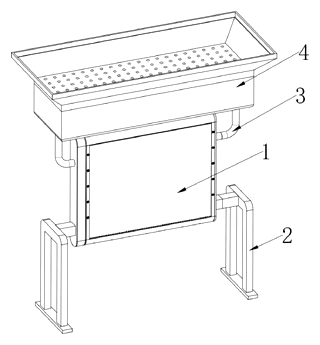
Drawings reproduced from the public patent document for reference.
Frequently asked questions
How does the self-cleaning mechanism work?
The display uses a transparent PVC soft crystal board as the front cover. This board is connected to rotating discs that move along an arc track. As the advertisement cloth scrolls behind it, the board also moves. Stationary brush strips fixed on the top and bottom of the housing sweep against the moving board, wiping away dust and dirt automatically.
Does it really use rain for cooling?
Yes. The top section includes a water collecting tank. Rainwater enters this tank, passes through a filter plate and drainage cotton to remove debris, and is then stored. A small pump sends this filtered water to nozzles inside the unit. The water sprays the internal components and the back of the display panel, lowering the temperature through evaporation and conduction.
Is the PVC board fragile?
The patent specifies a “PVC soft crystal board,” which is generally more impact-resistant than glass or rigid acrylic. It is designed to flex slightly during the cleaning motion. However, proper tensioning and alignment of the guides are essential to prevent cracking or excessive wear.
What powers the system?
The system requires electricity for the servo motors, LED lights, fans, and the water pump. The patent mentions servo motors for precise rotation control. In the US market, this would typically require a standard AC adapter or connection to a mains supply, adhering to local electrical codes.
Can it operate without rain?
Yes. The cooling system is passive when there is no rain. The fans provide basic ventilation, and the LED lights function normally. The cleaning mechanism operates independently of the water system, relying solely on the motor-driven movement of the board.
How much maintenance is required?
The design reduces routine maintenance by automating surface cleaning. However, the water filter plate and cotton may need periodic replacement if sediment builds up. The brush strips should be inspected for wear, and the servo motors require standard lubrication checks per manufacturer guidelines.
Can this design be made and sold in the US?
The patent was filed in China and is currently in force there. However, the public record shows no US counterpart or foreign family members. Therefore, this specific patent does not restrict the manufacture or sale of this design in the United States. We recommend a freedom-to-operate check to ensure no other US patents cover similar rotating display technologies.
Are you affiliated with the patent owner?
No. IP2M is an independent design and manufacturing service working from the public patent document.
Request a quote
Click Request a Quote below to see our email address - copy it, or open your email app with a ready-made message. Please mention patent CN115273697B in the subject.
Helpful details to include:
- Your company and channel (retail brand, exhibition builder, municipal supplier)
- Target dimensions (height, width, depth)
- Environment (indoor, outdoor, coastal, etc.)
- Power preferences (AC, DC, battery backup)
- Estimated quantity and target price
- Timeline - when you would like samples and the first shipment
You can also reach us at (332) 203-9997.
Page editor: Daniel Chen, Product Research Editor · IP2M
Last updated November 5, 2026. If something on this page looks wrong, email [email protected] and we will check it against the patent.
Interested in building this?
Tell us your target market, quantity and timeline. We reply with options for prototyping, small-batch runs or volume production.
Send your inquiry to
Please put CN115273697B in the subject line and tell us your company, country, estimated quantity and timeline.
Prefer to talk? Call (332) 203-9997.
More product-ready patents
All Retail Display patents →
Retail Display
Motorized Shelf Display That Presents a Product to Shoppers
Shelf unit that lifts a product over the price rail toward shoppers when a sensor detects them.
Patent CN215077184U
Retail Display
Portable Advertising Light Box with Spinning LED Display
Portable ad box whose spinning LED bars draw images and text; content changes by wireless or USB.
Patent CN207425291U
Retail Display
Automated Folding Store Shelf That Pushes Products Up to the Customer
Double-sided shelf for unmanned stores: folding tiers, screw pushers and lift cylinders present stock.
Patent CN109645754B
Retail Display
Motorized Rotating Display Pedestal with Lift Column, Info Screen and Clip-On Display Racks
Mobile pedestal: motorized rotating cube with lit faces and racks, electric lift column and info screen.
Patent CN208875862U
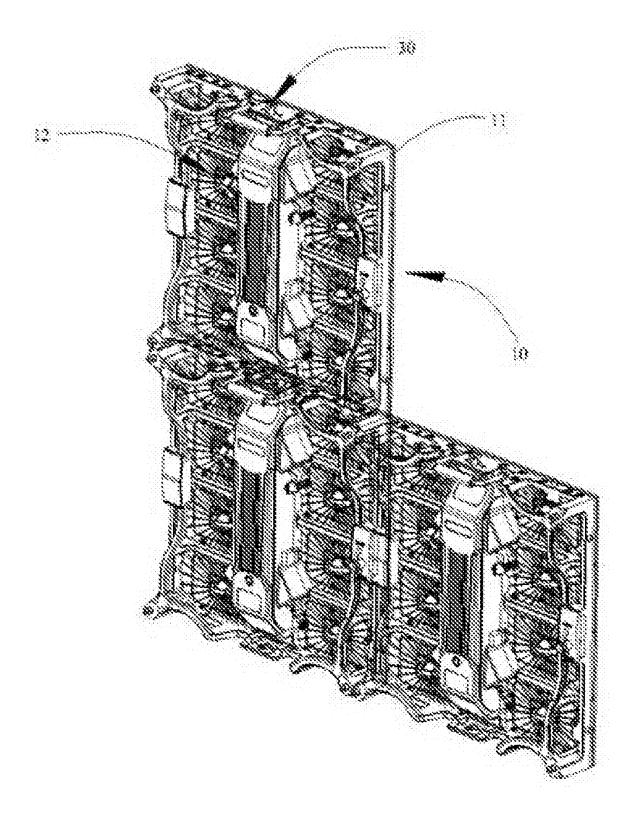
Retail Display
Thin Outdoor LED Video Wall Cabinet with Magnetic Modules and Tool-Free Locks
Thin outdoor LED wall cabinet: magnetic modules and rear body, rotary locks, finned rear cooling.
Patent CN205354557U
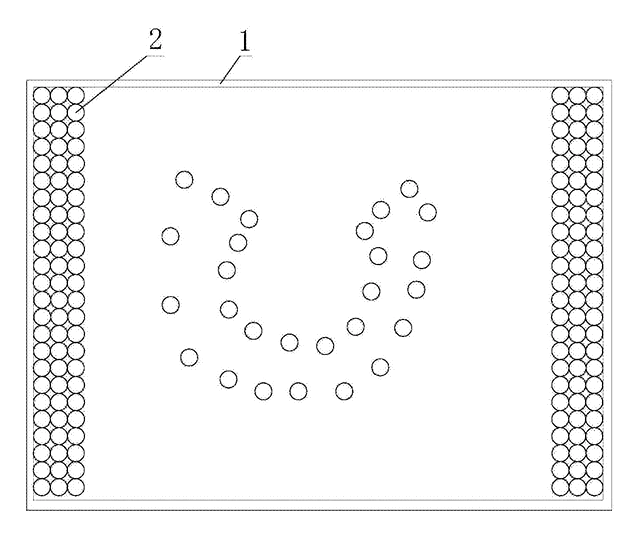
Store & Display
Magnetically Repositionable LED Advertising Panel
LED panel whose lamp beads slide to new positions via an external electromagnet.
Patent CN205487209U
Browse by category
- Apparel & Accessories (41)
- Baby & Kids (27)
- Bags & Luggage (15)
- Bath & Personal Care (28)
- Car Accessories (23)
- Furniture, Bedding & Storage (21)
- Garden & Outdoor (29)
- Health & Wellness (13)
- Home, Kitchen & Cleaning (44)
- Lighting (22)
- Packaging & Containers (11)
- Pet Products (10)
- Phone & Camera Accessories (8)
- Retail Display (23)
- School, Office & Art (32)
- Sports & Recreation (41)
- Tools & Workshop (50)
- Toys & Games (21)
This page is based on the public patent document CN115273697B, assigned to Jiangsu Zhuogao Advertising Equipment Co ltd. IP2M is an independent manufacturing service and is not affiliated with, endorsed by or licensed by the patent owner. Images marked as concept renderings are illustrations, not photos of an existing product. Patent status information is provided for reference only and is not legal advice; confirm freedom to operate for your market before production. Full disclaimer.