At a glance
| Patent number | CN115486631B (application CN202211207386) |
| Type | China invention patent (发明专利) - protects product structure and method |
| Original title | High-efficient hair round brush that removes of brush cylinder radian adjustable (一种刷筒弧度可调的高效除毛滚刷) |
| Patent owner | Suzhou Zhengyuxin Cleaning Products Co ltd |
| Inventors | Zhang Ting |
| Filing date | 2022-09-30 |
| Grant date | 2024-02-02 |
| Status (China) | Active - In force in China until at most 2042-09-30 (if annual fees are paid) |
| Patent family | Chinese filings only - no US, European, Japanese, PCT or other filings listed |
| Cited by | 0 later documents |
| Source | Google Patents (search for CN115486631B) |
What the claims cover, in plain language
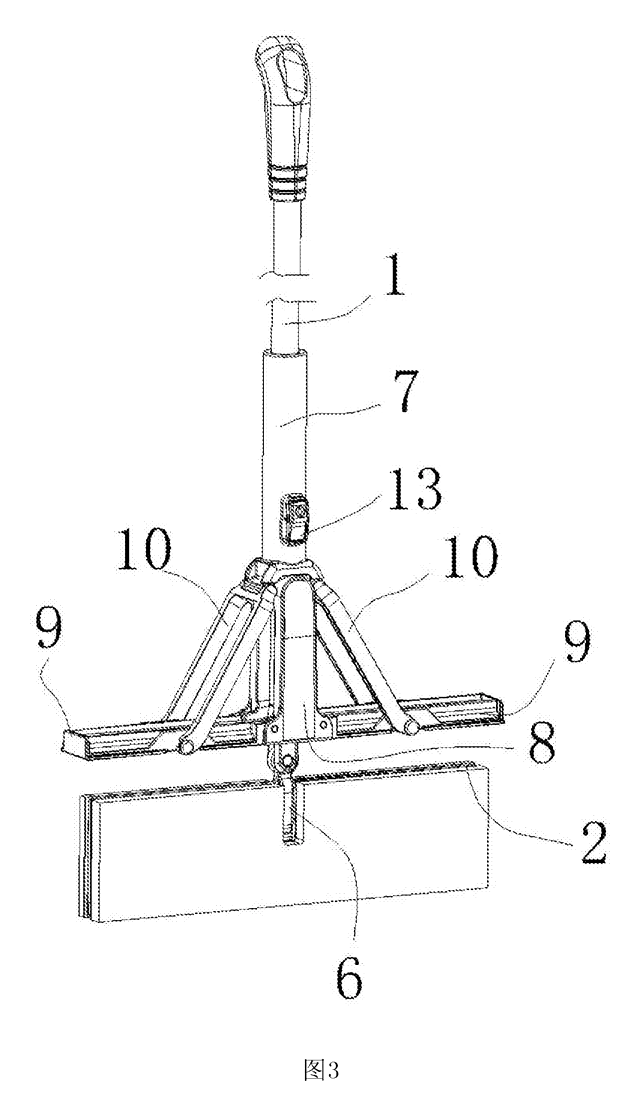
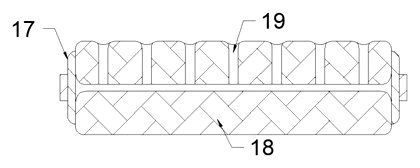
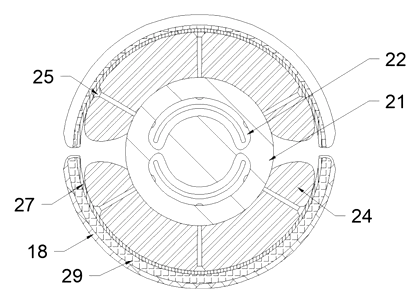
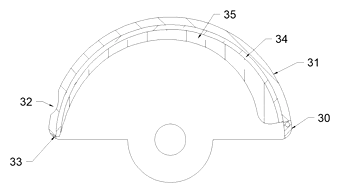
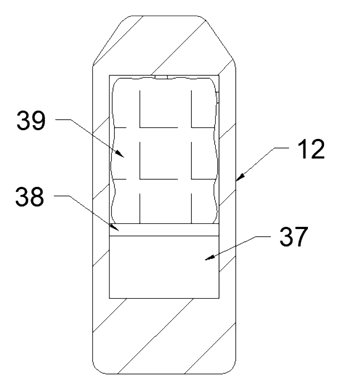
Claim 1 - defines a hair removal roller brush comprising a metal rod piece with a handheld rod, and a functional shell part rotatably mounted on the rod. The functional shell includes a butt joint shell piece holding a polyester wrapping pad. An adjustable rolling brush is mounted on the shell, consisting of two butt joint pieces connected by carrying cross bars. Symmetrically arranged soft rubber elastic pads are installed on these bars. Each pad has an elastic interlayer covered by a polyester yarn cloth. Crucially, the cloth has adjusting groove portions, and below each groove is an adjustable airbag strip. The handheld rod contains a sliding groove and an adjusting cavity with a sliding block connected to a transmission airbag. Airflow grooves in the carrying cross bar connect the transmission airbag to the adjustable airbag strips, allowing the user to change the curvature of the brush surface (flat, convex, or concave) via the handle slider.
This is a simplified reading for orientation only. The legal scope is defined by the exact claim wording in the official Chinese document.
What this means for US production
This patent was filed only in China and is currently active. It has no US or other foreign counterpart.
Two points to settle early:
- Other patents may exist. Cleaning tools and lint rollers are a competitive field with many existing patents regarding adhesive mechanisms, telescopic handles, and ergonomic grips. While this specific pneumatic curvature adjustment appears unique to this filing, a freedom-to-operate (FTO) review is recommended to ensure no broader claims from other holders cover general “adjustable surface” concepts in household cleaning.
- Material Safety. Since the device involves plastic housings, rubber pads, and potentially air inflation mechanisms, materials must meet US standards for household goods, particularly if marketed for children’s rooms or food-contact adjacent areas (though primarily for textiles).
Customization and manufacturing
What can be customized
| Area | Options |
|---|---|
| Cloth Material | Different polyester weaves, microfiber blends, or static-charged fabrics for varying lint types. |
| Rubber Hardness | Shore A durometer settings for the elastic pads to balance flexibility and durability. |
| Handle Mechanism | Slider stroke length, button vs. slider activation, and grip texture. |
| Color & Branding | Housing colors, logo molding, and packaging design. |
| Capacity | Diameter of the roller head and length of the cloth roll. |
Things to plan for (US market)
- CPSC General Requirements: Household cleaning tools must not pose unreasonable risks of injury. Sharp edges or pinch points in the sliding mechanism should be evaluated.
- ASTM F963 (if marketed for kids): If sold as a toy or children’s room accessory, strict testing for small parts, phthalates, and heavy metals applies.
- California Prop 65: Plastics and rubber components may require warnings if they contain certain chemicals like DEHP or lead above safe harbor levels.
- UL / Electrical: Not applicable as this is a purely mechanical/pneumatic device with no batteries or mains power.
How a project runs
- Inquiry - Define target surface types (car, furniture, clothes) and desired adjustment range.
- Design - Finalize the air channel layout, rubber pad thickness, and cloth attachment method.
- Prototype - Build units to test the “convex/concave” switching effectiveness and hair release mechanism.
- Pilot run - Verify durability of the rubber pads under repeated inflation cycles and cloth abrasion resistance.
- Production - Injection molding for shells, extrusion/molding for rubber pads, assembly of air lines, and cloth winding.
Quantities & timeline
Manufacturing requires precision molds for the internal air channels to prevent leaks, and specialized tooling for attaching the polyester cloth to the elastic pads. Testing for air retention over time is critical. Send us your target markets, material preferences, quantity estimates, and branding requirements and we will reply with options.
Patent drawings
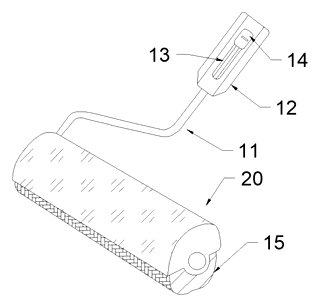
Drawings reproduced from the public patent document for reference.