
Patent CN115501100B
Updated November 3, 2026Lower Limb Massager with Automatic Cloth Replacement
Shared leg massagers in spas and gyms often suffer from hygiene issues because users dislike touching previously used surfaces. Manual cleaning of cloth wraps is time-consuming and inconsistent. This design automates the process: after each use, a mechanical linkage triggered by the user's weight shift rotates internal sleeves to pull fresh massage cloth over the rollers, ensuring every user encounters a clean surface.
- China invention patent - active
- No filings outside China
- Massage & Wellness
- Automatic cloth replacement mechanism
Splat! What let you down?
🔄
Auto-Swap Hygiene
Rotating sleeves replace used massage cloth with clean fabric automatically after each use.
⚙️
Weight-Triggered Drive
A gear and pawl system activates rotation when the user stands up from the lying plate.
🦵
Roller Massage
Massage rollers rotate against the cloth to massage the legs without direct skin contact.
🧼
Low Maintenance
Eliminates frequent manual wiping or cloth changes for busy commercial environments.
Bring this product to market
- ✓ Patent vetted China-only family and legal status checked
- 2 Product brief · now How it works, uses and options written up
- 3 Prototype First samples for buyers to review
- 4 Pilot run Small first batch for launch customers
- 5 Volume production Repeat orders at scale
Buyer interest
– of 100 buyers needed to start prototyping
One click, no sign-up. Each vote is one real visitor, and products with the most interest go to prototyping first.
Build team: no members yet. Need a partner, co-funding or skills to build this? Join and we introduce the team once it forms.
The problem
Commercial leg massagers in gyms, spas, and wellness centers face a significant hygiene challenge. Users often hesitate to place their legs on surfaces that have been used by others, even if wiped down. Traditional designs rely on fixed pads or cloths that require manual cleaning after every session, which is labor-intensive and prone to human error. If a previous user left sweat or residue, the next user experiences discomfort and potential health concerns. Existing automatic solutions are complex or expensive. There is a need for a simple, reliable mechanism that ensures a fresh contact surface for every user without requiring staff intervention between sessions.
The solution
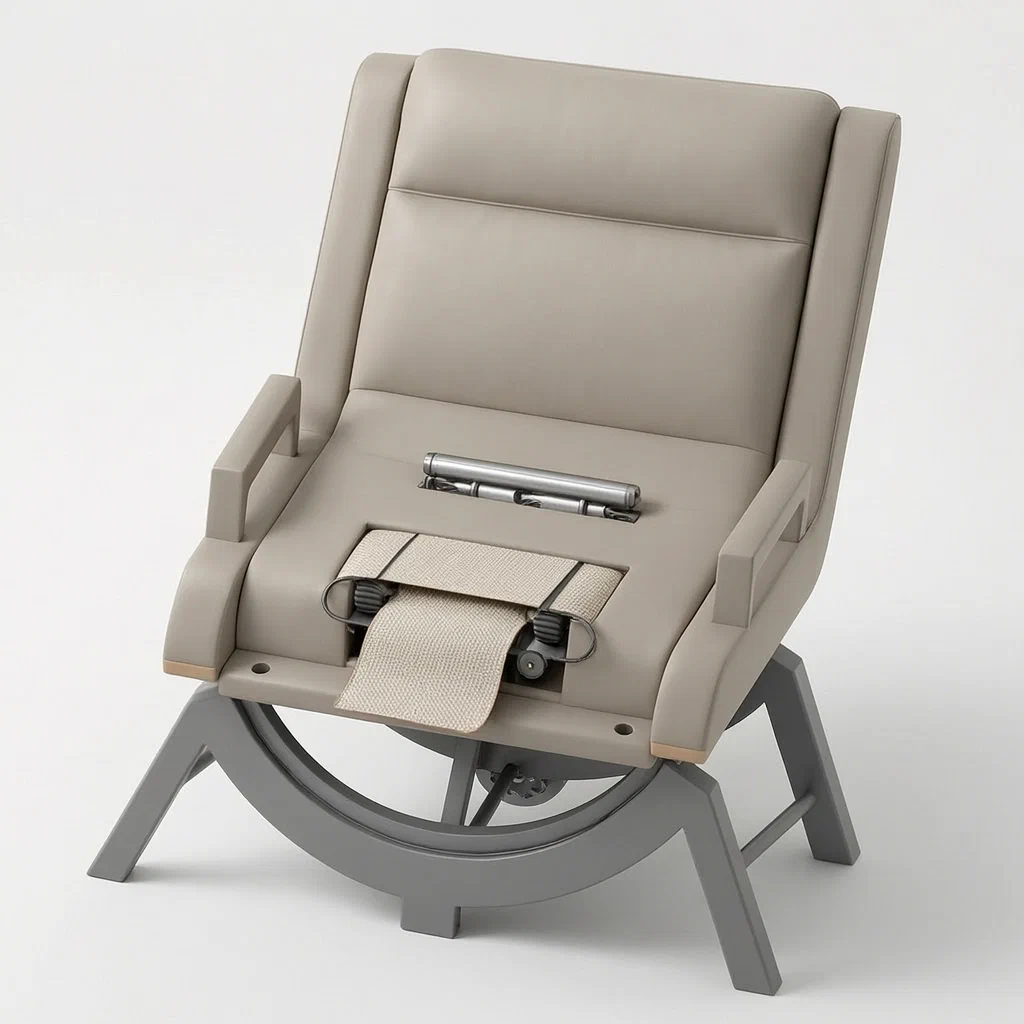
The patent describes a lower limb massager integrated into a lying plate structure. The core innovation is an automated cloth replacement system driven by the user’s movement.
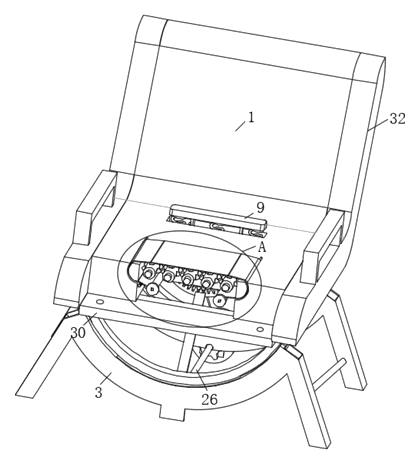
- Lying Plate and Opening: The device features a lying plate (1) with an opening at the front end surface. This opening houses the massage components.
- Massage Rollers: Multiple massage rollers (4) are rotatably arranged within the opening at equal intervals. These rollers extend into a groove at the bottom of the plate to connect with a rotating assembly.
- Cloth Sleeves: Two rotating rods (5) are positioned on the sides within the opening. Each rod carries a sleeve—one first sleeve (61) and one second sleeve (62). Massage cloth (7) is wound around these sleeves.
- Exposed Section: The cloth passes through groove bodies (34) on the sides of the plate, creating a middle section exposed on the upper end surface where the user places their legs. The rollers abut this cloth section.
- Drive Mechanism: A mechanical drive assembly connects the user’s weight change to the rotation of the sleeves. When the user leaves the plate, the mechanism engages to rotate the rods, winding the used cloth onto the second sleeve and pulling fresh cloth from the first sleeve across the roller area.
Who it is for
- Gym Equipment Manufacturers: Brands looking to differentiate cardio or recovery zones with hygienic, self-cleaning leg rest options.
- Spa and Wellness Center Operators: Facilities requiring high turnover rates with minimal staff cleaning time between clients.
- Furniture Designers: Creators of massage chairs who want to integrate a novel, low-maintenance upholstery alternative.
- Public Transit Planners: Agencies considering premium seating areas where shared surface hygiene is a priority.
How it works
The main parts
| No. | Part | What it does |
|---|---|---|
| 1 | Lying Plate | Main structural body with a front opening. |
| 4 | Massage Rollers | Rotate against the cloth to massage the legs. |
| 5 | Rotating Rods | Side-mounted shafts holding the cloth sleeves. |
| 61, 62 | First/Second Sleeves | Wind the massage cloth; swap positions during rotation. |
| 7 | Massage Cloth | Flexible fabric passed through grooves and over rollers. |
| 8 | First Gear | Engages with the drive mechanism to turn the rod. |
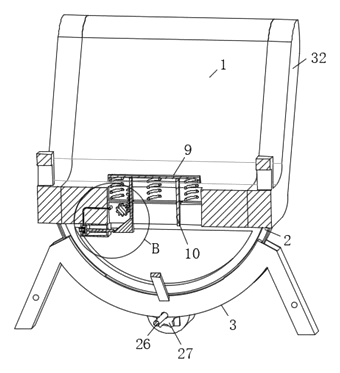
| 9, 10 | Cover Plate/Sliding Plate | Components pressed by the user to activate the switch. |
| 12 | First Teeth (Pawls) | One-way engagement pieces that mesh with the gear. |
| 13 | Limiting Structure | Prevents backward rotation of the teeth. |
Operating Steps
- User Lies Down: The user places their legs on the exposed middle section of the massage cloth (7). The cover plate (9) is depressed by the user’s weight.
- Disengagement: As the sliding plate (10) descends, the first teeth (12) move away from the first gear (8), allowing the gear to remain stationary while the rollers operate.
- Massage Action: The rotating assembly drives the massage rollers (4) forward and reverse. According to the patent, the rollers press against the cloth to massage the user’s legs without direct skin-to-roller contact.
- User Leaves: When the user stands up, the weight is removed. The first spring (11) pushes the cover plate (9) and sliding plate (10) back up.
- Engagement: The rising sliding plate forces the first teeth (12) upward. Due to the limiting structure (13), the teeth cannot rotate downward; instead, they mesh with the first gear (8).
- Rotation: The engagement drives the first gear (8) and the connected rotating rod (5) forward. This rotates the first sleeve (61) and second sleeve (62).
- Cloth Swap: The rotation unreels the used section of cloth from the first sleeve (61) and winds it onto the second sleeve (62). Simultaneously, clean cloth is pulled from the second sleeve (62) across the roller area, ready for the next user.
Applications
Commercial Gyms
In high-traffic fitness centers, leg recovery stations are frequently used. This mechanism gives every athlete a fresh layer of cloth, so staff do not have to wipe the pad between users.
Spa Treatment Rooms
Spas offer leg massage treatments. The automatic swap lets therapists prepare the station quickly between clients without manually changing large fabric wraps.
Airport Lounges
Premium airport lounges provide massage chairs for travelers. Shared surfaces can be a concern for passengers. This design gives each traveler a clean cloth surface without staff wiping it down between users.
Massage Chair Integration
Manufacturers of full-body massage chairs can incorporate this module into the leg extension unit. It replaces traditional leather or synthetic covers that require wiping, offering a textile-based alternative that self-refreshes.
Where it is less suitable
- Home Use with Low Turnover: For single-user households, the complexity of the mechanism may not justify the cost compared to removable, washable covers.
- Wet Environments: The cloth material and mechanical gaps may not be suitable for areas with constant water exposure unless specific waterproofing measures are taken beyond the patent description.
- Heavy Industrial Loads: The mechanism relies on standard springs and gears; extreme weights or abusive handling could damage the drive assembly faster than in simpler designs.
Frequently asked questions
How does the cloth actually change?
When you stand up from the lying plate, a spring-loaded mechanism lifts a sliding plate. This action causes pawls (teeth) to engage with a gear attached to the cloth sleeves. The rotation of the sleeves pulls new cloth from a reserve roll and winds the used section onto a take-up roll, effectively moving the dirty part out of sight and bringing a clean part to the surface.
Do I need to buy special rolls of cloth?
The patent describes using a continuous strip of massage cloth wound on sleeves. In practice, you would likely use standard industrial fabric rolls cut to the specific width required by the machine’s groove dimensions. The fabric needs to be durable enough to withstand repeated tensioning and friction from the rollers.
Is the mechanism noisy?
The patent does not specify noise levels. However, since it uses gears and springs rather than electric motors for the cloth swap, the noise is primarily mechanical clicking during the short activation phase when the user stands up. The massage rollers themselves may produce sound depending on their motorized drive, but the cloth swap is passive.
Can this be added to an existing massage chair?
Yes, the patent mentions it can be part of a massage chair. Retrofitting depends on the space available in the leg rest area. You would need to install the lying plate assembly with the opening, sleeves, and drive mechanism. It requires engineering modifications to the chair’s frame to accommodate the new module.
How long does one roll of cloth last?
The patent does not give a lifespan. Durability depends on the fabric quality, the number of users per day, and the amount of cloth advanced per cycle. Commercial facilities would track usage to determine optimal replacement schedules for the fabric rolls.
Does it work if the user sits lightly?
The mechanism relies on the depression of the cover plate by the user’s weight to disengage the gears, and the release of that weight to engage them. If the user is too light or shifts weight significantly, the trigger might not function reliably. Proper calibration of the spring tension is critical for consistent operation.
Can this design be made and sold in the US?
The patent was filed only in China and is active there. It has no US counterpart, so it does not restrict making or selling this design in the US. However, massage devices are subject to other US patents and safety regulations. We recommend a freedom-to-operate check before volume production.
Are you affiliated with the patent owner?
No. IP2M is an independent design and manufacturing service working from the public patent document.
Request a quote
Click Request a Quote below to see our email address - copy it, or open your email app with a ready-made message. Please mention patent CN115501100B in the subject.
Helpful details to include:
- Your company and channel (gym equipment maker, spa supplier, furniture manufacturer)
- Target dimensions for the lying plate and leg area
- Fabric specifications (type, width, color)
- Integration plan (standalone unit or embedded in a chair)
- Estimated quantity and target price
- Timeline - when you would like samples and the first shipment
You can also reach us at (332) 203-9997.
Explore this product
Interested in building this?
Tell us your target market, quantity and timeline. We reply with options for prototyping, small-batch runs or volume production.
Send your inquiry to
Please put CN115501100B in the subject line and tell us your company, country, estimated quantity and timeline.
Prefer to talk? Call (332) 203-9997.
More product-ready patents
All Health & Wellness patents →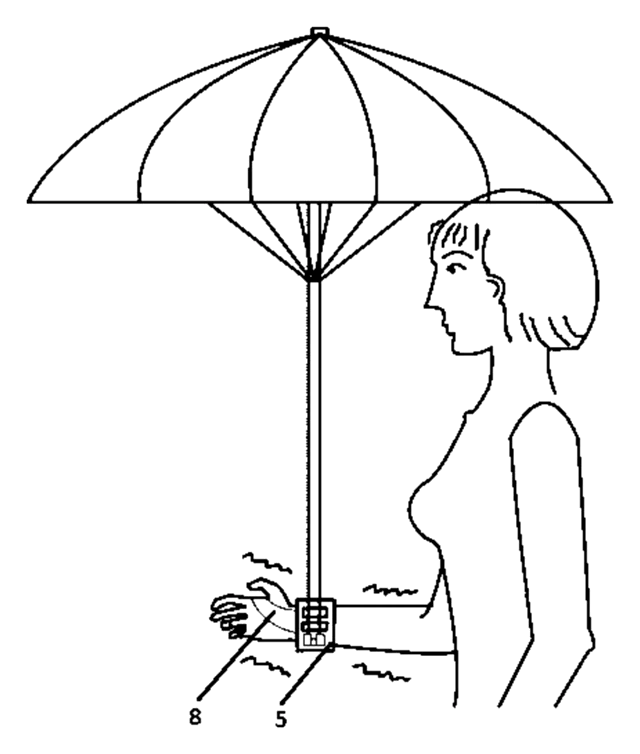
Health & Wellness
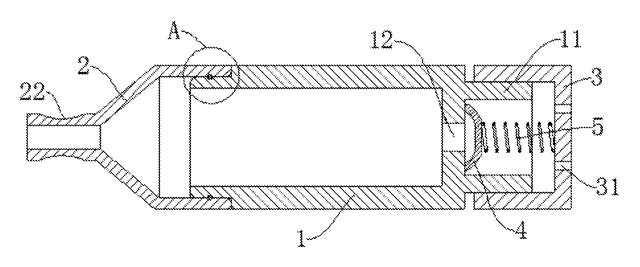
Wrist-Mounted Umbrella Stabilizer
Wrist-worn umbrella holder with an anti-shake link; the patent designs it for people with tremor.
Patent CN212545964U
Health & Wellness
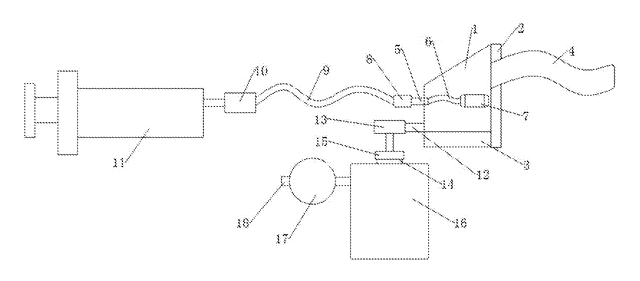
Spring-Valve Breath Trainer for Singers
Pocket breath trainer: blow against a spring-loaded valve to practice breath support for singing.
Patent CN207833725U
Health & Wellness
Closed-Loop Nasal Rinse Kit with Collection Bottle
Nasal rinse set: syringe-fed nose plug inside a sealed hood, with used solution drawn into a bottle.
Patent CN208017763U
Health & Wellness
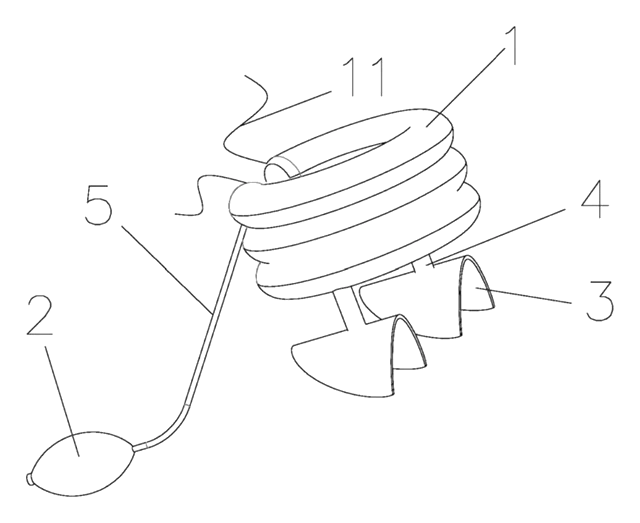
Inflatable Cervical Traction Collar Shaped for a Child's Neck
Child-size three-ring air collar on telescoping shoulder struts, inflated with a hand bulb.
Patent CN208958444U
Massage & Wellness
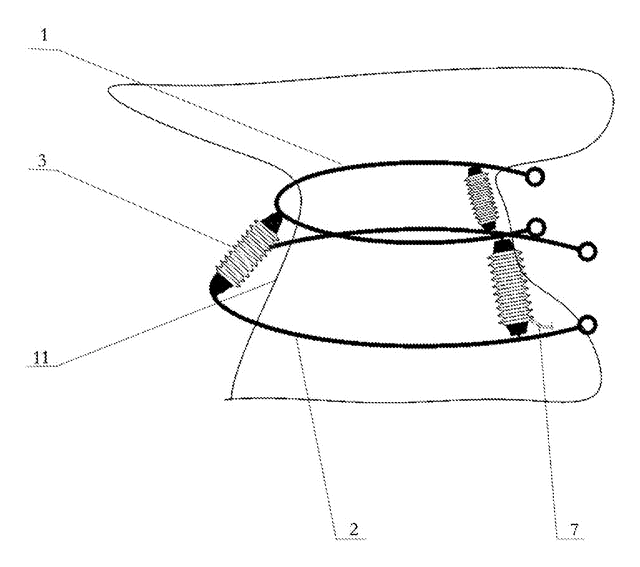
Pneumatic Multi-Directional Neck Traction Collar
Three-airbag cervical collar that inflates in sequence to guide the head in multiple directions.
Patent CN207202980U
Health & Wellness
Shoulder-Detecting Massage Chair Mechanism with Forked Swing Arms
Massage chair core uses forked swing arms and sensors to detect shoulders and adjust the routine.
Patent CN106618998B
Browse by category
- Apparel & Accessories (31)
- Baby & Kids (23)
- Bags & Luggage (14)
- Bath & Personal Care (23)
- Car Accessories (19)
- Furniture, Bedding & Storage (17)
- Garden & Outdoor (25)
- Health & Wellness (11)
- Home, Kitchen & Cleaning (36)
- Lighting (18)
- Packaging & Containers (9)
- Pet Products (8)
- Phone & Camera Accessories (7)
- Retail Display (19)
- School, Office & Art (27)
- Sports & Recreation (33)
- Tools & Workshop (41)
- Toys & Games (18)
This page is based on the public patent document CN115501100B, assigned to De Rucci Healthy Sleep Co Ltd. IP2M is an independent manufacturing service and is not affiliated with, endorsed by or licensed by the patent owner. Images marked as concept renderings are illustrations, not photos of an existing product. Patent status information is provided for reference only and is not legal advice; confirm freedom to operate for your market before production. Full disclaimer.