At a glance
| Patent number | CN115501100B (application CN202211310878) |
| Type | China invention patent (发明专利) - protects product method and structure |
| Original title | Lower limb massager and massage chair (一种下肢按摩器和按摩椅) |
| Patent owner | De Rucci Healthy Sleep Co Ltd |
| Inventors | Wang Bingkun |
| Filing date | 2022-10-25 |
| Grant date | 2023-08-11 |
| Status (China) | In force - valid until at most 2042-10-25, provided annual fees are paid |
| Patent family | Chinese filings only - no US, European, Japanese, PCT or other filings listed |
| Cited by | 0 later documents |
| Source | Google Patents (search for CN115501100B) |
What the claims cover, in plain language
Claim 1 defines a lower limb massager comprising a lying plate with a front opening. Inside, massage rollers are rotatably installed. Rotating rods on the sides hold a first sleeve and a second sleeve, both wound with massage cloth. The cloth passes through groove bodies on the plate sides, leaving a middle section exposed above the rollers. A drive assembly includes a first gear on the rod, a cover plate and sliding plate biased by a spring, and first teeth (pawls) with a limiting structure. When the user leaves the plate, the spring lifts the sliding plate, causing the teeth to engage the gear and rotate the rods, thereby swapping the used cloth for clean cloth.
This is a simplified reading for orientation only. The legal scope is defined by the exact claim wording in the official Chinese document.
What this means for US production
This patent was filed only in China and is currently in force. Making or selling this specific design in China requires the owner’s permission. Since there are no US counterparts, the patent itself does not restrict manufacturing or sales in the United States.
Two points to settle early:
- Other patents may exist. Massage devices are a crowded field with many existing US patents covering various roller mechanisms, fabric wrapping systems, and ergonomic chair designs. A freedom-to-operate (FTO) review is essential to ensure your implementation does not infringe on any current US intellectual property rights unrelated to this specific Chinese patent.
- Material Safety. The massage cloth is a critical component. Ensure the fabric selection meets flammability standards for upholstered furniture and durability requirements for repeated tensioning.
Customization and manufacturing
What can be customized
| Area | Options |
|---|---|
| Cloth Material | Breathable mesh, cotton blends, or antimicrobial-treated fabrics (material choice affects wear rate). |
| Sleeve Diameter | Adjusted to control the length of cloth deployed per cycle. |
| Gear Ratio | Modified to change the speed of cloth advancement relative to user egress. |
| Plate Dimensions | Sized to fit different massage chair frames or standalone benches. |
| Roller Profile | Shape and texture of the massage rollers can be varied for a different massage feel. |
Things to plan for (US market)
- Flammability Standards: Upholstered furniture sold in the US must comply with state-specific flammability laws (e.g., California TB 117-2013) and federal regulations (16 CFR 1632/1633 for mattresses, though this is a seat, similar testing protocols often apply for consumer comfort safety).
- Electrical Safety: If the massage rollers are motor-driven, the entire unit must meet UL 982 (Household Electric Sewing Machines, Cooking Appliances, and Similar Apparatus) or relevant appliance standards, including FCC Part 15 for electromagnetic interference.
- General Product Safety: Compliance with CPSC guidelines for consumer products intended for physical contact.
How a project runs
- Inquiry - Define target dimensions, cloth type, and integration platform (standalone vs. chair).
- Design - Engineer the gear train, spring constants, and sleeve spacing for reliable cloth advance.
- Prototype - Build functional models to test the “leave-seat” trigger mechanism and cloth winding consistency.
- Pilot Run - Small batch production to validate assembly tolerances and fabric durability under cyclic stress.
- Production - Injection molding for plastic parts, metal stamping for plates, and assembly of the drive unit.
Quantities & timeline
Tooling for the injection-molded sleeves, gears, and housing will take several weeks. Fabric sourcing requires lead time for custom widths and treatment. Testing for electrical safety and mechanical endurance adds to the schedule. Send us your target dimensions, cloth preferences, quantity estimates, and timeline goals and we will reply with options.
Patent drawings
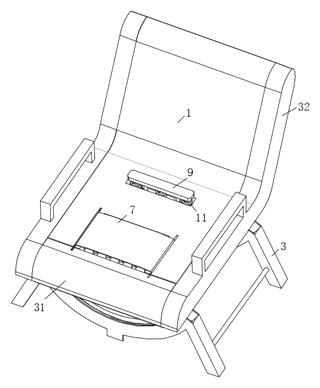
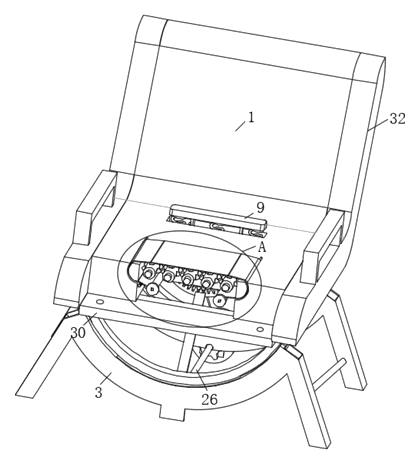
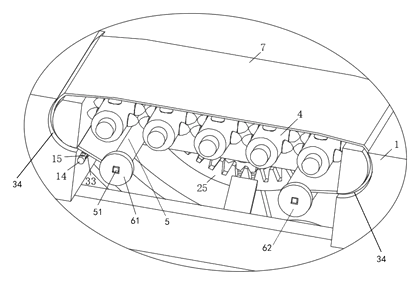
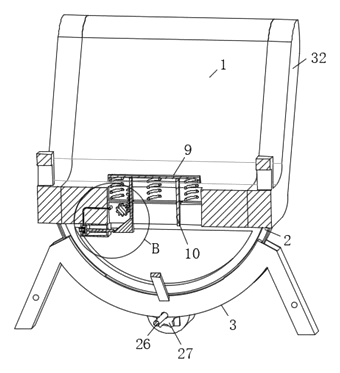
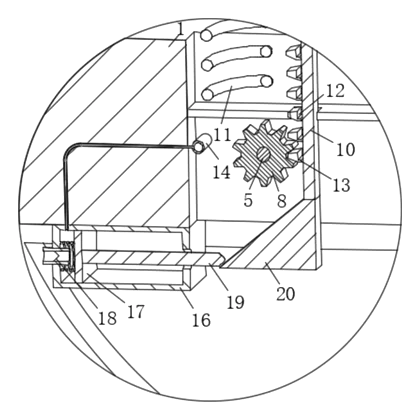
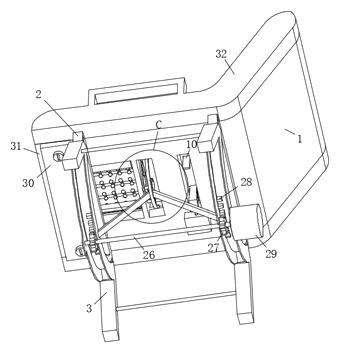
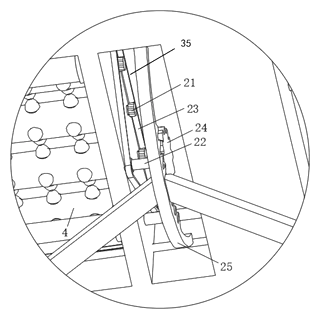
Drawings reproduced from the public patent document for reference.