
Patent CN116036614B
Updated November 8, 2026Gamepad with Grip-Activated Air Blowing and Palm Cooling
Long gaming sessions often lead to sweaty palms and slipping controllers. Standard fans require power sources or add bulk. This design uses the user's own grip strength to drive a mechanical air pump inside the handle. By pressing the handle, a piston moves within a tube, forcing air through vents directly onto the palm. It provides active cooling without external power, adapting intensity based on how firmly you hold the controller.
- China invention patent - In force
- No filings outside China
- Gaming accessories
- Mechanical grip-cooling system
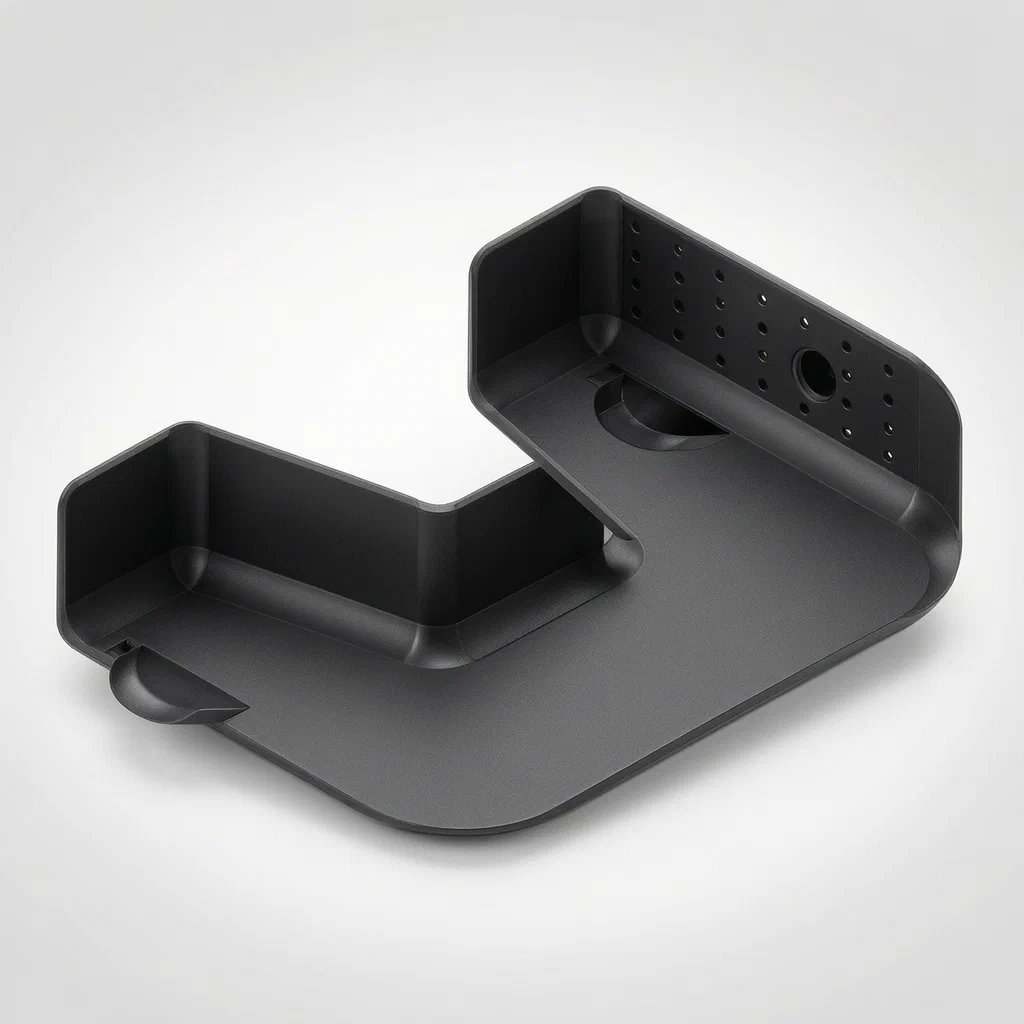
Splat! What let you down?
🌬️
Grip-Driven Airflow
The harder you hold the controller, the more air blows onto your palms.
🔧
No Battery Needed
Uses a mechanical piston and turntable system powered by hand movement.
🕹️
Flush Swing Rods
External rods retract into the handle when gripped, maintaining ergonomics.
⚙️
Adjustable Intensity
Spring-loaded adjustment blocks modify stroke length based on grip pressure.
Bring this product to market
- ✓ Patent review Patent family and legal status reviewed in the relevant jurisdictions.
- 2 Product brief · now How it works, uses and options written up
- 3 Prototype First samples for buyers to review
- 4 Pilot run Small first batch for launch customers
- 5 Volume production Repeat orders at scale
Buyer interest
– of 100 buyers needed to start prototyping
One click, no sign-up. Each vote is one real visitor, and products with the most interest go to prototyping first.
Build team: no members yet. Need a partner, co-funding or skills to build this? Join and we introduce the team once it forms.
Patent Rights & Team Participation
Before joining a development team, participants should ensure they have the necessary rights or authorization to participate in the project.
Participation is generally appropriate where:
- You own the relevant patent rights or have obtained permission or a license from the rights holder.
- The relevant patent rights have expired or have been legally invalidated in the jurisdictions where the planned activities will take place.
- The planned development, manufacturing, and commercialization activities have been independently assessed and do not infringe applicable patent rights in the relevant jurisdictions.
Important: Being located outside a country where a patent is protected does not automatically exempt you from patent infringement risks. Patent rights may apply based on where development, manufacturing, use, sale, or import activities take place.
IP2M does not grant any patent license or authorization through team participation. Joining a project does not provide permission to use, manufacture, or commercialize patented technology.
The problem
Gamers often experience sweaty palms during extended play sessions, which can cause slipping and discomfort. Traditional cooling solutions, such as attachable fans or gel pads, either require additional power sources, add bulk to the controller, or do not actively cool the skin surface. Existing gamepads lack an integrated mechanism that utilizes the natural motion of holding the device to provide targeted airflow to the hands.
The solution
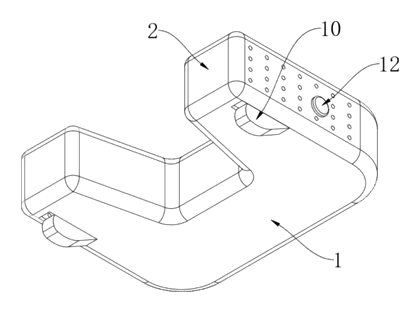
- A gamepad (1) features two handle portions (2), each containing an internal cavity (4).
- A vent hole (3) is positioned on the side wall of the handle, communicating with the cavity.
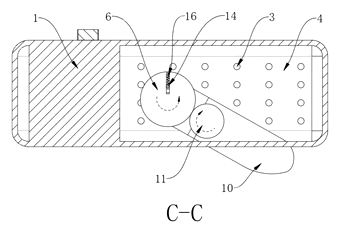
- An air blowing component is housed within the cavity. It includes a turntable (6) mounted on an inner convex part (5) via a rotating shaft.
- A piston tube (9) is fixed inside the cavity, equipped with one-way air inlet and outlet valves. The outlet faces the vent hole (3).
- A swing rod (10) is mounted externally but connected internally. When the user grips the handle, the swing rod is pushed back into the cavity.
- This movement rotates the turntable via a friction wheel (11) driven by a motor (in alternative embodiments) or direct mechanical linkage, causing a piston block to slide within the tube, expelling air through the vent.
Who it is for
- Competitive Gaming Brands: Companies looking for ergonomic advantages in their high-end controller lines.
- Mobile Gaming Accessory Makers: Manufacturers producing clip-on controllers for smartphones who want differentiated cooling features.
- Ergonomic Product Designers: Studios focused on reducing fatigue and improving comfort for long-duration device usage.
- Wholesale Electronics Distributors: Buyers seeking unique, battery-free accessory concepts for the gaming market.
How it works
The main parts
| No. | Part | What it does |
|---|---|---|
| 1 | Gamepad Body | Main housing with two handles. |
| 2 | Handle Portions | Contain the cooling mechanism; grip area. |
| 3 | Vent Hole | Exit point for air onto the palm. |
| 4 | Cavity | Internal space housing the pump components. |
| 5 | Inner Convex Part | Mounting base for the turntable and springs. |
| 6 | Turntable | Rotates to drive the piston mechanism. |
| 7 | Connecting Rod | Links the cross rod to the turntable. |
| 8 | Cross Rod | Attached to the piston block; converts rotation to linear motion. |
| 9 | Piston Tube | Contains the piston; has one-way valves. |
| 10 | Swing Rod | External lever pressed by the hand; retracts into cavity. |
| 11 | Friction Wheel | Motor-driven wheel contacting the turntable (optional). |
| 12 | Button/Block | Interaction point for adjusting stroke length. |
| 13 | Conical Disk | Adjusts the effective radius of the connecting rod. |
| 14 | Adjusting Block | Slides in radial groove to change piston stroke. |
| 15 | Adjusting Groove | Radial track for the adjusting block. |
| 16 | First Spring | Returns the adjusting block. |
| 17 | Ball | Reduces friction between block and cone. |
| 18 | Push Rod | Connects button to conical disk. |
| 19 | Second Spring | Resets the push button. |
Operating Steps
- Grip the Handle: As the user holds the gamepad, their fingers press against the swing rod (10).
- Retract the Rod: The swing rod moves inward into the cavity (4), rotating the turntable (6) via the linked connecting rod (7) and cross rod (8).
- Piston Action: The rotation causes the piston block to slide within the piston tube (9).
- Air Expulsion: The piston draws air through the one-way inlet and forces it out through the one-way outlet towards the vent hole (3).
- Cooling Effect: Air is blown directly onto the user’s palm, providing immediate cooling.
- Intensity Adjustment: Stronger grip compresses the button (12), moving the conical disk (13) to alter the adjusting block (14) position, increasing the piston stroke and airflow volume.
Applications
Competitive Esports Setup
Players in tournaments often face high stress and physical exertion. This controller keeps hands dry and secure, preventing accidental slips during critical moments without adding weight from batteries.
Mobile Gaming Controllers
Clip-on controllers for smartphones are prone to heating up due to proximity to the phone. The mechanical airflow helps dissipate heat from the player’s hands, improving comfort during mobile play sessions.
VR Motion Controllers
Virtual reality experiences involve significant hand movement. Integrating this grip-cooling system into VR wands could enhance immersion by keeping the user’s hands comfortable during long exploration sequences.
Arcade Cabinet Joysticks
Large arcade sticks suffer from sweat accumulation. Retrofitting handles with this self-powered ventilation system ensures consistent performance and hygiene for public use machines.
Where it is less suitable
- Lightweight Travel Controllers: The added mechanical complexity and internal cavity increase size and weight compared to standard compact pads.
- Silent Environment Gaming: The mechanical clicking and air blowing may produce noise unsuitable for quiet rooms or streaming setups.
- Waterproof Needs: The open vent holes and internal mechanisms make this design incompatible with wet environments or heavy cleaning protocols.
Patent & Production
At a glance
| Patent number | CN116036614B (application CN202310026225) |
| Type | China invention patent (发明专利) - protects product structure and method |
| Original title | Gamepad (一种游戏手柄) |
| Patent owner | Shenzhen Jiexiangxin Technology Co ltd |
| Inventors | Gou Shangzan, Tang Yongchang |
| Filing date | 2023-01-09 |
| Grant date | 2023-12-26 |
| Status (China) | In force - valid until at most 2043-01-09 (subject to annual fee payments) |
| Patent family | Public record shows Chinese filings only - no US, European, Japanese, PCT or other filings listed |
| Cited by | 0 later documents |
| Source | Google Patents (search for CN116036614B) |
What the claims cover, in plain language
Claim 1 defines a gamepad with two handle portions. Each handle contains a cavity and a side-wall vent hole. An air blowing component inside the cavity blows air out of the vent onto the user’s palm. The component includes a turntable on an inner convex part, a piston tube with one-way valves, and a piston block connected via rods to the turntable. A swing rod is mounted on the outer ring of the inner convex part, extending through a slot in the handle. A torsion spring pushes the swing rod outward. When the user grips the handle, the swing rod is pushed back, rotating the turntable and driving the piston. A friction wheel driven by a motor contacts the turntable.
Claim 2 adds an adjusting assembly controlled by grip strength. Higher grip strength results in higher air blowing efficiency.
Claim 3 details the mechanical adjustment: a radial groove on the turntable holds an adjustable block connected to the connecting rod. A spring returns the block. A button on the handle pushes a conical disk against the block, changing its radial position and thus the piston stroke length.
Claim 4 specifies rolling contact (ball bearing) between the adjusting block and the conical disk.
Claim 5 offers an electronic alternative: a motor drives the turntable, controlled by a pressure sensor on the handle. Motor speed increases proportionally with grip pressure.
Claim 6 includes a sweat-absorbing sleeve on the handle exterior.
Claim 7 states the swing rod end is hard rubber and sits flush with the handle wall when retracted.
This is a simplified reading for orientation only. The legal scope is defined by the exact claim wording in the official Chinese document.
What this means for US production
This patent was filed in China and is currently in force. Making or selling this specific design in China requires the owner’s permission. However, the public record shows no US or other foreign counterpart. Therefore, this patent does not restrict manufacturing or sales in the United States.
Two points to settle early:
- Other patents may exist. The gaming controller field is heavily patented globally. While this specific Chinese patent has no US family member, similar mechanical or electronic cooling concepts for handheld devices may be covered by existing US patents. A freedom-to-operate (FTO) review is recommended before launching in the US market.
- Motor vs. Mechanical. Claim 1 mentions a motor-driven friction wheel, while Claims 2-4 describe a purely mechanical grip adjustment. Producing the motor version involves electronics compliance, whereas the mechanical version focuses on precision molding.
Customization and manufacturing
What can be customized
| Area | Options |
|---|---|
| Housing Material | ABS, PC, or TPU blends for durability and feel |
| Vent Design | Grille pattern, size, and placement for optimal airflow |
| Color & Finish | Matte, glossy, textured rubberized coatings |
| Internal Mechanism | Choose between pure mechanical (Claims 2-4) or motor-assisted (Claim 5) |
| Sleeve Type | Fabric, silicone, or foam sweat-absorbing covers |
| Ergonomics | Handle curvature and swing rod protrusion height |
Things to plan for (US market)
- CPSC Regulations: If marketed to children under 12, strict small parts and choking hazard rules apply (16 CFR 1501).
- FCC Compliance: If the motor-assisted version (Claim 5) is used, the PCB and motor must meet FCC Part 15 for unintentional radiators.
- Battery Safety: If the motor version uses rechargeable batteries, UN 38.3 transport testing and UL certification for battery packs are required.
- Chemical Compliance: California Prop 65 warnings may be needed for certain plastics or adhesives used in assembly.
How a project runs
- Inquiry - Define whether you need the mechanical-only or motor-assisted variant.
- Design - CAD modeling of the piston tube, turntable, and handle cavity integration.
- Prototype - 3D printed samples to test grip mechanics and airflow volume.
- Pilot Run - Injection molded parts assembled for durability and drop testing.
- Production - Mass manufacturing of housings, internal components, and final assembly.
Quantities & timeline
Tooling costs depend on the complexity of the internal cavity molds. The mechanical version requires precise fitting of the piston and valves. The motor version adds PCB assembly and battery compartment security. Development typically takes 3-5 months depending on iteration cycles. Send us your target quantity, feature set, and budget range and we will reply with options.
Production notes
Tooling and process
Injection molding is likely the primary process for the gamepad body and internal cavity components. The piston tube and turntable may require separate molds to ensure smooth sliding fits. Pad printing would be used for any branding or instructional icons on the handle surface.
Cost drivers
The number of molds is typically a key driver, especially if the internal mechanism has multiple moving parts like the adjusting block and conical disk. Electronic parts, including motors and sensors, significantly increase cost for the motor-assisted variant. Packaging must also account for potential fragile internal components.
Prototyping path
We typically start with a 3D-printed sample to verify the swing rod retraction mechanism and airflow direction. Use off-the-shelf electronics if pursuing the motor version to test speed control logic. Proceed to a functional sample with machined or molded internal parts to check piston seal integrity.
What we would change before tooling
We might simplify the adjusting block geometry to reduce mold complexity if the grip-strength variation is deemed secondary to basic cooling. Ensuring the swing rod end is perfectly flush (Claim 7) may require tight tolerance adjustments in the handle slot design.
Common failure points
Small parts like the ball bearings (Claim 4) could pose choking hazards if detached. Cracking after drops is a risk for the thin-walled piston tube. Shaft and bearing alignment issues could cause the turntable to jam, stopping airflow. Wire routing and strain relief are critical if a motor is included.
Patent drawings
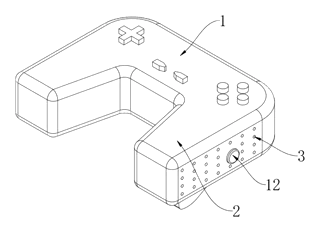
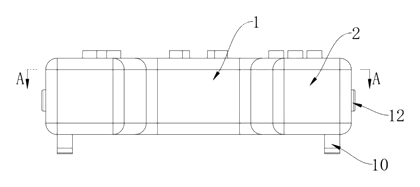
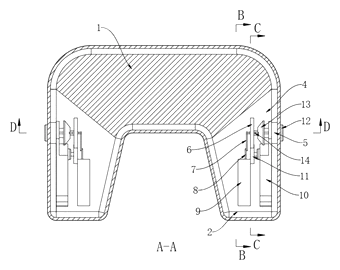
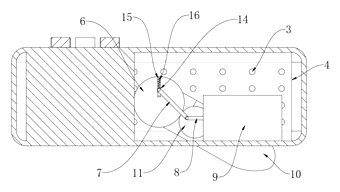
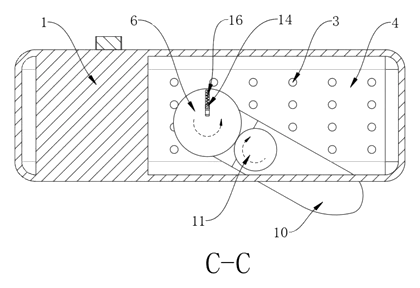
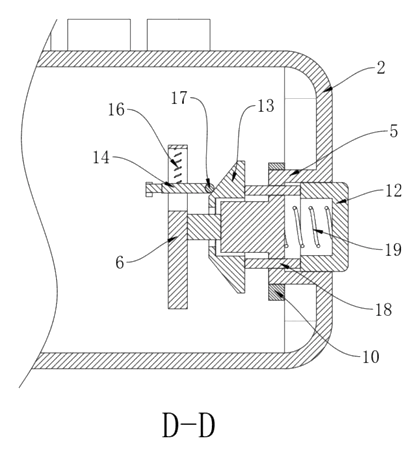
Drawings reproduced from the public patent document for reference.
Frequently asked questions
Does this gamepad need batteries?
The core mechanical design described in Claims 1-4 operates entirely on grip strength, requiring no batteries. However, Claim 5 describes an optional motor-driven version that would require power, either from internal batteries or USB connection.
How strong does the airflow feel?
The patent does not specify CFM (cubic feet per minute) values. Airflow intensity depends on the piston stroke length and turntable speed, which vary with grip strength. Functional prototypes are needed to determine actual wind speed and comfort levels.
Is it noisy?
Mechanical versions may produce some clicking sounds from the piston and gears. Motor versions will have fan-like white noise. Noise levels are not specified in the patent and would be tuned during prototyping.
Can I customize the color and logo?
Yes. The housing supports pad printing for logos and injection molding in various colors. We can also offer different finishes like matte or rubberized textures to improve grip.
What materials are used?
Typically, ABS or PC plastic is used for the durable shell and internal structures. The swing rod tip uses hard rubber as per Claim 7. Sweat-absorbing sleeves (Claim 6) can be fabric or silicone.
Is this safe for children?
If marketed to children, strict CPSC small parts regulations apply. The internal mechanism contains small components like balls and springs that must be securely enclosed to prevent choking hazards.
Can this design be made and sold in the US?
The patent was filed in China and is in force there, but the public record shows no US counterpart. This means you are not restricted by this specific patent in the US. However, other US patents in the gaming controller space may exist, so a freedom-to-operate review is recommended.
Are you affiliated with the patent owner?
No. IP2M is an independent design and manufacturing service working from the public patent document.
Request a quote
Click Request a Quote below to see our email address - copy it, or open your email app with a ready-made message. Please mention patent CN116036614B in the subject.
Helpful details to include:
- Your company and channel (gaming brand, accessory maker, distributor)
- Version preference: Mechanical only (no power) or Motor-assisted (needs electronics)
- Target price and estimated annual quantity
- Customization needs: Colors, logos, sleeve types
- Timeline - when you need samples and mass production
You can also reach us at (332) 203-9997.
Page editor: Emily Zhang, Product Editor · IP2M
Last updated November 8, 2026. If something on this page looks wrong, email [email protected] and we will check it against the patent.
Interested in building this?
Tell us your target market, quantity and timeline. We reply with options for prototyping, small-batch runs or volume production.
Send your inquiry to
Please put CN116036614B in the subject line and tell us your company, country, estimated quantity and timeline.
Prefer to talk? Call (332) 203-9997.
More product-ready patents
All Toys & Games patents →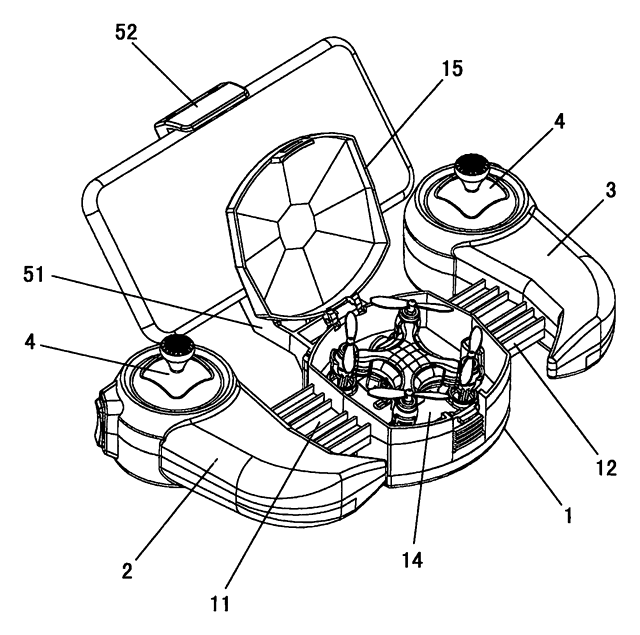
Toys & Games
Stretch-to-Fit Toy Remote with Drone Storage
Toy drone remote with slide-out handles for any hand size, a phone clamp and built-in drone storage.
Patent CN205412243U
Toys & Games
Magnetic Tile Racks for Ultra-Thin Travel Mahjong
Magnetic rack frames that hold ultra-thin mahjong tiles upright and fold into the set's carrying box.
Patent CN207169017U
Toys & Games
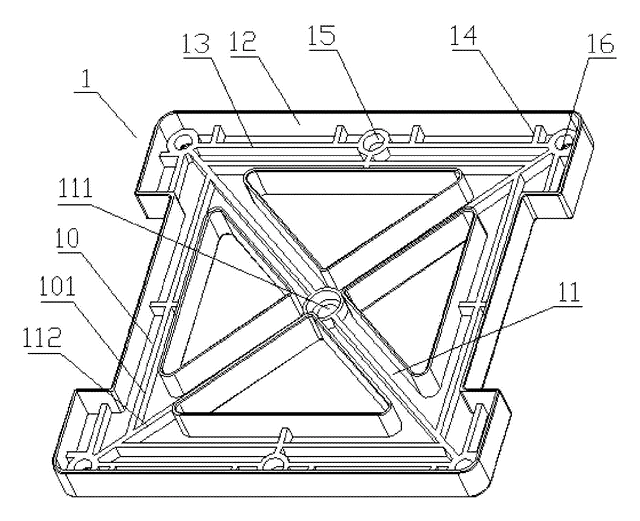
X-Braced Square Magnetic Building Tile with Locating-Post Shell
Square magnetic building tile: open X-brace frame, corner-lug magnets, two shells aligned by posts.
Patent CN105963988B
Toys & Games
Card-Thin Magnetic Travel Mahjong and Chess Sets with Magnet Racks
Pocket mahjong and chess sets: thin magnetic-powder tiles, finger magnet picker and fold-out magnetic racks.
Patent CN206896783U
Toys & Games
Inflatable Baby Climbing Mat with a Bumpy Hump and a Ramp Obstacle
Inflatable crawling mat: a bumpy rounded hump and a sloped ramp on a stiffened air base.
Patent CN108905229B
Toys, Games & Puzzles
Ring-Layout Automatic Card Shuffler with Electromagnetic Box Coupling
Ring-layout card shuffler that sweeps stacks between boxes via electromagnetic coupling.
Patent CN209564602U
Browse by category
- Apparel & Accessories (51)
- Baby & Kids (30)
- Bags & Luggage (17)
- Bath & Personal Care (33)
- Car Accessories (27)
- Furniture, Bedding & Storage (25)
- Garden & Outdoor (34)
- Health & Wellness (15)
- Home, Kitchen & Cleaning (52)
- Lighting (25)
- Packaging & Containers (13)
- Pet Products (12)
- Phone & Camera Accessories (10)
- Retail Display (27)
- School, Office & Art (38)
- Sports & Recreation (49)
- Tools & Workshop (57)
- Toys & Games (24)
This page is based on the public patent document CN116036614B, assigned to Shenzhen Jiexiangxin Technology Co ltd. IP2M is an independent manufacturing service and is not affiliated with, endorsed by or licensed by the patent owner. Images marked as concept renderings are illustrations, not photos of an existing product. Patent status information is provided for reference only and is not legal advice; confirm freedom to operate for your market before production. Full disclaimer.