At a glance
| Patent number | CN116039479B (application CN202310327628) |
| Type | China invention patent (发明专利) - protects product shape, structure, and method |
| Original title | Chair back table, adjustable seat and vehicle (一种椅背桌板、可调座椅以及车辆) |
| Patent owner | Ningbo Shuaitelung Automotive Systems Co ltd |
| Inventors | Cao Xiaopeng, Dong Lin, He Zhuyuan, Gan Chunlei |
| Filing date | 2023-03-30 |
| Grant date | 2024-05-17 |
| Status (China) | In force - valid until at most 2043-03-30, provided annual maintenance fees are paid |
| Patent family | Chinese filings only - no US, European, Japanese, PCT or other filings listed |
| Cited by | 0 later documents |
| Source | Google Patents (search for CN116039479B) |
What the claims cover, in plain language
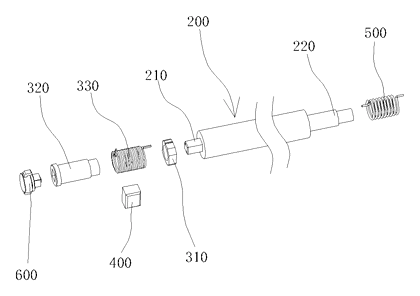
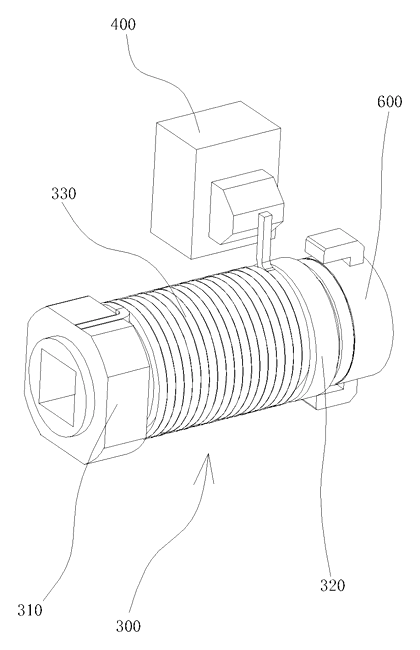
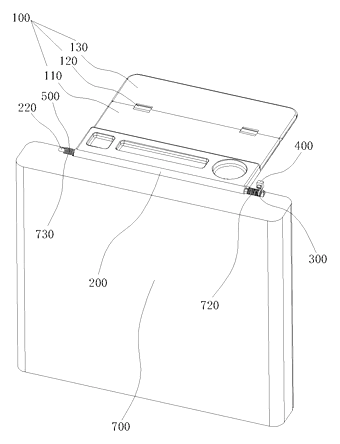
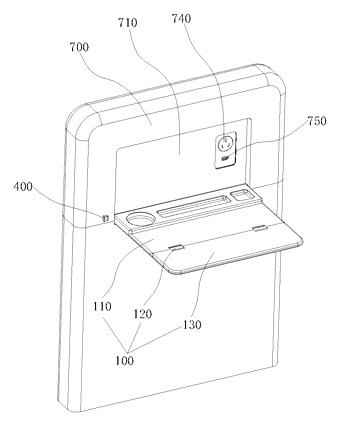
Claim 1 defines an adjustable seat comprising a table top body (100) with a rotating shaft (200). It includes a locking mechanism (300) made of a fixed member (310), a rotating member (320), and a clamping spring (330). The rotating member connects to the shaft. The spring wraps around the rotating member, with one end fixed to the fixed member. The spring grips the rotating member to limit unidirectional rotation (preventing opening). A pressable unlocking block (400) connects to the other end of the spring; pressing it pushes the spring to release the grip. The claim further specifies a torsion spring (500) connected to the shaft to apply force for flipping the table open. It also details a chair back (700) with a receiving groove (710) where the table fits, and the shaft splitting into a first shaft (210) and second shaft (220).
Claim 2 adds a damper (600) connected to the rotating member to control motion. Claim 3 specifies that the table top body consists of a first plate (110) and second plate (130) connected by a hinge (120), with the shaft on the first plate. Claims 4-5 describe the installation within the chair back’s side holes (720, 730), where the locking mechanism and torsion spring are housed respectively.
This is a simplified reading for orientation only. The legal scope is defined by the exact claim wording in the official Chinese document.
What this means for US production
This patent was filed only in China and is currently in force there. It has no US or other foreign counterpart. Therefore, manufacturing or selling this specific design in the United States does not infringe on this particular Chinese patent. However, since the patent is active in China, exporting products made using this technology to China could potentially face issues if the local rights holder enforces their patent.
Two points to settle early:
- Other patents may exist. Automotive interior mechanisms and folding tables are heavily patented fields globally. Major suppliers like Lear, Adient, and Faurecia hold numerous patents on similar locking and deployment systems. A freedom-to-operate (FTO) review is essential to ensure your specific implementation does not violate other active US or international patents.
- Material Safety. As an automotive component, materials must meet strict flammability and toxicity standards (e.g., FMVSS 302 in the US). The choice of plastics for the spring and housing affects both safety compliance and durability.
Customization and manufacturing
What can be customized
| Area | Options |
|---|---|
| Table Surface | Size, material (ABS, PP, wood veneer), texture, color |
| Mechanism Housing | Integrated into seat frame vs. standalone module |
| Spring Type | Material (stainless steel, coated wire), tension strength |
| Assist Features | Torsion spring stiffness, damper damping coefficient |
| Mounting Interface | Bolt patterns compatible with various seat frames |
| Finish | Paint, powder coat, or raw engineering plastic appearance |
Things to plan for (US market)
- FMVSS 302 - Flammability of interior materials; all components in the passenger compartment must pass burn rate tests.
- EPA VOC Regulations - Volatile organic compound emissions from plastics and adhesives used in the assembly.
- ISO 16750 / AEC-Q - Environmental testing standards for automotive electronics and mechanical parts (vibration, temperature cycling), often adopted by US automakers.
- RoHS/REACH - While primarily EU regulations, many US supply chains enforce these substance restrictions for global compatibility.
How a project runs
- Inquiry - Define table dimensions, load requirements, and integration method (seat model).
- Design - CAD modeling of the locking mechanism, spring selection, and housing design.
- Prototype - 3D printed housings and custom-wound springs for functional testing.
- Pilot Run - Injection molding tooling, assembly line setup, and durability testing (cycle life).
- Production - Mass manufacturing of molded parts, spring coiling, and final assembly.
Quantities & timeline
Injection molds for the table body and housing take 8-12 weeks. Springs are custom-wound and can be produced quickly once specs are finalized. Durability testing for automotive-grade cycles (e.g., 10,000+ open/close cycles) typically takes 4-6 weeks. Send us your table dimensions, target load capacity, material preferences, quantity and target price and we will reply with options.
Patent drawings
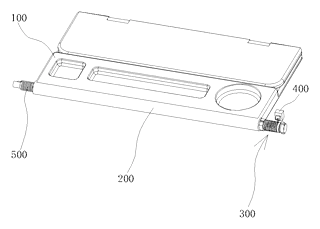
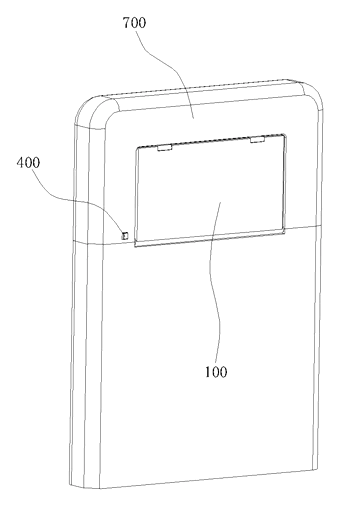
Drawings reproduced from the public patent document for reference.