
Patent CN116312284B
Updated November 8, 2026Modular Aluminum Hinge for Large Advertising Light Boxes
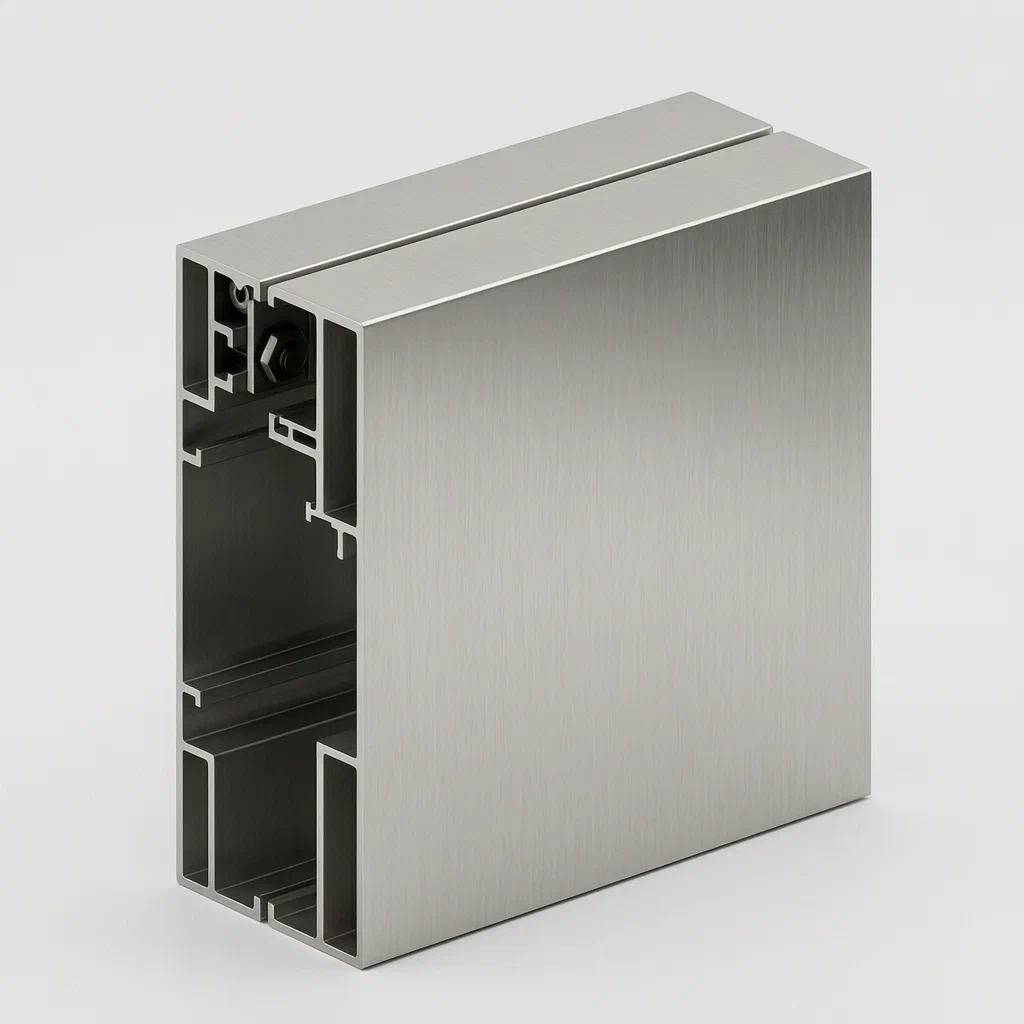
Traditional large light boxes require heavy-duty hinges and multiple screws to hold the front panel securely against wind and weight. This modular hinge system simplifies assembly by using a nested locking mechanism. The face frame connects to the main frame via a rotating shaft and positioning hinge. A movable bolt secures the joint, while a spring-loaded slider on the internal strip engages with the bolt's limiting grooves. This allows quick access to change advertisements while maintaining a rigid, safe structure for large-format displays.
- China invention patent - In force
- No filings outside China
- Aluminum alloy construction
- Tool-free spring locking mechanism
Splat! What let you down?
🔩
Movable Bolt Lock
A threaded movable bolt with angled limiting grooves secures the hinge position.
🛠️
Spring Slider Mechanism
Internal strip uses a return spring and slider to engage the bolt without tools.
📐
Triangular Limit Strip
Face frame uses embedded triangular strips to guide and limit rotation safely.
🔄
Dual Hinge System
Combines a movable hinge and positioning hinge for stable large-format support.
Bring this product to market
- ✓ Patent review Patent family and legal status reviewed in the relevant jurisdictions.
- 2 Product brief · now How it works, uses and options written up
- 3 Prototype First samples for buyers to review
- 4 Pilot run Small first batch for launch customers
- 5 Volume production Repeat orders at scale
Buyer interest
– of 100 buyers needed to start prototyping
One click, no sign-up. Each vote is one real visitor, and products with the most interest go to prototyping first.
Build team: no members yet. Need a partner, co-funding or skills to build this? Join and we introduce the team once it forms.
Patent Rights & Team Participation
Before joining a development team, participants should ensure they have the necessary rights or authorization to participate in the project.
Participation is generally appropriate where:
- You own the relevant patent rights or have obtained permission or a license from the rights holder.
- The relevant patent rights have expired or have been legally invalidated in the jurisdictions where the planned activities will take place.
- The planned development, manufacturing, and commercialization activities have been independently assessed and do not infringe applicable patent rights in the relevant jurisdictions.
Important: Being located outside a country where a patent is protected does not automatically exempt you from patent infringement risks. Patent rights may apply based on where development, manufacturing, use, sale, or import activities take place.
IP2M does not grant any patent license or authorization through team participation. Joining a project does not provide permission to use, manufacture, or commercialize patented technology.
The problem
Large advertising light boxes often suffer from complex assembly processes and insecure front panels. Standard hinges may loosen over time due to vibration or weather exposure, causing the face frame to sag or detach. Changing posters frequently requires unscrewing multiple fasteners, which is time-consuming and risks damaging the aluminum extrusion threads. There is a need for a robust hinge system that allows quick access for maintenance while ensuring the large front panel remains rigidly fixed during operation.
The solution
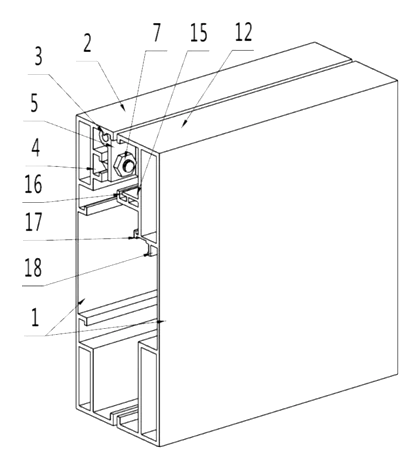
- The light box body consists of a face frame and a main frame. The face frame holds the advertisement and rotates open for changes.
- A movable hinge is attached to the edge of the face frame. It connects to a rotating shaft, which allows the face frame to swing relative to the main frame.
- A positioning hinge is mounted on the outer surface of the rotating shaft. This component bridges the gap between the face frame and the main frame, providing structural continuity.
- A limit strip with a triangular cross-section is embedded in the inner surface of the face frame. This guides the movement and prevents over-rotation.
- A movable bolt is threaded into the lower end of the positioning hinge. This bolt features limiting grooves arranged at equal angles along its axis.
- An internal strip slides within a groove in the main frame. It carries a movable locking piece equipped with a return spring and a slider. When pushed, the slider’s limiting column snaps into one of the bolt’s grooves, locking the hinge position securely.
Who it is for
- Signage manufacturers producing large-format outdoor or indoor advertising displays who need reliable, repeatable assembly methods.
- Retail brands operating store fronts where frequent poster changes are required; the tool-free locking speeds up maintenance.
- Event organizers needing modular display stands that can be quickly assembled and disassembled for transport.
- Installation contractors working on high-mounted light boxes where manual screw tightening is difficult or unsafe.
How it works
The main parts
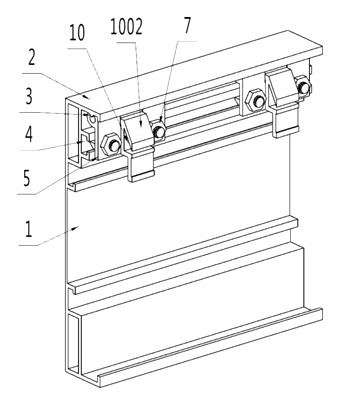
| No. | Part | What it does |
|---|---|---|
| 1 | Light Box Body | Overall structure holding the ad. |
| 2 | Face Frame | Front border that rotates open. |
| 12 | Main Frame | Rear chassis supporting the light box. |
| 3 | Limit Strip | Triangular guide on the face frame. |
| 5 | Movable Hinge | Connects face frame to the shaft. |
| 8 | Rotating Shaft | Pivot point for opening/closing. |
| 10 | Positioning Hinge | Links shaft to the main frame. |
| 13 | Movable Bolt | Threaded fastener with locking grooves. |
| 19 | Internal Strip | Sliding component with spring lock. |
| 1903 | Return Spring | Provides tension for the locking slider. |
Opening and closing
- Unlock: Press the handle on the internal strip. The slider moves against the return spring, disengaging the limiting column from the movable bolt’s groove.
- Open: Rotate the face frame outward around the rotating shaft. The positioning hinge pivots, allowing the frame to swing open for poster replacement.
- Close: Swing the face frame back onto the main frame. Ensure the limit strip aligns with the nesting groove.
- Lock: Release the handle. The return spring pushes the slider so the limiting column snaps into the nearest groove on the movable bolt, securing the assembly.
Applications
Outdoor Storefront Signage
High-wind environments require secure locking. The spring-loaded bolt engagement ensures the face frame stays closed despite vibrations, while the aluminum construction resists corrosion.
Indoor Retail Displays
In shopping malls, aesthetics matter. The hidden locking mechanism keeps the exterior clean. Staff can change seasonal promotions quickly without carrying tools to the ladder.
Exhibition Booths
Modular booths need rapid setup. The nested hinge design allows panels to be joined firmly but separated easily if the layout changes, reducing installation time at trade shows.
Public Transit Ads
Bus shelters and subway stations have high traffic. The robust dual-hinge system supports large panels that must withstand frequent opening for content updates by maintenance crews.
Where it is less suitable
- Small tabletop displays - The complexity of the spring-lock mechanism is unnecessary for lightweight frames under 1 meter wide.
- Fixed permanent installations - If the ad never needs changing, simpler welded or screwed joints are cheaper and lighter.
Patent & Production
At a glance
| Patent number | CN116312284B (application CN202310132674) |
| Type | China invention patent - protects product shape, structure, and method |
| Original title | Hinge for Convenient Combination of Large Aluminum Alloy Advertising Light Box (一种方便组合的大型铝合金广告灯箱合页) |
| Patent owner | Shenzhen Kesai Logo Intelligent Technology Co ltd |
| Inventors | Wang Weiwen, Zhong Lin, Zhong Yu, Fan Zhongjun |
| Filing date | 2023-02-07 |
| Grant date | 2025-04-22 |
| Status (China) | In force in China until at most 2043-02-07 (if annual fees are paid) |
| Patent family | Public record shows Chinese filings only - no US, European, Japanese, PCT or other filings listed |
| Cited by | 0 later documents |
| Source | Google Patents (search for CN116312284B) |
What the claims cover, in plain language
Claim 1 - a large aluminum alloy advertising light box hinge comprising a light box body made of a face frame and a main frame. Key components include a limit strip on the face frame, a movable hinge connected to the face frame edge, and a rotating shaft connecting the movable hinge to a positioning hinge. The positioning hinge attaches to the main frame via a hook. A movable bolt with limiting grooves is threaded into the positioning hinge. An internal strip with a support member and card plate slides in the main frame. Claim 8 specifies a movable locking piece on the internal strip featuring a slider, return spring, and limiting column that engages the bolt’s grooves.
Claims 2-7 - detail specific structural relationships: the triangular shape of the limit strip, the nesting of the hook and positioning hinge, the integrated structure of the positioning block and diagonal brace, the angle of the limiting grooves on the bolt, and the T-shape of the card plate.
This is a simplified reading for orientation only. The legal scope is defined by the exact claim wording in the official Chinese document.
What this means for US production
This patent was filed in China and is currently in force. Making or selling this specific hinge design in China requires the owner’s permission. However, the public record shows no US or other foreign counterpart. Therefore, this patent alone does not restrict manufacturing or selling this design in the United States.
Two items to resolve before launch:
- Other patents may exist. Signage hardware is a competitive field with many existing utility patents regarding latch mechanisms and aluminum extrusions. A freedom-to-operate (FTO) review is recommended to ensure the spring-loaded slider and movable bolt configuration do not infringe on other active US patents.
- Material sourcing. The design relies on aluminum alloy extrusions. Verify supplier capabilities for custom profiles matching the specified triangular limit strips and T-shaped card plates.
Customization and manufacturing
What can be customized
| Area | Options |
|---|---|
| Frame Size | Width and height adjusted for standard poster sizes (e.g., 60x90cm, 100x150cm) |
| Finish | Powder coating colors (black, white, silver) or anodized aluminum |
| Locking Strength | Spring rate and groove pitch adjusted for larger/heavier face frames |
| Mounting | Wall-mount brackets or pole-mount adapters for street signs |
| Graphics | Silk-screening or UV printing on the face frame edges |
Things to plan for (US market)
- UL 48 / UL 879 - If the light box contains electrical components, the enclosure must meet safety standards for wet locations.
- Wind Load Ratings - For outdoor use, engineering calculations must verify the hinge can resist local wind codes (ASCE 7).
- RoHS/REACH - Compliance for coatings and plastic parts (spring/slider) if exporting globally.
How a project runs
- Inquiry - Define frame dimensions, load requirements, and finish.
- Design - CAD modeling of the extrusion profile and hinge interface.
- Prototype - Fabricated samples for fit and function testing.
- Pilot run - Small batch production to validate assembly efficiency.
- Production - Extrusion, die-casting/machining for bolts, injection molding for sliders, final assembly.
Quantities & timeline
Aluminum extrusion dies and injection molds for the locking pieces are the critical path, and surface finishing follows. Send us your target frame size, quantity, and desired finish and we will reply with options.
Production notes
Tooling and process
The primary components rely on aluminum extrusion for the main and face frames, requiring custom dies for the triangular limit strip profile. The movable bolt and positioning hinge likely involve sheet metal fabrication or aluminum extrusion, depending on thickness. The slider and locking piece housing typically use injection molding for consistent spring integration.
Cost drivers
Sheet thickness of the aluminum typically drives material cost and rigidity. Number of parts is significant here; the multi-component hinge (shaft, bolt, slider, springs) increases assembly labor compared to simple butt hinges. Surface finish quality affects powder coating costs.
Prototyping path
We typically start with a 3D model and load check to verify the spring mechanism. Produce a cut and bent sample of the frame to test the nesting grooves. Conduct a load test on the hinge to simulate wind resistance before committing to full tooling.
What we would change before tooling
We might adjust the wall thickness and joint design of the extrusion to reduce weight without losing strength. The hinge boss and pivot wear should be tested with different lubricants. Simplifying the thread engagement and fastener torque specs could speed up field installation.
Common failure points
Insufficient load capacity may cause the face frame to sag if the aluminum gauge is too thin. Tipping is a risk if the center of gravity shifts during opening. Acrylic cracking near the mounting points can occur if the frame flexes too much. Spring fatigue could prevent the lock from engaging after thousands of cycles.
Patent drawings
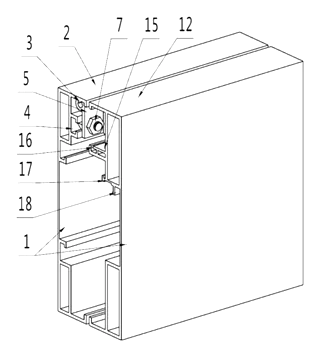
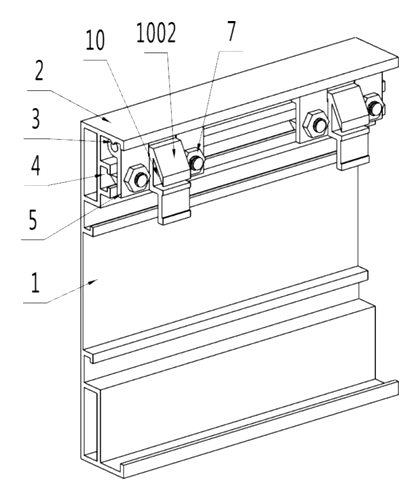
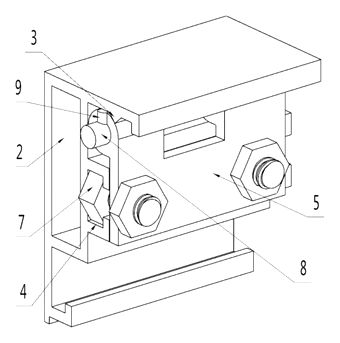
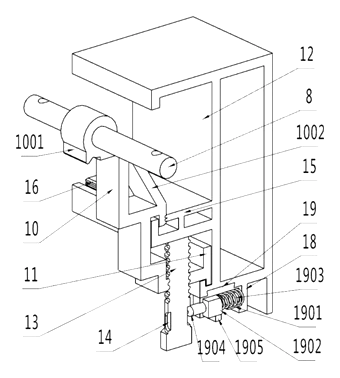
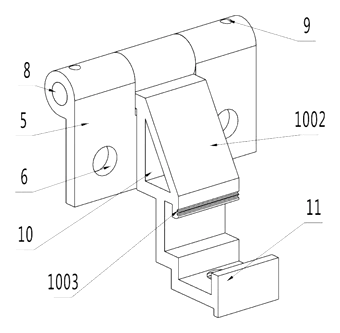
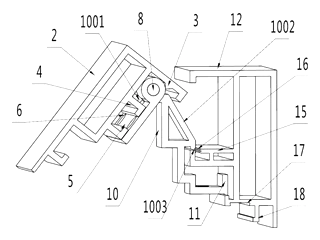
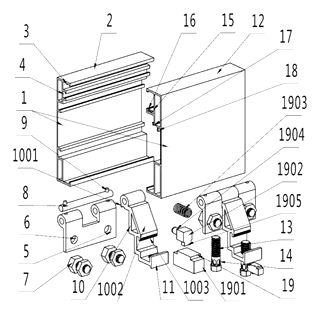
Drawings reproduced from the public patent document for reference.
Frequently asked questions
How does the tool-free locking work?
The internal strip has a spring-loaded slider. When you push the handle, the slider retracts. When released, the spring pushes a column into one of the angled grooves on the movable bolt. This locks the face frame in place without needing a screwdriver.
Is the aluminum strong enough for large signs?
Yes, the design uses aluminum alloy extrusions. The triangular limit strip and T-shaped card plate reinforce the connection between the face and main frames, distributing stress evenly across the hinge area.
Can I change the poster size?
The hinge mechanism is modular. You can customize the length of the aluminum extrusions to fit different standard poster sizes (like ISO B1 or A0), as long as the weight remains within the hinge’s load capacity.
Does it rust or corrode outdoors?
Aluminum naturally resists corrosion. For coastal or high-pollution areas, powder coating adds an extra protective layer. The steel components like the bolt are typically plated to prevent rust.
How hard is it to assemble?
The frames snap together using the nesting grooves and hooks. The movable bolt threads into the positioning hinge. Once aligned, the spring lock engages automatically. It is designed for quick factory assembly and field maintenance.
What happens if the spring breaks?
The patent describes a replaceable internal strip assembly. If the spring fails, the entire locking unit can usually be swapped out without replacing the whole frame, depending on the specific mold design used in production.
Can this design be made and sold in the US?
The patent is in force in China, but the public record shows no US counterpart. Therefore, this specific patent does not restrict making or selling the design in the US. However, always conduct a freedom-to-operate check for other existing signage patents.
Are you affiliated with the patent owner?
No. IP2M is an independent design and manufacturing service working from the public patent document.
Request a quote
Click Request a Quote below to see our email address - copy it, or open your email app with a ready-made message. Please mention patent CN116312284B in the subject.
Helpful details to include:
- Your company and channel (signage maker, retail brand, event organizer)
- Target frame dimensions and expected poster weight
- Finish preference (color, texture, anodized vs painted)
- Quantity needed for initial order
- Timeline - when you need prototypes or first shipment
You can also reach us at (332) 203-9997.
Page editor: Daniel Chen, Product Research Editor · IP2M
Last updated November 8, 2026. If something on this page looks wrong, email [email protected] and we will check it against the patent.
Interested in building this?
Tell us your target market, quantity and timeline. We reply with options for prototyping, small-batch runs or volume production.
Send your inquiry to
Please put CN116312284B in the subject line and tell us your company, country, estimated quantity and timeline.
Prefer to talk? Call (332) 203-9997.
More product-ready patents
All Retail Display patents →
Retail Display
Motorized Shelf Display That Presents a Product to Shoppers
Shelf unit that lifts a product over the price rail toward shoppers when a sensor detects them.
Patent CN215077184U
Retail Display
Portable Advertising Light Box with Spinning LED Display
Portable ad box whose spinning LED bars draw images and text; content changes by wireless or USB.
Patent CN207425291U
Retail Display
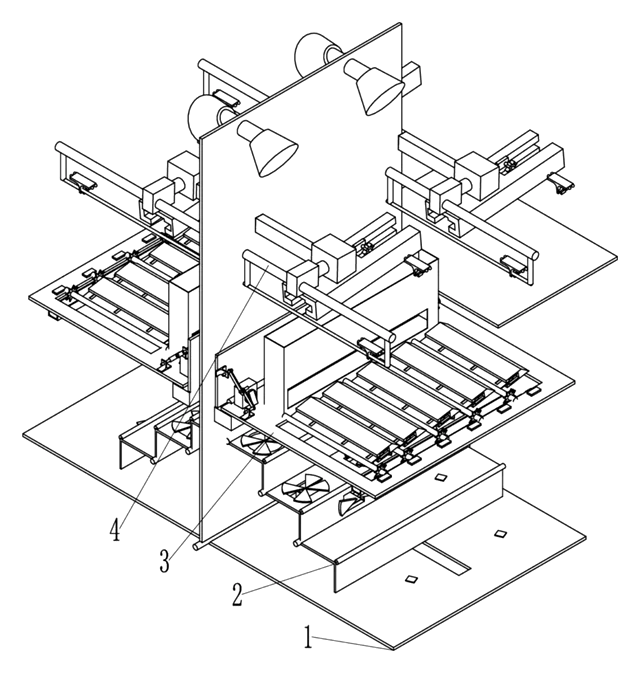
Automated Folding Store Shelf That Pushes Products Up to the Customer
Double-sided shelf for unmanned stores: folding tiers, screw pushers and lift cylinders present stock.
Patent CN109645754B
Retail Display
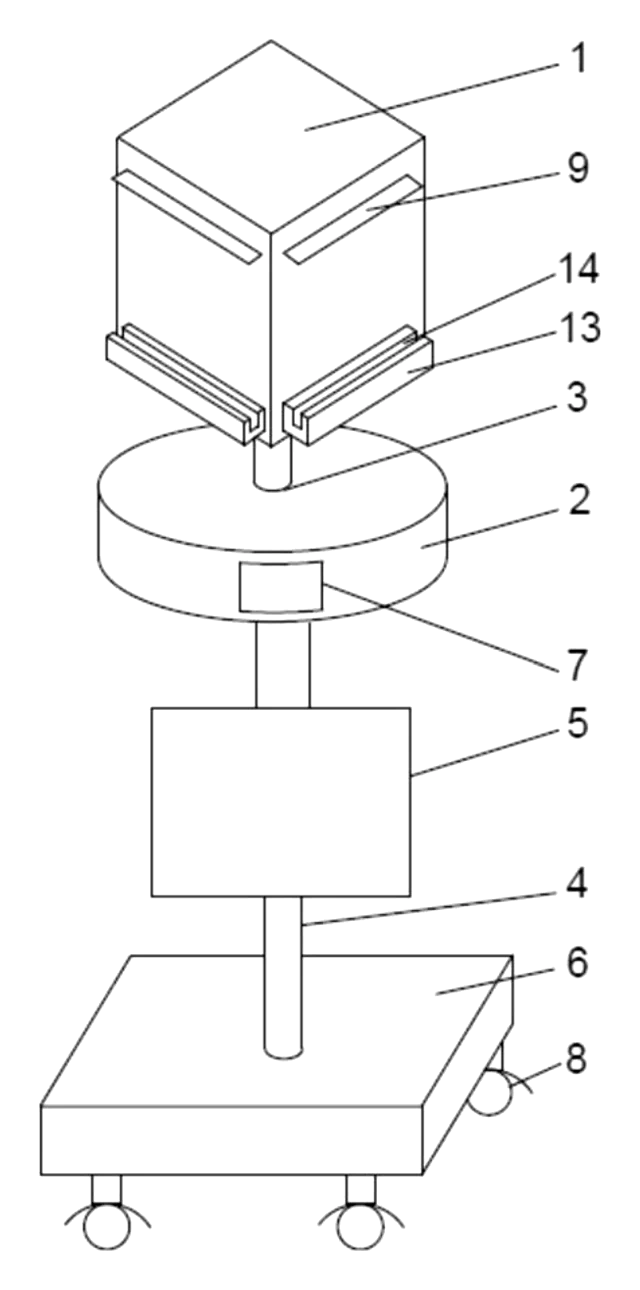
Motorized Rotating Display Pedestal with Lift Column, Info Screen and Clip-On Display Racks
Mobile pedestal: motorized rotating cube with lit faces and racks, electric lift column and info screen.
Patent CN208875862U
Retail Display
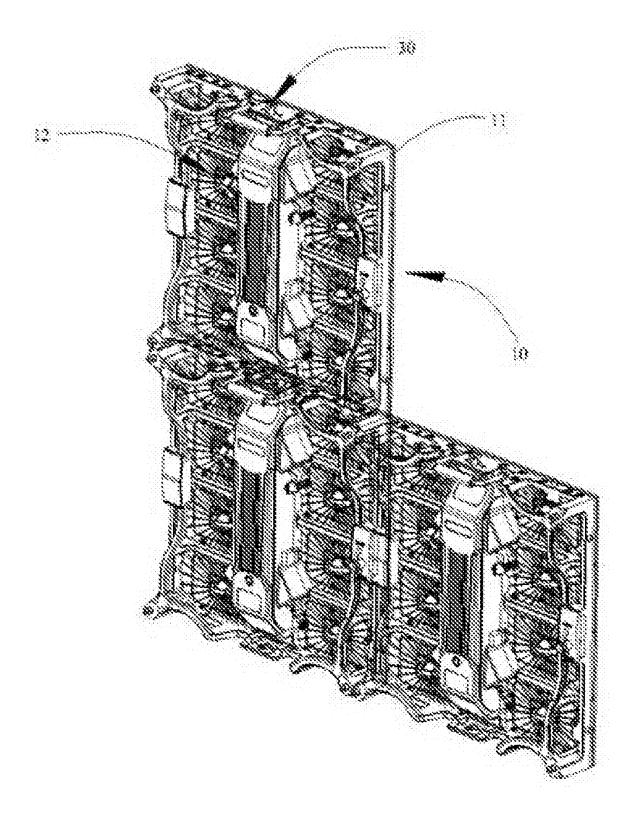
Thin Outdoor LED Video Wall Cabinet with Magnetic Modules and Tool-Free Locks
Thin outdoor LED wall cabinet: magnetic modules and rear body, rotary locks, finned rear cooling.
Patent CN205354557U
Store & Display
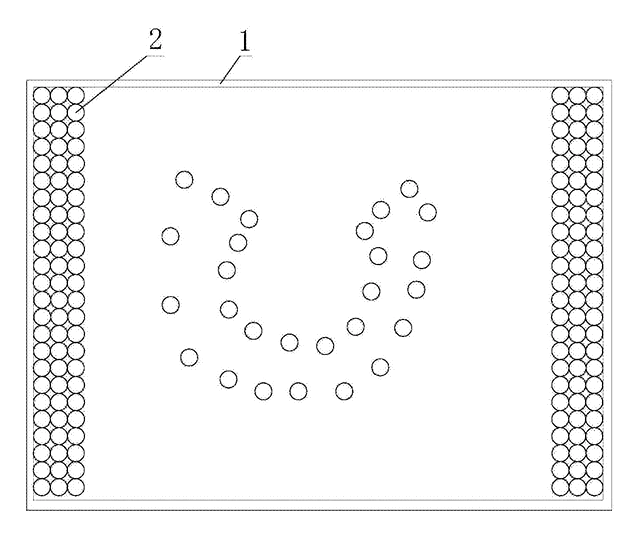
Magnetically Repositionable LED Advertising Panel
LED panel whose lamp beads slide to new positions via an external electromagnet.
Patent CN205487209U
Browse by category
- Apparel & Accessories (51)
- Baby & Kids (30)
- Bags & Luggage (17)
- Bath & Personal Care (33)
- Car Accessories (27)
- Furniture, Bedding & Storage (25)
- Garden & Outdoor (34)
- Health & Wellness (15)
- Home, Kitchen & Cleaning (52)
- Lighting (25)
- Packaging & Containers (13)
- Pet Products (12)
- Phone & Camera Accessories (10)
- Retail Display (27)
- School, Office & Art (38)
- Sports & Recreation (49)
- Tools & Workshop (57)
- Toys & Games (24)
This page is based on the public patent document CN116312284B, assigned to Shenzhen Kesai Logo Intelligent Technology Co ltd. IP2M is an independent manufacturing service and is not affiliated with, endorsed by or licensed by the patent owner. Images marked as concept renderings are illustrations, not photos of an existing product. Patent status information is provided for reference only and is not legal advice; confirm freedom to operate for your market before production. Full disclaimer.