
Patent CN116473399B
Updated October 31, 2026Automatic Light-Supplementing Clothing Display Stand
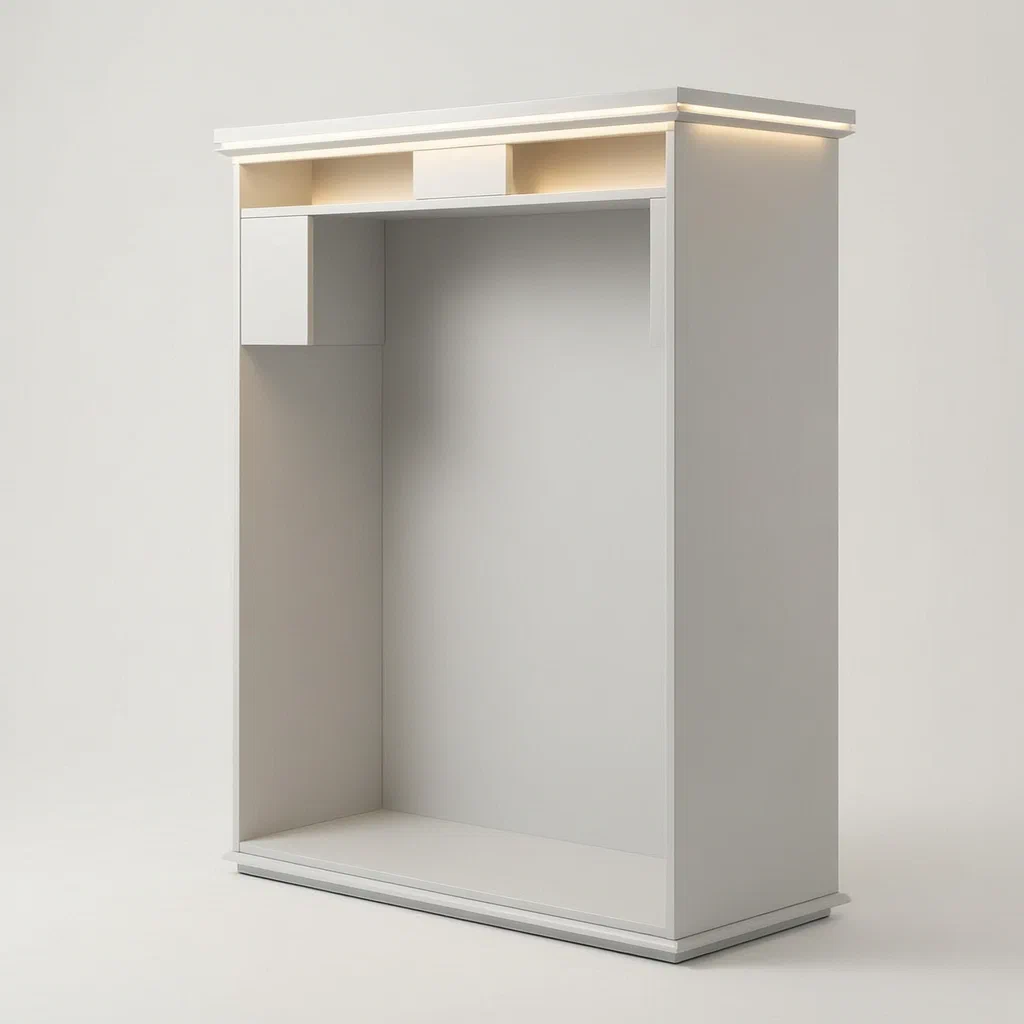
Traditional display racks require staff to manually move lights up, down, or sideways, which is slow and inconsistent. This automated stand solves this by using internal gear systems. A motor drives a sliding plate to lift or lower the lamp. Another set of gears swings the lamp to change the angle, highlighting different parts of the garment. Finally, a rotating cover adjusts the light tone from cool to warm, ensuring the fabric color appears accurate under varying conditions.
- China invention patent - active
- No filings outside China
- Retail display equipment
- Electric gear-driven lamp adjustment
Splat! What let you down?
💡
Auto Height Adjustment
Planetary gears drive the lamp up or down to match the mannequin size.
📐
Swinging Angle Control
Transmission parts swing the lamp block to highlight garment details.
🎨
Tone Switching
A rotating cover changes light warmth to suit different fabric colors.
⚙️
Motorized Operation
Replaces manual adjustments with electric precision for consistent displays.
Bring this product to market
- ✓ Patent vetted China-only family and legal status checked
- 2 Product brief · now How it works, uses and options written up
- 3 Prototype First samples for buyers to review
- 4 Pilot run Small first batch for launch customers
- 5 Volume production Repeat orders at scale
Buyer interest
– of 100 buyers needed to start prototyping
One click, no sign-up. Each vote is one real visitor, and products with the most interest go to prototyping first.
Build team: no members yet. Need a partner, co-funding or skills to build this? Join and we introduce the team once it forms.
The problem
In retail environments, clothing displays often suffer from poor lighting angles or incorrect color temperatures. When a store changes its inventory from dark suits to bright summer dresses, the fixed position of the spotlight may cast shadows on key features or wash out the fabric color. Staff members must manually climb ladders or reach high fixtures to adjust the lamp’s height, tilt, and filter. This process is time-consuming, physically demanding, and prone to inconsistency between different store locations. Furthermore, manual adjustments rarely achieve the precise positioning needed to enhance the three-dimensional appearance of the garments.
The solution
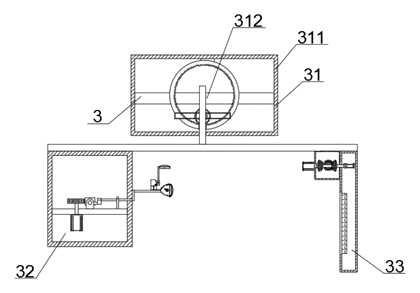
This display stand integrates an electric adjustment system directly into the rack structure. The core solution involves three interconnected mechanisms housed within the top frame:
- Lifting Mechanism: A first motor drives a gear assembly that interacts with a planetary gear system. This setup moves a sliding plate vertically, raising or lowering the lamp holder relative to the mannequin below.
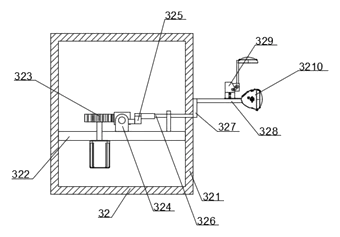
- Angle Adjustment Mechanism: Located adjacent to the lifting unit, this mechanism uses a transmission part (motor, gear, toothed plate) to drive a connecting seat and telescopic rod. This causes the swinging block to pivot, changing the horizontal angle of the light beam.
- Dimming Mechanism: Positioned to work with the lamp, this unit uses bevel gears and a winding roller to rotate a warm light cover. By covering or uncovering the lamp surface, it shifts the light tone to complement specific clothing colors.
Who it is for
- Fashion Retail Chains: Brands with multiple stores need standardized, easy-to-operate displays that maintain consistent lighting quality across all locations without specialized maintenance staff.
- Visual Merchandising Agencies: Companies that design temporary pop-up shops or seasonal displays benefit from the ability to quickly reconfigure lighting for new product lines.
- High-End Boutique Owners: Stores selling delicate fabrics or tailored suits require precise control over light angle and warmth to accurately represent product texture and color.
- Trade Show Exhibitors: Brands participating in exhibitions can use these stands to dynamically adjust lighting as they switch between different collections throughout the event schedule.
How it works
The main parts
The system relies on mechanical linkages powered by small motors. Key components include:
| No. | Part | What it does |
|---|---|---|
| 1 | Display Rack | The main vertical structure holding the mannequin and top unit. |
| 2 | Model/Mannequin | Detachable form for displaying clothes. |
| 3 | Adjusting Piece | The top housing containing all motion mechanisms. |
| 31 | Lifting Mechanism | Motor and gears that move the lamp vertically. |
| 313 | First Motor | Powers the vertical movement. |
| 319 | Planetary Gear | Ensures smooth, precise vertical travel. |
| 32 | Angle Adjustment | Mechanism that swings the lamp left or right. |
| 323 | Transmission Part | Converts motor rotation into swinging motion. |
| 327 | Swinging Block | Holds the lamp and pivots to change angle. |
| 33 | Polishing/Dimming Mech | Rotates a filter to change light tone. |
| 334 | Winding Roller | Drags the warm light cover across the lamp. |
| 335 | Warm Light Cover | Filter that alters color temperature. |
Operating steps
- Vertical Adjustment: To fit a child-sized mannequin, the operator activates the first motor. The gear descends along the planetary gear track, pulling the sliding plate down. This lowers the lamp closer to the garment.
- Angular Swing: For a coat display, the angle motor engages. The transmission part pushes the connecting seats, extending the telescopic rod. This forces the swinging block to pivot, directing light onto the shoulder area rather than the front.
- Tone Change: If the garment is beige or pastel, the dimming motor activates. Bevel gears turn the winding roller, unspooling the warm light cover over the lamp bulb. This softens the light output to prevent harsh glare.
Applications
Seasonal Inventory Changes
When a store transitions from winter coats to spring jackets, the lighting needs shift. Winter items often require higher intensity and cooler tones to show texture, while spring items need softer, warmer light. The automatic dimming and height adjustment allow staff to reset the entire row of racks in minutes using a simple control panel, rather than hours of manual ladder work.
High-Precision Tailoring Displays
Suits and formal wear depend heavily on how light reflects off fabric weave and buttons. The angle adjustment mechanism allows the lamp to swing precisely to catch the lapel or shoulder line. This enhances the three-dimensional sense of the garment, making it look more expensive and well-fitted to potential buyers.
Multi-Brand Pop-Up Shops
Pop-up spaces often host various brands with different aesthetic guidelines. A brand focusing on vibrant streetwear might need direct, bright overhead lighting, while a minimalist eco-brand prefers indirect, warm glow. The modular nature of the stand lets organizers swap mannequins and instantly recalibrate the light settings for each brand’s identity.
Department Store Floor Management
Large department stores have hundreds of racks. Centralized management teams can use these stands to ensure uniform lighting standards across different departments. If a section is being restocked with darker colors, the floor manager can trigger the warming tone feature remotely or locally, maintaining visual consistency without interrupting sales staff.
Where it is less suitable
- Static Permanent Installations: Stores that never change their layout or product mix may not justify the cost of motorized adjustment compared to fixed spotlights.
- Outdoor Markets: The patent describes an indoor-style rack; it does not specify weatherproofing for rain or wind, so it is best suited for controlled retail environments.
- Low-Budget Fast Fashion: High-volume discount retailers who prioritize speed over visual precision may find simpler, manual stands sufficient for their turnover rates.
Frequently asked questions
How does the automatic light supplementing work?
The stand uses three separate motorized systems. One lifts the lamp up or down to match the mannequin height. Another swings the lamp horizontally to change the lighting angle. The third rotates a physical cover over the bulb to shift the light from cool to warm tones. All movements are controlled electronically, removing the need for manual adjustment.
Do I need special training to operate it?
No. The system is designed for simplicity. Operators typically use a control panel or remote to select preset positions (e.g., “Full Body,” “Detail View,” “Warm Tone”). The gears handle the complex movements, so staff only need to press a button.
What power source does it require?
The patent describes connection to an external power supply. Specific voltage depends on the motors chosen for production (typically 12V DC or 110V AC). The wiring is hidden within the rack column for a clean look.
Can the mannequin be removed?
Yes. The model (mannequin) is detachably connected to the bottom of the display stand. This allows you to swap between adult, child, or torso-only forms depending on the merchandise being displayed.
Is the noise level acceptable for a boutique?
The design uses planetary gears and sliding plates, which generally operate more quietly than open spur gears. However, exact noise levels depend on the motor selection and lubrication. We recommend specifying low-decibel motors during the design phase for high-end retail environments.
How durable are the moving parts?
The mechanisms rely on metal gears and sliding grooves. Durability is determined by the material grade (steel vs. plastic) and maintenance schedule. Regular inspection of the sliding plates and lubrication of the gear teeth is advised to ensure long-term smooth operation.
Can this design be made and sold in the US?
The patent is currently in force in China. It has no US counterpart. Therefore, you are free to manufacture and sell this design in the US, provided you do not infringe on any other existing US patents related to adjustable lighting. We advise a freedom-to-operate check before starting mass production.
Are you affiliated with the patent owner?
No. IP2M is an independent design and manufacturing service working from the public patent document.
Request a quote
Click Request a Quote below to see our email address - copy it, or open your email app with a ready-made message. Please mention patent CN116473399B in the subject.
Helpful details to include:
- Your company and channel (fashion retailer, display manufacturer, exhibition agency)
- Target dimensions for the rack and mannequin
- Preferred control method (buttons, remote, app)
- Light source type (LED module, standard bulb socket)
- Estimated quantity and target price
- Timeline - when you would like samples and the first shipment
You can also reach us at (332) 203-9997.
Explore this product
Interested in building this?
Tell us your target market, quantity and timeline. We reply with options for prototyping, small-batch runs or volume production.
Send your inquiry to
Please put CN116473399B in the subject line and tell us your company, country, estimated quantity and timeline.
Prefer to talk? Call (332) 203-9997.
More product-ready patents
All Retail Display patents →
Retail Display
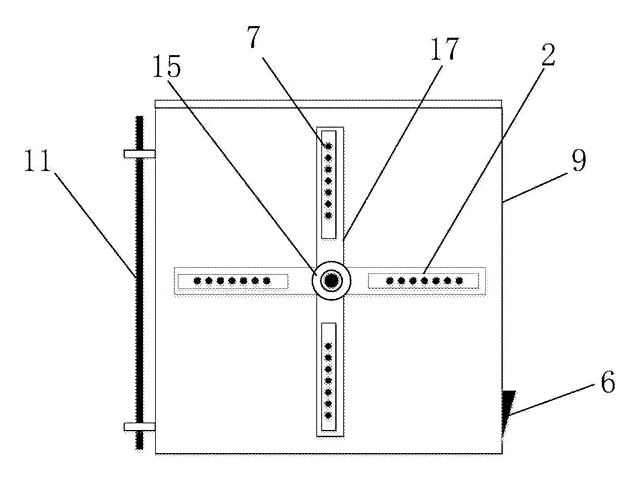
Motorized Shelf Display That Presents a Product to Shoppers
Shelf unit that lifts a product over the price rail toward shoppers when a sensor detects them.
Patent CN215077184U
Retail Display
Portable Advertising Light Box with Spinning LED Display
Portable ad box whose spinning LED bars draw images and text; content changes by wireless or USB.
Patent CN207425291U
Retail Display
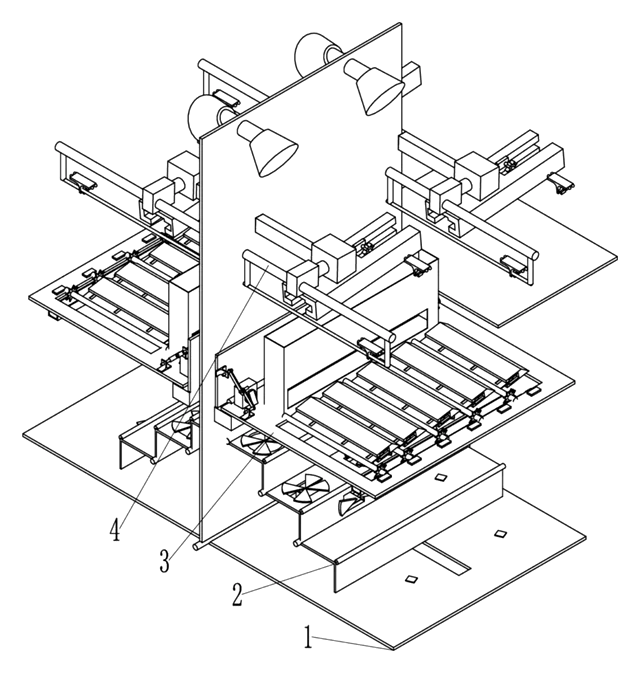
Automated Folding Store Shelf That Pushes Products Up to the Customer
Double-sided shelf for unmanned stores: folding tiers, screw pushers and lift cylinders present stock.
Patent CN109645754B
Retail Display
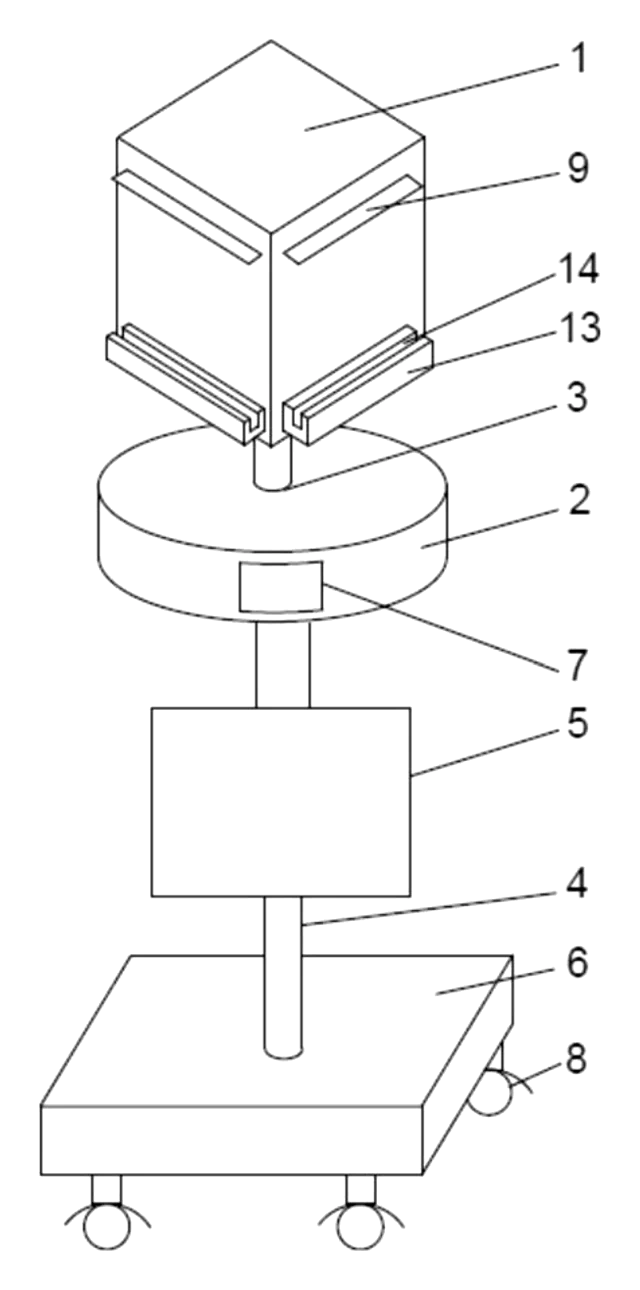
Motorized Rotating Display Pedestal with Lift Column, Info Screen and Clip-On Display Racks
Mobile pedestal: motorized rotating cube with lit faces and racks, electric lift column and info screen.
Patent CN208875862U
Retail Display
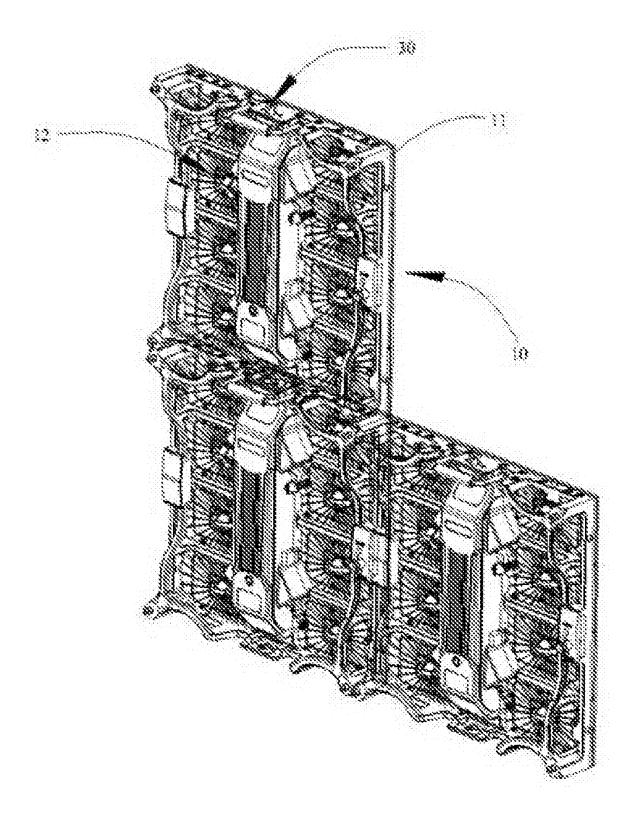
Thin Outdoor LED Video Wall Cabinet with Magnetic Modules and Tool-Free Locks
Thin outdoor LED wall cabinet: magnetic modules and rear body, rotary locks, finned rear cooling.
Patent CN205354557U
Store & Display
Magnetically Repositionable LED Advertising Panel
LED panel whose lamp beads slide to new positions via an external electromagnet.
Patent CN205487209U
Browse by category
- Apparel & Accessories (23)
- Baby & Kids (17)
- Bags & Luggage (12)
- Bath & Personal Care (17)
- Car Accessories (12)
- Furniture, Bedding & Storage (13)
- Garden & Outdoor (19)
- Health & Wellness (8)
- Home, Kitchen & Cleaning (27)
- Lighting (12)
- Packaging & Containers (6)
- Pet Products (6)
- Phone & Camera Accessories (4)
- Retail Display (14)
- School, Office & Art (20)
- Sports & Recreation (26)
- Tools & Workshop (30)
- Toys & Games (13)
This page is based on the public patent document CN116473399B, assigned to Fujian Anbang Exhibition Co ltd. IP2M is an independent manufacturing service and is not affiliated with, endorsed by or licensed by the patent owner. Images marked as concept renderings are illustrations, not photos of an existing product. Patent status information is provided for reference only and is not legal advice; confirm freedom to operate for your market before production. Full disclaimer.