
Patent CN116549985B
Updated November 3, 2026Multi-Angle Splice Plate for Building Toy Structures
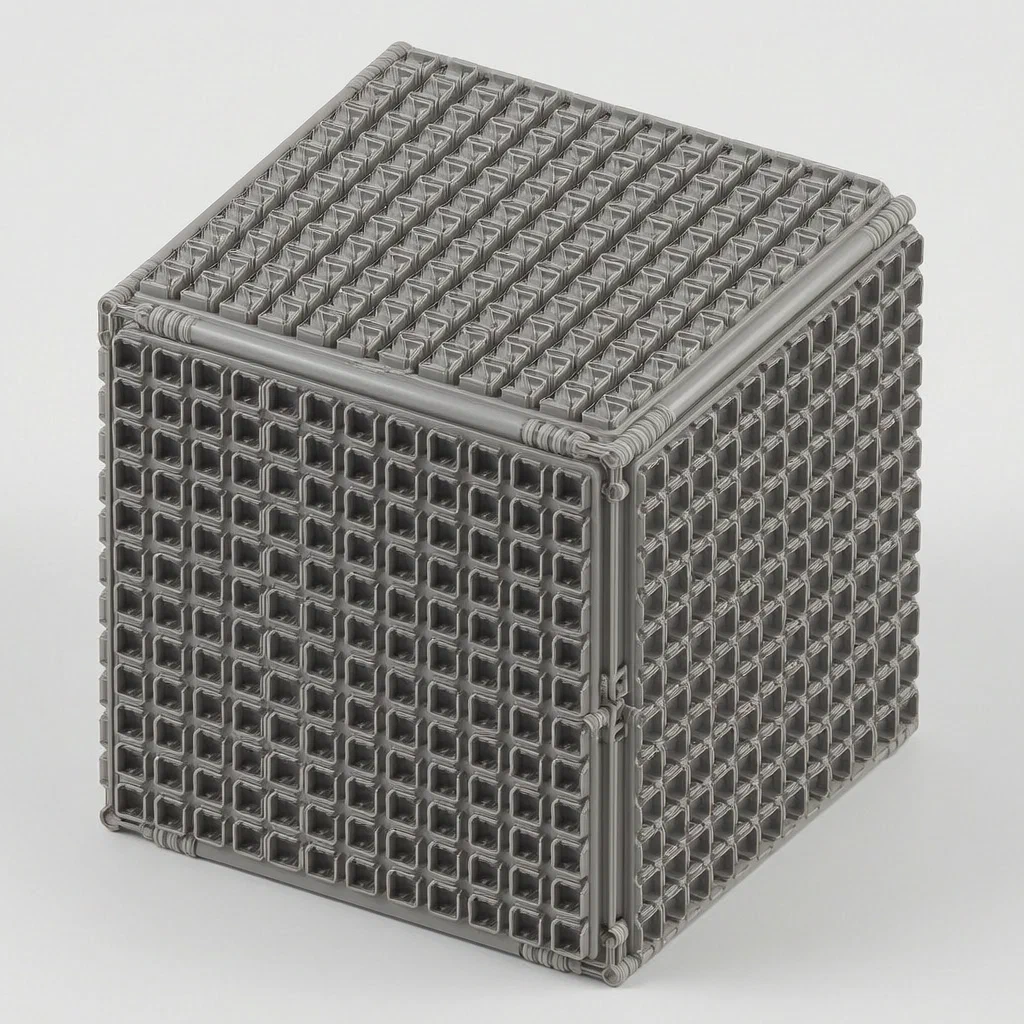
Most educational building sets restrict children to flat, two-dimensional layouts because standard panels lack the structural joints needed for depth. This splice plate solves that limitation by integrating a universal connection system directly into the panel edges. By using a shared connecting groove, the design supports three distinct connector types: straight bars for rigid horizontal alignment, L-shaped pieces for fixed right-angle corners, and central shaft assemblies for movable hinges. This allows users to construct complex 3D forms like boxes and enclosures rather than just wall-mounted patterns. The surface features a modular grid of clamping units specifically shaped with inward limit strips and half-lip profiles. These geometric features create secure first slots for round items and second slots between adjacent units for kidney-shaped parts. The result is a single component that handles both the structural integrity of a frame and the flexible attachment of diverse decorative elements, enabling intuitive spatial reasoning and precise hand-eye coordination during assembly.
- China invention patent - in force
- No filings outside China
- Educational building components
- Injection molded plastic construction
Splat! What let you down?
🧩
Grid Clamping System
Square units with inward protrusions hold round and irregular shapes securely.
📐
Multi-Angle Connectivity
Edge grooves accept straight, L-shaped, and hinge connectors for 3D builds.
🔄
Hinge Mechanism
Central shaft connectors allow panels to pivot relative to each other.
🏗️
Modular Assembly
Panels snap together without tools, supporting boxes and architectural models.
Bring this product to market
- ✓ Patent vetted China-only family and legal status checked
- 2 Product brief · now How it works, uses and options written up
- 3 Prototype First samples for buyers to review
- 4 Pilot run Small first batch for launch customers
- 5 Volume production Repeat orders at scale
Buyer interest
– of 100 buyers needed to start prototyping
One click, no sign-up. Each vote is one real visitor, and products with the most interest go to prototyping first.
Build team: no members yet. Need a partner, co-funding or skills to build this? Join and we introduce the team once it forms.
The problem
Standard educational splice plates often confine users to flat, two-dimensional arrangements. While these surfaces may allow various accessories to be attached, they typically lack the structural provisions necessary to connect multiple panels at angles other than zero degrees. When a child attempts to build a three-dimensional object, such as a box or an architectural corner, the existing hardware fails to provide rigid right-angle joints or movable hinges. Furthermore, many conventional attachment points on flat panels use simple holes or uniform pegs that cannot securely grip objects with varying geometries, such as circular tokens or kidney-shaped parts. This forces users to rely on adhesive tape or separate bracket systems, which complicates the play experience and limits the intuitive expression of spatial ideas. The inability to transition seamlessly from a flat pattern to a solid structure restricts the developmental benefits of hand-eye coordination and proportion understanding.
The solution
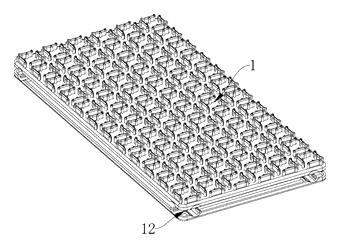
The patented splice plate integrates a dual-function architecture that addresses both surface attachment and structural joining. First, the main body consists of a plurality of clamping units arranged uniformly in transverse and longitudinal directions. Each unit comprises four limit strips forming a square structure with inwardly extending limit protrusions at their middle ends. This specific geometry creates a first slot capable of gripping round articles through elastic deformation, while the spaces between adjacent units form second slots designed to clamp kidney-shaped articles. The cross-section of the limit strips utilizes an outward half-lip structure, ensuring that parts remain seated even when the panel is inverted.
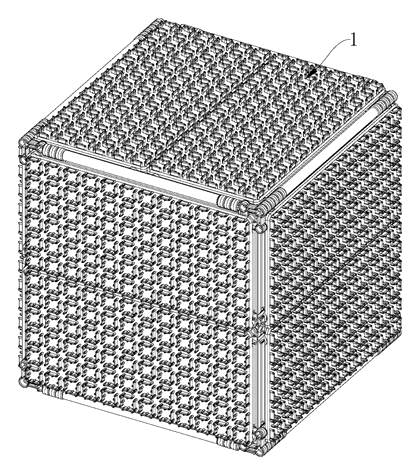
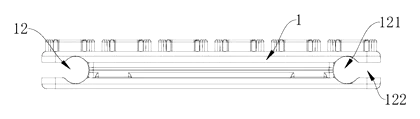
Second, the edge of the splice plate incorporates a dedicated connecting groove. This groove is engineered to interface with three distinct types of connecting structures, all utilizing radial limit blocks that insert into the groove. For horizontal connections, an elongated member with two opposing blocks locks two panels side-by-side. For vertical structures, an L-shaped piece with perpendicular blocks and interlocking sleeves creates rigid ninety-degree corners. Finally, for movable assemblies, a third component uses a central shaft passing through a series of single-head connectors, allowing the connected panels to hinge along the axis of the shaft. This unified groove system means a single panel can serve as part of a flat wall, a cube, or a folding screen depending solely on the chosen connector.
Who it is for
- Educational toy manufacturers seeking to differentiate their product lines with 3D-capable modular systems that go beyond traditional flat boards.
- STEM curriculum developers requiring physical manipulatives that help students visualize geometric concepts like symmetry, volume, and angular relationships through hands-on construction.
- Home decor brands interested in creating customizable, wall-mounted organizational systems where panels can be linked horizontally or vertically to fit unique room dimensions.
- Retailers of interactive displays needing durable, reconfigurable base units that can support mixed-media attachments without permanent adhesives or complex tooling.
How it works
The main parts
| No. | Part | What it does |
|---|---|---|
| 1 | Splice Plate Body | The primary panel containing the grid of clamping units and the peripheral connecting groove. |
| 11 | Clamping Units | Square arrays of limit strips that hold various accessory shapes via friction and mechanical stops. |
| 12 | Connecting Groove | A channel along the edge that accepts the radial limit blocks of all connector types. |
| 2 | Straight Connector | An elongated bar with two end blocks for locking two panels in a linear horizontal plane. |
| 3 | L-Shaped Connector | A right-angle piece with stacked sleeves and perpendicular blocks for rigid vertical joins. |
| 4 | Hinge Assembly | A central shaft and single-head links that allow panels to pivot around a common axis. |
Operating steps
- Surface Attachment: To add accessories, align a round article with the first slot formed by the inward protrusions of a single clamping unit. Press it down; the half-lip strips flex outward to admit the object, then snap back to trap it. For kidney-shaped items, position them across the boundary between two adjacent units so the outer curves engage the second slots.
- Horizontal Joining: Insert the radial limit blocks of the straight connector into the connecting grooves of two separate panels. Push the blocks fully home; the groove walls prevent lateral movement, securing the panels in a continuous flat plane.
- Vertical Cornering: Take the L-shaped connector and insert its two perpendicular blocks into the grooves of two panels oriented at ninety degrees. The interlocking sleeve features on the connector body stack against each other, reinforcing the joint against shear forces.
- Hinging Action: Thread the central shaft through the through-holes of multiple single-head connectors. Insert the free block of each connector into the respective panel grooves. The panels can now rotate freely around the shaft, enabling the creation of folding screens or adjustable stands.
Applications
Classroom Geometry Lessons
Teachers distribute kits to students to demonstrate how 2D grids transform into 3D solids. Students use the L-connectors to build cubes and pyramids, physically experiencing the relationship between face area and volume while practicing fine motor skills.
Interactive Museum Exhibits
Curators install large-scale versions of the panels to create tactile display bases. Visitors attach informational cards and small artifacts using the clamping units, while staff configure the layout using straight connectors to match the gallery walls or hinge connectors to create pop-out storyboards.
Modular Wall Organization
Homeowners mount the panels to drywall using screws through the positioning holes described in alternative embodiments. They link panels horizontally to cover wide areas or vertically to reach high shelves, using the clamping grid to hang keys, tools, or photos without damaging the surface.
Portable Trade Show Displays
Exhibition designers assemble lightweight partitions using the hinge mechanism. Panels fold flat for shipping and unfold into zigzag barriers on-site, with branding graphics clipped onto the surface using the universal clamping slots for easy replacement between events.
Where it is less suitable
- High-load industrial shelving: The plastic injection-molded construction and snap-fit joints are not rated for heavy weight-bearing applications compared to steel bolted frames.
- Outdoor weather exposure: Unless specifically formulated with UV stabilizers during manufacturing, standard materials may degrade under prolonged sunlight and rain.
- Fixed permanent installations: Users requiring non-reconfigurable structures may find the ease of disassembly unnecessary and prefer welded or glued solutions.
Frequently asked questions
Can I mix different connector types on the same plate?
Yes. The patent describes a single connecting groove profile that accepts the radial limit blocks of the straight, L-shaped, and hinge connectors. You can join panels horizontally, vertically, or with a hinge using the same edge interface.
What sizes of objects can the clamps hold?
The clamping units are designed with specific geometric slots. Round articles fit into the “first slot” created by inward protrusions. Kidney-shaped or irregular items fit into the “second slot” formed between two adjacent square units. Exact dimensions are set in design and confirmed on prototypes.
Is this safe for young children?
The design focuses on secure retention to prevent parts from falling off. However, US compliance requires strict adherence to ASTM F963 and CPSIA standards regarding small parts and toxic materials. We recommend targeting an age range of 3+ unless the entire kit passes small-part cylinder tests.
Do the panels need glue or screws to stay together?
No. The system relies on mechanical interference. The connector blocks slide into the panel grooves and lock radially. The L-shaped connectors also feature interlocking sleeves that stack to reinforce the joint without additional fasteners.
Can the hinge mechanism support heavy loads?
The hinge uses a central shaft and staggered insertion. Load capacity depends on the material choice (ABS vs. Nylon) and wall thickness, which are determined during the engineering phase. It is primarily suited for lightweight display or toy structures.
Are there electronic components involved?
No. The patent describes a purely mechanical construction system. Any addition of lights or sensors would be a separate integration outside the scope of this specific patent.
Can this design be made and sold in the US?
The patent is filed only in China and is currently in force there. It has no US counterpart, so the specific patent does not block US sales. However, you must conduct a freedom-to-operate search to ensure no other active US patents cover similar modular building systems.
Are you affiliated with the patent owner?
No. IP2M is an independent design and manufacturing service working from the public patent document.
Request a quote
Click Request a Quote below to see our email address - copy it, or open your email app with a ready-made message. Please mention patent CN116549985B in the subject.
Helpful details to include:
- Your company and channel (toy brand, educational supplier, retailer)
- Target age group and safety certifications needed
- Material preferences (color, transparency, texture)
- Accessory types you plan to clamp (round, kidney, etc.)
- Estimated quantity and target price
- Timeline - when you would like samples and the first shipment
You can also reach us at (332) 203-9997.
Explore this product
Interested in building this?
Tell us your target market, quantity and timeline. We reply with options for prototyping, small-batch runs or volume production.
Send your inquiry to
Please put CN116549985B in the subject line and tell us your company, country, estimated quantity and timeline.
Prefer to talk? Call (332) 203-9997.
More product-ready patents
All Toys & Games patents →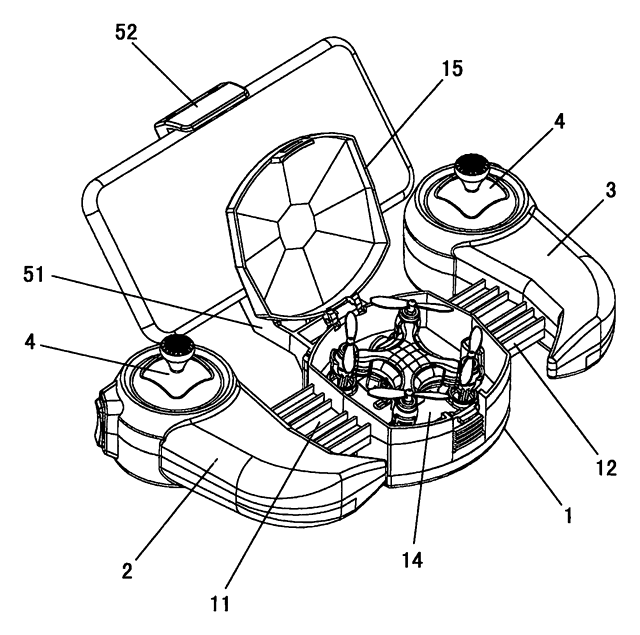
Toys & Games
Stretch-to-Fit Toy Remote with Drone Storage
Toy drone remote with slide-out handles for any hand size, a phone clamp and built-in drone storage.
Patent CN205412243U
Toys & Games
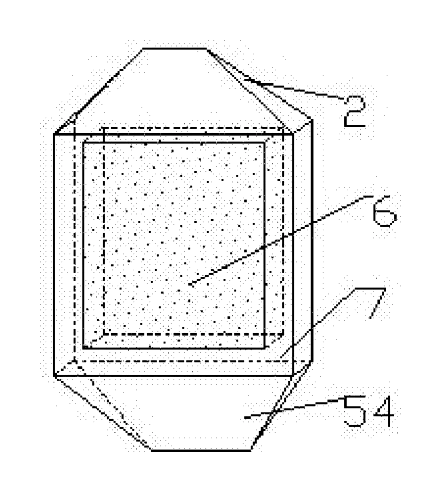
Magnetic Tile Racks for Ultra-Thin Travel Mahjong
Magnetic rack frames that hold ultra-thin mahjong tiles upright and fold into the set's carrying box.
Patent CN207169017U
Toys & Games
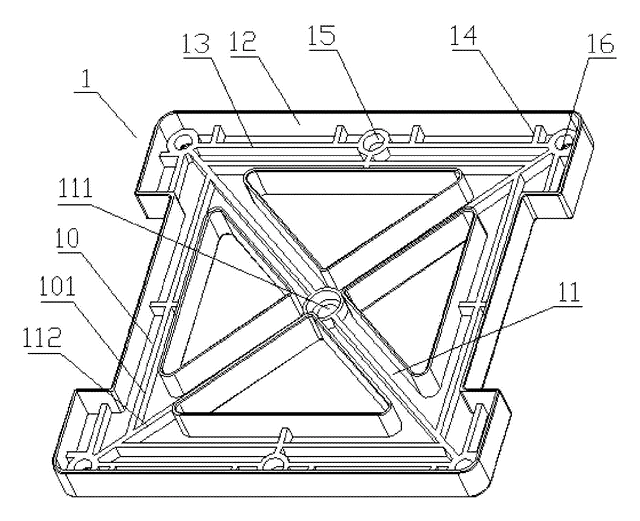
X-Braced Square Magnetic Building Tile with Locating-Post Shell
Square magnetic building tile: open X-brace frame, corner-lug magnets, two shells aligned by posts.
Patent CN105963988B
Toys & Games
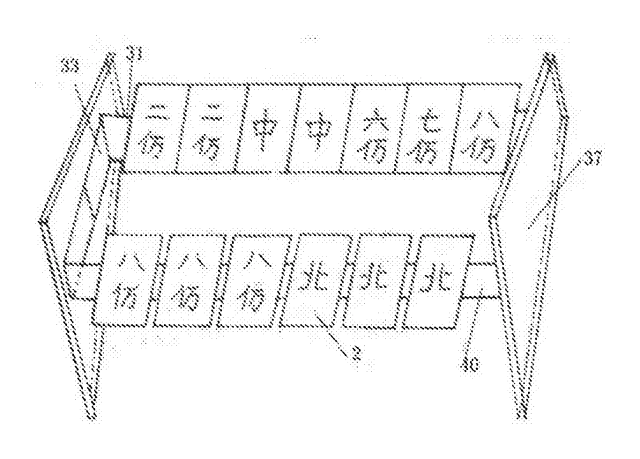
Card-Thin Magnetic Travel Mahjong and Chess Sets with Magnet Racks
Pocket mahjong and chess sets: thin magnetic-powder tiles, finger magnet picker and fold-out magnetic racks.
Patent CN206896783U
Toys & Games
Inflatable Baby Climbing Mat with a Bumpy Hump and a Ramp Obstacle
Inflatable crawling mat: a bumpy rounded hump and a sloped ramp on a stiffened air base.
Patent CN108905229B
Toys, Games & Puzzles
Ring-Layout Automatic Card Shuffler with Electromagnetic Box Coupling
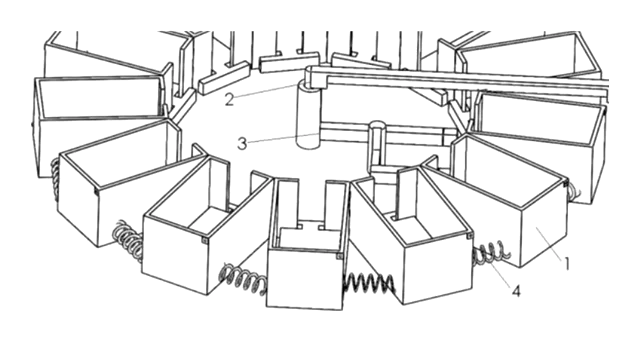
Ring-layout card shuffler that sweeps stacks between boxes via electromagnetic coupling.
Patent CN209564602U
Browse by category
- Apparel & Accessories (36)
- Baby & Kids (25)
- Bags & Luggage (15)
- Bath & Personal Care (25)
- Car Accessories (21)
- Furniture, Bedding & Storage (19)
- Garden & Outdoor (27)
- Health & Wellness (12)
- Home, Kitchen & Cleaning (40)
- Lighting (20)
- Packaging & Containers (10)
- Pet Products (9)
- Phone & Camera Accessories (7)
- Retail Display (21)
- School, Office & Art (30)
- Sports & Recreation (37)
- Tools & Workshop (46)
- Toys & Games (19)
This page is based on the public patent document CN116549985B, assigned to Shenzhen Shengshi Jincheng Education Technology Co ltd. IP2M is an independent manufacturing service and is not affiliated with, endorsed by or licensed by the patent owner. Images marked as concept renderings are illustrations, not photos of an existing product. Patent status information is provided for reference only and is not legal advice; confirm freedom to operate for your market before production. Full disclaimer.