
Patent CN116850572B
Updated October 28, 2026Adjustable Magnetic Center Assembly for a Puzzle Cube
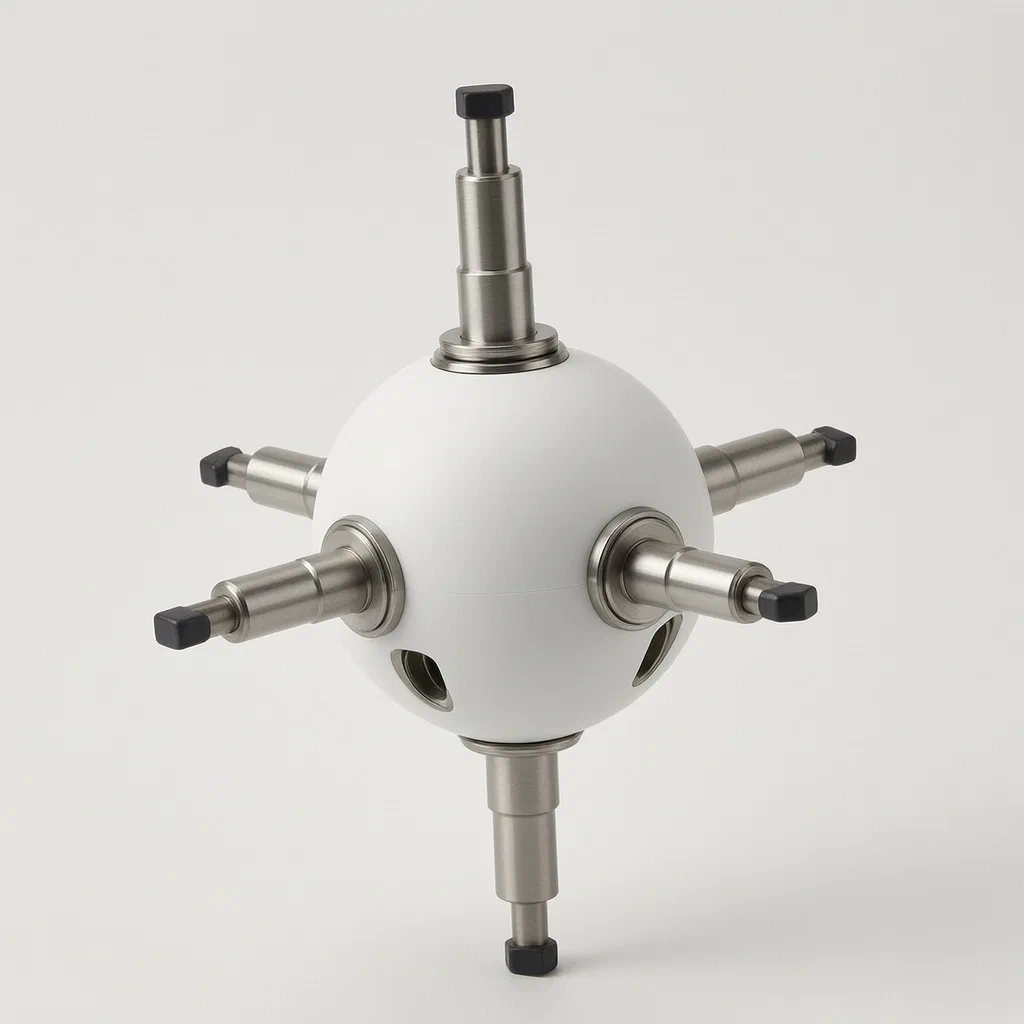
Standard puzzle cubes rely on fixed magnets or screws to set the tension, so changing the feel means taking the cube apart. This center assembly uses rotatable second shaft bodies to move multiple first magnetic components at once. Turning one shaft drives four magnets along arc grooves on a disc, bringing them closer to or farther from the corner block magnets without disassembly. The design allows quick adjustment of the hand feeling for home play, club practice or teaching use.
- China invention patent - in force
- No filings outside China
- Board games, puzzles & toys
- Plastic housing, magnets, guide cylinders
Splat! What let you down?
🧲
Movable magnets
First magnetic components slide radially to change the distance to the corner block magnets.
⚙️
Rotatable shaft drive
Turning a second shaft body rotates a driving disc that moves four magnets at once.
🎛️
Feel adjustment
Users change the turning resistance without disassembling the cube.
📐
Arc groove guidance
Push fit portions ride in arc grooves spaced along the disc circumference.
Bring this product to market
- ✓ Patent vetted China-only family and legal status checked
- 2 Product brief · now How it works, uses and options written up
- 3 Prototype First samples for buyers to review
- 4 Pilot run Small first batch for launch customers
- 5 Volume production Repeat orders at scale
Buyer interest
– of 100 buyers needed to start prototyping
One click, no sign-up. Each vote is one real visitor, and products with the most interest go to prototyping first.
Build team: no members yet. Need a partner, co-funding or skills to build this? Join and we introduce the team once it forms.
The problem
Puzzle cubes used for home, board-game, club or teaching purposes rely on magnets to provide tactile feedback during turns. In many designs, the magnets are fixed inside the center caps or screwed into place. Changing the magnetic pull requires opening the cube, swapping magnets or adjusting individual screws, which takes time and risks losing small parts. Players who want a different turning feel for practice versus casual solving must maintain multiple setups or accept a single fixed setting.
The solution
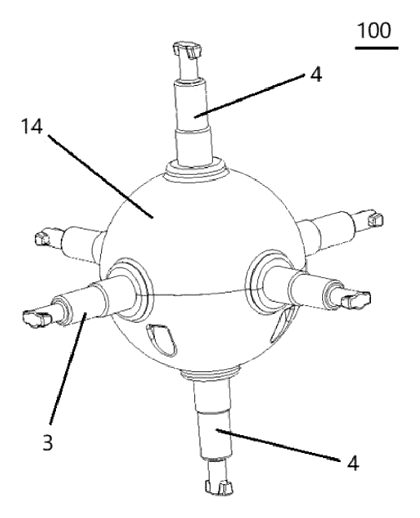
This center assembly places movable first magnetic components on the axle center body and links them to rotatable second shaft bodies. Rotating a second shaft body drives its connected magnets inward or outward through arc grooves on a driving disc. Because each shaft controls four magnets at once, a user adjusts the entire side by turning one part. The cube does not need to be taken apart, and the distance to the second magnetic components in the corner blocks changes evenly.
Who it is for
- Puzzle cube brands adding an adjustable-magnet feature to their product lines for home and club players.
- Educational toy distributors supplying schools and teaching programs where students benefit from tuning the cube’s resistance.
- Wholesalers for board-game shops looking for puzzle cubes that offer a customizable feel without extra tools.
- Amazon sellers in the toy category targeting hobbyists who want quick adjustments between practice sessions at home.
How it works
The main parts
| No. | Part | What it does |
|---|---|---|
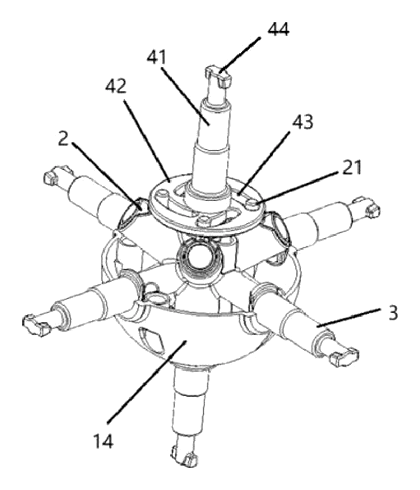
| 1 | Axle center body | Main hub holding all components; includes a spherical shell. |
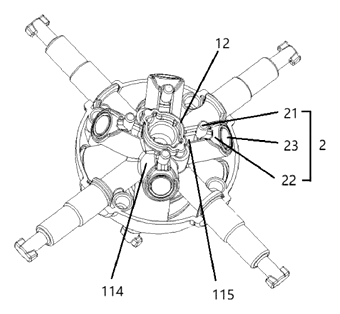
| 2 | First magnetic components | Movable magnets (eight total) that slide radially. |
| 21 | Push fit portion | Extends from the magnet into the arc groove. |
| 3 | First shaft bodies | Fixed to the axle center body to hold the cube faces. |
| 4 | Second shaft bodies | Rotatable shafts (two total) that drive the magnets. |
| 41 | Main shaft | Rotates inside the connecting groove of the hub. |
| 42 | Driving disc | Connected to the main shaft; carries the arc grooves. |
| 43 | Arc grooves | Four per disc, spaced circumferentially, guiding the push fit portions. |
| 12 | Positioning member | Contacts the positioning mating part to limit rotation. |
| 6 | Corner blocks | Contain the second magnetic components. |
Adjusting the magnetic feel
- Turn the second shaft body - the main shaft rotates inside the connecting groove of the axle center body.
- The driving disc rotates - the four arc grooves sweep around the main shaft axis.
- The push fit portions follow the grooves - because one end of each groove is closer to the shaft and the other is farther, the first magnetic components slide along their guide grooves.
- Magnets move together - all four first magnetic components on that side shift toward or away from the center simultaneously, changing the gap to the second magnetic components in the corner blocks.
- Repeat on the opposite side - the second shaft body on the other side adjusts the remaining four magnets.
Applications
Home puzzle play
Players at home often switch between relaxed solving and focused practice. Turning the second shaft body lets them tighten or loosen the magnetic feel in seconds without searching for screwdrivers or spare magnets.
Club and group practice
Puzzle clubs share cubes among members with different preferences. A club organizer can quickly reset the magnetic strength between users by rotating the shaft, keeping the session moving without partial disassembly.
Teaching environments
In classrooms, younger students may need a stronger magnetic catch to prevent overshooting, while older students prefer a lighter feel. Teachers adjust the center assembly to match the lesson, using the cube as a spatial reasoning tool.
Board-game nights
When a puzzle cube is part of a broader board-game collection at home, guests can tune the resistance to their liking. The adjustment mechanism stays enclosed inside the spherical shell, so it does not interfere with handling.
Where it is less suitable
- Sealed competition cubes - official tournaments often require fixed, tamper-proof hardware; an adjustable mechanism may not meet those specific event rules.
- Non-magnetic budget cubes - entry-level cubes without corner magnets have no second magnetic components for this system to interact with.
- Very small keychain cubes - the axle center body and driving discs require space that miniature formats do not provide.
Frequently asked questions
How do the magnets move inside the cube?
Each first magnetic component sits in a radial guide groove on the axle center body. A push fit portion extends from the magnet into an arc groove on a rotating driving disc. When the second shaft body turns, the arc groove pushes the magnet inward or outward along the guide.
Do I need to take the cube apart to adjust it?
No. The second shaft bodies are accessible externally. Rotating one shaft adjusts four magnets on that side simultaneously. The patent describes operating both shafts to set all eight magnets without disassembly.
How many magnets does the assembly use?
The patent specifies eight first magnetic components in total, four driven by each of the two second shaft bodies. These interact with corresponding second magnetic components located inside the corner blocks.
What keeps the magnets from sliding back during play?
A positioning member contacts a positioning mating part on the main shaft. The member has an elastic portion with teeth that mesh with a toothed ring, creating detent clicks that hold the shaft in place after adjustment.
What materials are used?
The patent mentions a containing shell for the magnets, guide cylinders and a spherical shell encasing the drive components. Specific plastic grades are set in design / confirmed on prototypes based on durability and friction requirements.
Is this suitable for children?
Puzzle cubes are common educational and home toys. However, because this design uses internal magnets, the final product must comply with US magnet safety standards before being marketed to children.
Can the adjustment range be changed?
Yes. The shape and length of the arc grooves on the driving disc determine how far the magnets travel. Different groove profiles can be designed to offer wider or narrower adjustment ranges.
Can this design be made and sold in the US?
The patent was filed only in China and is currently in force there. It has no US counterpart, so it does not restrict making or selling the design in the US. However, other US patents may cover magnetic puzzle cube mechanisms - see Patent & Production - so we recommend a freedom-to-operate check before volume production.
Are you affiliated with the patent owner?
No. IP2M is an independent design and manufacturing service working from the public patent document.
Request a quote
Click Request a Quote below to see our email address - copy it, or open your email app with a ready-made message. Please mention patent CN116850572B in the subject.
Helpful details to include:
- Your company and channel (toy brand, educational distributor, Amazon seller, wholesaler)
- Target cube size and overall dimensions
- Magnet grade and preferred adjustment range
- Plastic material preferences and colors
- Estimated quantity and target price
- Timeline - when you would like samples and the first shipment
You can also reach us at (332) 203-9997.
Explore this product
Interested in building this?
Tell us your target market, quantity and timeline. We reply with options for prototyping, small-batch runs or volume production.
Send your inquiry to
Please put CN116850572B in the subject line and tell us your company, country, estimated quantity and timeline.
Prefer to talk? Call (332) 203-9997.
More product-ready patents
All Toys & Games patents →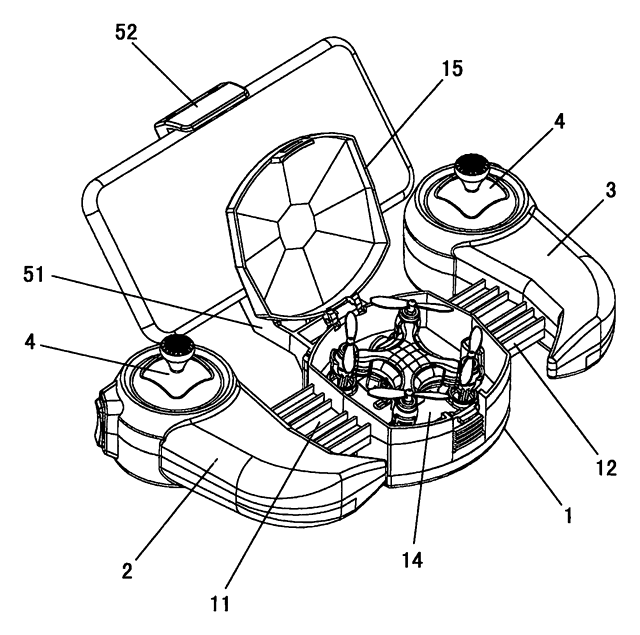
Toys & Games
Stretch-to-Fit Toy Remote with Drone Storage
Toy drone remote with slide-out handles for any hand size, a phone clamp and built-in drone storage.
Patent CN205412243U
Toys & Games
Magnetic Tile Racks for Ultra-Thin Travel Mahjong
Magnetic rack frames that hold ultra-thin mahjong tiles upright and fold into the set's carrying box.
Patent CN207169017U
Toys & Games
X-Braced Square Magnetic Building Tile with Locating-Post Shell
Square magnetic building tile: open X-brace frame, corner-lug magnets, two shells aligned by posts.
Patent CN105963988B
Toys & Games
Card-Thin Magnetic Travel Mahjong and Chess Sets with Magnet Racks
Pocket mahjong and chess sets: thin magnetic-powder tiles, finger magnet picker and fold-out magnetic racks.
Patent CN206896783U
Toys & Games
Inflatable Baby Climbing Mat with a Bumpy Hump and a Ramp Obstacle
Inflatable crawling mat: a bumpy rounded hump and a sloped ramp on a stiffened air base.
Patent CN108905229B
Toys, Games & Puzzles
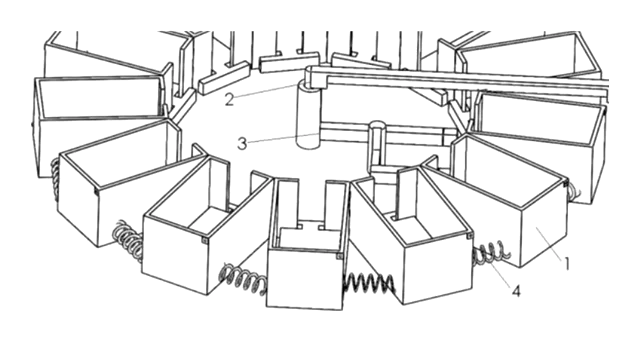
Ring-Layout Automatic Card Shuffler with Electromagnetic Box Coupling
Ring-layout card shuffler that sweeps stacks between boxes via electromagnetic coupling.
Patent CN209564602U
Browse by category
- Apparel & Accessories (22)
- Baby & Kids (16)
- Bags & Luggage (9)
- Bath & Personal Care (16)
- Car Accessories (10)
- Furniture, Bedding & Storage (12)
- Garden & Outdoor (18)
- Health & Wellness (8)
- Home, Kitchen & Cleaning (24)
- Lighting (12)
- Packaging & Containers (6)
- Pet Products (6)
- Phone & Camera Accessories (4)
- Retail Display (13)
- School, Office & Art (19)
- Sports & Recreation (25)
- Tools & Workshop (27)
- Toys & Games (12)
This page is based on the public patent document CN116850572B, assigned to Shantou Chenghai District Moyu Culture Co ltd. IP2M is an independent manufacturing service and is not affiliated with, endorsed by or licensed by the patent owner. Images marked as concept renderings are illustrations, not photos of an existing product. Patent status information is provided for reference only and is not legal advice; confirm freedom to operate for your market before production. Full disclaimer.