At a glance
| Patent number | CN116850572B (application CN202311138315) |
| Type | China invention patent (发明专利) - protects product shape, structure and method |
| Original title | Center component of magic cube and magic cube (一种魔方的中心组件及魔方) |
| Patent owner | Shantou Chenghai District Moyu Culture Co ltd |
| Inventors | Chen Yonghuang |
| Filing date | 2023-09-05 |
| Grant date | 2023-11-28 |
| Status (China) | In force - in force in China until at most 2043-09-05 (if annual fees are paid) |
| Patent family | Chinese filings only - CN116850572B |
| Cited by | 0 later documents |
| Source | Google Patents (search for CN116850572B) |
What the claims cover, in plain language
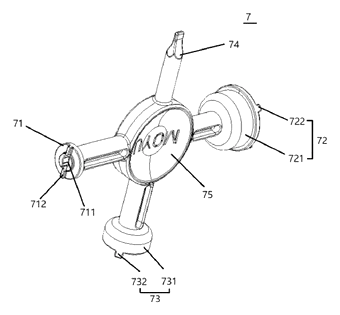
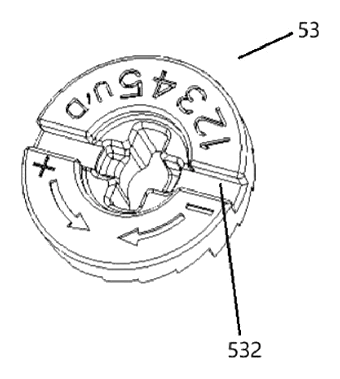
Claim 1 - a center assembly for a cube comprising an axle center body, first shaft bodies fixed to it, and two second shaft bodies on opposite sides. Four first magnetic components are movably arranged for each second shaft body. Each second shaft body is rotatable and in transmission fit with its four magnets. The second shaft body has a main shaft and a driving disc with four arc grooves spaced along the circumference; one end of each groove is near the shaft, the other far. Each magnet has a push fit portion extending into a groove, so rotating the main shaft drives the magnets toward or away from the center.
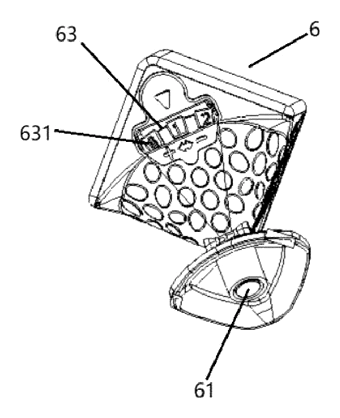
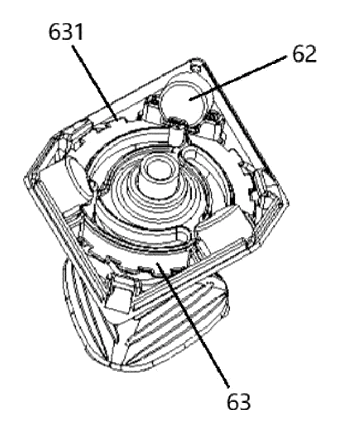
Claim 2 - the hub has a main hub with a connecting groove and a positioning member. The main shaft has a plugging portion rotatably inserted in the groove and a positioning mating part contacted by the positioning member to limit rotation. Claim 3 - the positioning member has an elastic portion with a tooth meshing with a toothed ring on the positioning mating part. Claim 4 - the elastic portion comprises two bars and two links forming a hollowed-out area; teeth are on the bars, links insert into fixing grooves on the hub, and the positioning mating part passes through the hollow area. Claim 5 - guide cylinders on the hub form radial guide grooves in which the first magnetic members slide. Claim 6 - the cylinder wall has an avoiding opening; the magnet comprises a containing shell and a magnet inside it, with the push fit portion passing through the opening. Claim 7 - the hub body includes a spherical shell encasing the drive disc, primary hub and first magnetic components.
This is a simplified reading for orientation only. The legal scope is defined by the exact claim wording in the official Chinese document.
What this means for US production
This patent was filed only in China and is currently in force. It has no US or other foreign counterpart. However, making or selling this exact center assembly in China needs the owner’s permission while the patent remains active.
Two points to settle early:
- Other patents may exist. The puzzle cube field contains many active patents covering magnetic alignment, core structures and tension systems from various global manufacturers, so a freedom-to-operate (FTO) review of the arc-groove drive and radial magnet movement is needed before tooling.
- Magnet safety. Small magnets in toys sold in the US face strict regulations; the size, flux index and retention method of the first and second magnetic components must be locked down early to pass testing.
Customization and manufacturing
What can be customized
| Area | Options |
|---|---|
| Cube size | Overall dimensions to be confirmed in design |
| Magnet strength | Grade and size of the first and second magnetic components |
| Arc groove profile | Curve shape to set the adjustment range and feel steps |
| Plastic material | ABS, POM or other engineering resins for the hub and shells |
| Color and finish | Stickerless colored plastic or painted surfaces |
| Positioning detent | Tooth count on the ring to set click increments |
Things to plan for (US market)
- CPSC 16 CFR 1258 - US mandatory standard for consumer products containing loose or separable magnets; applies directly to puzzle cubes with internal magnets.
- ASTM F963 - Standard Consumer Safety Specification for Toy Safety, covering mechanical hazards, small parts and labeling.
- CPSIA Section 101 - Lead content limits for substrates and surface coatings on children’s products.
- California Prop 65 - Screening of plastics and metal components for listed substances.
How a project runs
- Inquiry - target cube size, magnet grades, adjustment range and quantity.
- Design - CAD models of the axle center body, driving discs, arc grooves and guide cylinders.
- Prototype - 3D-printed or machined samples to verify the push fit portion travel and magnetic feel.
- Pilot run - Injection molds opened; samples undergo drop tests, magnet retention tests and cycle testing.
- Production - Mass molding, magnet insertion, sub-assembly of the center core and final cube assembly.
Quantities & timeline
The axle center body, driving discs, positioning members and containing shells each require dedicated injection molds. Magnet insertion fixtures and assembly jigs are built per cube size. Certification tests under ASTM F963 and 16 CFR 1258 add to the development schedule. Send us your target cube size, magnet preferences, estimated quantity and timeline and we will reply with options.
Patent drawings
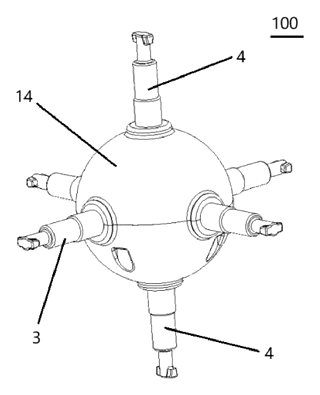
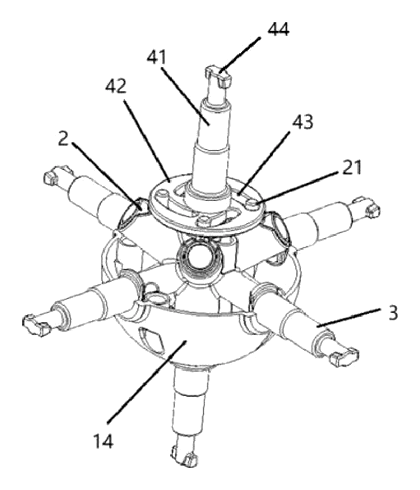
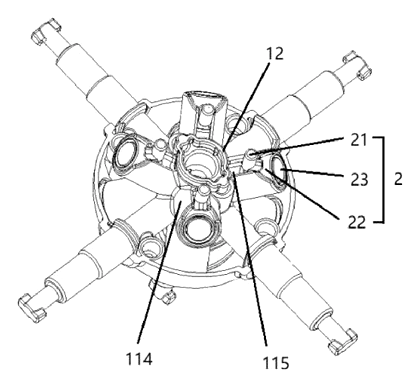
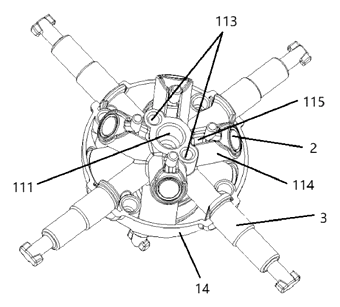
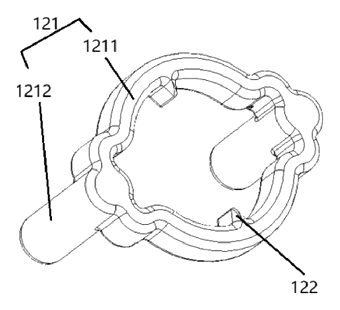
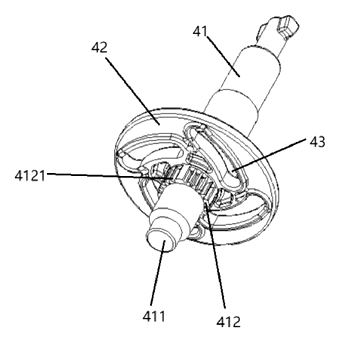
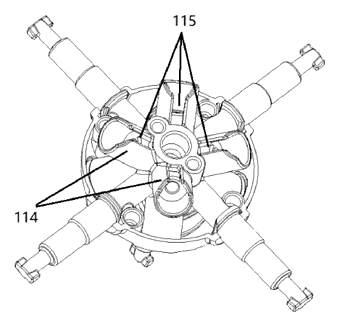
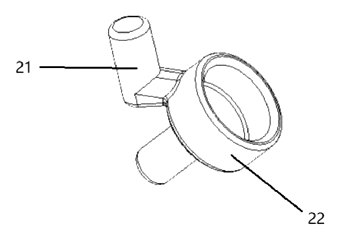
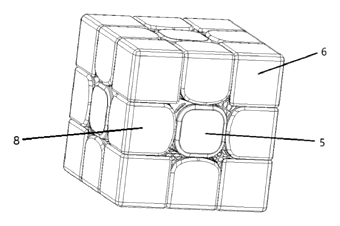
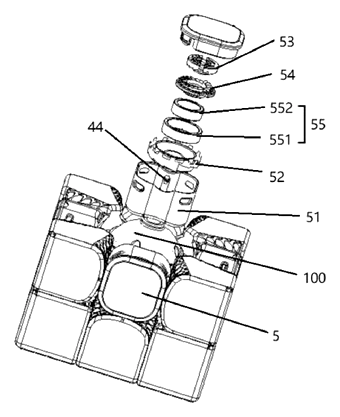
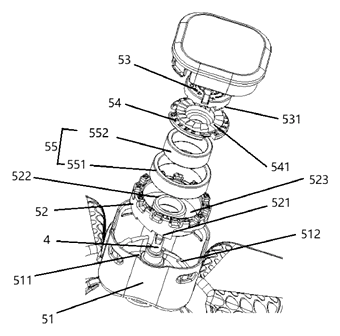
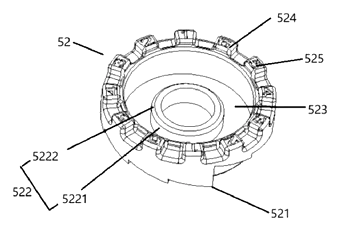
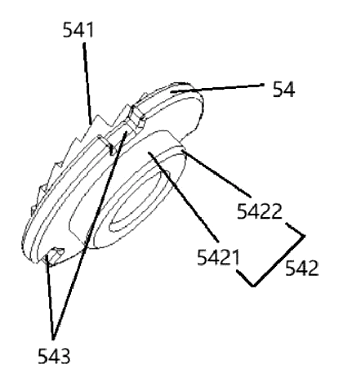
Drawings reproduced from the public patent document for reference.