
Patent CN116906875B
Updated November 4, 2026Rotating Garden Light with Integrated Mosquito Repellent and Self-Cleaning Features
Standard garden lights often suffer from limited coverage areas and require manual cleaning, which can be difficult at height. This design solves both issues through motion. A motor in the base rotates the lamp post, expanding the illuminated area without needing multiple fixtures. Simultaneously, the rotation drives secondary mechanisms: one set of plates spins to generate wind that repels insects near the light source, and another set of gears activates a cleaning arm that wipes the lamp cover. This reduces labor for maintenance and ensures consistent brightness over time.
- China invention patent - in force
- No filings outside China
- Outdoor landscape lighting
- Motor-driven rotation, belt/gear transmission, self-cleaning mechanism
Splat! What let you down?
🔄
Rotational Illumination
The lamp head rotates on a vertical pole, expanding the effective lighting area without adding extra fixtures.
🦟
Active Repellent System
Spinning plates generate airflow to deter mosquitoes from the immediate vicinity of the light source.
🧼
Self-Cleaning Function
A linked mechanism moves cleaning cotton up and down the lamp body, removing dirt automatically during operation.
⚙️
Integrated Drive
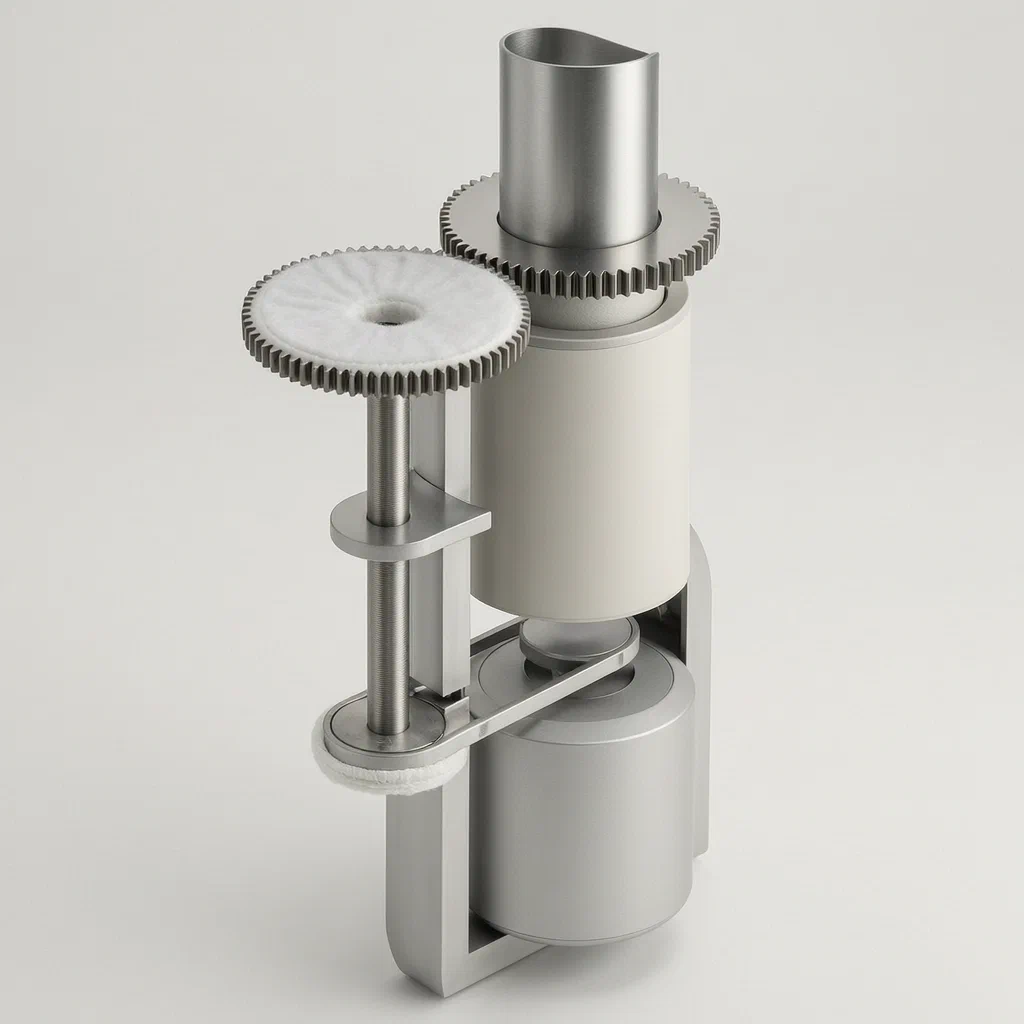
A single motor in the base powers both the main rotation and the secondary repellent and cleaning systems via belts and gears.
Bring this product to market
- ✓ Patent vetted China-only family and legal status checked
- 2 Product brief · now How it works, uses and options written up
- 3 Prototype First samples for buyers to review
- 4 Pilot run Small first batch for launch customers
- 5 Volume production Repeat orders at scale
Buyer interest
– of 100 buyers needed to start prototyping
One click, no sign-up. Each vote is one real visitor, and products with the most interest go to prototyping first.
Build team: no members yet. Need a partner, co-funding or skills to build this? Join and we introduce the team once it forms.
The problem
Traditional garden lighting fixtures have static beams, meaning large areas often require multiple poles and wiring runs to achieve uniform coverage. Furthermore, outdoor lamps accumulate dust, pollen, and bird droppings quickly, which significantly reduces light output over time. Cleaning these fixtures is labor-intensive, especially when mounted high on poles. Mosquitoes are also attracted to many light sources, creating discomfort for people using the space nearby. Existing solutions typically address these problems separately—using bug zappers, separate fans, or requiring manual maintenance schedules—which increases complexity and cost.
The solution
This design integrates three functions into one mechanical unit driven by a single motor located in the base.
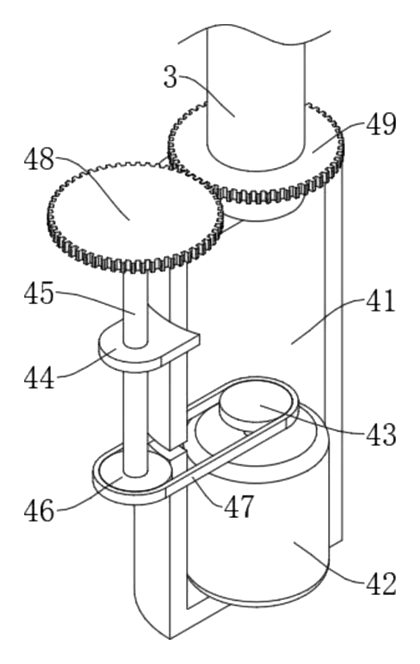
- Main Rotation: A motor in the fixing seat drives a vertical pole via a gear and belt system. This causes the entire upper assembly, including the connecting plate and lamp holder, to rotate around the central axis.
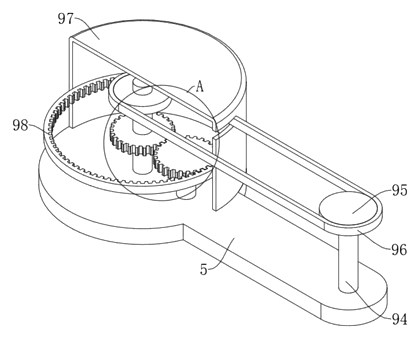
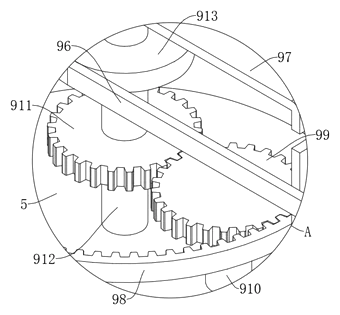
- Mosquito Repellent Assembly: Attached to the rotating connecting rod are specific plates. As the main structure rotates, these plates are driven by a secondary transmission system (belts and gears) to spin independently. The movement generates localized airflow intended to discourage mosquitoes from settling near the light.
- Cleaning Assembly: Linked to the same rotational drive is a bidirectional screw rod mechanism. As the lamp rotates, this rod turns, causing a mounting ring equipped with cleaning cotton to move vertically along the guide rods. This action wipes the outer surface of the lamp body, keeping it clear of obstructions.
Who it is for
- Landscape Architecture Firms: Designers looking for low-maintenance, multi-functional fixtures for parks, resorts, and private gardens where reducing service visits is a priority.
- Municipal Parks Departments: Agencies responsible for public green spaces that need efficient lighting coverage with fewer poles and automated cleanliness features.
- Residential Developers: Builders of high-end homes with large backyards who want premium amenities like integrated pest deterrents and self-maintaining lighting.
- Hospitality Venues: Hotels and restaurants with outdoor seating areas that benefit from reduced insect interference and cleaner-looking fixtures for guests.
How it works
The main parts
| No. | Part | What it does |
|---|---|---|
| 1 | Mounting Base | Secures the device to the ground or platform. |
| 2 | Fixing Seat | Houses the motor and primary drive components. |
| 3 | Vertical Pole | The central shaft that rotates, carrying the lamp head. |
| 4 | Rotating Assembly | Motor, belts, and gears that convert electrical energy into rotation. |
| 5 | Connecting Plate | Transmits rotation from the pole to the lamp and accessory assemblies. |
| 6 | Connecting Rod | Supports the lamp holder and connects to the repellent/cleaning drives. |
| 7 | Lamp Holder | Holds the actual light source (bulb/LED module). |
| 8 | Lamp Body | The cover or housing of the light itself. |
| 9 | Insect Repellent Assembly | Plates and shafts that spin to create airflow. |
| 10 | Cleaning Assembly | Screw rod, ring, and cotton wipers that clean the lamp body. |
Operating steps
- Power On: The motor (42) inside the base begins to turn.
- Primary Drive: The motor drives a first belt and gear set, which rotates the vertical pole (3).
- Head Rotation: The rotating pole carries the connecting plate (5) and lamp holder (7), causing the light beam to sweep across the area.
- Secondary Transmission:
- One path drives the insect repellent plates (93) via a second belt and gear system, making them spin against the air to generate wind.
- Another path drives the cleaning assembly (10) via a third belt and a bidirectional screw rod (105).
- Cleaning Action: The screw rod’s rotation moves the cleaning cotton (103) up and down the exterior of the lamp body (8), wiping away debris.
- Continuous Cycle: These actions repeat as long as the light is on, providing dynamic illumination, pest deterrence, and self-maintenance simultaneously.
Applications
Public Park Pathways
Park managers can install fewer poles because the rotating light covers a wider arc. The self-cleaning feature reduces the frequency of ladder-based maintenance crews needed to keep pathways bright and safe.
Resort Outdoor Lounges
Guests enjoy evening relaxation without the nuisance of mosquitoes hovering around the lights. The continuous cleaning ensures the fixtures look pristine, enhancing the aesthetic appeal of luxury hospitality environments.
Residential Backyards
Homeowners benefit from a “set and forget” lighting solution. The automated cleaning prevents the dimming effect caused by dust accumulation, while the repellent function makes outdoor dining more comfortable without chemical sprays.
Agricultural or Garden Centers
Greenhouses and nurseries often have high humidity and dust levels. This lamp maintains its light output automatically, supporting plant growth monitoring or display visibility without frequent manual intervention.
Where it is less suitable
- Indoor Spaces: The mechanical noise and airflow generation are designed for open-air environments and may be disruptive indoors.
- High-Wind Areas: While the design uses wind for repellency, extreme storms might damage the moving parts or destabilize the rotating mass if not properly anchored.
- Fixed-Direction Requirements: If a project requires precise, static spotlighting on a specific object, the sweeping motion of this lamp would be inappropriate.
Frequently asked questions
How does the self-cleaning actually work?
It uses a mechanical wiper. As the lamp rotates, a gear system turns a bidirectional screw rod. This rod moves a ring wrapped in cleaning cotton up and down along the outside of the lamp body. It physically wipes away dust and stains, keeping the light clear.
Does the mosquito repellent use chemicals?
No. The patent describes a physical method. Rotating plates attached to the lamp head spin to generate airflow. This wind is intended to deter mosquitoes from landing near the light source. It does not involve spraying or burning repellents.
Why does the light rotate?
Rotation expands the coverage area. Instead of a fixed beam illuminating just one spot, the rotating head sweeps light across a wider radius. This can reduce the number of poles needed for a garden or pathway.
Is the motor reliable outdoors?
The patent places the motor inside the sealed base. However, outdoor reliability depends heavily on the IP rating of the final product. Moving parts always introduce wear risks, so regular inspection of seals and bearings is recommended.
Can it be solar powered?
The patent does not specify the power source, implying mains connection. Adapting it for solar would require adding batteries and a charge controller, which changes the weight distribution and thermal management needs.
How loud is it?
The patent does not provide decibel ratings. Noise levels depend on the quality of the gears, belts, and bearings used in manufacturing. Proper lubrication and precision machining are typically required to keep it quiet.
Can this design be made and sold in the US?
Yes, the patent is only registered in China and has no US counterpart. However, you should conduct a freedom-to-operate search to ensure no other US companies hold patents on similar rotating or self-cleaning light technologies.
Are you affiliated with the patent owner?
No. IP2M is an independent design and manufacturing service working from the public patent document.
Request a quote
Click Request a Quote below to see our email address - copy it, or open your email app with a ready-made message. Please mention patent CN116906875B in the subject.
Helpful details to include:
- Your company and channel (landscape firm, municipal buyer, resort developer, home goods brand)
- Target lumen output and color temperature
- IP Rating requirement (e.g., IP65 for rain, IP67 for submersion risk)
- Power source (AC mains, DC, or Solar adaptation)
- Material preferences (Aluminum finish, plastic colors)
- Estimated quantity and target price
- Timeline - when you would like prototypes and the first shipment
You can also reach us at (332) 203-9997.
Explore this product
Interested in building this?
Tell us your target market, quantity and timeline. We reply with options for prototyping, small-batch runs or volume production.
Send your inquiry to
Please put CN116906875B in the subject line and tell us your company, country, estimated quantity and timeline.
Prefer to talk? Call (332) 203-9997.
More product-ready patents
All Lighting patents →
Lighting
Wrist-Worn Flashlight with Click-Lock Angle Adjustment
Rechargeable wrist flashlight whose lamp turns and locks at an angle with a push button.
Patent CN113915544B
Lighting
Self-Folding Desk Lamp That Turns into a Phone Stand
Desk lamp with a shape-memory stem that unfolds when warm and folds into a phone stand.
Patent CN213237087U
Lighting
Ring-Shaped Outdoor Lantern That Lifts Off a Power-Bank Charging Base
Ring lantern with a battery handle that docks in a cone base with its own battery, clamp and charging plug.
Patent CN212408329U
Lighting
LED Flameless Candle with an Outside Flame Shade and Wax Dish Top
Battery LED candle: flame shade stands above a dished wax top, angled LEDs light a printed wick.
Patent CN205424561U
Lighting
Telescoping Tripod Portable Work Light with Fold-In Light Panels
Telescoping tripod work light with dual light panels that fold flat into the base.
Patent CN207298471U
Lighting
Self-Cooling and Self-Cleaning LED Street Light with Rainwater Harvesting
LED street lamp that harvests rain to cool its heat sink and spray-wash the lens automatically.
Patent CN205480639U
Browse by category
- Apparel & Accessories (36)
- Baby & Kids (25)
- Bags & Luggage (15)
- Bath & Personal Care (25)
- Car Accessories (21)
- Furniture, Bedding & Storage (19)
- Garden & Outdoor (27)
- Health & Wellness (12)
- Home, Kitchen & Cleaning (40)
- Lighting (20)
- Packaging & Containers (10)
- Pet Products (9)
- Phone & Camera Accessories (7)
- Retail Display (21)
- School, Office & Art (30)
- Sports & Recreation (37)
- Tools & Workshop (46)
- Toys & Games (19)
This page is based on the public patent document CN116906875B, assigned to Wuhan Jinyeyun Landscape Technology Co ltd. IP2M is an independent manufacturing service and is not affiliated with, endorsed by or licensed by the patent owner. Images marked as concept renderings are illustrations, not photos of an existing product. Patent status information is provided for reference only and is not legal advice; confirm freedom to operate for your market before production. Full disclaimer.