
Patent CN116946026B
Updated November 8, 2026Motorized Hidden Umbrella Box for Vehicle Doors
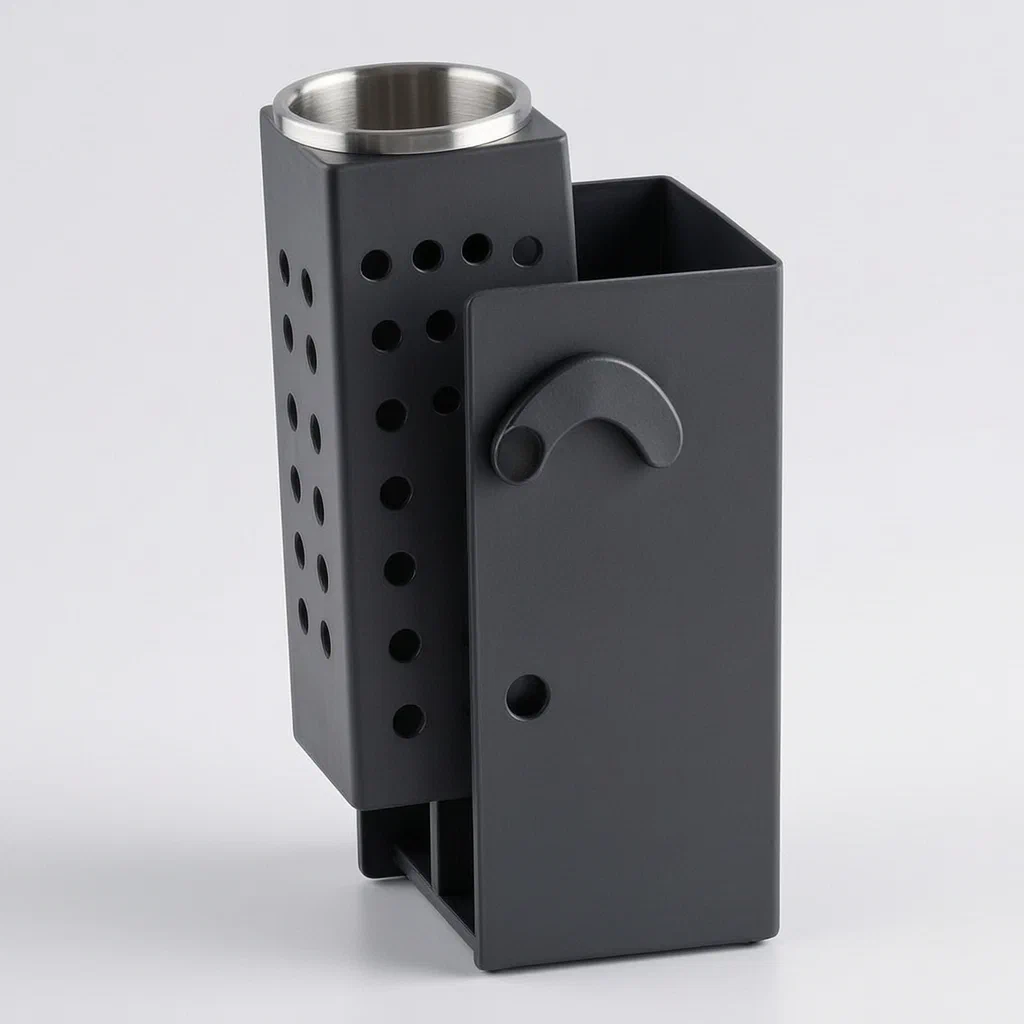
Standard car umbrellas often roll around in trunk corners or take up valuable footwell space. This patent describes a hidden storage solution built directly into the door panel. A compact box sits flush with the door surface when not in use. Activated by a single electric motor, the box rotates outward from the door frame. As it swings open, an internal cam mechanism simultaneously pushes the umbrella barrel upward, presenting the handle at an accessible height. The system uses shared drive components to minimize parts count, ensuring the mechanism is robust enough for daily automotive use while remaining invisible when closed.
- China invention patent - active
- No filings outside China
- Automotive interior accessories
- Single-motor dual-function mechanism
Splat! What let you down?
🚗
Flush Integration
The outer cover aligns with the car door plane when hidden, preserving aesthetic lines.
⚙️
Single-Motor Drive
One motor powers both the box rotation and the umbrella ejection via gear linkage.
📤
Cam Ejection
A rotating cam pushes the umbrella barrel up as the box opens, exposing the handle.
💧
Drainage & Venting
Designed with air holes for climate control and water channels to manage rain runoff.
Bring this product to market
- ✓ Patent review Patent family and legal status reviewed in the relevant jurisdictions.
- 2 Product brief · now How it works, uses and options written up
- 3 Prototype First samples for buyers to review
- 4 Pilot run Small first batch for launch customers
- 5 Volume production Repeat orders at scale
Buyer interest
– of 100 buyers needed to start prototyping
One click, no sign-up. Each vote is one real visitor, and products with the most interest go to prototyping first.
Build team: no members yet. Need a partner, co-funding or skills to build this? Join and we introduce the team once it forms.
Patent Rights & Team Participation
Before joining a development team, participants should ensure they have the necessary rights or authorization to participate in the project.
Participation is generally appropriate where:
- You own the relevant patent rights or have obtained permission or a license from the rights holder.
- The relevant patent rights have expired or have been legally invalidated in the jurisdictions where the planned activities will take place.
- The planned development, manufacturing, and commercialization activities have been independently assessed and do not infringe applicable patent rights in the relevant jurisdictions.
Important: Being located outside a country where a patent is protected does not automatically exempt you from patent infringement risks. Patent rights may apply based on where development, manufacturing, use, sale, or import activities take place.
IP2M does not grant any patent license or authorization through team participation. Joining a project does not provide permission to use, manufacture, or commercialize patented technology.
The problem
Umbrellas stored loosely in cars can slide under seats, get wet and moldy, or obstruct footwells. Traditional fixed holders are bulky and visible, disrupting the clean interior design of modern vehicles. There is a need for a storage solution that remains completely invisible when not in use but provides easy access when needed, without requiring manual effort to retrieve the item.
The solution
- Box Body and Bracket: The system consists of a box body containing an umbrella barrel and a bracket fixed to the vehicle structure. The box rotates between a first position (flush with the door) and a second position (extended out).
- Rotation Mechanism: A fixed shaft connects the box to the bracket. A protruding rod on the box slides within a rail on the bracket to guide the movement and support the load during rotation.
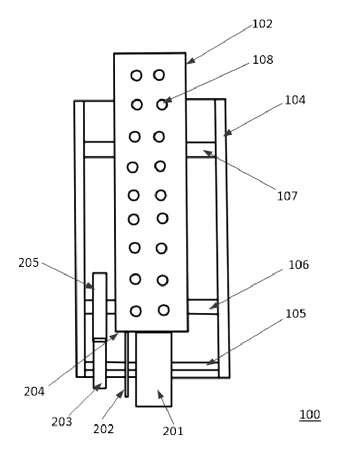
- Dual Function Drive: A single motor drives the rotation of the box. Through a gear train (first gear on the fixed shaft, second gear on a separate rotating shaft), the same motor also rotates a cam located beneath the umbrella barrel.
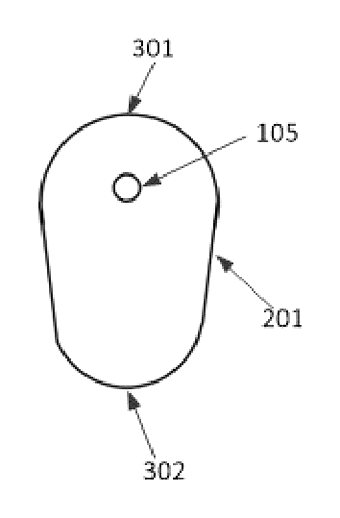
- Ejection Action: As the box rotates outward, the cam turns. In the hidden position, the cam’s smaller radius rests against the barrel bottom. In the extended position, the larger radius pushes the barrel upward along the box’s inner walls, exposing the umbrella handle.
- Safety Deformation: The cam is made of a deformable material. If the umbrella gets stuck, the cam deforms elastically, allowing the box to continue rotating without jamming the motor.
Who it is for
- Automotive Interior Designers looking for seamless, hidden storage solutions that do not compromise cabin aesthetics.
- OEM Suppliers providing premium accessory packages for luxury or SUV models where weather protection is key.
- Aftermarket Specialists offering retrofit kits for high-end vehicles lacking factory-integrated umbrella storage.
- Concept Car Developers demonstrating smart, automated interior features that enhance user experience.
How it works
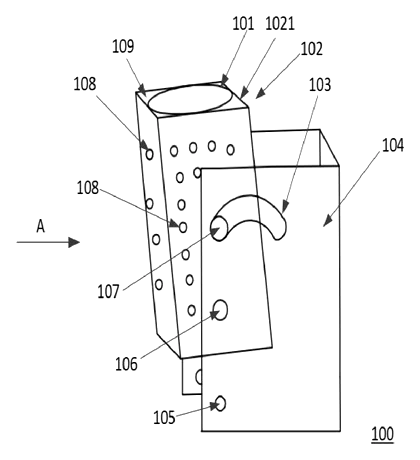
The main parts
| No. | Part | What it does |
|---|---|---|
| 100 | Assembly | The complete hidden umbrella unit. |
| 102 | Box Body | Houses the umbrella; has side walls and a bottom surface. |
| 101 | Umbrella Barrel | Cylindrical holder for the umbrella inside the box. |
| 104 | Bracket | Fixed to the car; supports the box and guides its motion. |
| 106 | Fixed Shaft | Axis around which the box rotates. |
| 107 | Protruding Rod | Connects box to bracket rail for stability. |
| 201 | Cam | Rotates to push the umbrella barrel up. |
| 204 | Bottom Surface | Features a through-hole for the cam to engage the barrel. |
Operating Steps
- Activation: The user triggers the system through the vehicle’s control interface. The motor starts.
- Rotation: The motor turns the fixed shaft, causing the box body to rotate outward from the door panel.
- Gear Linkage: Simultaneously, the first gear on the fixed shaft drives the second gear on the cam’s rotating shaft.
- Ejection: As the cam rotates, its profile changes from a low-radius section to a high-radius section. This pushes the umbrella barrel upward.
- Access: The umbrella handle rises above the box rim, ready for the user to grab.
- Retraction: Reversing the motor lowers the barrel and rotates the box back to the flush position.
Applications
Luxury Sedan Interiors
High-end sedans often lack practical storage for long umbrellas. This system integrates into the rear door panel, offering a discreet, automatic solution that matches the premium finish of the interior trim.
SUV and Off-Road Vehicles
SUV owners frequently encounter sudden weather changes. Having an umbrella instantly available via a door-mounted system saves time compared to digging through a cargo area, especially when passengers are seated.
Ride-Hailing Fleets
Professional drivers need quick access to umbrellas for passenger pickup in rainy conditions. A hidden, automated box ensures the umbrella is always presentable and easy to hand over without cluttering the cabin.
Electric Vehicle Concept Displays
EV manufacturers emphasize tech-forward interiors. This mechanical feature demonstrates automated deployment and space-saving design, appealing to buyers interested in practical interior functions.
Where it is less suitable
- Compact Economy Cars: The depth required for the umbrella barrel and mechanism may exceed the thickness of standard door panels in budget vehicles.
- Retrofit Without Power Access: Systems requiring a dedicated power line and switch installation may be complex for older cars lacking pre-wired door modules.
Patent & Production
At a glance
| Patent number | CN116946026B (application CN202311204320) |
| Type | China invention patent - protects product shape, structure, and method |
| Original title | A Hidden Umbrella Box for Car Doors (一种车门隐藏式雨伞盒) |
| Patent owner | Kity Tianjin Automobile Co ltd |
| Inventors | Ma Xiaolong |
| Filing date | 2023-09-19 |
| Grant date | 2024-01-23 |
| Status (China) | In force until at most 2043-09-19 (if annual fees are paid) |
| Patent family | Public record shows Chinese filings only - no US, European, Japanese, PCT or other filings listed |
| Cited by | 0 later documents |
| Source | Google Patents (search for CN116946026B) |
What the claims cover, in plain language
Claim 1 defines a hidden umbrella box comprising a box body with an umbrella barrel inside. The box rotates between a hidden position (flush with the door) and an exposed position. A bracket fixed to the vehicle supports the box via a protruding rod sliding in a rail. A first driving mechanism (motor + gears) rotates the box. A second driving mechanism (cam + gears) lifts the umbrella barrel. Both mechanisms share the same motor. The cam is positioned below the barrel; as the box opens, the cam rotates to push the barrel up. The cam is made of a deformable material to prevent jamming if the umbrella sticks. Air holes allow AC airflow; small holes prevent rain leakage.
Claim 2 specifies the cam profile: the transition from the small-radius side to the large-radius side has a tangential direction change from large to small.
Claim 3 adds a water hole and hose at the bottom of the umbrella barrel to drain water out of the vehicle.
Claim 4 notes the umbrella barrel is cylindrical and the box is square.
This is a simplified reading for orientation only. The legal scope is defined by the exact claim wording in the official Chinese document.
What this means for US production
This patent was filed in China and is currently in force. The public record shows no US or other foreign counterpart. Making or selling this specific design in China requires the owner’s permission. However, since there is no US patent, the design itself does not restrict manufacturing or sales in the United States based on this patent alone.
Two points to settle early:
- Other patents may exist. Automotive interior mechanisms, particularly those involving motorized deployment and hidden storage, are a competitive field. Major suppliers like Faurecia, Magna, and Lear hold extensive portfolios on door module structures and actuation systems. A freedom-to-operate (FTO) review is recommended to ensure no conflicting US patents cover the specific gear linkage or cam deformation logic.
- Integration complexity. This design relies on precise alignment between the door panel, bracket, and internal mechanism. Customization must account for varying door thicknesses and curvature across different vehicle models.
Customization and manufacturing
What can be customized
| Area | Options |
|---|---|
| Dimensions | Box size adapted to specific door panel thickness and umbrella length |
| Materials | ABS/PC housing, metal brackets, rubber seals for weatherproofing |
| Actuation | Motor voltage, speed, and noise reduction features |
| Interface | Button location, touch controls, or integration with vehicle infotainment |
| Finish | Painted or textured surfaces to match interior trim color |
Things to plan for (US market)
- FMVSS 208/214 - Ensure the mechanism does not interfere with airbag deployment zones or occupant protection standards.
- Electrical Safety - Compliance with ISO 6722 or equivalent wire harness standards for automotive applications.
- Environmental Durability - Resistance to temperature extremes (-40°C to +85°C) and humidity per common OEM specs.
- Noise/Vibration/Harshness (NVH) - Minimize motor whine and mechanical clatter to meet cabin quietness targets.
How a project runs
- Inquiry - Define target vehicle model, door dimensions, and umbrella specifications.
- Design - CAD modeling of the bracket, cam, and housing; simulation of kinematics.
- Prototype - 3D-printed fit checks and functional samples for mechanism testing.
- Pilot Run - Small batch assembly for durability and NVH testing.
- Production - Injection molding, die-casting, motor assembly, and final QA.
Quantities & timeline
Tooling for injection molded parts and die-cast brackets takes several weeks. Motor and gear assemblies require sourcing lead times. Functional testing cycles for durability and environmental stress add to development time. Send us your target vehicle model, door dimensions, quantity and target price and we will reply with options.
Production notes
Tooling and process
The door module and umbrella barrel would likely use injection-molded housings, while the bracket, fixed shaft and cam are typically machined aluminum or zinc parts. One motor drives both the fixed shaft and the gear pair, so the gearbox and cam profile need to share a common tooling datum. Seals and a drain path are typically added to keep water out of the door cavity.
Cost drivers
Tooling count is likely the main upfront cost: housing, cover, umbrella barrel, bracket, cam and gear set each need their own mold or fixture. Motor selection and gearbox tolerance affect both cost and noise. Sealing and drainage features add parts and assembly steps, and low vehicle volumes typically spread tooling over fewer units.
Prototyping path
Prototypes would likely start with 3D-printed housings and an off-the-shelf motor to check the swing path and cam lift. A machined bracket and shaft are typically used for the first kinematic sample. Door-panel fit, water drainage and motor current should be checked before production tooling.
What we would change before tooling
We would likely simplify the linkage between the fixed shaft and the cam gear if the timing proves sensitive. The door interface would typically be re-drawn for each vehicle model, and the drain path may need enlargement depending on the door cavity. We would also check that the cover sits flush with the door skin at the first position.
Common failure points
Water ingress past the cover seal can corrode the motor or jam the cam. The cam and gear teeth wear if the umbrella barrel binds in its guides. Door-panel tolerance stack-up can leave the cover proud or create rattles. Motor stall at the end stops is another risk if limit sensing is omitted.
Patent drawings
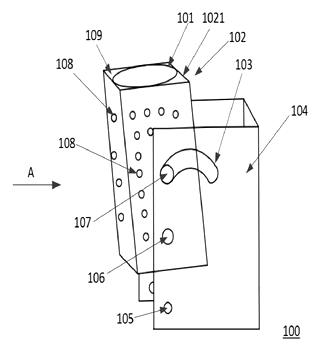
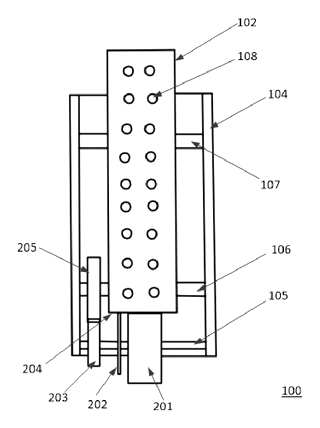
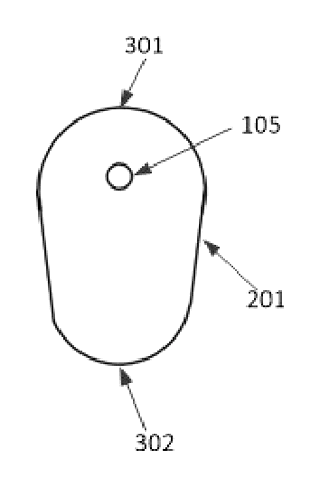
Drawings reproduced from the public patent document for reference.
Frequently asked questions
How does the umbrella pop up?
When the box rotates out of the door, a cam mechanism linked to the same motor pushes the umbrella barrel upward. This exposes the handle so you can grab it easily without reaching deep into the box.
What happens if the umbrella gets stuck?
The cam is made of a deformable material. If the umbrella cannot slide up due to resistance, the cam flexes instead of jamming. This allows the box to continue rotating safely, preventing damage to the motor or mechanism.
Is it waterproof?
The design includes small air holes that allow airflow from the car’s AC to keep the interior dry, but their diameter is too small for rainwater to enter. Additionally, a hose can be connected to drain any accumulated water out of the vehicle.
Can it fit any car door?
Not exactly. The mechanism requires sufficient depth within the door panel. It is best suited for vehicles with thicker door structures or custom-fitted retrofits. Specific dimensions depend on the umbrella size and motor housing.
Does it require special maintenance?
Regular cleaning of the track and rails is recommended to prevent dust buildup. The motor and gears are sealed units, typically requiring replacement rather than repair if they fail after many years of use.
Can this design be made and sold in the US?
The patent was filed in China and is in force there. The public record shows no US counterpart, so this specific patent does not restrict making or selling the design in the US. However, other automotive patents may apply, so a freedom-to-operate check is advised before volume production.
Are you affiliated with the patent owner?
No. IP2M is an independent design and manufacturing service working from the public patent document.
Request a quote
Click Request a Quote below to see our email address - copy it, or open your email app with a ready-made message. Please mention patent CN116946026B in the subject.
Helpful details to include:
- Your company and channel (auto supplier, aftermarket brand, concept developer)
- Target vehicle model and door panel thickness
- Umbrella dimensions (length and diameter)
- Power requirements (voltage, activation method)
- Estimated quantity and target price
- Timeline - when you would like prototypes and the first shipment
You can also reach us at (332) 203-9997.
Page editor: Daniel Chen, Product Research Editor · IP2M
Last updated November 8, 2026. If something on this page looks wrong, email [email protected] and we will check it against the patent.
Interested in building this?
Tell us your target market, quantity and timeline. We reply with options for prototyping, small-batch runs or volume production.
Send your inquiry to
Please put CN116946026B in the subject line and tell us your company, country, estimated quantity and timeline.
Prefer to talk? Call (332) 203-9997.
More product-ready patents
All Car Accessories patents →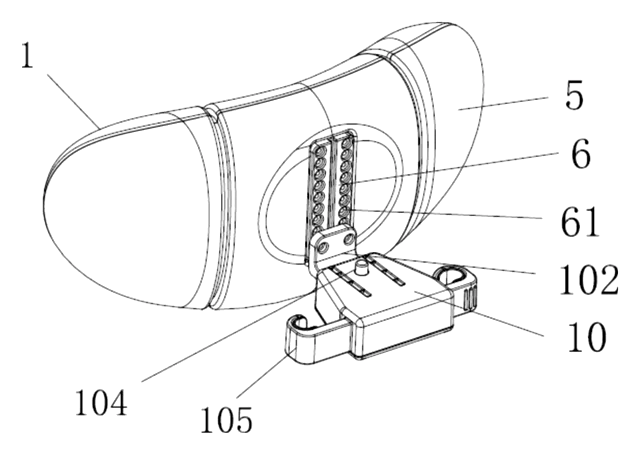
Car Accessories
Car Headrest Pillow with Ratchet Side Wings and Push-Button Reach
Post-mounted car headrest pillow with ratchet side wings and a push-button forward adjustment.
Patent CN212195197U
Car Accessories
Hard-Shell Rooftop Tent That Doubles as a Cargo Box
Roof box whose hard frames lift on gas struts into a tent with door and skylight, and fold back for luggage.
Patent CN206327275U
Car Accessories
Headlamp-to-Bumper Adapter Bracket That Sets Gap and Flush in Three Directions
Molded bracket under the headlamp: support blocks and snap teeth locate the bumper flange for an even gap.
Patent CN216580316U
Car Accessories
Infant Car Seat with a Load-Bearing Base That Wraps the Carrier
Infant car seat whose base has a backrest and swing-up side rails, so the carrier can be lighter.
Patent CN206383856U
Car Accessories
Retractable Side Impact Protection Block for Child Car Seats
Retractable side-impact block for child seats: springs out to provide side-impact buffering, folds flat.
Patent CN207028930U
Car Accessories
Rain-Deflecting Side Mirror with a Pivoting Air-Guide Plate
Side mirror with a top air duct and folding guide plate that directs airflow across the glass.
Patent CN207345672U
Browse by category
- Apparel & Accessories (50)
- Baby & Kids (29)
- Bags & Luggage (17)
- Bath & Personal Care (33)
- Car Accessories (26)
- Furniture, Bedding & Storage (25)
- Garden & Outdoor (34)
- Health & Wellness (14)
- Home, Kitchen & Cleaning (52)
- Lighting (24)
- Packaging & Containers (13)
- Pet Products (12)
- Phone & Camera Accessories (9)
- Retail Display (26)
- School, Office & Art (38)
- Sports & Recreation (48)
- Tools & Workshop (56)
- Toys & Games (23)
This page is based on the public patent document CN116946026B, assigned to Kity Tianjin Automobile Co ltd. IP2M is an independent manufacturing service and is not affiliated with, endorsed by or licensed by the patent owner. Images marked as concept renderings are illustrations, not photos of an existing product. Patent status information is provided for reference only and is not legal advice; confirm freedom to operate for your market before production. Full disclaimer.