At a glance
| Patent number | CN117325770B (application CN202311237628) |
| Type | China invention patent (发明专利) - protects product structure and method |
| Original title | A high-strength automobile luggage rack (一种高强度汽车行李架) |
| Patent owner | Qiao Luming Technology Co ltd |
| Inventors | Huang Shengquan, Zhou Shenling, Zhang Yixun, Ye Liwei |
| Filing date | 2023-09-22 |
| Grant date | 2024-12-13 |
| Status (China) | In force - valid until at most 2043-09-22, subject to payment of annual fees |
| Patent family | Chinese filings only - no US, European, Japanese, PCT or other filings listed |
| Cited by | 0 later documents |
| Source | Google Patents (search for CN117325770B) |
What the claims cover, in plain language
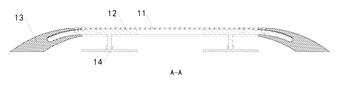
Claim 1 defines a high-strength automobile luggage rack comprising a cross rod, connecting pieces, and a fixed seat. Key structural elements include:
- Two symmetrical round holes for counter-bore bolts on the upper end face of the cross rod.
- A limit sliding groove formed on the lower end face of the cross rod along its length.
- Two connecting pieces slidably arranged in the limit sliding groove.
- Each connecting piece consists of a horizontal section (sliding in the groove), a vertical section (fixed to the horizontal one), and an arc-shaped section (connecting to the round hole end).
- Threaded holes in the horizontal section align with the cross rod’s bolt holes.
- A rubber pad sleeved at the bottom of the limit sliding groove.
- The fixed seat connects to the arc-shaped section and mounts to the vehicle roof.
- The claim emphasizes that the vertical section supports the cross rod against the roof to prevent deformation.
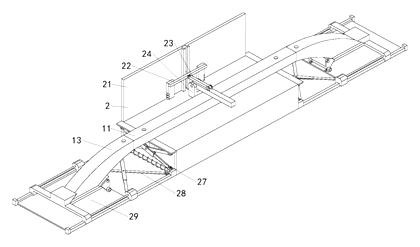
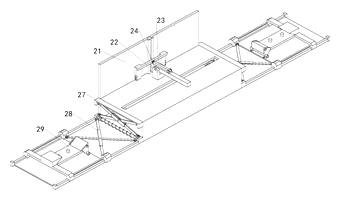
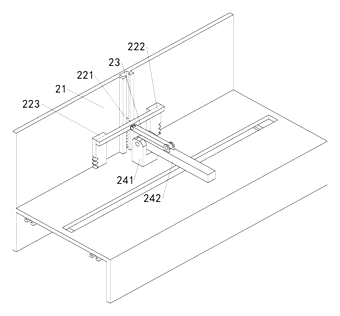
Claims 2 and 3 (implied from description context, though specific text truncated in source): Likely elaborate on the assembly unit mechanism, including the U-shaped plate, linkage assembly, gear sets, and the method of assembling by rotating a pressure rod. Note: Full claim text should be verified against the official Chinese document.
This is a simplified reading for orientation only. The legal scope is defined by the exact claim wording in the official Chinese document.
What this means for US production
This patent was filed only in China and is currently in force. Making, selling, or importing products that fall within the scope of these claims in China would require permission from the patent owner. There is no US counterpart patent listed.
Two points to settle early:
- Other patents may exist. The automotive accessory field is densely populated with patents covering various roof rack configurations, quick-release mechanisms, and aerodynamic designs. While this specific arc-connector structure is not patented in the US, similar functional outcomes might be protected by existing US utility or design patents held by major brands like Thule, Yakima, or Rhino-Rack. A freedom-to-operate (FTO) review is essential before launching in the US market.
- Assembly Method Protection. The patent also covers a specific assembly jig/unit. If you manufacture in regions where this method is patented, using the described jig could infringe on the method claims, even if the final product differs slightly.
Customization and manufacturing
What can be customized
| Area | Options |
|---|---|
| Material | Aluminum alloy (common for lightweight strength), Steel (for heavy-duty commercial use) |
| Finish | Anodized black/silver, Powder coating, Chrome plating |
| Dimensions | Crossbar length (typically 1.2m - 1.6m), Width of sliding groove |
| Connector Shape | Variations in arc radius to fit different crossbar profiles |
| Mounting Interface | Bolt spacing to match specific vehicle roof rail standards (e.g., flush rails, raised rails) |
| Rubber Components | Hardness (Shore A) and color of protective pads |
Things to plan for (US market)
- SAE J2778 / SAE J2779: Standards for roof-mounted carrier systems, covering static load capacity, fatigue life, and vibration testing. Compliance is critical for liability insurance and retailer acceptance.
- DOT FMVSS 216: While primarily for rollover crush resistance, aftermarket accessories must not interfere with vehicle safety structures. Ensure mounting points do not compromise roof integrity.
- California Prop 65: Screening for lead, cadmium, and phthalates in coatings, plastics, and rubber components.
- TSCA: Chemical substance control for any new materials used in adhesives or sealants within the assembly.
How a project runs
- Inquiry - Define target vehicle models, load requirements, and aesthetic preferences.
- Design Adaptation - Modify crossbar profile and connector geometry to fit your brand’s specifications while maintaining the arc-support principle.
- Prototype Fabrication - CNC machining or casting of initial samples; build test fixtures.
- Validation Testing - Static load tests, salt spray corrosion tests, and vibration analysis per SAE standards.
- Production Setup - Tooling for injection molding (connectors/rubber) and extrusion/casting (crossbars); assembly line configuration.
Quantities & timeline
Custom molds for the arc-shaped connectors and the assembly jig will need to be developed. Extrusion dies for the crossbar vary by length and profile. Certification testing typically takes 4-8 weeks depending on lab availability. Send us your target vehicle compatibility list, desired load rating, finish options, estimated annual volume and we will reply with options.
Patent drawings
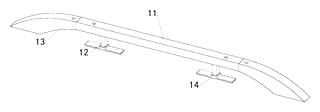

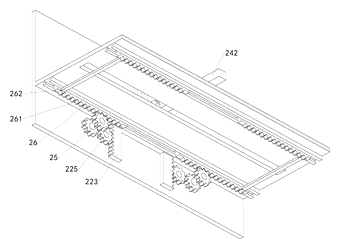
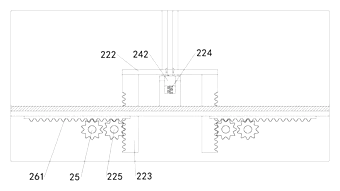
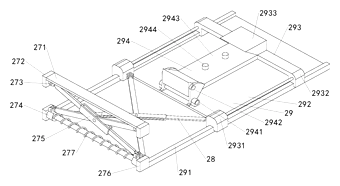
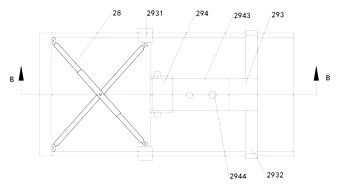
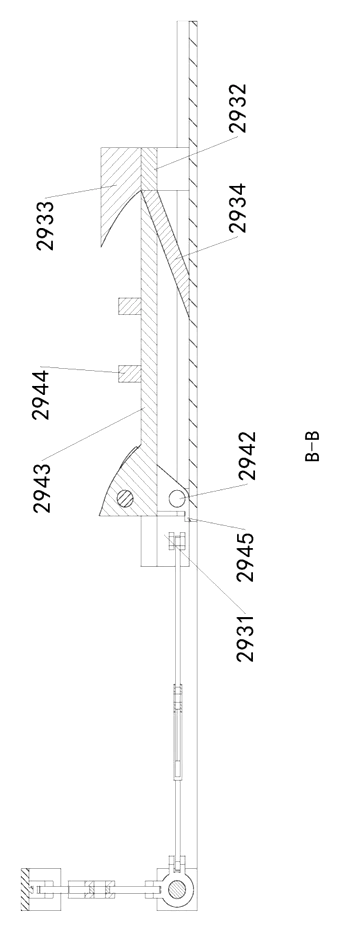
Drawings reproduced from the public patent document for reference.