
Patent CN117679724B
Updated November 2, 2026Volleyball Wall-Ball Auto-Counting Teaching Device
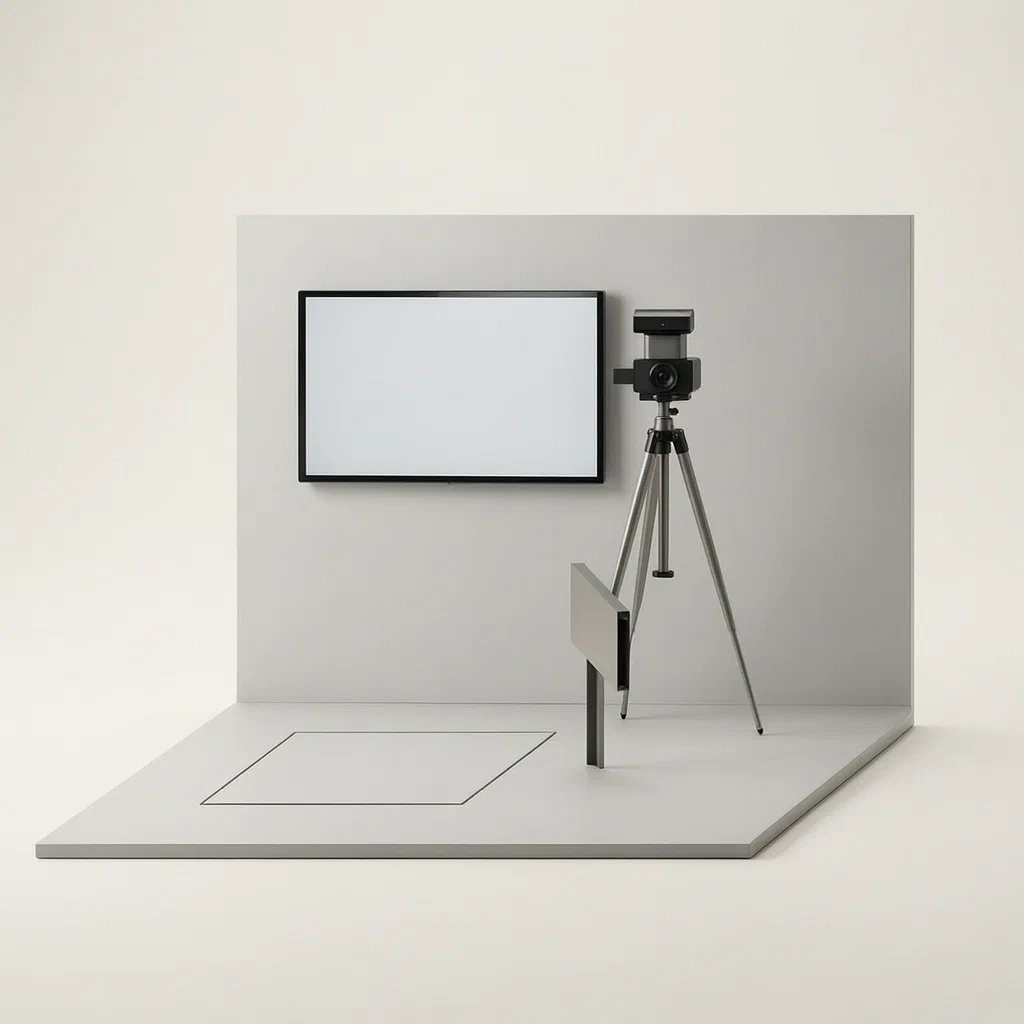
Manual counting during volleyball drills is inaccurate and distracts coaches from observing technique. Players often miss their form errors without immediate feedback. This automated device solves this by mounting a camera directly on the wall next to the target area. It tracks the player's head position to ensure they stay in the correct zone and analyzes the shape of the ball's contact with the wall to validate each hit. Only clean contacts are counted, providing instant visual feedback on a display and saving video clips for later analysis, turning solo practice into an effective coaching session.
- China invention patent - active
- No filings outside China
- Sports equipment & education tech
- Camera, controller, display, memory modules
Splat! What let you down?
📷
Wall-Mounted Camera
Mounted beside the target zone to capture unobstructed views of ball contact.
✅
Smart Validation
Counts only valid hits based on ball edge geometry and player position.
📊
Real-Time Feedback
Display shows live counts and scores; memory saves data for review.
🎓
Teaching Focus
Helps students self-correct posture and extract videos for coaching.
Bring this product to market
- ✓ Patent vetted China-only family and legal status checked
- 2 Product brief · now How it works, uses and options written up
- 3 Prototype First samples for buyers to review
- 4 Pilot run Small first batch for launch customers
- 5 Volume production Repeat orders at scale
Buyer interest
– of 100 buyers needed to start prototyping
One click, no sign-up. Each vote is one real visitor, and products with the most interest go to prototyping first.
Build team: no members yet. Need a partner, co-funding or skills to build this? Join and we introduce the team once it forms.
The problem
Traditional volleyball wall-ball training relies on manual counting or simple mechanical sensors, which are prone to error and lack context. Coaches cannot watch every student individually, leading to unnoticed bad habits like incorrect arm angles or stepping out of bounds. Without precise feedback, players may reinforce poor techniques while believing they are practicing correctly. Furthermore, distinguishing between a solid, controlled touch and a glancing blow or accidental graze is difficult for human observers, making training metrics unreliable.
The solution
The device integrates a camera, controller, display, and input system to automate and refine wall-ball training.
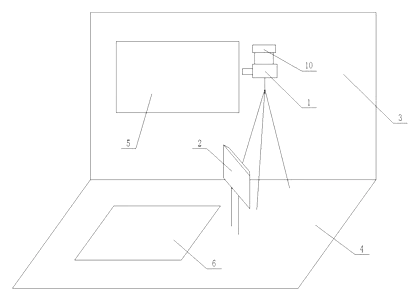
- Setup: A specific “ball contact area” is marked on the wall, and a “standing area” is defined on the floor. The camera is mounted on the wall adjacent to the contact area to avoid occlusion by the ball itself.
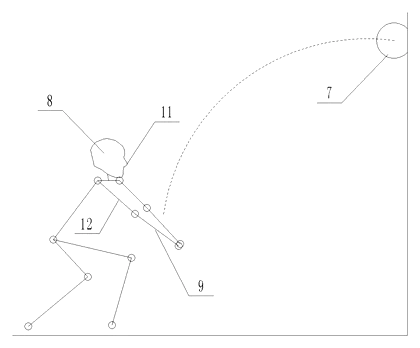
- Position Tracking: The system uses face recognition to locate the player’s head anchor point (nose tip). It verifies if the player remains within the designated standing area throughout the drill.
- Contact Validation: When the ball hits the wall, the camera captures the interaction. An edge detection algorithm analyzes the contact line between the ball and the wall surface. Valid hits are identified by the change in contact shape from a point to a line and back to a point, with a maximum line length threshold ensuring the touch was controlled rather than a hard impact or glance.
- Posture Check: The system monitors the angle between the player’s upper arm and the hitting part of the forearm, aiming for a range of 180°±10°, to ensure proper form.
- Feedback Loop: The controller processes these inputs. If conditions are met, the count increments on the display. Data is stored in memory, allowing users to review statistics or extract video clips for technical analysis.
Who it is for
- School Physical Education Departments seeking scalable tools for large class sizes where individual coach attention is limited.
- Volleyball Clubs and Academies wanting to standardize training metrics and provide objective performance data to athletes.
- Home Gym Owners looking for an interactive way to practice skills with immediate visual confirmation.
- Rehabilitation Centers using low-impact sports activities where consistent, monitored movement patterns are required.
How it works
The main parts
| No. | Part | What it does |
|---|---|---|
| 1 | Camera | Captures video of the wall and player; mounted to view the contact area clearly. |
| 2 | Display | Shows real-time count, score, and status messages to the user. |
| 3 | Controller | Processes image data, runs algorithms for edge detection and pose estimation. |
| 4 | Memory | Stores training sessions, scores, and video clips for later retrieval. |
| 5 | Input Device | Allows users to select modes, start/stop tests, or configure settings. |
| 6 | Standing Area | Defined floor zone; tracked via head position to ensure player compliance. |
| 7 | Volleyball | The object being tracked; its contact with the wall is analyzed. |
| 8 | Head/Face | Used as anchor points for position and orientation tracking. |
| 9 | Hitting Part | Forearm/wrist area monitored for angle relative to the upper arm. |
| 10 | Fill Light | Optional lighting to improve camera visibility in dim environments. |
| 11 | Anchor Point | Specific facial feature (e.g., nose tip) used for coordinate mapping. |
| 12 | Identification Part | Upper arm segment used to calculate elbow/arm angle. |
Operating steps
- Calibration: User selects the wall area and ground zone. The camera is adjusted to frame both the contact area and the player’s expected position.
- Test Start: The player enters the standing area. The system confirms the head position is valid.
- Action Detection: As the player hits the ball against the wall, the camera records the impact.
- Analysis:
- Edge Check: The system detects the ball’s contact edge. It calculates the maximum length of the contact line. If the line exceeds a set threshold or fails the point-line-point transition pattern, the hit is invalid.
- Pose Check: The system measures the angle between the upper arm and forearm. Hits outside the 180°±10° range may be flagged or ignored depending on settings.
- Zone Check: The system verifies the head remains above the standing area.
- Counting & Display: Valid hits increment the counter shown on the display. Invalid attempts do not count but may trigger a warning.
- Session End: Upon timer expiration or manual stop, the final score is calculated. Video clips of key moments are saved to memory.
Applications
School PE Classes
Teachers deploy multiple units to allow simultaneous practice. Students receive instant feedback on their form without waiting for teacher rotation, improving engagement and skill acquisition rates during crowded sessions.
Club Training Drills
Coaches use the device to track consistency over time. By reviewing saved video clips, they can identify recurring errors in specific players’ techniques, such as improper arm angles or footwork deviations, leading to targeted corrective exercises.
Solo Practice Sessions
Athletes practicing alone benefit from the automated counting and validation. The system prevents “cheating” by ignoring glancing blows, ensuring that the recorded score reflects genuine, controlled repetitions, which helps in building muscle memory accurately.
Rehabilitation Monitoring
Physical therapists can set conservative parameters to monitor patient progress. The device provides objective data on repetition quality and range of motion, helping to adjust therapy intensity based on actual performance rather than subjective observation.
Where it is less suitable
- Outdoor Beach Volleyball: The camera requires stable mounting and controlled lighting; sand and wind interference make it impractical for outdoor beach courts.
- High-Speed Competitive Play: The processing latency might not suit fast-paced game scenarios where millisecond reactions are critical; it is designed for training drills, not match officiating.
- Low-Light Environments Without Auxiliary Power: While a fill light is mentioned, complex setups may require additional power sources if the environment is very dark, limiting portability in some contexts.
Frequently asked questions
How accurate is the counting?
The device uses edge detection and positional checks to filter out glancing blows or off-target hits. Accuracy depends on camera resolution, lighting conditions, and proper calibration of the “contact area” and “standing area” boundaries. In controlled indoor environments, it provides consistent validation based on the defined geometric criteria.
Does it require internet access?
Not necessarily. The core counting and display functions work locally using the onboard controller and memory. Internet connectivity (via the communicator module) is optional, used for saving data to the cloud, remote updates, or sharing video clips with coaches.
Can it distinguish between different players?
The patent mentions face recognition and head anchor points for positioning. While primarily used to verify the current player’s stance, the system can potentially be configured to recognize different users if the software layer supports profile switching, though this is an implementation detail beyond the basic structural claims.
Is the video data private?
Data is stored locally in the device’s memory by default. If internet connectivity is enabled, users must manage privacy settings. For school deployments, administrators should ensure compliance with local student data protection laws (like FERPA in the US) when configuring cloud storage features.
How is it installed?
The camera mounts directly on the wall adjacent to the target area. The display and input controls are positioned facing the standing area for easy viewing. Installation requires securing the bracket and connecting power. No complex wiring is needed if using wireless communication options.
Can I adjust the difficulty level?
Yes. The sensitivity thresholds for what constitutes a “valid hit” (such as the maximum contact line length) and the acceptable arm angle range can be modified in the software configuration. This allows the device to adapt from beginner drills to advanced precision training.
Can this design be made and sold in the US?
The patent is active only in China. There are no corresponding US patents for this specific invention. Therefore, manufacturing and selling this design in the US does not infringe this patent. However, due to the prevalence of sports-tech patents in the US, we recommend a freedom-to-operate search to ensure no other US patents cover similar computer-vision training methods.
Are you affiliated with the patent owner?
No. IP2M is an independent design and manufacturing service working from the public patent document.
Request a quote
Click Request a Quote below to see our email address - copy it, or open your email app with a ready-made message. Please mention patent CN117679724B in the subject.
Helpful details to include:
- Your company and channel (school district, sports club, consumer electronics brand)
- Hardware preferences (wall-mount vs. portable, screen size, camera specs)
- Software needs (local storage vs. cloud sync, multi-user support)
- Certification requirements (FCC, UL, etc.)
- Estimated quantity and target price
- Timeline - when you would like prototypes and mass production
You can also reach us at (332) 203-9997.
Explore this product
Interested in building this?
Tell us your target market, quantity and timeline. We reply with options for prototyping, small-batch runs or volume production.
Send your inquiry to
Please put CN117679724B in the subject line and tell us your company, country, estimated quantity and timeline.
Prefer to talk? Call (332) 203-9997.
More product-ready patents
All Sports & Recreation patents →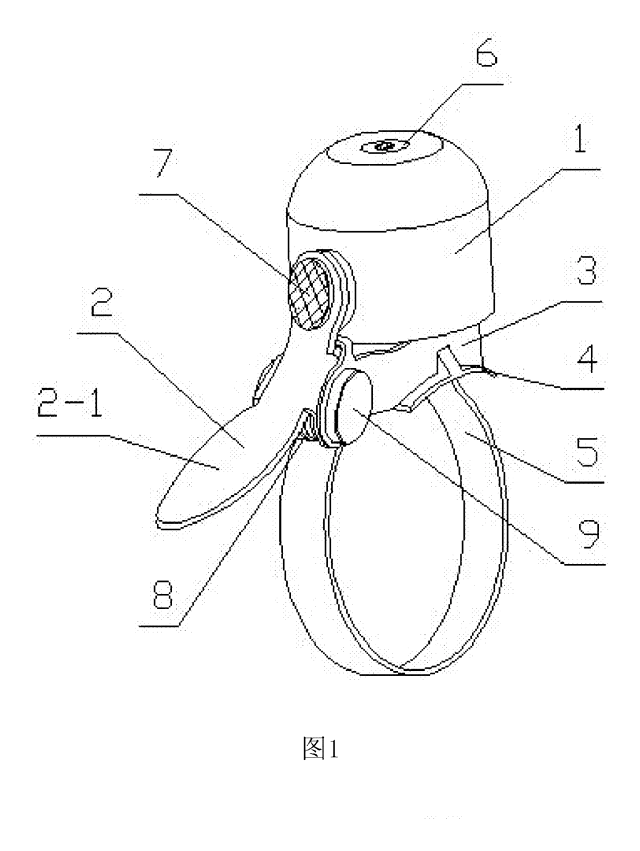
Sports & Recreation
Compact Torsion-Spring Bike Bell
Mini bike bell with a standard torsion spring and a rubber-floated dome - small size, clear tone, quick strap mount.
Patent CN205819384U
Sports & Recreation
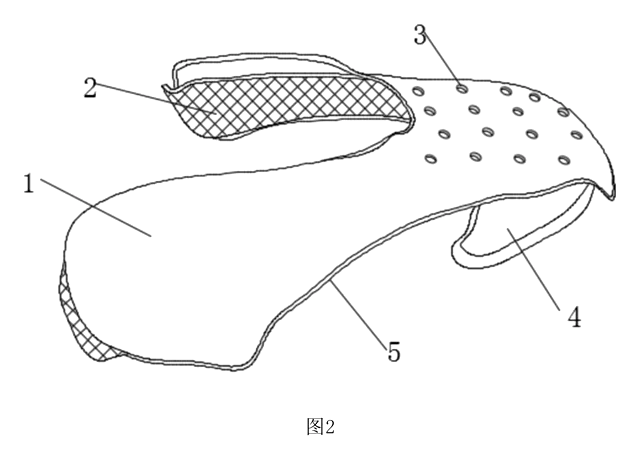
Padded Toe-Box Shield for Sneakers
Ventilated, silicone-lined toe-box insert that supports the front of a sneaker and cushions the toes.
Patent CN209473731U
Sports & Recreation
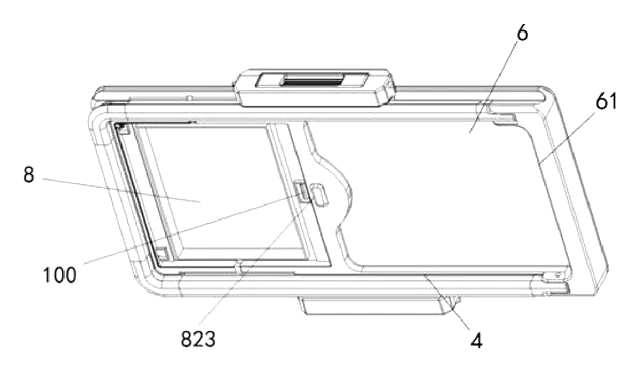
Reversible Fishing Seat-Box Lid with Backrest
Fishing seat-box lid that flips on removable hinge pins: cushion, backrest and storage on one face.
Patent CN208624426U
Sports & Recreation
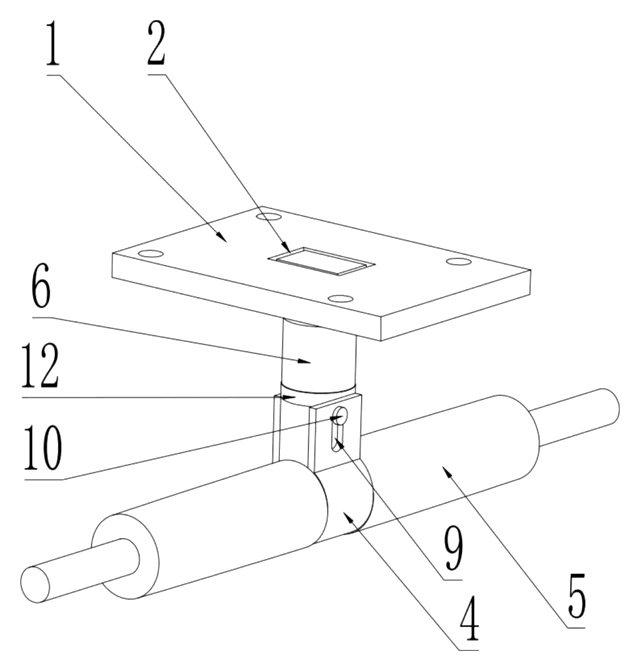
Swivel-Pin Skateboard Truck with Rubber Sleeve
Skateboard truck with a turning center pin, a tilting axle clamp and a rubber sleeve that centers it.
Patent CN216777880U
Sports & Recreation
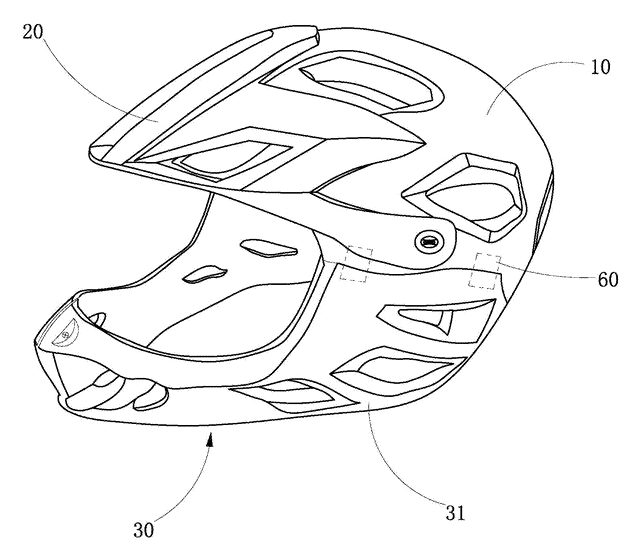
Full-Face Bike Helmet with Magnetic Detachable Chin Bar
Full-face cycling helmet whose chin bar clips on and off with magnetic, latching side connectors.
Patent CN206630067U
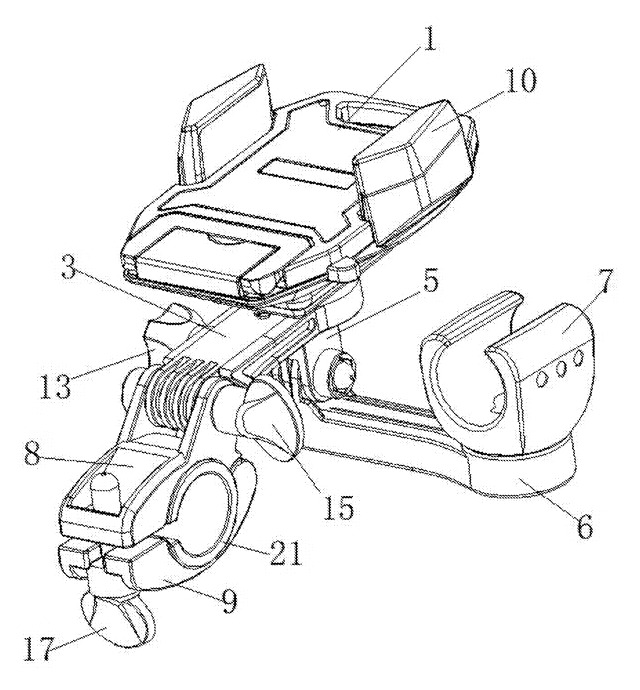
Sports & Recreation
Bike Phone Holder with Built-In Flashlight Clamp
Handlebar mount with a phone cradle on top and a flashlight clamp below, on one arm.
Patent CN206077485U
Browse by category
- Apparel & Accessories (31)
- Baby & Kids (22)
- Bags & Luggage (13)
- Bath & Personal Care (22)
- Car Accessories (17)
- Furniture, Bedding & Storage (17)
- Garden & Outdoor (25)
- Health & Wellness (10)
- Home, Kitchen & Cleaning (35)
- Lighting (16)
- Packaging & Containers (8)
- Pet Products (8)
- Phone & Camera Accessories (6)
- Retail Display (18)
- School, Office & Art (24)
- Sports & Recreation (32)
- Tools & Workshop (38)
- Toys & Games (17)
This page is based on the public patent document CN117679724B, assigned to Fuzhou Yuanzhong Education Technology Co ltd. IP2M is an independent manufacturing service and is not affiliated with, endorsed by or licensed by the patent owner. Images marked as concept renderings are illustrations, not photos of an existing product. Patent status information is provided for reference only and is not legal advice; confirm freedom to operate for your market before production. Full disclaimer.