At a glance
| Patent number | CN117679724B (application CN202410151308) |
| Type | China invention patent (发明专利) - protects method and structure |
| Original title | A volleyball wall-to-wall ball automatic counting teaching device (一种排球对墙垫球自动计数教学装置) |
| Patent owner | Fuzhou Yuanzhong Education Technology Co ltd |
| Inventors | Xu Yunli |
| Filing date | 2024-02-02 |
| Grant date | 2024-04-26 |
| Status (China) | In force - valid until at most 2044-02-02, subject to payment of annual fees |
| Patent family | Chinese filings only - no US, European, Japanese, PCT or other filings listed |
| Cited by | 0 later documents |
| Source | Google Patents (search for CN117679724B) |
What the claims cover, in plain language
Claim 1 defines the core device: a camera, controller, display, memory, and input device. The camera is mounted on the wall near a defined ball contact area. The system validates hits by checking if the player’s head is within a standing area, and if the ball’s contact with the wall creates an edge line that changes from point to line to point, with the line length staying below a maximum threshold.
Claims 2-3 specify the edge detection algorithm used to extract the contact line and determine the maximum value during the rebound process. They also detail the position check logic, confirming the player’s head location relative to the standing area space.
Claim 4 adds a fill light on the side of the camera to assist in imaging under varying light conditions.
Claim 5 describes the image processing step: converting color images to black and white to separate background from target objects for clearer detection.
Claims 6-8 focus on pose estimation: recognizing the face, selecting the nose tip as an anchor point, and identifying the upper arm and hitting part (forearm) to measure the angle between them (targeting 180°±10°).
Claim 9 specifies the placement of the display and input device facing the standing area for user visibility.
Claim 10 includes a communicator module, allowing the device to connect to the internet for data transmission or remote management.
This is a simplified reading for orientation only. The legal scope is defined by the exact claim wording in the official Chinese document.
What this means for US production
This patent was filed only in China and is currently in force. Making, selling, or importing this specific design into the United States does not infringe this Chinese patent, as patents are territorial. However, because there are no foreign counterparts, you must ensure your implementation does not violate any existing US patents in the field of sports analytics or computer vision training aids.
Two points to settle early:
- Other patents may exist. Computer vision-based sports training devices are an active area of innovation in the US. Major sports tech companies and universities hold numerous patents on pose estimation, ball tracking, and automated scoring systems. A freedom-to-operate (FTO) review is strongly recommended before launching in the US market to check for conflicting IP.
- Algorithm Implementation. The specific logic of “point-line-point” contact validation and head-anchor positioning described in the claims may overlap with general machine learning practices. Ensure your software architecture is distinct from patented methods held by other entities.
Customization and manufacturing
What can be customized
| Area | Options |
|---|---|
| Hardware Form Factor | Wall-mount brackets, portable tripod stands, or integrated cabinet designs. |
| Camera Specs | Resolution, frame rate, and field of view tailored to court size and lighting. |
| Display Interface | Touchscreen LCD, LED matrix, or projection onto the wall. |
| Software Features | Adjustable sensitivity thresholds for “valid hits,” multi-user profiles, cloud sync options. |
| Connectivity | Wi-Fi, Bluetooth, Ethernet ports for school networks or standalone operation. |
| Power Supply | AC adapter, battery pack for mobility, or PoE (Power over Ethernet) integration. |
Things to plan for (US market)
- FCC Part 15 - All electronic devices emitting radio frequencies (Wi-Fi, Bluetooth) must undergo FCC certification to prevent interference.
- UL/ETL Listing - For mains-powered units, safety certification is often required by retailers and commercial buyers to mitigate liability risks.
- COPPA/GDPR Compliance - If the device stores biometric data (face/head tracking) or connects to the internet, strict privacy policies and data handling protocols are necessary, especially for minors in schools.
- ADA Accessibility - Interfaces should consider accessibility standards if deployed in public facilities.
How a project runs
- Inquiry - Define hardware requirements, software features, and target volume.
- Design - Industrial design for casing, PCB layout for controller/camera, UI/UX for display.
- Prototype - Build functional samples; test camera accuracy and algorithm response times.
- Pilot Run - Small batch production; conduct FCC/UL pre-tests and field trials in gyms.
- Production - Mass manufacturing of electronics, assembly, firmware flashing, and packaging.
Quantities & timeline
Electronics lead times depend on component availability (cameras, processors). Software development requires iterative tuning of the detection algorithms to minimize false positives. Certification testing (FCC, UL) typically takes 4-8 weeks. Send us your desired specs, quantity estimates, and target launch date and we will reply with options.
Patent drawings
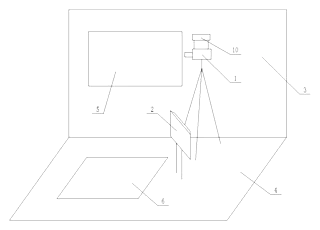
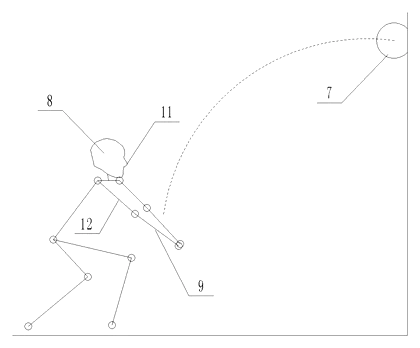
Drawings reproduced from the public patent document for reference.