
Patent CN118024178B
Updated October 31, 2026Flexible Joint Sleeve Mounting and Dismounting Tool with Quick-Release Clamping Ring
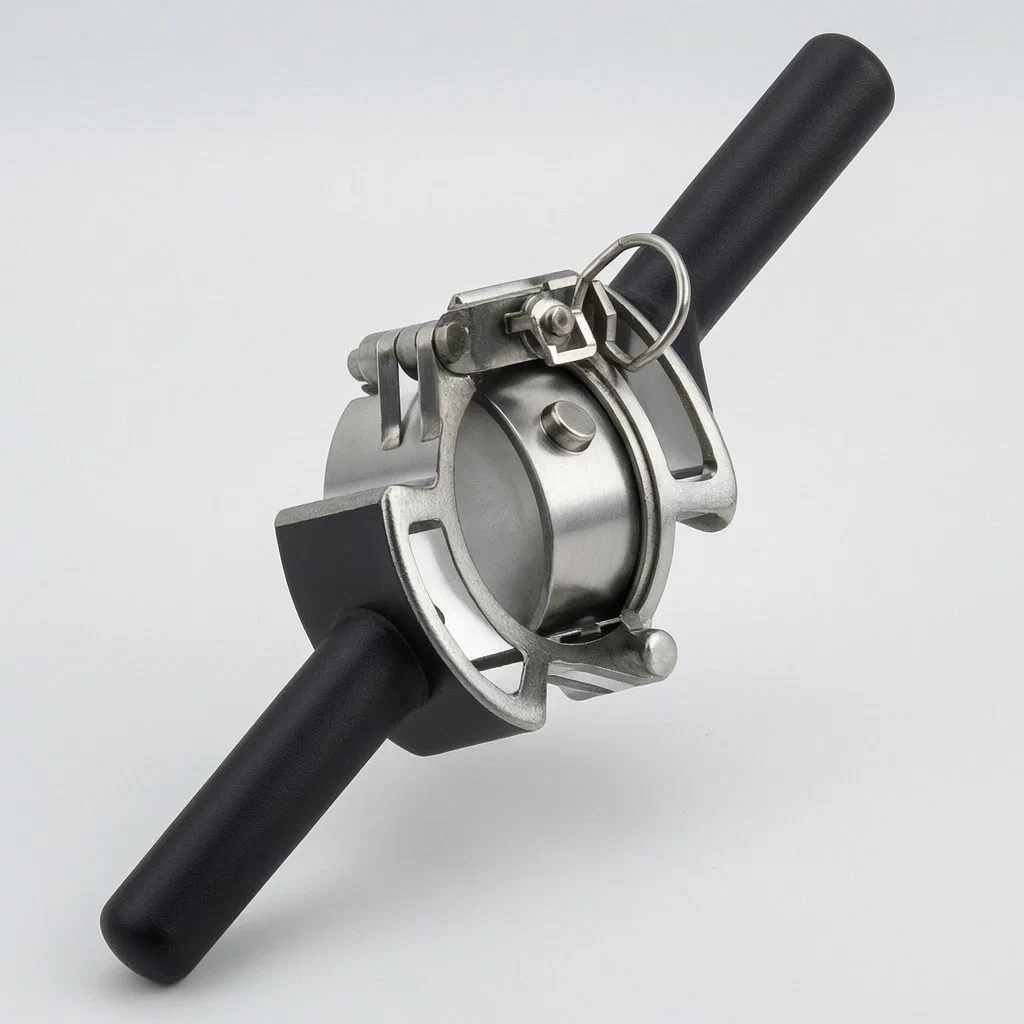
Installing or removing a flexible joint sleeve often requires awkward force application, leading to slipping tools or damaged seals. This tool solves that with a compact, split-ring design. Two semicircular halves hinge together around the sleeve, locked by a quick-release pin with a steel ball catch and a tether to keep it from falling into the machinery. Integrated handles or insertable levers allow the user to push or pull the sleeve straight along the pipe axis, ensuring safe, non-destructive assembly and disassembly in tight spaces.
- China invention patent - active
- No filings outside China
- Pipe & plumbing tools
- Steel ball lock, knurled handles, split ring
Splat! What let you down?
🔗
Quick-release lock
A stop pin with a steel ball catch closes the ring; a tether prevents losing the pin.
📐
Split ring design
Two hinged semicircles fit around existing pipes without full disassembly.
✋
Leverage points
Knurled handles insert into staggered holes for controlled push-pull force.
🛡️
Non-destructive
Annular groove grips the sleeve evenly to avoid damaging seals or surfaces.
Bring this product to market
- ✓ Patent vetted China-only family and legal status checked
- 2 Product brief · now How it works, uses and options written up
- 3 Prototype First samples for buyers to review
- 4 Pilot run Small first batch for launch customers
- 5 Volume production Repeat orders at scale
Buyer interest
– of 100 buyers needed to start prototyping
One click, no sign-up. Each vote is one real visitor, and products with the most interest go to prototyping first.
Build team: no members yet. Need a partner, co-funding or skills to build this? Join and we introduce the team once it forms.
The problem
Flexible joint sleeves are essential components in piping systems, allowing for movement and vibration absorption. However, installing or removing these sleeves can be difficult. Traditional methods often involve prying with screwdrivers or using generic pliers, which can damage the sleeve’s sealing surface or the pipe itself. In confined spaces, applying sufficient axial force is challenging, and workers risk slipping or injuring their hands if the tool fails. Furthermore, small parts like retaining pins are easily lost when dropped into complex machinery or drains.
The solution
The tool addresses these issues with a purpose-built, compact design:
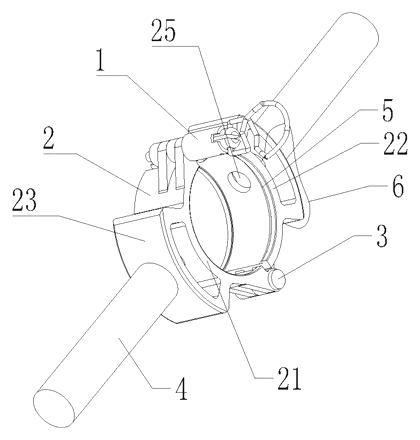
- Clamping Ring: Composed of two symmetrical semicircular ring bodies (left and right) that form a complete circle when closed. The inner circular surface has an annular clamping groove specifically shaped to fit the flexible joint sleeve.
- Hinge Mechanism: One end of the two semicircular bodies is permanently connected by a pin shaft, allowing them to open and close like a book.
- Quick-Release Closure: The opposite end is secured by a quick-release stop pin. This pin uses a steel ball clamping mode for a positive lock. To prevent loss, the pin is attached to the ring via an anti-drop fixing piece (such as a nylon rope).
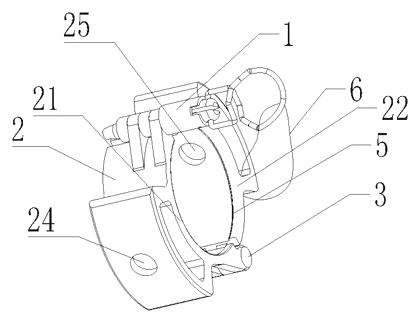
- Handle Integration: The outer sides of the semicircular bodies feature ear-shaped connecting ends. Both the main ring body and the connecting ends have through-holes (first and second through-holes) designed to accept a separate handle.
- Staggered Geometry: The hinge holes on the left and right bodies are staggered, optimizing the structural integrity and grip distribution.
Who it is for
- Plumbing and HVAC Contractors: Professionals who frequently install or replace flexible connectors in residential and commercial piping systems.
- Industrial Maintenance Teams: Technicians working in factories where machinery vibration requires regular inspection and replacement of joint sleeves.
- Tool Manufacturers: Brands looking to add specialized pipe fitting tools to their catalog for B2B sales.
- Wholesale Hardware Distributors: Suppliers targeting construction and industrial supply chains needing reliable, simple-to-use manual tools.
How it works
The main parts
| No. | Part | What it does |
|---|---|---|
| 1 | Quick-release stop pin | Locks the ring closed; steel ball catch ensures security. |
| 2 | Clamping ring | Splits into two semicircles; inner groove grips the sleeve. |
| 3 | Pin shaft | Hinges the two semicircular bodies together. |
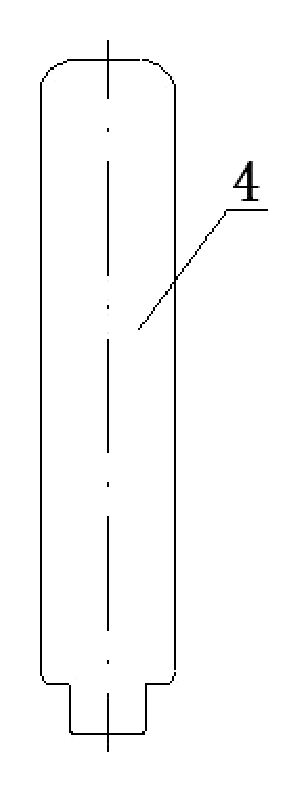
| 4 | Handle | Inserts into holes for leverage; knurled surface prevents slipping. |
| 5 | Annular clamping groove | Fits precisely over the flexible joint sleeve. |
| 6 | Anti-drop fixing piece | Tethers the stop pin to the ring to prevent loss. |
| 21, 22 | Left/Right semicircular bodies | Form the main structure; integrated for strength. |
| 23 | Connecting ends | Ear-shaped protrusions providing additional handle insertion points. |
| 24, 25 | Through holes | Allow the handle to pass through for different leverage angles. |
Operating steps
- Preparation: Select the tool size that matches the diameter of the flexible joint sleeve.
- Opening: Pull out the quick-release stop pin (it remains tethered to the ring). Open the clamping ring around the pipe/sleeve assembly.
- Closing: Wrap the two semicircular bodies around the sleeve so the sleeve sits inside the annular clamping groove. Insert the quick-release stop pin back into its hole until the steel ball locks it in place.
- Gripping: Hold the ear-shaped connecting ends directly by hand for light tasks, or insert the knurled handle through the first and second through-holes for greater leverage.
- Action: Push or pull the tool along the axis of the pipeline. The groove grips the sleeve securely, driving it onto the pipe seat (installation) or off the pipe seat (removal) without damaging the seal.
Applications
Residential Plumbing
When replacing a flexible water heater connector, this tool allows plumbers to remove the old sleeve without scratching the copper pipe or bending the new connector, ensuring a leak-free start.
Industrial Pipe Repair
In factory settings, vibrating machinery often loosens flexible joints. Maintenance crews can quickly swap sleeves on hydraulic lines using this tool, minimizing downtime because they don’t need to disconnect the entire pipe run.
Tight-Space Installation
For HVAC ducts or narrow utility chases where full wrench access is impossible, the compact split-ring design can be folded around the pipe, and the handle provides the necessary torque in confined areas.
Fleet Maintenance
Bus and truck repair shops use this for air brake system hoses. The steel-ball lock prevents the pin from dropping into engine bays, keeping the workspace clean and safe during repetitive service intervals.
Where it is less suitable
- Extremely Large Diameter Pipes: The tool is sized for standard flexible joint sleeves; very large industrial pipes may require custom-sized jacks or cranes.
- High-Torque Assembly: For sleeves requiring extreme press-fit forces beyond human leverage, powered hydraulic presses are more appropriate than manual tools.
Frequently asked questions
How does the quick-release pin stay secure?
The pin uses a steel ball clamping mode. When inserted, the steel ball snaps into a recess, holding the pin firmly in place. This prevents accidental opening during use but allows easy removal by pulling the pin.
Won’t I lose the pin?
No. The patent specifies an anti-drop fixing piece (like a nylon rope) that connects the stop pin to the clamping ring. Even when you pull the pin out to open the tool, it stays tethered to the ring, preventing it from falling into pipes or drains.
Can I use this without the handle?
Yes. The tool has ear-shaped connecting ends that can be gripped directly by hand for lighter tasks. For more force, you insert the knurled handle through the designated through-holes to act as a lever.
What sizes are available?
The patent describes a general design. Sizes are determined by the diameter of the flexible joint sleeve. You would need to specify the target sleeve sizes (e.g., 1/2 inch, 3/4 inch) for production.
Is the tool made of plastic or metal?
The clamping ring and handle are typically metal (steel or aluminum) for strength. The anti-drop tether is described as potentially nylon. Specific materials are chosen based on load requirements and corrosion resistance needs.
Why are the hinge holes staggered?
The patent notes that the hinge holes on the left and right semicircular bodies are staggered. This design choice likely improves structural alignment and ensures the ring closes tightly around the sleeve without gaps.
Can this design be made and sold in the US?
Yes. The patent was filed only in China and is active there. It has no US patent family member. Therefore, manufacturing or selling this design in the US does not infringe this patent. However, always check for other US patents in the pipe tool field before mass production.
Are you affiliated with the patent owner?
No. IP2M is an independent design and manufacturing service working from the public patent document.
Request a quote
Click Request a Quote below to see our email address - copy it, or open your email app with a ready-made message. Please mention patent CN118024178B in the subject.
Helpful details to include:
- Your company and channel (plumbing supplier, industrial distributor, tool brand)
- Target sleeve diameters (list the sizes you need)
- Handle preference (material, length, knurling style)
- Locking mechanism (confirm steel ball detent or request alternatives)
- Estimated quantity and target price
- Timeline - when you would like samples and the first shipment
You can also reach us at (332) 203-9997.
Explore this product
Interested in building this?
Tell us your target market, quantity and timeline. We reply with options for prototyping, small-batch runs or volume production.
Send your inquiry to
Please put CN118024178B in the subject line and tell us your company, country, estimated quantity and timeline.
Prefer to talk? Call (332) 203-9997.
More product-ready patents
All Tools & Workshop patents →
Tools & Workshop
Rolling Tool Box with Telescoping Step Ladder
Telescoping A-frame ladder with an attached rolling tool box that slides to your working height.
Patent CN206290197U
Tools & Workshop
Folding 3-Handle Wrench Multi-Tool
Folding three-handle wrench multi-tool with magnetic screwdriver bits, saw, file and bottle opener.
Patent CN205290875U
Tools & Workshop
Rolling Auto-Repair Tool Cabinet with Built-In Lights
Lockable rolling tool cabinet for car repair with interior lights, a lubricant tray, parts drawers and a tool bay.
Patent CN205989314U
Tools & Workshop
Wide-Opening Folding Bolt Cutter
Bolt cutter with linked, gear-meshing handles that open up to 190° and fold in half for storage.
Patent CN207206226U
Tools & Workshop
Nail-Holding Hammer with Fold-Out Drivers
Hammer with a nail-holding T-slot in the head and fold-out drivers stored in the handle.
Patent CN205254927U
Tools & Workshop
Modular Wrench with Screw-On Heads
Wrench handle with a three-way threaded hub for screw-on adjustable and hex heads, plus a pipe sleeve.
Patent CN206216564U
Browse by category
- Apparel & Accessories (23)
- Baby & Kids (18)
- Bags & Luggage (12)
- Bath & Personal Care (18)
- Car Accessories (14)
- Furniture, Bedding & Storage (13)
- Garden & Outdoor (19)
- Health & Wellness (9)
- Home, Kitchen & Cleaning (27)
- Lighting (13)
- Packaging & Containers (7)
- Pet Products (6)
- Phone & Camera Accessories (4)
- Retail Display (15)
- School, Office & Art (20)
- Sports & Recreation (26)
- Tools & Workshop (32)
- Toys & Games (13)
This page is based on the public patent document CN118024178B, assigned to Yibin Sanjiang Machinery Co Ltd. IP2M is an independent manufacturing service and is not affiliated with, endorsed by or licensed by the patent owner. Images marked as concept renderings are illustrations, not photos of an existing product. Patent status information is provided for reference only and is not legal advice; confirm freedom to operate for your market before production. Full disclaimer.