
Patent CN118129096B
Updated October 31, 2026Garden Lamp with Automatic Mosquito Net Cleaning
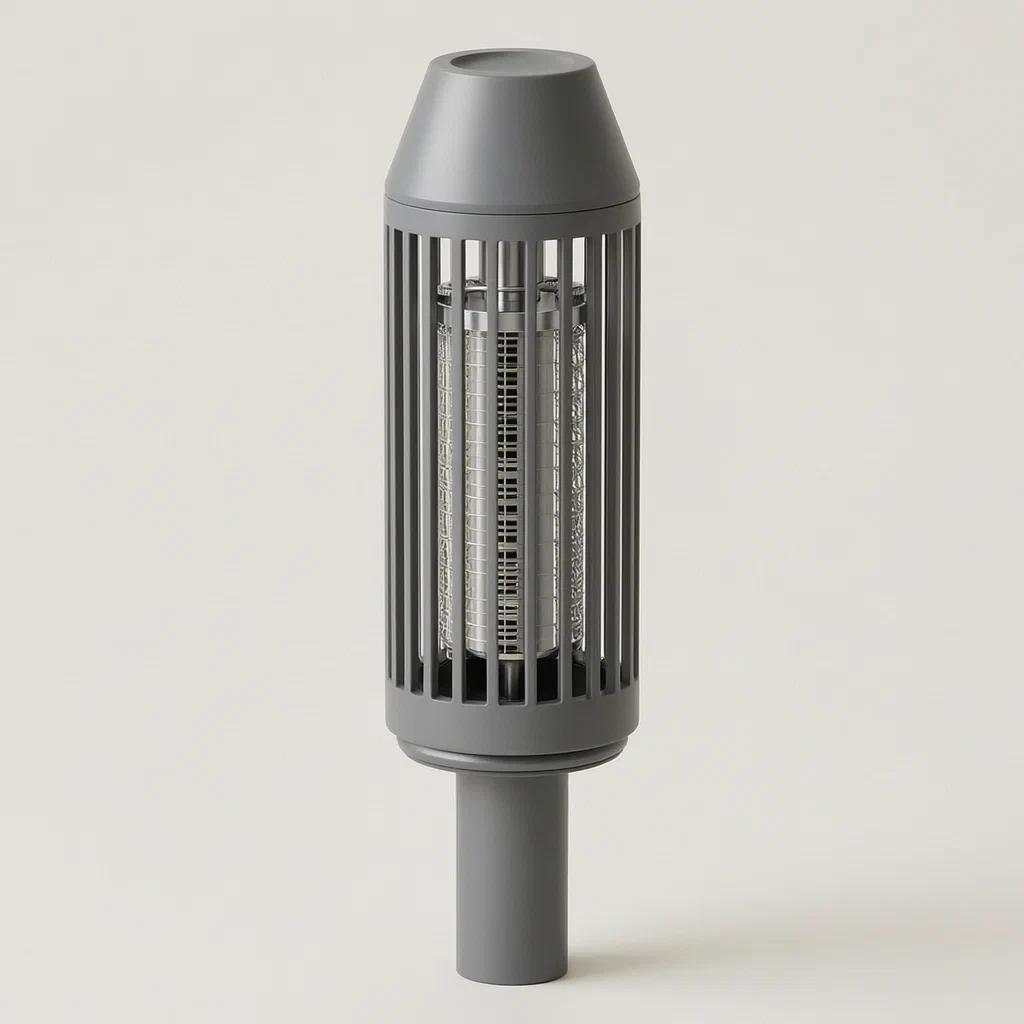
Traditional electric mosquito lamps lose effectiveness as dead insects clog the grid, requiring frequent manual cleaning that poses safety risks. This patent describes a self-cleaning mechanism where a timed motor drives gears to rotate brushes against the net's surface. The system clears adhered mosquitoes from both inside and outside, restoring the grid's active area. It also features a rotating column for applying attractants, enhancing capture rates while keeping the unit safe and efficient.
- China invention patent - in force
- No filings outside China
- Outdoor lighting & pest control
- Gear-driven auto-cleaning system
Splat! What let you down?
🧹
Auto-Cleaning Grid
Rotating brushes clear dead insects from the net, maintaining shock efficiency.
⚙️
Gear-Driven Motor
A timed motor drives a dual-gear system to rotate cleaning tools precisely.
💧
Attractant Coating
A rotating column applies liquid attractants to enhance mosquito capture.
🔌
Safety Interlock
The power grid is interrupted during cleaning cycles to prevent accidents.
Bring this product to market
- ✓ Patent vetted China-only family and legal status checked
- 2 Product brief · now How it works, uses and options written up
- 3 Prototype First samples for buyers to review
- 4 Pilot run Small first batch for launch customers
- 5 Volume production Repeat orders at scale
Buyer interest
– of 100 buyers needed to start prototyping
One click, no sign-up. Each vote is one real visitor, and products with the most interest go to prototyping first.
Build team: no members yet. Need a partner, co-funding or skills to build this? Join and we introduce the team once it forms.
The problem
Electric mosquito lamps rely on exposed grids to kill pests. Over time, dead mosquitoes and debris adhere to these grids, reducing the available surface area for new contacts. This buildup diminishes the lamp’s effectiveness, leading to fewer kills per hour. Manual cleaning is required to restore performance, but this process is often inconvenient and can pose electrical safety risks if not done carefully. Additionally, standard designs lack integrated methods to consistently apply attractants, which could otherwise improve capture rates.
The solution
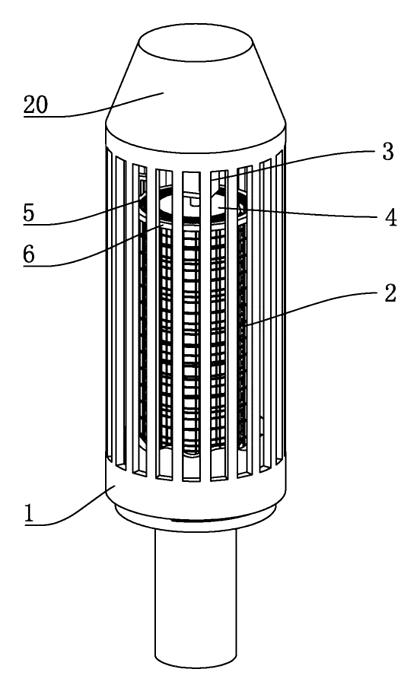
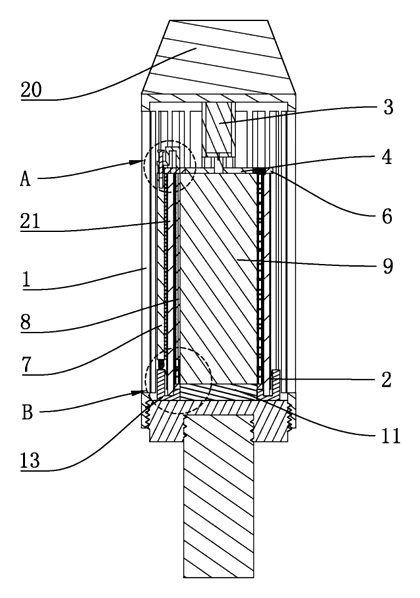
- Lamp Post Structure: The device consists of a main lamp post (1) housing an annular electric network group (2) at the bottom interior.
- Motorized Drive: A motor (3) is fixed at the top of the post, connected to a timing device. The motor’s output shaft carries a first gear (4).
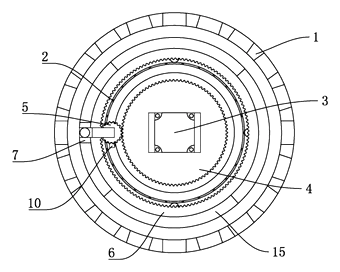
- Cleaning Mechanism: The first gear meshes with a second gear (5). Brushes are attached to the second gear: a first cleaning brush (7) on top and a second cleaning brush (8) on the bottom.
- Grid Rotation: The second gear also meshes with the inner teeth of a toothed ring (6) mounted on a fixed column (21). This arrangement allows the brushes to rotate around the grid.
- Attractant Application: A liquid coating column (9) is positioned inside the grid. A spray device (10) applies attractant to its surface. The rotation of the gear system helps distribute this liquid.
- Safety Feature: When the cleaning cycle activates, the timing device interrupts the power supply to the electric grid, ensuring the brushes operate safely without live current.
Who it is for
- Outdoor Lighting Brands: Companies looking to differentiate their garden lamps with low-maintenance features.
- Resort and Hospitality Managers: Facilities needing reliable, hands-free pest control in guest areas.
- Smart Home Integrators: Developers seeking automated solutions for outdoor environments.
- Pest Control Equipment Suppliers: Distributors offering advanced alternatives to basic UV traps.
How it works
The main parts
| No. | Part | What it does |
|---|---|---|
| 1 | Lamp Post | Main housing for all components. |
| 2 | Electric Network Group | The grid that kills mosquitoes; located at the bottom. |
| 3 | Motor | Drives the cleaning system; controlled by a timer. |
| 4, 5 | First and Second Gears | Transmit motion from the motor to the brushes and ring. |
| 6 | Toothed Ring | Fixed to the central column; guides the gear movement. |
| 7, 8 | Cleaning Brushes | Rotate to scrape debris from the outer and inner sides of the grid. |
| 9 | Liquid Coating Column | Central pillar for holding and spreading attractant. |
| 10 | Spray Device | Applies liquid attractant to the column. |
| 11, 12 | Turntable and Connecting Disc | Link the rotating column to the grid base. |
Operating steps
- Normal Operation: The electric grid is powered on to attract and kill mosquitoes entering the light zone.
- Timer Activation: After a preset period, the timing device triggers the motor.
- Power Interruption: The system cuts power to the electric grid to ensure safety during mechanical movement.
- Brush Rotation: The motor turns the first gear, which drives the second gear. The brushes rotate around the grid, scraping off accumulated debris from both inner and outer surfaces.
- Attractant Distribution: Simultaneously, the spray device releases attractant onto the coating column, and the rotation spreads it evenly.
- Reset: Once the cleaning cycle finishes, the motor stops, and the electric grid is re-energized for continued operation.
Applications
Residential Gardens
Homeowners benefit from reduced maintenance frequency, as the lamp cleans itself without requiring ladder access or manual brushing.
Commercial Patios
Restaurants and cafes use these units to maintain hygiene standards in dining areas, avoiding the unsightly appearance of clogged insect traps.
Public Parks
Municipalities deploy them in walkways and picnic zones, ensuring consistent pest control coverage across large areas with minimal staff intervention.
Agricultural Outbuildings
Farmers install them near storage sheds or livestock areas to manage mosquito populations effectively, protecting workers and animals from bites.
Where it is less suitable
- Indoor Use: The design relies on outdoor weather resistance and may be too bulky or complex for typical indoor living spaces.
- High-Wind Areas: If the mounting is not robust, strong winds could affect the stability of the rotating internal components.
- Very Low Budget Projects: The added complexity of motors and gears increases manufacturing costs compared to simple static electric zappers.
Frequently asked questions
How does the self-cleaning feature work?
A motor drives a set of gears that rotate brushes around the electric grid. The timing device activates this process periodically. The brushes scrape dead insects off both the inside and outside of the grid, restoring its surface area for better performance.
Is it safe to have moving parts near the electric grid?
Yes. The patent specifies that when the cleaning motor starts, the power supply to the electric grid is interrupted. This prevents accidental shocks. Additionally, the brush bristles are made of insulating plastic materials to further enhance safety.
Does it use chemicals to repel mosquitoes?
It uses a liquid attractant stored in a spray device. This attractant is applied to a rotating column inside the lamp to lure mosquitoes toward the grid. The patent does not specify the chemical composition of the attractant; users or manufacturers would select compliant attractants.
Can I adjust the cleaning frequency?
The system is controlled by a timing device. In custom versions, this timer can be programmed to activate the cleaning cycle at user-defined intervals, such as once every 24 hours or after a certain number of operating hours.
What happens to the debris collected?
The design includes a sliding ring with a collecting groove at the bottom. As the brushes clean the grid, debris falls into this area. The patent describes a mechanism where the fixed column interacts with this groove, potentially aiding in containment or removal, though specific disposal methods are part of the operational design.
Is this lamp suitable for indoor use?
While technically possible, it is primarily designed for outdoor garden environments. The construction focuses on weather resistance and handling larger volumes of airborne debris typical in outdoor settings. Indoor use might require modifications for noise reduction and aesthetics.
Can this design be made and sold in the US?
The patent is filed only in China and is currently in force there. It has no US counterpart, so you are not restricted by this specific patent in the US. However, other US patents may cover similar technologies in outdoor lighting or pest control. We recommend a freedom-to-operate check before mass production.
Are you affiliated with the patent owner?
No. IP2M is an independent design and manufacturing service working from the public patent document.
Request a quote
Click Request a Quote below to see our email address - copy it, or open your email app with a ready-made message. Please mention patent CN118129096B in the subject.
Helpful details to include:
- Your company and channel (outdoor lighting brand, resort supplier, hardware distributor)
- Target market (residential, commercial, municipal)
- Desired features (solar power, smart controls, specific attractant types)
- Estimated quantity and target price
- Timeline - when you would like samples and the first shipment
You can also reach us at (332) 203-9997.
Explore this product
Interested in building this?
Tell us your target market, quantity and timeline. We reply with options for prototyping, small-batch runs or volume production.
Send your inquiry to
Please put CN118129096B in the subject line and tell us your company, country, estimated quantity and timeline.
Prefer to talk? Call (332) 203-9997.
More product-ready patents
All Lighting patents →
Lighting
Wrist-Worn Flashlight with Click-Lock Angle Adjustment
Rechargeable wrist flashlight whose lamp turns and locks at an angle with a push button.
Patent CN113915544B
Lighting
Self-Folding Desk Lamp That Turns into a Phone Stand
Desk lamp with a shape-memory stem that unfolds when warm and folds into a phone stand.
Patent CN213237087U
Lighting
Ring-Shaped Outdoor Lantern That Lifts Off a Power-Bank Charging Base
Ring lantern with a battery handle that docks in a cone base with its own battery, clamp and charging plug.
Patent CN212408329U
Lighting
LED Flameless Candle with an Outside Flame Shade and Wax Dish Top
Battery LED candle: flame shade stands above a dished wax top, angled LEDs light a printed wick.
Patent CN205424561U
Lighting
Telescoping Tripod Portable Work Light with Fold-In Light Panels
Telescoping tripod work light with dual light panels that fold flat into the base.
Patent CN207298471U
Lighting
Self-Cooling and Self-Cleaning LED Street Light with Rainwater Harvesting
LED street lamp that harvests rain to cool its heat sink and spray-wash the lens automatically.
Patent CN205480639U
Browse by category
- Apparel & Accessories (23)
- Baby & Kids (18)
- Bags & Luggage (12)
- Bath & Personal Care (18)
- Car Accessories (14)
- Furniture, Bedding & Storage (13)
- Garden & Outdoor (19)
- Health & Wellness (9)
- Home, Kitchen & Cleaning (27)
- Lighting (13)
- Packaging & Containers (7)
- Pet Products (6)
- Phone & Camera Accessories (4)
- Retail Display (15)
- School, Office & Art (20)
- Sports & Recreation (26)
- Tools & Workshop (32)
- Toys & Games (13)
This page is based on the public patent document CN118129096B, assigned to Guangdong Biaosheng Optical Energy Technology Co ltd. IP2M is an independent manufacturing service and is not affiliated with, endorsed by or licensed by the patent owner. Images marked as concept renderings are illustrations, not photos of an existing product. Patent status information is provided for reference only and is not legal advice; confirm freedom to operate for your market before production. Full disclaimer.