
Patent CN118155512B
Updated October 26, 2026Lightweight LED Curtain Screen with Puncture-Contact Lamp Modules
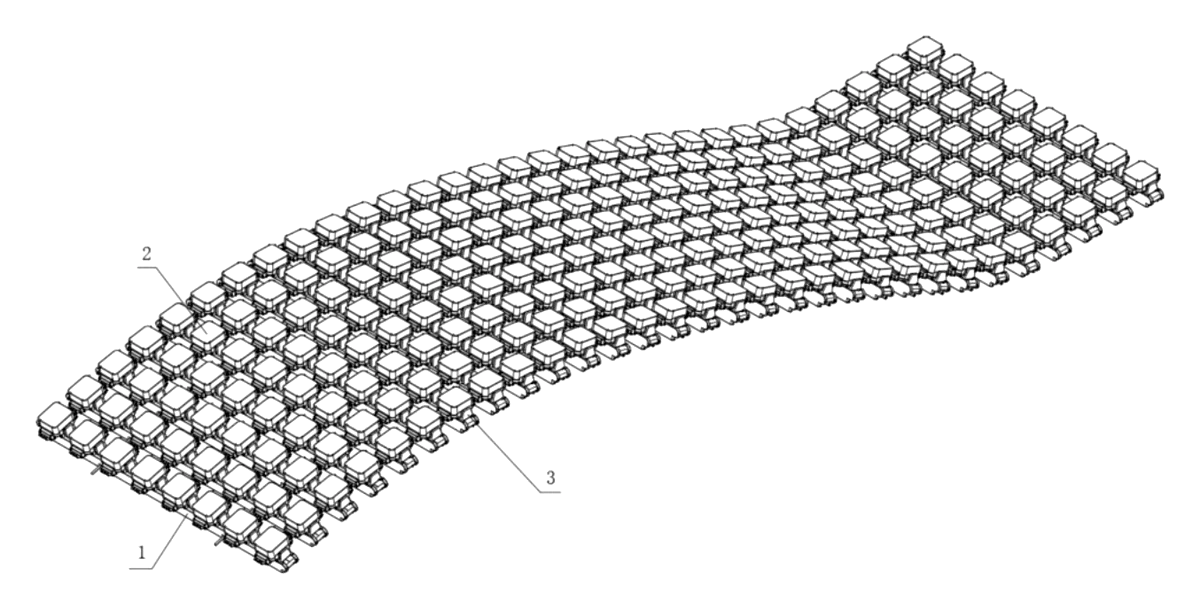
Traditional LED curtain screens require careful wiring at every node and rigid frames that add weight. This design replaces fixed frames with flexible connecting ropes threaded through limit holes in horizontal clamping strips, allowing the screen to follow curved building surfaces. Each lamp point monomer is an independent unit that clips onto the strip: a second limit groove slides over a limit column, and pressing the module down locks a fixing plate behind a stop body. Inside, a first support plate holds the LED. When the upper shell is pressed onto the lower shell, fixing columns enter third limit grooves and drive puncture copper sheets through the insulation into the wires, making electrical contact without manual soldering. A sealing ring compressed between matching arc-shaped holes, secured with screws, closes the joint against water.
- China invention patent - in force
- No filings outside China
- Signs & displays
- Clip-on lamp modules, puncture-wire contacts, rope-linked strips
Splat! What let you down?
🔗
Rope-linked strips
Connecting ropes threaded through limit holes join the clamping strips, allowing curved installations.
📎
Clip-on lamp modules
Each lamp point monomer snaps onto the strip via a stop body and fixing plate; replace one without rewiring.
⚡
Puncture-wire contact
Pressing the upper shell drives copper sheets through insulation into the wires for solder-free power delivery.
💧
Sealed housing
A sealing ring between the lower and upper shells, held by screws through arc-shaped holes, blocks water entry.
Bring this product to market
- ✓ Patent vetted China-only family and legal status checked
- 2 Product brief · now How it works, uses and options written up
- 3 Prototype First samples for buyers to review
- 4 Pilot run Small first batch for launch customers
- 5 Volume production Repeat orders at scale
Buyer interest
– of 100 buyers needed to start prototyping
One click, no sign-up. Each vote is one real visitor, and products with the most interest go to prototyping first.
Build team: no members yet. Need a partner, co-funding or skills to build this? Join and we introduce the team once it forms.
The problem
Installing large LED curtain screens on buildings usually involves rigid frames, heavy cable harnesses, and individual soldering at every lamp node. When a single pixel fails, technicians must trace wires and desolder connections to replace it. Rigid structures also struggle to follow curved facades, limiting where the screen can be mounted. The weight of traditional frames increases shipping costs and demands stronger mounting hardware on the building itself.
The solution
This curtain screen addresses those issues with three structural changes:
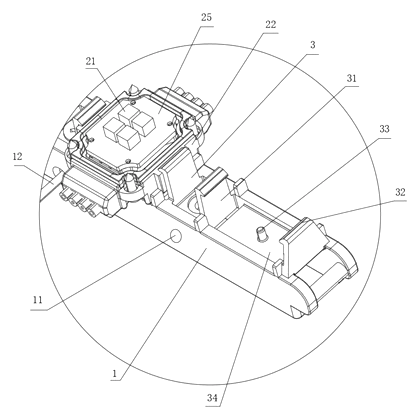
- Flexible linking. Horizontal connecting clamping strips (1) carry equidistant limit holes (11). Connecting ropes (12) thread through these holes to tie adjacent strips together. Because the ropes are flexible, the spacing between strips can be adjusted to match a curved building surface.
- Clip-on lamp modules. Each lamp point monomer (2) is an independent unit. Its lower shell (22) has a second limit groove (36) that slides over a limit column (33) in a first limit groove (34) on the strip. Pressing the module down causes a fixing plate (35) on the shell to lock behind a stop body (32) on parallel second support plates (31), holding it in place without screws.
- Solder-free wiring. Inside the lower shell, a first support plate (25) carries the LED (21). Below it, an insulating plate (43) holds puncture copper sheets (44) in placement grooves (47). Wires (42) run inside a support body (41) beneath the copper sheets. When the upper shell (23) is pressed down, its fixing columns (48) enter third limit grooves (46) and push the copper sheets through the wire insulation, contacting the conductors directly.
Who it is for
- Outdoor advertising operators who install large-format screens on commercial buildings and need faster setup with fewer wiring errors.
- Event production companies that build temporary stages and trade-show booths where screens must go up and come down repeatedly.
- Architectural lighting integrators working on curved facades or glass walls where rigid panels cannot follow the surface geometry.
- Display hardware brands looking to add a modular, lightweight curtain screen to their product catalog without developing the core structure from scratch.
How it works
The main parts
| No. | Part | What it does |
|---|---|---|
| 1 | Connecting clamping strip | Horizontal bar carrying the lamp modules; has limit holes (11) for ropes. |
| 12 | Connecting rope | Threads through limit holes to link adjacent strips flexibly. |
| 2 | Lamp point monomer | Independent LED module clipped onto the strip. |
| 21 | LED | Light source mounted on the first support plate (25). |
| 22 | Lower shell | Houses the support plate, wires and puncture mechanism. |
| 23 | Upper shell | Presses down to close the housing and drive the puncture contact. |
| 31 | Second support plates | Parallel plates on the strip that hold the stop bodies. |
| 32 | Stop body | Locks behind the fixing plate (35) to retain the module. |
| 33 | Limit column | Sits in the first limit groove (34) to guide the module. |
| 35 | Fixing plate | On the lower shell; snaps behind the stop body. |
| 43 | Insulating plate | Holds the puncture copper sheets below the support plate. |
| 44 | Puncture copper sheet | Pierces wire insulation to make electrical contact. |
| 57 | Sealing ring | Sits between the lower and upper shells to block water. |
| 54 | Screw | Passes through holes (53) in connecting blocks (51) into thread grooves (56) to compress the seal. |
Assembly steps
- Link the strips. Thread connecting ropes (12) through the limit holes (11) of adjacent connecting clamping strips (1) and fix them. Adjust the distance between strips to follow the target surface shape.
- Position the module. Align the second limit groove (36) of a lower shell (22) with the limit column (33) on the strip, and seat the shell into the first limit groove (34).
- Lock the module. Press the lamp point monomer downward. The fixing plate (35) on the shell passes the stop bodies (32) on the second support plates (31) and snaps behind them.
- Close and connect. Place the upper shell (23) over the lower shell. As the fixing columns (48) enter the third limit grooves (46), they push the insulating plate (43) so the puncture copper sheets (44) pierce the insulation around the wires (42), contacting the conductors and powering the LED (21).
- Seal the joint. Insert screws (54) through the through-holes (53) in the connecting blocks (51) into the thread grooves (56) of the connecting bodies (52). This compresses the sealing ring (57), whose mating plate (59) slides in the mating groove (58), closing the lamp point against water.
Applications
Building facade advertising
Media companies mount large screens on commercial towers. The rope-linked strips allow the display to follow curved glass or concrete surfaces without custom metal brackets, reducing installation time.
Stage and event backdrops
Concert and trade-show crews assemble temporary displays. Clip-on modules mean a damaged pixel can be swapped in seconds by unclipping one unit and snapping in another, avoiding rewiring during a live event.
Retail storefront windows
Shop owners hang transparent curtain screens behind glass. The lightweight structure puts less load on window frames, and the independent modules let the screen fit irregular window shapes.
Architectural accent lighting
Designers wrap columns or arches with light. Flexible connecting ropes permit the strips to bend around cylindrical structures while maintaining even module spacing.
Exhibition hall ceilings
Convention centers suspend overhead displays. Lower weight per square meter reduces the rigging requirements compared to solid LED panels.
Where it is less suitable
- Indoor fine-pitch video walls - boardrooms and control rooms that need very tight pixel pitch typically use solid panels rather than curtain structures.
- Permanent highway signage - road signs require specific regulatory approvals and rigid enclosures not addressed by this curtain format.
- Floor-mounted interactive displays - the clip-on housing is designed for suspended or wall-mounted use, not foot traffic loads.
Frequently asked questions
How do the lamp modules attach to the strips?
Each lamp point monomer has a lower shell with a fixing plate on its side. The connecting clamping strip has parallel second support plates with stop bodies at their upper ends. You slide the module’s second limit groove over the limit column on the strip, then press it down until the fixing plate snaps behind the stop bodies.
How is power delivered without soldering?
Wires run inside a support body in the lower shell. An insulating plate holds puncture copper sheets above them. When the upper shell is pressed onto the lower shell, fixing columns on the upper shell enter third limit grooves and push the copper sheets down so they pierce the wire insulation and touch the conductors, completing the circuit to the LED.
Can I replace a single broken module?
Yes. The patent describes each lamp point monomer as an independent structure. If one is damaged, you unclip it from the connecting clamping strip and snap a new one in its place.
How does the screen handle curved buildings?
The connecting clamping strips are joined by flexible connecting ropes threaded through limit holes. Because the ropes bend, the spacing between strips can be adjusted to follow a cambered surface rather than requiring a flat, rigid frame.
Is the module waterproof?
A sealing ring sits between the upper end of the lower shell and the lower end of the upper shell. Screws pass through connecting blocks in arc-shaped holes to compress the ring, and a mating plate slides in a mating groove to align the seal. The specific ingress protection rating is set in design and confirmed on prototypes.
What determines the screen resolution?
The limit holes on the strips are equidistantly arranged, and the lamp point monomers are placed equidistantly along the strip. The spacing between holes and between modules defines the pixel pitch, which is chosen based on the viewing distance required for the project.
Can this design be made and sold in the US?
The patent was filed only in China and is in force there until at most 2044-03-21 (if annual fees are paid). It has no US counterpart, so it does not restrict making or selling the design in the United States. However, LED display technology is widely patented; see Patent & Production for details on why a freedom-to-operate review is recommended before volume production.
Are you affiliated with the patent owner?
No. IP2M is an independent design and manufacturing service working from the public patent document.
Request a quote
Click Request a Quote below to see our email address - copy it, or open your email app with a ready-made message. Please mention patent CN118155512B in the subject.
Helpful details to include:
- Your company and channel (advertising operator, event producer, architectural integrator, display brand)
- Screen dimensions and target pixel pitch
- Installation environment (outdoor facade, indoor stage, ceiling suspension) and surface shape (flat or curved)
- Brightness and color requirements
- Estimated quantity of modules or total screen area
- Timeline - when you would like prototypes and the final installation
You can also reach us at (332) 203-9997.
Explore this product
Interested in building this?
Tell us your target market, quantity and timeline. We reply with options for prototyping, small-batch runs or volume production.
Send your inquiry to
Please put CN118155512B in the subject line and tell us your company, country, estimated quantity and timeline.
Prefer to talk? Call (332) 203-9997.
More product-ready patents
All Retail Display patents →
Retail Display
Motorized Shelf Display That Presents a Product to Shoppers
Shelf unit that lifts a product over the price rail toward shoppers when a sensor detects them.
Patent CN215077184U
Retail Display
Portable Advertising Light Box with Spinning LED Display
Portable ad box whose spinning LED bars draw images and text; content changes by wireless or USB.
Patent CN207425291U
Retail Display
Automated Folding Store Shelf That Pushes Products Up to the Customer
Double-sided shelf for unmanned stores: folding tiers, screw pushers and lift cylinders present stock.
Patent CN109645754B
Retail Display
Motorized Rotating Display Pedestal with Lift Column, Info Screen and Clip-On Display Racks
Mobile pedestal: motorized rotating cube with lit faces and racks, electric lift column and info screen.
Patent CN208875862U
Retail Display
Thin Outdoor LED Video Wall Cabinet with Magnetic Modules and Tool-Free Locks
Thin outdoor LED wall cabinet: magnetic modules and rear body, rotary locks, finned rear cooling.
Patent CN205354557U
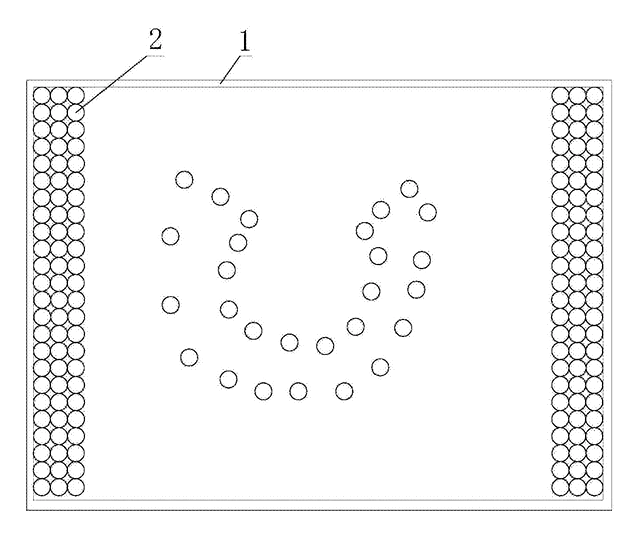
Store & Display
Magnetically Repositionable LED Advertising Panel
LED panel whose lamp beads slide to new positions via an external electromagnet.
Patent CN205487209U
Browse by category
- Apparel & Accessories (22)
- Baby & Kids (16)
- Bags & Luggage (9)
- Bath & Personal Care (16)
- Car Accessories (10)
- Furniture, Bedding & Storage (12)
- Garden & Outdoor (18)
- Health & Wellness (8)
- Home, Kitchen & Cleaning (24)
- Lighting (12)
- Packaging & Containers (6)
- Pet Products (6)
- Phone & Camera Accessories (4)
- Retail Display (13)
- School, Office & Art (19)
- Sports & Recreation (25)
- Tools & Workshop (27)
- Toys & Games (12)
This page is based on the public patent document CN118155512B, assigned to Jiangsu Hongguang Display Technology Co ltd. IP2M is an independent manufacturing service and is not affiliated with, endorsed by or licensed by the patent owner. Images marked as concept renderings are illustrations, not photos of an existing product. Patent status information is provided for reference only and is not legal advice; confirm freedom to operate for your market before production. Full disclaimer.