At a glance
| Patent number | CN118167961B (application CN202410282897) |
| Type | China invention patent (发明专利) - protects technical solution and structure |
| Original title | Desk lamp capable of adjusting light-emitting angle (一种调节出光角度的台灯) |
| Patent owner | Shenzhen Deled Led Co ltd |
| Inventors | Min Changwei, Min Xuanhaolan, Hu Aibin, Li Xiong, Tang Jinlong, Duan Xinnan, Yan Wei |
| Filing date | 2024-03-12 |
| Grant date | 2024-12-17 |
| Status (China) | In force - valid until at most 2044-03-12, provided annual fees are paid |
| Patent family | Chinese filings only - no US, European, Japanese, PCT or other filings listed |
| Cited by | 0 later documents |
| Source | Google Patents (search for CN118167961B) |
What the claims cover, in plain language
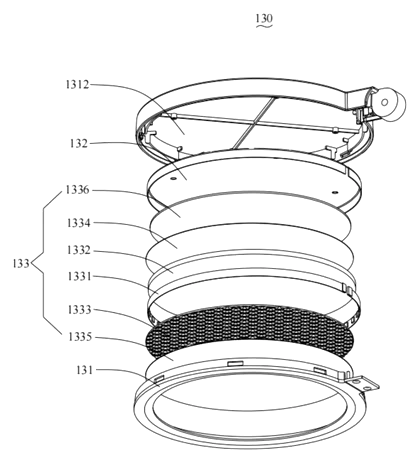
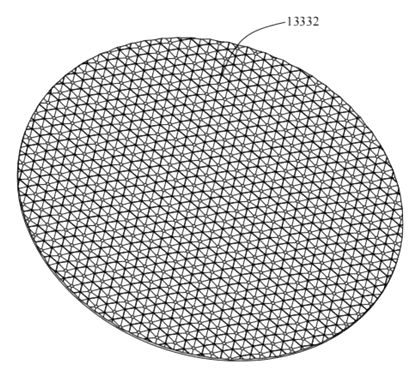
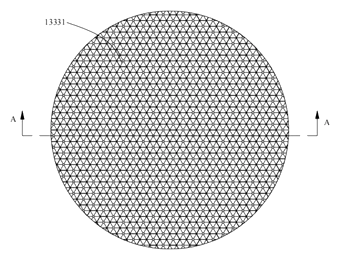
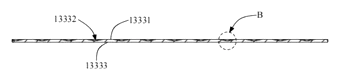
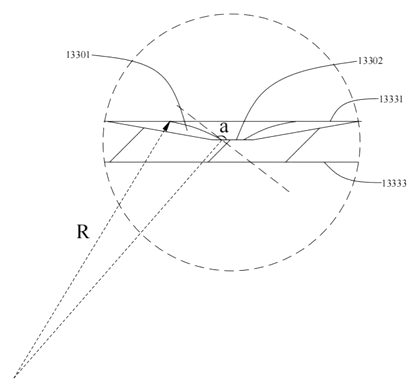
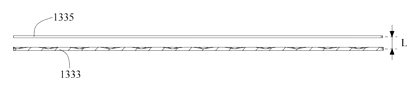
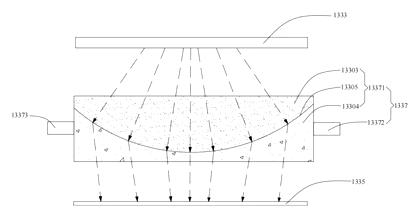
Claim 1 defines a desk lamp comprising a base, a hinged lamp post, and a lamp cap. The cap contains a housing, a sleeve, and an optical module. The module includes an annular lamp belt, a light guide plate, a reflecting film, a diffusion film, and a prism sheet. The key structural limitation is that the prism sheet is slidably connected between the light guide plate and the diffusion film. The prism sheet has arc-shaped curved side surfaces with an initial included angle of 135-175 degrees. Adjusting the distance between the prism and diffusion film changes the refraction angle of the emitted light.
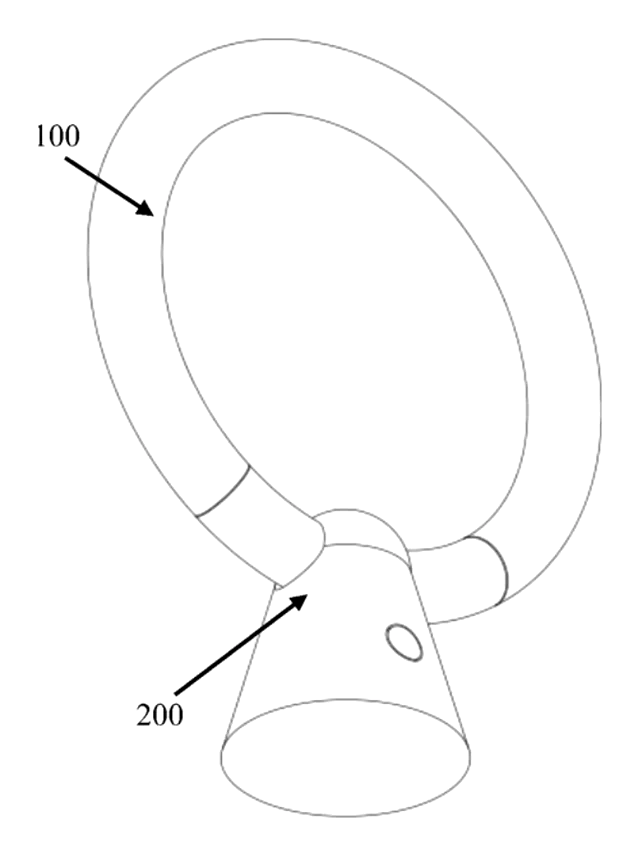
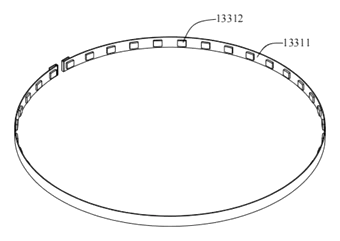
Claim 2 specifies the lamp belt as a flexible strip with spaced LED beads, forming an annulus that abuts the inner wall of the sleeve, with light entering the cylindrical guide plate radially.
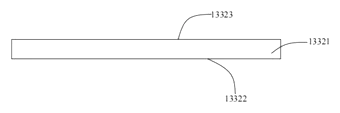
Claim 3 details the orientation: the guide plate has second and third emitting surfaces; the prism’s input face faces the second surface; the reflecting film faces the third surface to bounce light back into the guide.
Claim 4 states the reflecting film is attached to the third surface and has a radial distance greater than the guide plate.
Claim 5 adds a flexible gasket between the reflecting film and the sleeve bottom for axial support.
Claims 6-8 cover further structural details of the housing shells and attachment mechanisms.
This is a simplified reading for orientation only. The legal scope is defined by the exact claim wording in the official Chinese document.
What this means for US production
This patent was filed only in China and is currently in force. Making or selling products that infringe these claims in China requires permission from the patent owner. For production outside China, this specific patent does not restrict sales in the US or Europe.
Two points to settle early:
- Other patents may exist. Optical adjustments in LED lamps are a crowded field. While no foreign citations are listed for this specific document, major lighting companies hold broad patents on variable optics, lens positioning, and anti-glare structures. A freedom-to-operate (FTO) review is recommended before tooling to ensure your implementation of the sliding prism mechanism does not conflict with existing US utility patents.
- Mechanical Tolerance. The performance relies heavily on the precise gap distance L and the arc radius R. Manufacturing tolerances for the sliding track and prism sheet thickness must be tight to maintain the optical effect described in the claims.
Customization and manufacturing
What can be customized
| Area | Options |
|---|---|
| Beam Angle Range | Adjusted by changing the travel limit of the prism slider (e.g., 30° to 60° spread). |
| Color Temperature | Standard 2700K-6500K tunable white or single CCT options for the LED belt. |
| Material | PC or PMMA for the prism and guide plates; aluminum or ABS for the housing. |
| Control Mechanism | Manual slide knob, motorized adjustment via remote/app, or preset positions. |
| Form Factor | Diameter of the lamp head and length of the post can be scaled. |
Things to plan for (US market)
- FCC Part 15: Electronic ballasts/drivers and wireless modules (if smart-controlled) must meet EMC standards.
- UL/ETL Listing: Safety certification for electrical components is standard for US retail entry.
- ENERGY STAR: If targeting energy efficiency labels, strict lumen maintenance and power factor requirements apply.
- California Title 20: Appliance efficiency regulations may apply depending on wattage and standby power.
How a project runs
- Inquiry - Define target beam angle range, lumens, and physical dimensions.
- Design - CAD modeling of the optical stack, specifically the prism groove geometry and slider interface.
- Prototype - 3D printed housings and CNC-machined or molded optical components for light testing.
- Pilot Run - Injection mold trials for prism/guide plates; verify angle consistency across units.
- Production - Mass molding, LED assembly, driver integration, and aging tests.
Quantities & timeline
Precision injection molds for the prism sheet are critical due to the complex arc-shaped grooves. Tooling lead time typically ranges from 6-8 weeks. Optical alignment fixtures are needed for assembly to ensure the prism stays parallel to the diffusion film. Send us your target beam angles, lumens, color temperature, and estimated quantity and we will reply with options.
Patent drawings
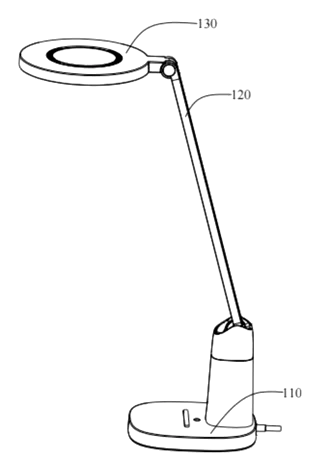
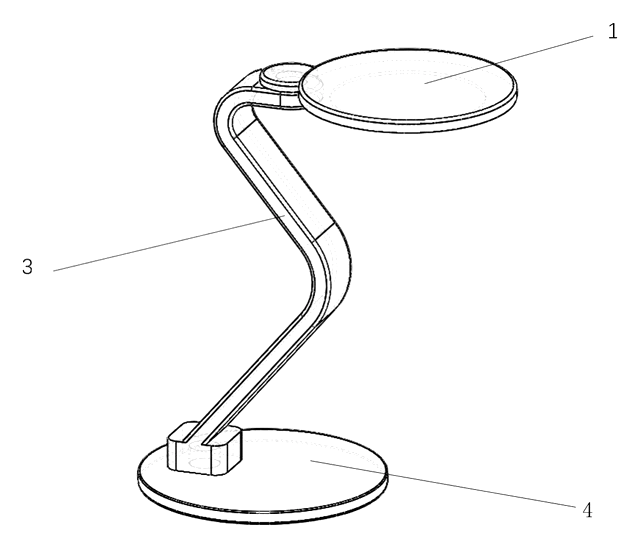
Drawings reproduced from the public patent document for reference.