At a glance
| Patent number | CN118179006B (application CN202410591736) |
| Type | China invention patent (发明专利) - protects product shape, structure and method |
| Original title | Educational jigsaw puzzle (一种益智拼图玩具) |
| Patent owner | Fujian Maestro Artware Co ltd, Shantou Maoyuan Plastic Co ltd |
| Inventors | You Zumao, Liu Pinghua, Xu Yanchuan |
| Filing date | 2024-05-14 |
| Grant date | 2024-07-05 |
| Status (China) | In force in China until at most 2044-05-14 (if annual fees are paid) |
| Patent family | Chinese filings only - no US, European, Japanese, PCT or other filings listed |
| Cited by | 0 later documents |
| Source | Google Patents (search for CN118179006B) |
What the claims cover, in plain language
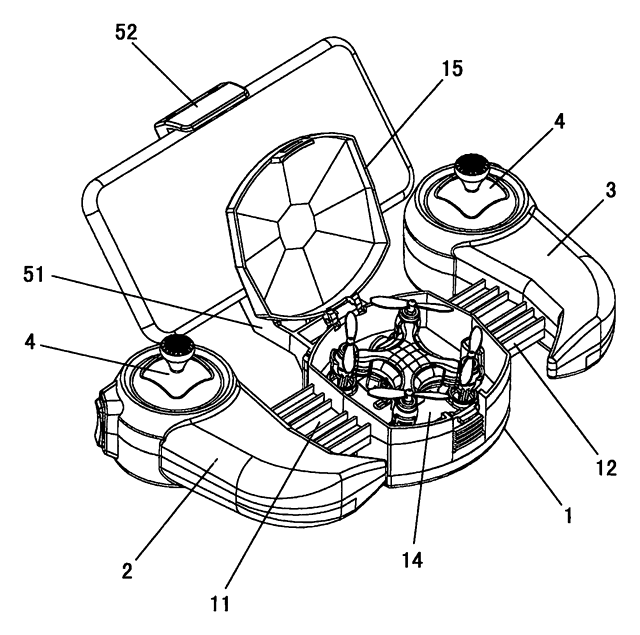
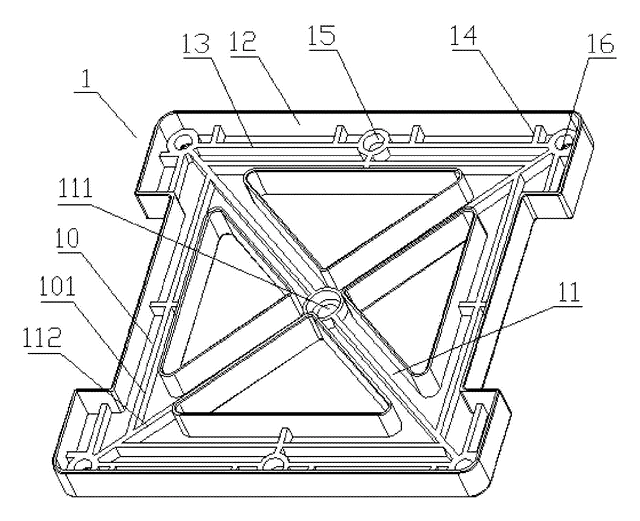
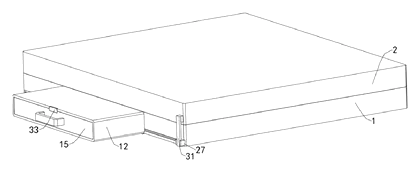
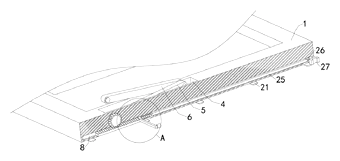
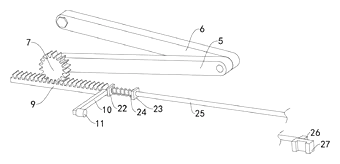
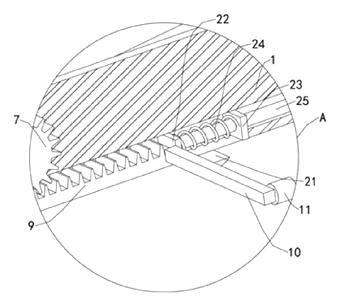
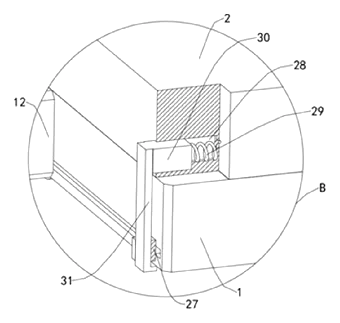
Claim 1 - an educational jigsaw puzzle comprising a first shell (1) and a second shell (2) hinged together by a hinge chain (3). Square grooves (4) at opposite ends hold a first hinge rod (5) and a second hinge rod (6). A driving mechanism inside the first shell includes a gear (7) fixed to the first hinge rod. A convex rack (9) meshed with the gear slides in a first fixed groove (8). A first moving rod (10) connects the rack to an inserting block (11) located inside a fixed box (12). A first spring (13) and push plate (14) sit inside the fixed box to push a storage box (15) outward when the inserting block leaves a slot (17) on the storage box. Additional components include a fixing plate (23), extrusion plate (22), second spring (24), second moving rod (25), first connecting block (26), fixing block (27), second fixing groove (28), third spring (29), second connecting block (30) and limiting plate (31).
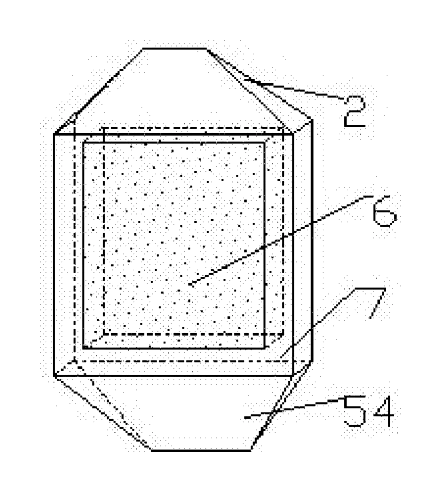
Claim 2 - a placing plate (18) is arranged in the first shell, containing a first magnet (19). Claim 3 - a second magnet (20) is fixed in the first shell, with a third magnet (21) connecting to the bottom of the placing plate. Claim 4 - multiple contact strips (34) with a coarse surface are evenly distributed on the bottom of the first shell. Claim 5 - the first and second hinge rods are longitudinally symmetrical and have an oval design. Claim 6 - a guide groove (33) is formed at the left end of the fixed box, and a baffle (32) with inclined planes is fixed on top of the storage box.
This is a simplified reading for orientation only. The legal scope is defined by the exact claim wording in the official Chinese document.
What this means for US production
This patent was filed only in China and is currently in force. Because there is no US counterpart, the patent itself does not restrict making or selling this specific design in the United States. However, making or selling it in China needs the owner’s permission while the patent remains active.
Two points to settle early:
- Other patents may exist. Mechanical toy cases and gear-driven storage mechanisms are common in the toy industry. Although no foreign patents cite this specific document, other companies may hold US or foreign patents covering similar auto-ejecting boxes or hinge-linked gear drives. We recommend a freedom-to-operate (FTO) review of the gear-and-rack release mechanism before committing to tooling.
- Piece count and box sizing. The dimensions of the storage box, the spring force required to eject it, and the gear ratio depend on the weight and volume of the puzzle pieces. These parameters must be set in design and confirmed on prototypes.
Customization and manufacturing
What can be customized
| Area | Options |
|---|---|
| Shell dimensions | Sized to fit the target piece count and assembled puzzle area |
| Plastic material | ABS, PP or other injection-molding grades for shells and gears |
| Puzzle artwork | Printed paper or film applied to the puzzle blanks |
| Piece count | Determines the depth of the storage box and the spring rating |
| Colors | Shell and storage box colors matched to brand guidelines |
| Partition layout | Shape and number of sections inside the storage box |
| Magnets | Size and pull force to be confirmed in design |
Things to plan for (US market)
- CPSC 16 CFR 1501 - small parts regulation; if marketed to children under 3, puzzle pieces must pass the small parts cylinder test.
- ASTM F963 - standard consumer safety specification for toy safety, covering mechanical hazards, sharp edges and heavy metals in surface coatings.
- CPSIA - requires third-party testing and tracking labels for children’s products sold in the US.
- California Prop 65 - plastics, paints and magnets must be screened for listed chemicals.
How a project runs
- Inquiry - target age group, piece count, shell size and quantity.
- Design - 3D modeling of the shells, hinge chain, gear, rack, springs and storage box to ensure smooth ejection and reliable locking.
- Prototype - CNC or printed samples to test the mechanical action, spring force and magnet alignment.
- Pilot run - injection mold trials, assembly of pilot units, and drop/cycle testing of the hinge and locking mechanism.
- Production - mass injection molding, printing puzzle artwork, die-cutting pieces, magnet insertion, final assembly and safety testing.
Quantities & timeline
The first and second shells require large injection molds, and the gear, rack, hinge rods and storage box need precision tooling. Die-cutting dies are needed for the puzzle pieces based on the chosen artwork. ASTM F963 and CPSIA certification tests add time before the first shipment. Send us your target age group, piece count, shell dimensions, material preferences, estimated quantity and target price and we will reply with options.
Patent drawings
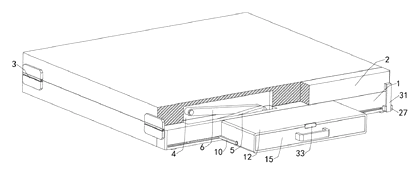
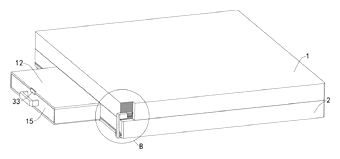
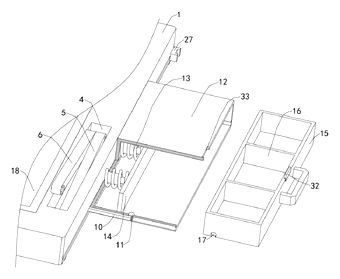
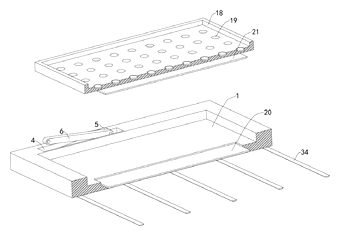
Drawings reproduced from the public patent document for reference.