At a glance
| Patent number | CN118405064B (application CN202410881364) |
| Type | China invention patent - protects product structure and method |
| Original title | Automobile luggage frame convenient to disassemble and assemble (一种便捷拆装的汽车行李架) |
| Patent owner | Changzhou Yuhang Automotive Trim Co |
| Inventors | Guo Fengli |
| Filing date | 2024-07-03 |
| Grant date | 2024-10-29 |
| Status (China) | In force - valid until at most 2044-07-03, subject to payment of annual fees |
| Patent family | Chinese filings only - no US, European, Japanese, PCT or other filings listed |
| Cited by | 0 later documents |
| Source | Google Patents (search for CN118405064B) |
What the claims cover, in plain language
Claim 1 defines a roof rack comprising two longitudinal beams and two crossbeams. The crossbeams are installed on the longitudinal beams. A reinforcing plate connects the crossbeams. Key structural elements include cassettes (clamp seats) sliding in slots at the ends of the crossbeams. These cassettes have clamping grooves matching the longitudinal beam shape. Inside each cassette, a linkage mechanism is triggered by the insertion of the longitudinal beam. This mechanism includes a power storage disc (spring-loaded), rotating rods, and gears that drive screw rods. The screw rods move clamp blocks to grip the beam. A locking mechanism on the reinforcing plate coordinates the movement of the four clamp seats, pushing them in opposite directions to center the assembly.
This is a simplified reading for orientation only. The legal scope is defined by the exact claim wording in the official Chinese document.
What this means for US production
This patent was filed only in China and is currently in force. Making or selling this specific mechanism in China would require the owner’s permission. However, since there are no US patents in this family, the technology itself is not protected by a US patent right.
Two points to settle early:
- Other patents may exist. The automotive accessory market is dense with intellectual property. Major players like Thule, Yakima, and Rhino-Rack hold numerous patents on roof rack mounting systems, including various quick-release and clamping mechanisms. A freedom-to-operate (FTO) review is essential to ensure your specific implementation does not infringe on existing US patents in the field of roof rack attachment devices.
- Material Durability. The linkage mechanism relies on moving parts (gears, springs, screws) exposed to weather. Material selection for these components must account for UV resistance, corrosion protection, and temperature fluctuations typical in outdoor automotive use.
Customization and manufacturing
What can be customized
| Area | Options |
|---|---|
| Beam Dimensions | Width and height of longitudinal/cross beams to match specific vehicle models. |
| Load Capacity | Adjust steel thickness and material grade (aluminum vs. steel) for different weight ratings. |
| Finish | Powder coating colors, anodized aluminum finishes, or protective rubber seals. |
| Locking Type | Integration of padlock holes or keyed locks for theft prevention. |
| Compatibility | Adapters for different roof rail profiles (flush, raised, or bare roof). |
Things to plan for (US market)
- SAE J1200 / FMVSS: While there is no single federal regulation specifically for aftermarket roof racks, they must not obstruct visibility or violate general safety standards. Ensure sharp edges are covered.
- Corrosion Resistance: ASTM B117 salt spray testing is commonly requested by buyers to verify finish durability against road salts and moisture.
- Weight Rating Documentation: Provide clear static and dynamic load limits based on engineering calculations or third-party testing (e.g., SAE J1200 equivalent tests).
How a project runs
- Inquiry - Define target vehicle compatibility, load requirements, and aesthetic preferences.
- Design - Finalize the linkage geometry, select materials for the spring and gear components, and design mold cavities.
- Prototype - Create functional prototypes to test the auto-centering force and locking reliability under vibration.
- Pilot Run - Small batch production for quality control checks on assembly tolerances and finish consistency.
- Production - Full-scale manufacturing, including injection molding for plastic parts, extrusion for beams, and assembly lines.
Quantities & timeline
The complex linkage mechanism requires precision molds for the gear assemblies and spring housings. Metal beams may require CNC machining or extrusion dies depending on volume. Certification testing for load capacity and environmental resistance should be scheduled early. Send us your target vehicle models, load specifications, desired finish, estimated quantity and we will reply with options.
Patent drawings
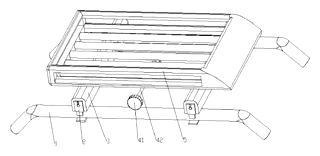
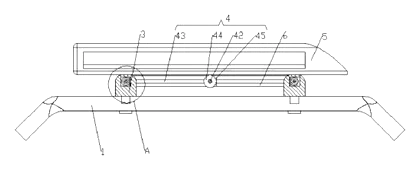
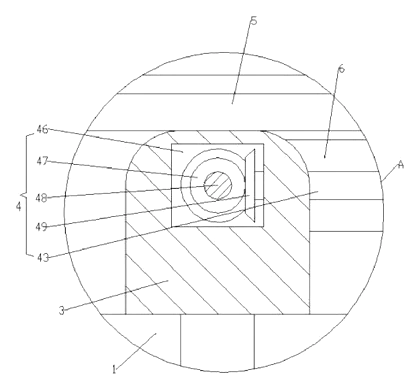
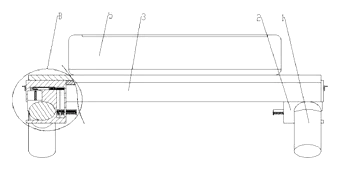
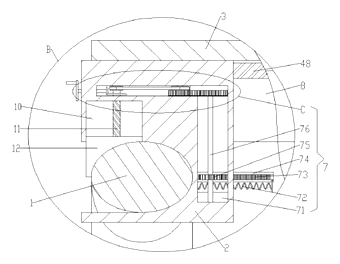
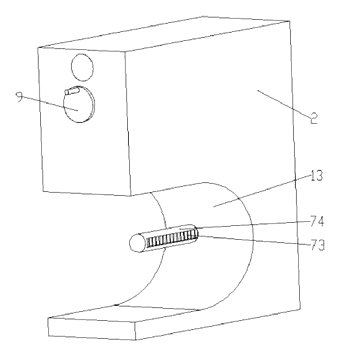
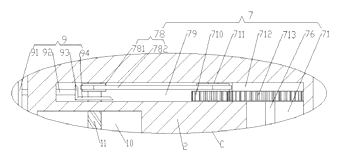
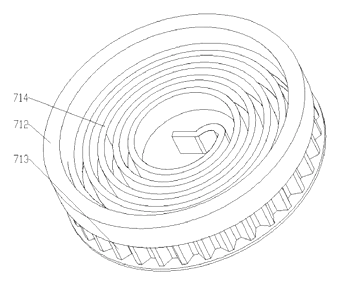
Drawings reproduced from the public patent document for reference.