
Patent CN118415089B
Updated October 27, 2026Automatic Cleaning Rodent Rearing Cage with Carousel Tray System
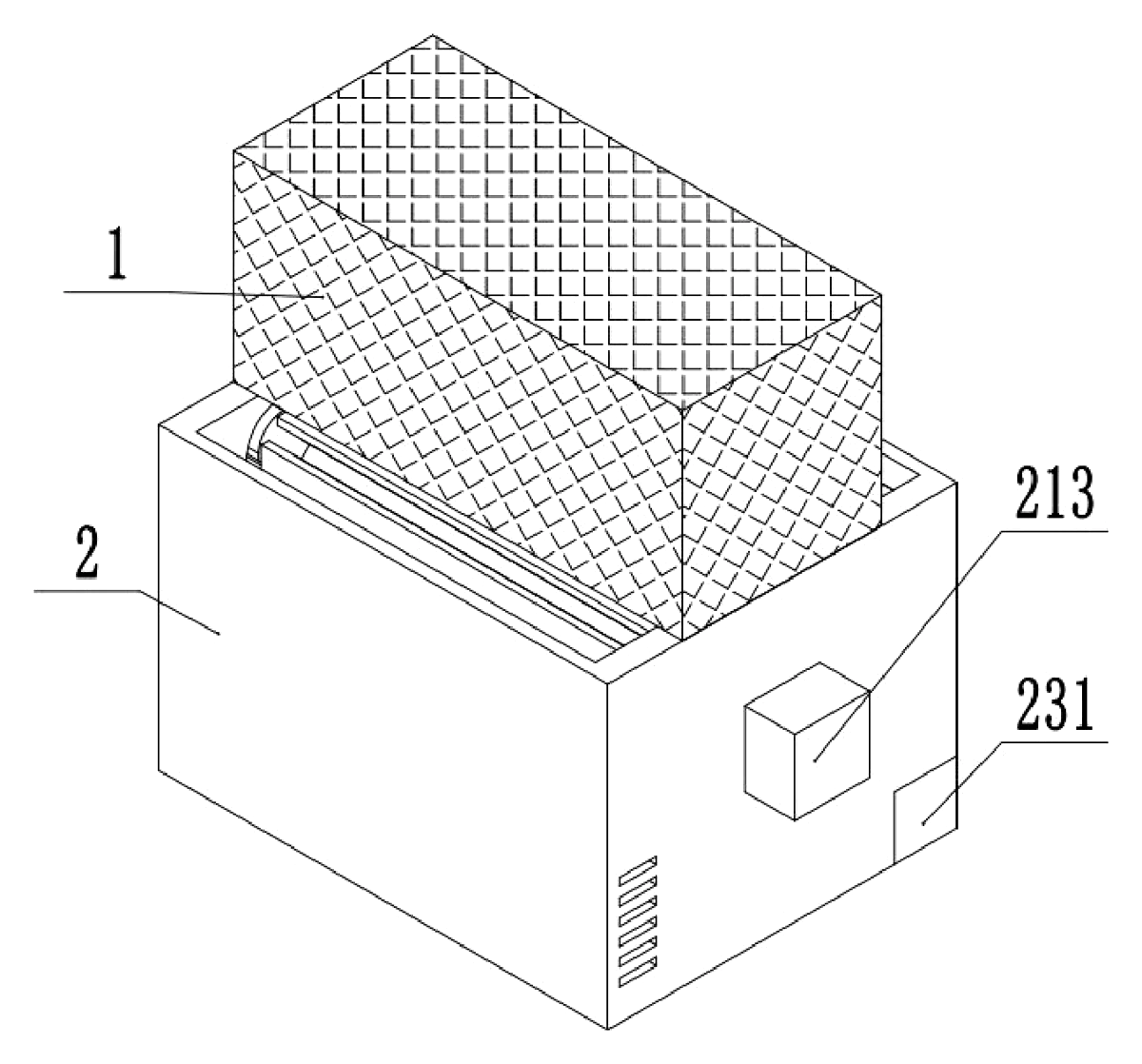
Keeping rodent cages clean usually means pulling out soiled trays by hand, scrubbing them, and putting them back in. This design removes that step. The cage body rests on a cleaning box that holds a ring of trays on an annular slide rail. A motor-driven carousel rotates each tray in sequence through four stations: a receiving area under the cage, a washing station with a moving brush and spray nozzle, a sterilizing zone lit by an ultraviolet lamp, and a drying section with ventilation holes for a fan. The drive box uses a continuous disk and an intermittent disk to advance the trays one position at a time, while also powering the cleaning mechanism through a chain of sprockets, a sliding shaft and a ball screw. Because the trays circulate inside the box, there is no need to manually swap them during the feeding period.
- China invention patent - in force
- No filings outside China
- Laboratory & pet rodent housing
- Motor-driven carousel, UV lamp, water spray and fan drying
Splat! What let you down?
🔄
Carousel tray rotation
An intermittent disk and continuous disk step the trays through receiving, cleaning, sterilizing and drying stations.
🧹
Automated washing
A ball-screw-driven slider moves a spray nozzle and a brush across the tray surface.
💡
UV sterilization
An ultraviolet lamp at the bottom of the cleaning box treats each tray as it passes the sterilizing part.
💨
Fan-assisted drying
Ventilation holes on the drying section wall allow a connected fan to dry the washed tray.
Bring this product to market
- ✓ Patent vetted China-only family and legal status checked
- 2 Product brief · now How it works, uses and options written up
- 3 Prototype First samples for buyers to review
- 4 Pilot run Small first batch for launch customers
- 5 Volume production Repeat orders at scale
Buyer interest
– of 100 buyers needed to start prototyping
One click, no sign-up. Each vote is one real visitor, and products with the most interest go to prototyping first.
Build team: no members yet. Need a partner, co-funding or skills to build this? Join and we introduce the team once it forms.
The problem
Maintaining rodent enclosures requires frequent tray changes to remove excreta. In facilities with many cages, staff spend considerable time pulling out dirty trays, washing them, drying them and sliding them back into place. If trays are not changed often enough, waste builds up, creating odor and sanitation issues that affect the animals’ living conditions. Manual handling also increases the chance of disturbing the rodents during their feeding period.
The solution
This patent describes a cage system that automates the entire tray-handling cycle.
- The cage body (1) sits directly on top of a cleaning box (2). Inside the cleaning box, an annular slide rail guides a set of trays (3) arranged in a circle.
- A drive box (213) mounted on one side of the cleaning box houses a motor that turns a continuous disk (210). A continuous rod (211) on this disk engages intermittent rods (209) fixed to an intermittent disk (208), advancing the carousel one step at a time.
- As the carousel steps, each tray moves sequentially through four zones: a receiving part beneath the cage, a cleaning part, a sterilizing part and a drying part.
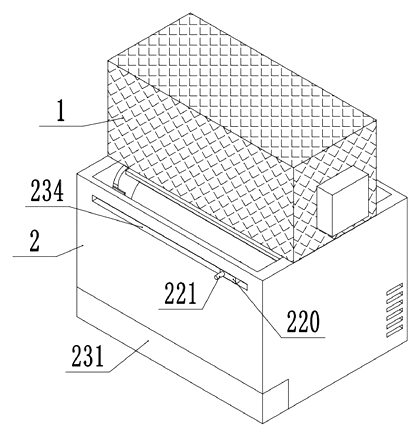
- The cleaning part uses a nozzle (221) connected to a water supply and a cleaning brush (225). Both are mounted on a slider (220) that travels along a screw rod (219) via a ball screw pair.
- The sterilizing part relies on an ultraviolet lamp (232) positioned at the bottom of the cleaning box to treat the tray rotated into that zone.
- The drying part features ventilation holes (233) on one wall surface, which connect to a fan to dry the tray before it returns under the cage.
Who it is for
- Laboratory animal equipment manufacturers supplying research facilities that house mice or rats and need automated sanitation to reduce technician workload.
- Pet product brands developing advanced rodent habitats for retail sale, offering owners a self-maintaining enclosure.
- University and agricultural research centers running long-term rodent breeding programs where consistent hygiene supports study parameters.
- Contract manufacturers for veterinary suppliers looking for a mechanical platform to build upon for professional animal-housing lines.
How it works
The main parts
| No. | Part | What it does |
|---|---|---|
| 1 | Cage body | Holds the rodents; includes doors, feeders and water kettles at each cage position. |
| 2 | Cleaning box | Houses the annular slide rail and the four processing stations. |
| 3 | Trays | Receive excreta; rotate through the cleaning box on the carousel. |
| 208 | Intermittent disk | Carries four intermittent rods to receive motion from the continuous disk. |
| 210 | Continuous disk | Driven by the motor; its continuous rod pushes the intermittent rods to step the carousel. |
| 213 | Drive box | Encloses the disks and the motor, fixed to the side of the cleaning box. |
| 219 | Screw rod | Forms a ball screw pair with the slider to move the cleaning mechanism. |
| 220 | Slider | Carries the nozzle and brush; slides through a through groove (234) in the cleaning box. |
| 221 | Nozzle | Sprays water onto the tray when connected to the water supply. |
| 225 | Cleaning brush | Rotatably connected to the slider to scrub the tray. |
| 232 | Ultraviolet lamp | Mounted at the bottom of the cleaning box to sterilize the tray. |
| 233 | Ventilation holes | Allow air from a connected fan to dry the tray in the drying part. |
Operating steps
- Receiving - Excreta falls from the cage body onto the tray currently positioned in the receiving part.
- Indexing - The motor in the drive box turns the continuous disk. Its continuous rod pushes one of the four intermittent rods, rotating the intermittent disk and stepping the carousel forward by one tray position.
- Washing - The start-stop assembly engages the screw rod. The slider moves along the through groove, carrying the nozzle and the cleaning brush across the tray. The swing sprockets and intermittent racks convert the linear travel into a brushing action. Water sprays from the nozzle to wash away waste.
- Sterilizing - The next index step places the washed tray over the ultraviolet lamp at the bottom of the cleaning box.
- Drying - Another step moves the tray to the drying part, where a fan blows air through the ventilation holes to dry the surface.
- Return - The clean, dry tray indexes back to the receiving part under the cage body.
Applications
Research laboratories
Facilities maintaining large colonies of mice require strict sanitation protocols. Technicians can rely on the automated cycle instead of manually swapping trays between dozens of cages, saving time during daily checks.
University breeding rooms
Agricultural and biological departments running long-term rodent studies benefit from consistent tray hygiene. The fixed-point feeders and water kettles at each cage position keep feeding schedules intact while the cleaning box operates below.
Specialty pet retail
Brands targeting rodent enthusiasts can offer an enclosure that manages waste without owner intervention. The sealed cleaning box keeps the washing and drying mechanisms out of sight, reducing noise and visual clutter in a home setting.
Veterinary quarantine units
When isolating rodents for observation, minimizing human contact with waste lowers cross-contamination risks. The UV lamp and enclosed washing path handle sanitation within the unit itself.
Where it is less suitable
- Large livestock or non-rodent animals - the carousel dimensions and tray sizes described are built for murine subjects.
- Outdoor field enclosures - the motor, UV lamp and water supply connections require a controlled indoor environment with power access.
- Disposable-tray operations - facilities that prefer single-use liners rather than washing reusable trays will not use the cleaning mechanism.
Frequently asked questions
How do the trays move without a belt?
The drive box uses a motor to turn a continuous disk. A rod on that disk pushes against one of four rods on an intermittent disk, rotating the carousel exactly one tray position per cycle. This Geneva-style mechanism steps the trays around the annular slide rail.
What cleans the trays?
A nozzle sprays water onto the tray while a cleaning brush scrubs it. The brush and nozzle are mounted on a slider that travels along a screw rod. Swing sprockets and intermittent racks convert the slider’s movement into the brushing action.
How does the sterilization work?
An ultraviolet lamp is mounted at the bottom of the cleaning box. When the carousel steps a washed tray into the sterilizing part, the lamp exposes its underside to UV light.
How are the trays dried?
The drying part of the cleaning box has ventilation holes in its wall. A fan connects to these holes to blow air across the tray after it leaves the sterilizing zone.
Do I still need to refill food and water manually?
Yes. The patent describes a feeder capable of feeding at fixed points and a water kettle at each cage position on the cage body. These are filled separately from the automated tray cycle.
How is the brush motor started and stopped?
A start-stop assembly links the cleaning mechanism to the drive box. It uses cleaning sprockets, a sliding shaft with a spline, a permanent magnet, a shaft spring and a shaft electromagnet. Limit plates and push rods engage the mechanism only when a tray is in the correct position.
Can this design be made and sold in the US?
The patent was filed only in China and is in force in China until at most 2044-07-05 (if annual fees are paid). It does not restrict making or selling the design in the US. However, automated animal enclosures may be covered by other US patents - see Patent & Production - so we recommend a freedom-to-operate check before volume production.
Are you affiliated with the patent owner?
No. IP2M is an independent design and manufacturing service working from the public patent document.
Request a quote
Click Request a Quote below to see our email address - copy it, or open your email app with a ready-made message. Please mention patent CN118415089B in the subject.
Helpful details to include:
- Your company and channel (laboratory equipment brand, pet product distributor, research facility)
- Target animal and approximate cage dimensions
- Number of cage positions per unit
- Power supply voltage and plug type for your market
- Estimated quantity and target price
- Timeline - when you would like prototypes and the first shipment
You can also reach us at (332) 203-9997.
Explore this product
Interested in building this?
Tell us your target market, quantity and timeline. We reply with options for prototyping, small-batch runs or volume production.
Send your inquiry to
Please put CN118415089B in the subject line and tell us your company, country, estimated quantity and timeline.
Prefer to talk? Call (332) 203-9997.
More product-ready patents
All Pet Products patents →
Pet Products
Multi-Pet Fountain Water Dispenser
Round pet fountain with a central flower spray head - several pets drink from any side; water is filtered and circulated.
Patent CN207870035U
Pet Products
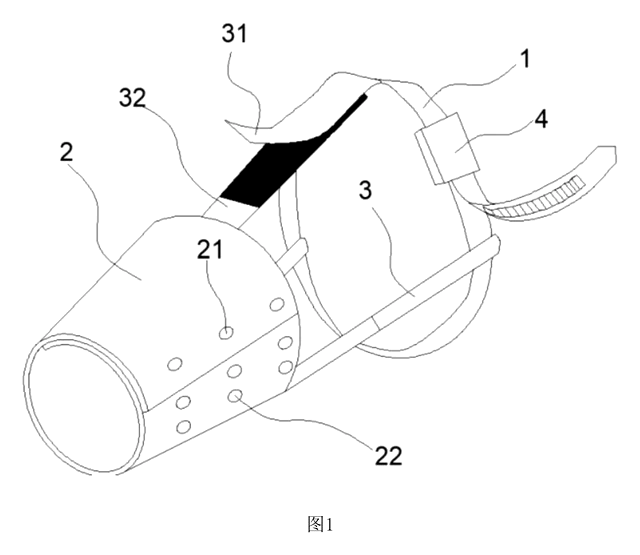
Adjustable Snap-Fit Animal Muzzle
Soft muzzle with snap-adjustable snout sleeve, ratchet neck strap and detachable connecting straps.
Patent CN208523497U
Pet Products
Wireless-Powered Aquarium with Internal Induction Receiver
Aquarium using electromagnetic induction to power internal lights and pumps without pass-through wires.
Patent CN206324044U
Pet Products
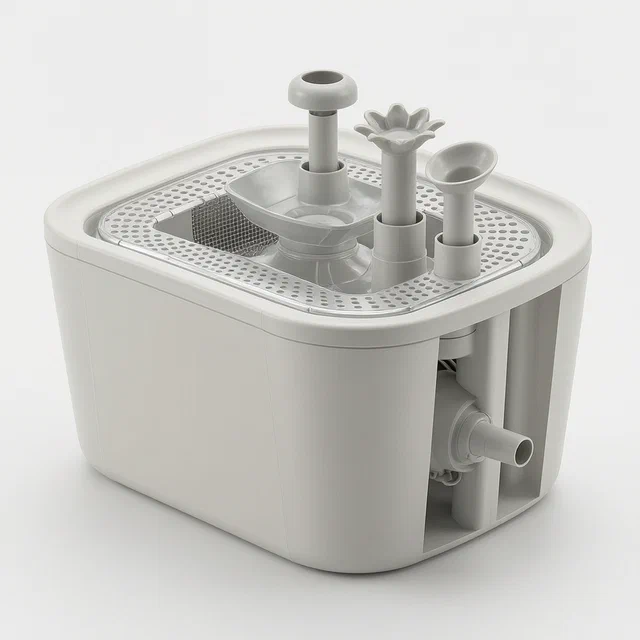
Automatic Pet Drinking Fountain with Interchangeable Water Outlet Heads
Pet fountain with a pressurized pump and swappable shower heads for multiple water flow patterns.
Patent CN207803161U
Pet Products
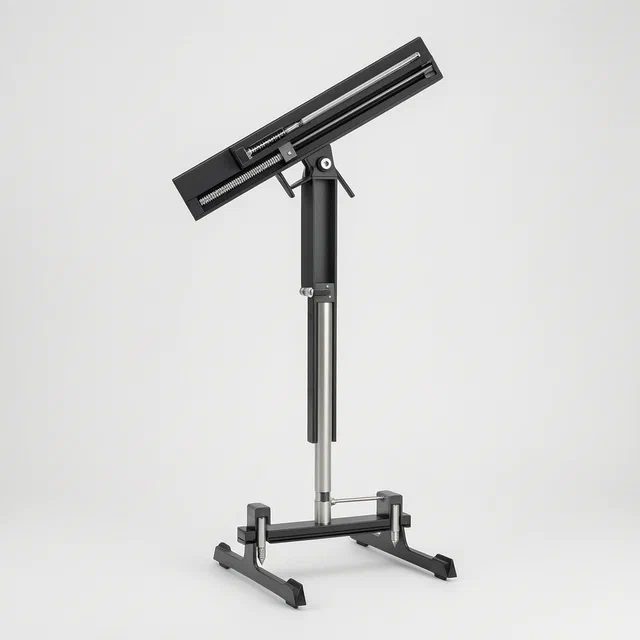
Mechanical Flying Disc Launcher for Pet Dog Training
Spring-loaded flying disc launcher for dogs with adjustable height, angle, and folding base.
Patent CN118614420B
Apparel, Footwear & Accessories
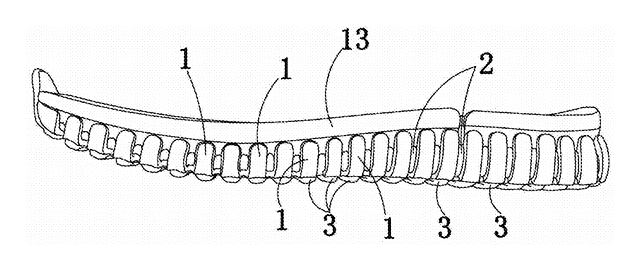
Resilient Support Sole with L-Shaped TPU Supporters and Ribbed Outsole
Athletic sole with L-shaped TPU supporters for shock absorption and a ribbed outsole for drainage.
Patent CN105686206B
Browse by category
- Apparel & Accessories (22)
- Baby & Kids (16)
- Bags & Luggage (9)
- Bath & Personal Care (16)
- Car Accessories (10)
- Furniture, Bedding & Storage (12)
- Garden & Outdoor (18)
- Health & Wellness (8)
- Home, Kitchen & Cleaning (24)
- Lighting (12)
- Packaging & Containers (6)
- Pet Products (6)
- Phone & Camera Accessories (4)
- Retail Display (13)
- School, Office & Art (19)
- Sports & Recreation (25)
- Tools & Workshop (27)
- Toys & Games (12)
This page is based on the public patent document CN118415089B, assigned to Inner Mongolia Agricultural University. IP2M is an independent manufacturing service and is not affiliated with, endorsed by or licensed by the patent owner. Images marked as concept renderings are illustrations, not photos of an existing product. Patent status information is provided for reference only and is not legal advice; confirm freedom to operate for your market before production. Full disclaimer.