At a glance
| Patent number | CN118415089B (application CN202410896210) |
| Type | China invention patent (发明专利) - protects product shape, structure and method |
| Original title | Murine rearing cage with automatic clearance function (一种具有自动清理功能的鼠类饲养笼) |
| Patent owner | Inner Mongolia Agricultural University |
| Inventors | Zhu Na, Yuan Shuai, Li Xin, Fu Heping, Wu Xiaodong, Ji Yanhua, Zhao Shengguo, Ma Chongyong, Shan Yanmin |
| Filing date | 2024-07-05 |
| Grant date | 2024-10-08 |
| Status (China) | In force in China until at most 2044-07-05 (if annual fees are paid) |
| Patent family | Chinese filings only - no US, European, Japanese, PCT or other filings listed |
| Cited by | 0 later documents |
| Source | Google Patents (search for CN118415089B) |
What the claims cover, in plain language
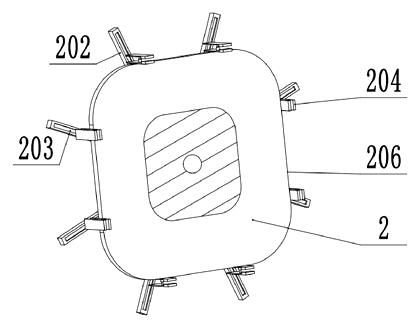
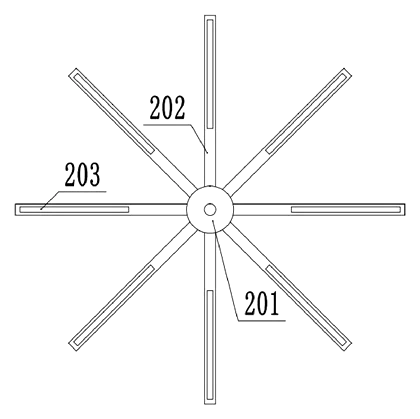
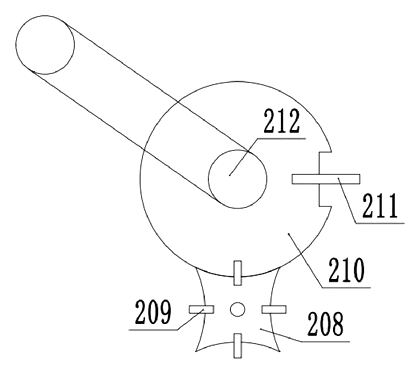
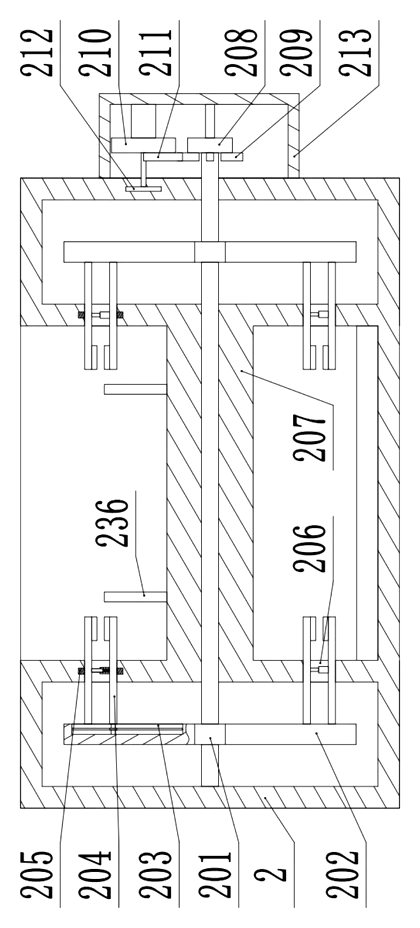
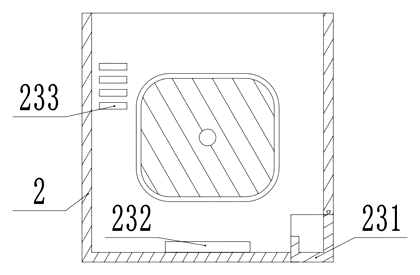
Claim 1 - a rodent breeding cage with a cage body, a cleaning box and trays. The cleaning box contains a receiving part, a cleaning part, a sterilizing part and a drying part. An annular slide rail holds the trays, with the cleaning part and drying part on two sides. A carousel assembly is driven by a drive box fixed to one side of the cleaning box. Inside the drive box, a motor turns a continuous disk; a continuous rod on it pushes intermittent rods on an intermittent disk to step the carousel. The drive box also drives the cleaning mechanism.
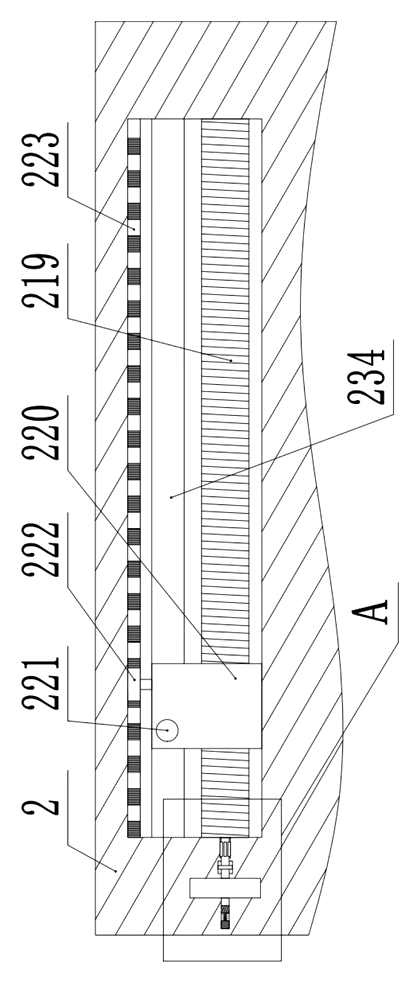
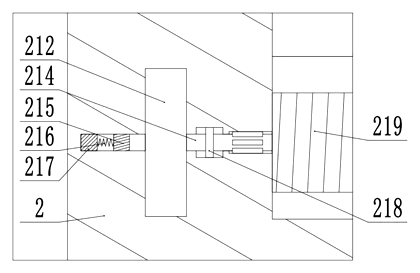
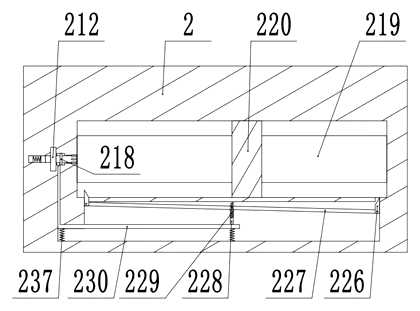
Claim 2 - an ultraviolet lamp is arranged at the bottom of the cleaning box to sterilize the tray rotated to the sterilizing part. Claim 3 - ventilation holes are arranged on the wall surface of the drying part, connectable to a fan to dry the tray. Claim 4 - the cleaning mechanism comprises a nozzle connected to a water supply and a cleaning brush. The nozzle is fixed on a slider rotatably connected to the brush. The slider cooperates with a ball screw pair on a screw rod controlled by a start-stop assembly. The brush connects via a shaft to a swing sprocket; two swing sprockets rotate synchronously through a chain, with one connected to a swing gear flanked by two intermittent racks with staggered teeth. The slider moves through a through groove in the cleaning box. Claim 5 - the start-stop assembly includes cleaning sprockets linked by a chain. One sprocket is fixed to the continuous disk; the other drives a sliding shaft through a spline. The sliding shaft connects to a permanent magnet and a shaft spring, which attaches to a shaft electromagnet fixed in the cleaning box. A limit plate on the sliding shaft contacts an L-shaped limit rod, which pushes a push rod hinged to a push block swing rod and push blocks.
This is a simplified reading for orientation only. The legal scope is defined by the exact claim wording in the official Chinese document.
What this means for US production
This patent was filed only in China and is in force in China until at most 2044-07-05 (if annual fees are paid). It has no US or other foreign counterpart. Making or selling this specific carousel-cage design in China needs the owner’s permission while the patent remains in force.
Two points to settle early:
- Other patents may exist. Automated animal housing and self-cleaning litter systems are patented fields in the US and Europe. Although no foreign patents cite this Chinese document, competitors hold earlier and parallel patents on rotating waste trays and UV-treatment enclosures, so a freedom-to-operate (FTO) review covering the carousel indexing and the brush-drive linkage is needed before tooling.
- Water and electrical integration. The combination of a water-spraying nozzle, a motor, a UV lamp and a fan inside a single box requires careful sealing and component layout to meet safety standards.
Customization and manufacturing
What can be customized
| Area | Options |
|---|---|
| Cage dimensions | Overall footprint and height to be confirmed in design based on target species |
| Number of trays | Quantity around the annular slide rail set in design to match the desired change frequency |
| Materials | Plastics or coated metals for the cleaning box; tray material chosen for brush wear resistance |
| UV lamp | Wavelength and power to be confirmed in design |
| Feeder and kettle | Capacity and mounting style per cage position set in design |
| Control interface | Manual switches or programmable timers for the motor and start-stop assembly |
Things to plan for (US market)
- UL 60335-1 / UL 60335-2-xx - household and similar electrical appliances safety standards apply because the unit combines a motor, water pump, heating or fan elements and a UV lamp.
- FCC Part 15 - the motor controller and any electronic timers emit radio frequency energy and must comply if sold in the US.
- FDA 21 CFR - if the device is marketed for laboratory animals used in food or drug research, materials contacting the animals or water may face scrutiny.
- California Prop 65 - plastics, solder and coatings must be screened for listed substances.
How a project runs
- Inquiry - target animal size, number of cage positions, power supply and quantity.
- Design - CAD layout of the cleaning box, annular rail diameter, drive box gearing, tray count and sealing for the water zone.
- Prototype - 3D-printed or machined samples to test the intermittent disk stepping, brush travel and UV exposure time.
- Pilot run - assembled units running full cycles to verify water drainage, fan drying performance and electrical safety.
- Production - injection molding for the box and trays, metal stamping for the rails and brackets, PCB assembly for controls, final wiring and testing.
Quantities & timeline
The cleaning box and trays require injection molds sized to the chosen carousel diameter. The drive box gears, intermittent rods and screw rod need machining or dedicated tooling. Certification tests for the combined water-and-electric system take significant time. Send us your target species, cage position count, power requirements, estimated quantity and timeline and we will reply with options.
Patent drawings
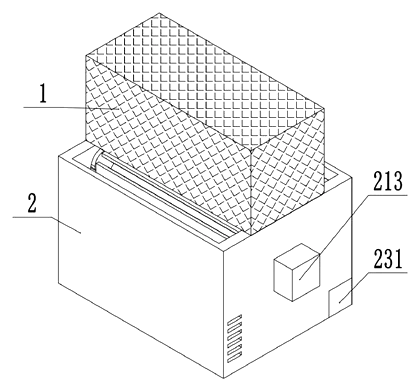
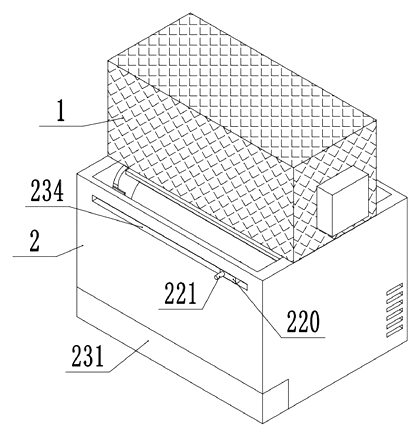
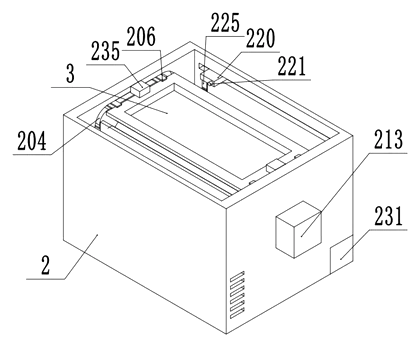
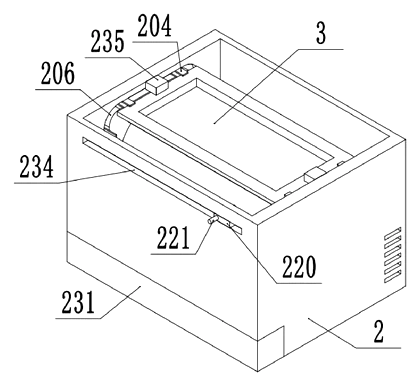
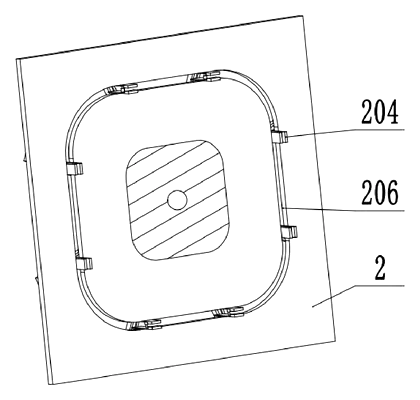
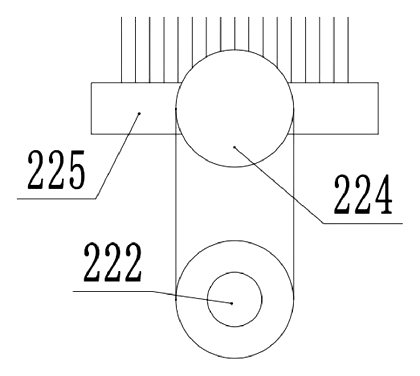
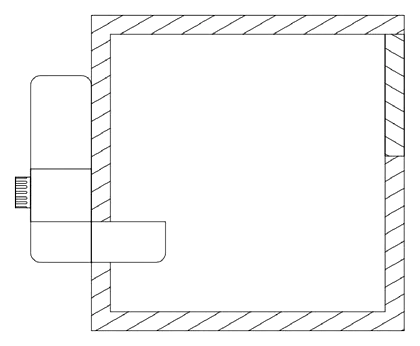
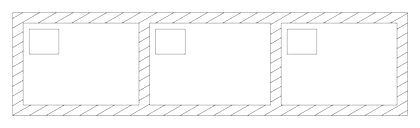
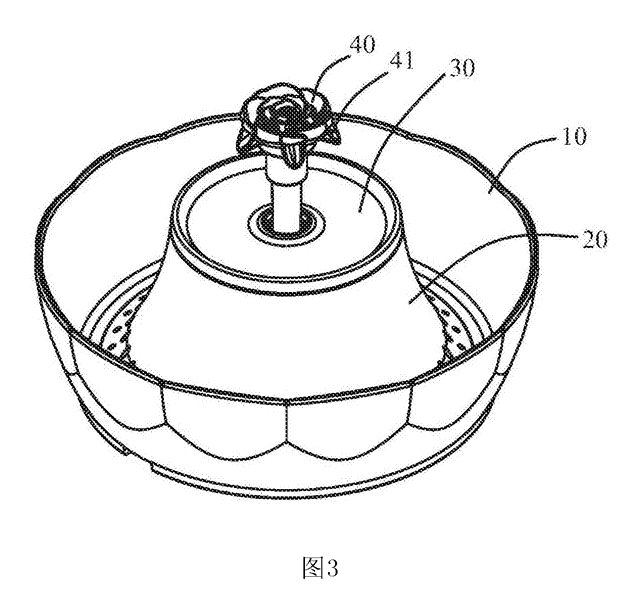
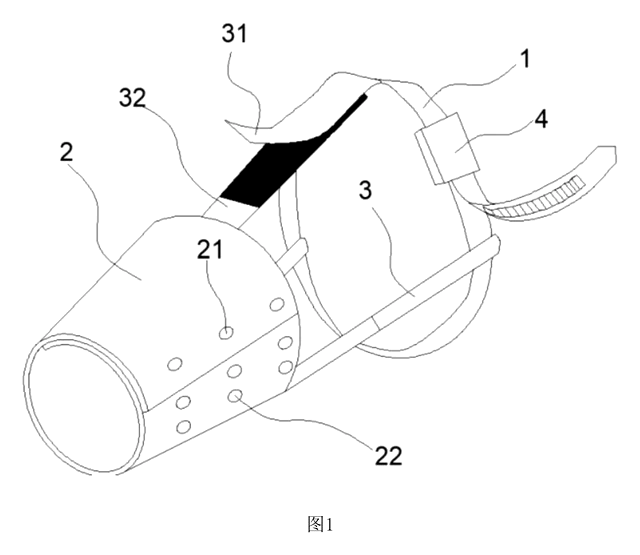
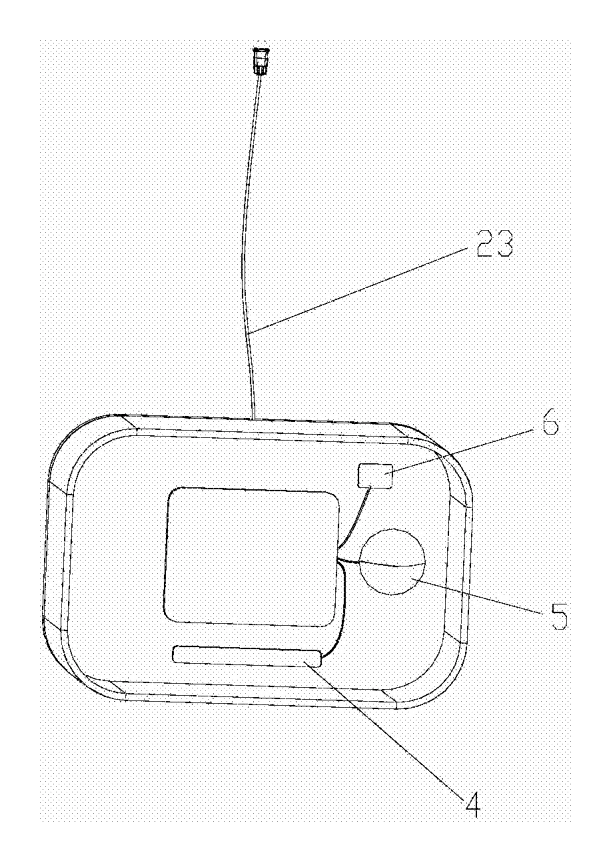
Drawings reproduced from the public patent document for reference.