
Patent CN118512096B
Updated October 28, 2026Telescopic Shelf Rack with Front-Back Sliding and Locking Mechanism
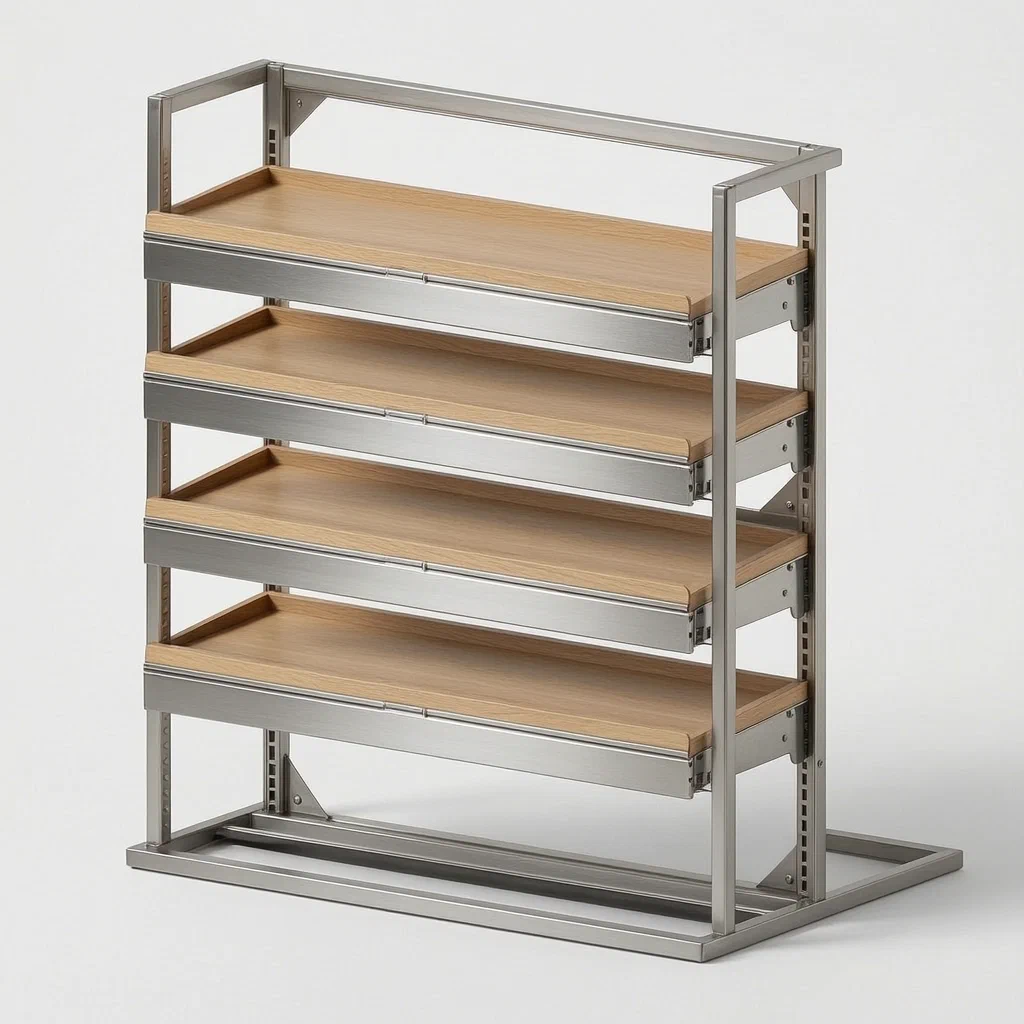
Fixed retail shelves force staff to reach deep into tight spaces to stock or pick items, slowing work and risking dropped goods. This telescopic shelf rack solves that by letting every shelf slide forward on its bracket and lock securely in place. Each shelf connects to a height-adjustable bracket through a front-back sliding mechanism, so the vertical spacing fits the products being stored. To move a shelf, the user presses the upper end of a pressing plate at the front; a shifting arm on the plate lifts one end of a rocker underneath, rotating it until its clamping head clears the positioning notch. The shelf then slides freely. When released, an elastic reset piece returns the pressing plate, and the clamping head drops into the front or rear notch to hold the shelf in the extended or retracted position. The number of locking mechanisms can be twice the number of shelves, placed at both left and right ends for stability.
- China invention patent - in force
- No filings outside China
- Store & display shelving
- Height-adjustable brackets, sliding shelves, rocker lock
Splat! What let you down?
↔️
Front-back sliding
Each shelf moves forward and backward on its bracket through a sliding mechanism for easy access.
🔒
Rocker locking mechanism
A pressing plate, shifting arm and rocker lift a clamping head out of a notch to release the shelf.
↕️
Adjustable height
Brackets mount at different heights on the frame body to fit various product sizes.
🔄
Elastic reset
An elastic reset piece returns the pressing plate so the clamping head drops back into the notch automatically.
Bring this product to market
- ✓ Patent vetted China-only family and legal status checked
- 2 Product brief · now How it works, uses and options written up
- 3 Prototype First samples for buyers to review
- 4 Pilot run Small first batch for launch customers
- 5 Volume production Repeat orders at scale
Buyer interest
– of 100 buyers needed to start prototyping
One click, no sign-up. Each vote is one real visitor, and products with the most interest go to prototyping first.
Build team: no members yet. Need a partner, co-funding or skills to build this? Join and we introduce the team once it forms.
The problem
Standard multi-tier shelving in stores and warehouses keeps every shelf fixed in place. When a worker needs to stock or pick items from the back of a deep shelf, they must lean in, often knocking over products on the way. In narrow aisles, reaching the rear of a fixed shelf is difficult, and rearranging vertical space to fit taller items requires tools to unbolt and move entire shelf supports. These issues slow down restocking, increase the chance of damaged goods, and limit how much inventory a single rack can hold.
The solution
This telescopic shelf rack addresses those limits with three linked features:
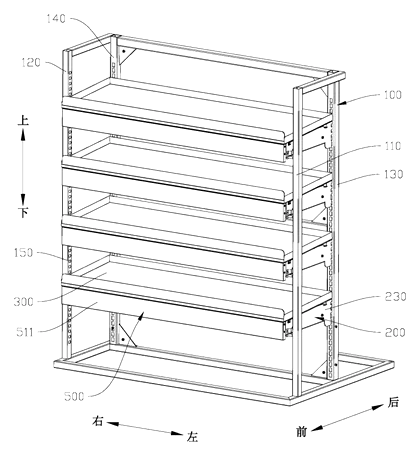
- A frame body (100) supports multiple brackets (200), each mounted at an adjustable height so the vertical gap between shelves matches the stored items.
- Each shelf (300) sits on a bracket through a front-back sliding mechanism (400), allowing it to extend forward for access or retract backward for normal storage.
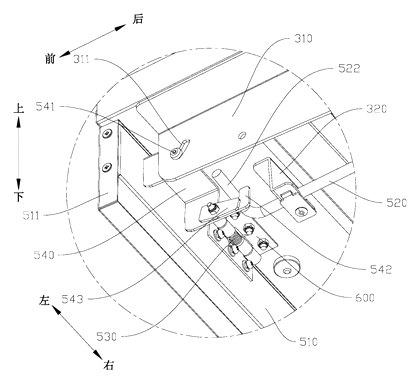
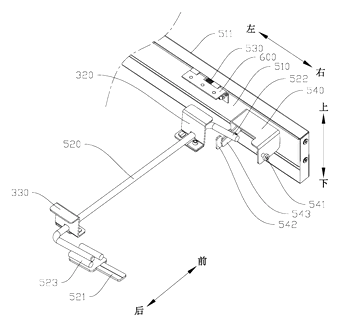
- A locking mechanism (500) secures the shelf at the front or rear dead point. Pressing the top of a pressing plate (510) pivots it around a left-right axis; a shifting arm (540) on the plate pushes up one end of a rocker (520) underneath the shelf. The rocker rotates, lifting a clamping head (521) out of a front positioning notch (210) or rear positioning notch (220) on the bracket. Once released, an elastic reset piece (530) drives the pressing plate back, and the clamping head falls into the opposite notch to lock the shelf in its new position.
Who it is for
- Retail store fixture brands looking for pull-out shelving that lets staff stock deep shelves without leaning into the unit.
- Warehouse and wholesale operators who need to adjust shelf heights frequently as product sizes change.
- Supermarket and convenience store chains that want faster restocking cycles in narrow aisles.
- Display rack manufacturers serving trade shows or showrooms where products must be pulled forward for viewing and pushed back for transport.
How it works
The main parts
| No. | Part | What it does |
|---|---|---|
| 100 | Frame body | Vertical structure supporting the brackets. |
| 200 | Bracket | Holds the shelf; height is adjustable on the frame body. |
| 210, 220 | Front / rear positioning notch | Receives the clamping head to lock the shelf forward or back. |
| 300 | Shelf | Stores articles; slides front-to-back on the bracket. |
| 310 | Limiting plate | Extends below the shelf; contains a limiting groove (311). |
| 400 | Front-back sliding mechanism | Allows the shelf to extend and retract on the bracket. |
| 500 | Locking mechanism | Secures the shelf at the front or rear position. |
| 510 | Pressing plate | Hinged at the shelf front; pressed to unlock the shelf. |
| 511 | Advertising message board | Mounted on the front side of the pressing plate. |
| 520 | Rocker | Pivots below the shelf; carries the clamping head and rocker arm. |
| 521 | Clamping head | Engages the positioning notches to lock the shelf. |
| 522 | Rocker arm | Lifted by the shifting arm to rotate the rocker. |
| 530 | Elastic reset piece | Returns the pressing plate after release. |
| 540 | Shifting arm | Transfers motion from the pressing plate to the rocker arm. |
| 541 | Limiting column | Extends into the limiting groove to control pressing plate travel. |
| 542 | Hook block | At the front of the shifting arm; catches the rocker arm. |
| 543 | Adjusting plate | Rotates to set the initial position of the rocker arm. |
| 600 | Hinge | Connects the pressing plate upper end to the shelf front. |
Operating steps
- Unlock: Press the upper end of the pressing plate (510) inward. It rotates around the hinge (600). The shifting arm (540) pushes the rocker arm (522) upward.
- Release the notch: The rocker (520) pivots, lifting the clamping head (521) out of the current positioning notch (210 or 220).
- Slide: Pull or push the shelf (300) along the front-back sliding mechanism (400) to the desired position.
- Lock: Let go of the pressing plate. The elastic reset piece (530) returns it. The rocker rotates back, and the clamping head drops into the other positioning notch, fixing the shelf.
The limiting column (541) inside the limiting groove (311) stops the pressing plate from rotating too far. The hook block (542) and adjusting plate (543) keep the rocker arm aligned during operation.
Applications
Supermarket grocery aisles
Stock clerks pull the shelf forward to load heavy cans or bottles at the back without climbing or reaching blindly. The lock holds the shelf steady while items are arranged, preventing it from sliding back under weight.
Warehouse picking stations
Pickers extend the shelf toward the aisle to grab cartons quickly. Adjustable bracket heights let managers reconfigure the rack when carton dimensions change between seasons.
Retail electronics displays
Sales staff slide the shelf out to hand a boxed device to a customer, then push it flush against the wall when the store closes. The advertising message board on the pressing plate faces shoppers at all times.
Pharmacy back rooms
Pharmacists pull specific tiers forward to read labels on small boxes stored at the rear. The locking mechanism prevents accidental movement while counting inventory.
Trade show booths
Exhibitors extend shelves to present samples to visitors walking past the booth. After the event, the shelves retract flat for compact transport in standard cases.
Where it is less suitable
- Heavy-duty industrial pallet racking - the sliding and rocker-lock design is built for manual handling of boxed or loose goods, not forklift-loaded pallets.
- Outdoor environments - unless materials and finishes are specified for weather resistance, the moving parts and notches may corrode or jam outside.
- Vibrating vehicles - constant vibration could cause the clamping head to bounce out of the notch unless additional transit locks are added.
Frequently asked questions
How does the shelf slide in and out?
Each shelf connects to its bracket through a front-back sliding mechanism. The patent describes this connection but does not specify the exact track type; roller guides, ball bearings or polymer slides can be selected during design based on the load and budget.
How does the locking mechanism work?
A pressing plate is hinged to the front of the shelf. When you press its top, a shifting arm on the plate pushes up a rocker arm underneath the shelf. The rocker pivots, lifting a clamping head out of a notch on the bracket. You then slide the shelf. When you let go, a torsion spring on the hinge pushes the pressing plate back, and the clamping head drops into the other notch to lock the shelf in its new position.
Can the shelf height be changed?
Yes. The brackets mount on the frame body at adjustable heights. The vertical distance between adjacent brackets is set according to the height of the stored articles, allowing the rack to use the full top-to-bottom space.
What materials are used?
The patent does not list specific materials. The frame, brackets, shelves and locking components can be made from metals, plastics or composites, to be confirmed in design based on the required load and environment.
How much weight can each shelf hold?
The patent does not state a load capacity. The maximum weight per shelf depends on the bracket strength, sliding mechanism rating and frame material, which are set in design and confirmed on prototypes.
Does the pressing plate serve any other purpose?
According to the patent, the front side of the pressing plate can carry an advertising message board, turning the lock handle into a visible signage area for retail use.
What prevents the pressing plate from rotating too far?
A limiting plate extends below the shelf with a limiting groove. A limiting column on the shifting arm rides inside this groove, stopping the pressing plate once it has rotated enough to clear the clamping head from the notch.
Can this design be made and sold in the US?
The patent was filed only in China and is in force there until at most 2044-06-20 (if annual fees are paid). It has no US counterpart, so it does not restrict making or selling the design in the United States. However, manufacturing it in China would require the owner’s permission. Other shelving patents may exist in the US - see Patent & Production - so we recommend a freedom-to-operate check before volume production.
Are you affiliated with the patent owner?
No. IP2M is an independent design and manufacturing service working from the public patent document.
Request a quote
Click Request a Quote below to see our email address - copy it, or open your email app with a ready-made message. Please mention patent CN118512096B in the subject.
Helpful details to include:
- Your company and channel (retail fixture brand, warehouse operator, supermarket chain, display manufacturer)
- Application (store aisle, warehouse picking, trade show, etc.)
- Overall dimensions (height, width, depth) and number of shelves per unit
- Target load per shelf
- Material preferences for frame, shelves and locking parts
- Estimated quantity and target price
- Timeline - when you would like samples and the first shipment
You can also reach us at (332) 203-9997.
Explore this product
Interested in building this?
Tell us your target market, quantity and timeline. We reply with options for prototyping, small-batch runs or volume production.
Send your inquiry to
Please put CN118512096B in the subject line and tell us your company, country, estimated quantity and timeline.
Prefer to talk? Call (332) 203-9997.
More product-ready patents
All Retail Display patents →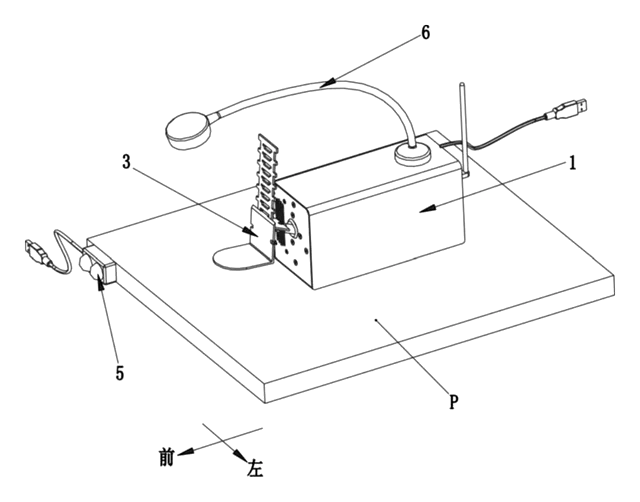
Retail Display
Motorized Shelf Display That Presents a Product to Shoppers
Shelf unit that lifts a product over the price rail toward shoppers when a sensor detects them.
Patent CN215077184U
Retail Display
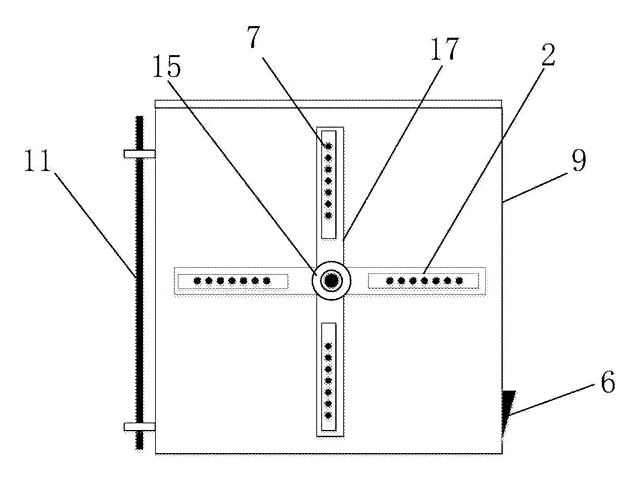
Portable Advertising Light Box with Spinning LED Display
Portable ad box whose spinning LED bars draw images and text; content changes by wireless or USB.
Patent CN207425291U
Retail Display
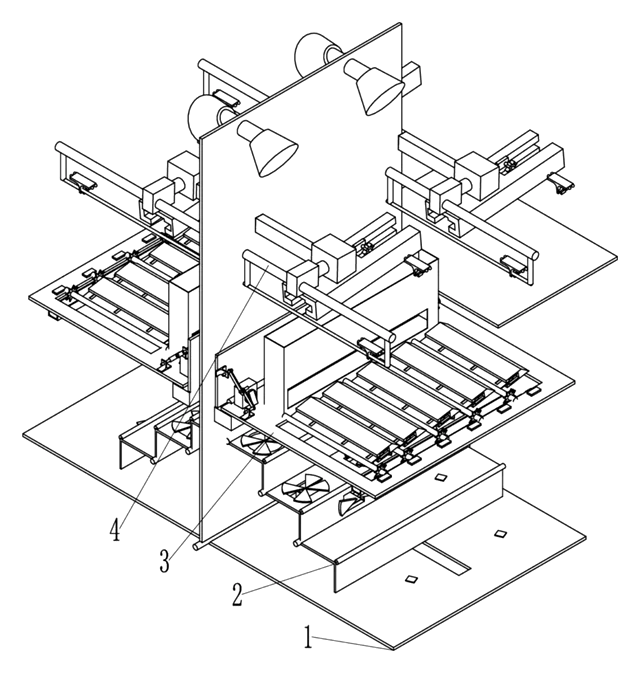
Automated Folding Store Shelf That Pushes Products Up to the Customer
Double-sided shelf for unmanned stores: folding tiers, screw pushers and lift cylinders present stock.
Patent CN109645754B
Retail Display
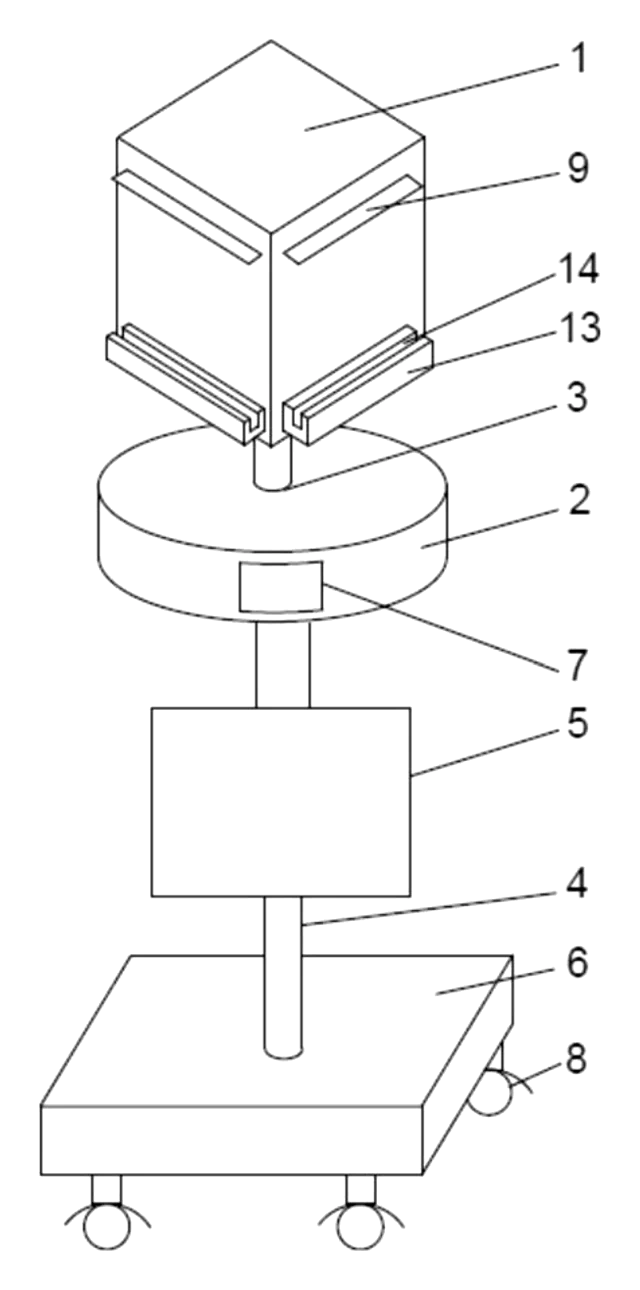
Motorized Rotating Display Pedestal with Lift Column, Info Screen and Clip-On Display Racks
Mobile pedestal: motorized rotating cube with lit faces and racks, electric lift column and info screen.
Patent CN208875862U
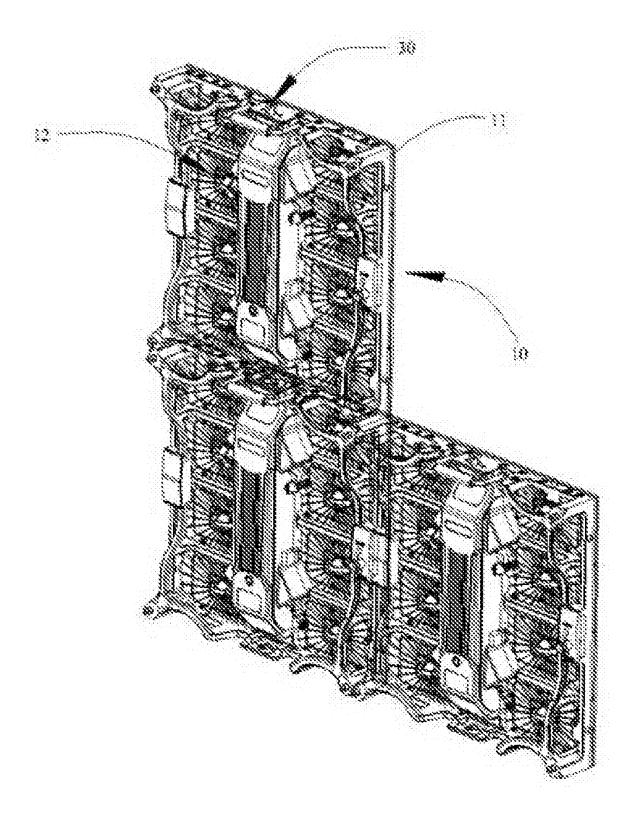
Retail Display
Thin Outdoor LED Video Wall Cabinet with Magnetic Modules and Tool-Free Locks
Thin outdoor LED wall cabinet: magnetic modules and rear body, rotary locks, finned rear cooling.
Patent CN205354557U
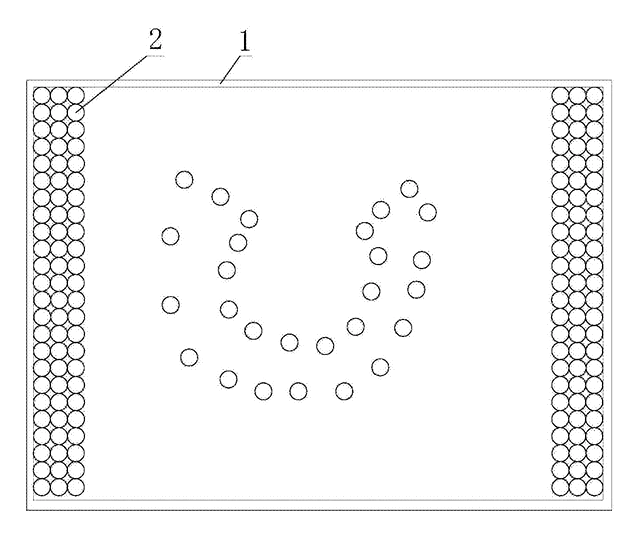
Store & Display
Magnetically Repositionable LED Advertising Panel
LED panel whose lamp beads slide to new positions via an external electromagnet.
Patent CN205487209U
Browse by category
- Apparel & Accessories (22)
- Baby & Kids (16)
- Bags & Luggage (9)
- Bath & Personal Care (16)
- Car Accessories (10)
- Furniture, Bedding & Storage (12)
- Garden & Outdoor (18)
- Health & Wellness (8)
- Home, Kitchen & Cleaning (24)
- Lighting (12)
- Packaging & Containers (6)
- Pet Products (6)
- Phone & Camera Accessories (4)
- Retail Display (13)
- School, Office & Art (19)
- Sports & Recreation (25)
- Tools & Workshop (27)
- Toys & Games (12)
This page is based on the public patent document CN118512096B, assigned to Baisai Plastic Technology Zhuhai Free Trade Zone Co ltd. IP2M is an independent manufacturing service and is not affiliated with, endorsed by or licensed by the patent owner. Images marked as concept renderings are illustrations, not photos of an existing product. Patent status information is provided for reference only and is not legal advice; confirm freedom to operate for your market before production. Full disclaimer.