At a glance
| Patent number | CN118512096B (application CN202410803168) |
| Type | China invention patent (发明专利) - protects product shape, structure and method |
| Original title | A telescopic shelf type goods shelf (一种伸缩层架式货架) |
| Patent owner | Baisai Plastic Technology Zhuhai Free Trade Zone Co ltd |
| Inventors | Qiu Jun, Wu Xionghao |
| Filing date | 2024-06-20 |
| Grant date | 2025-04-18 |
| Status (China) | In force in China until at most 2044-06-20 (if annual fees are paid) |
| Patent family | Chinese filings only - no US, European, Japanese, PCT or other filings listed |
| Cited by | 0 later documents |
| Source | Google Patents (search for CN118512096B) |
What the claims cover, in plain language
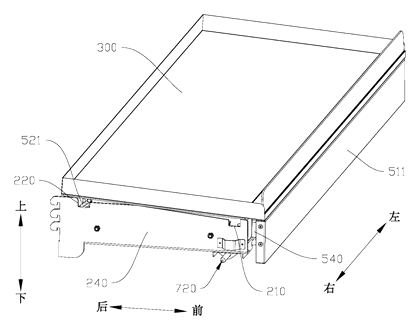
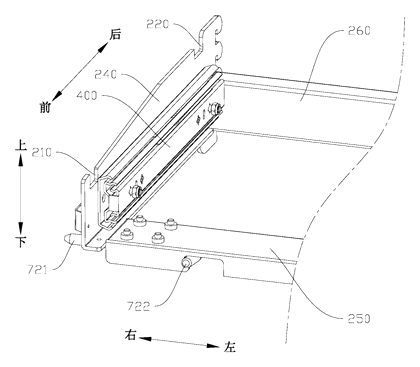
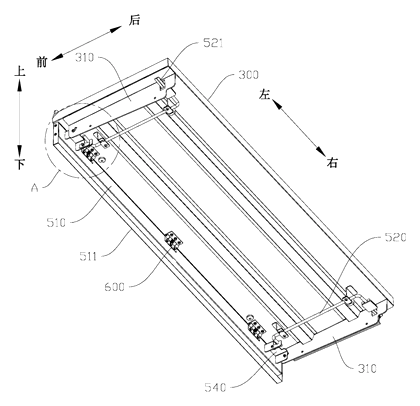
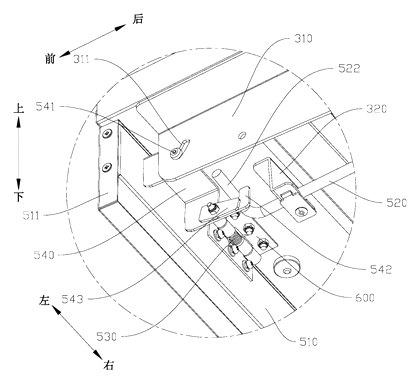
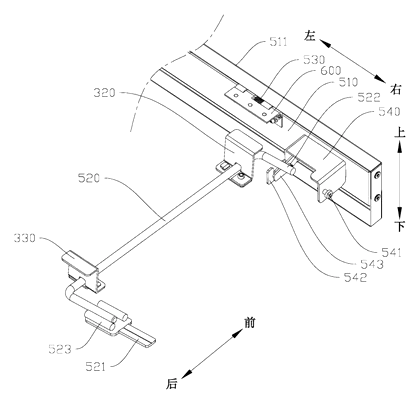
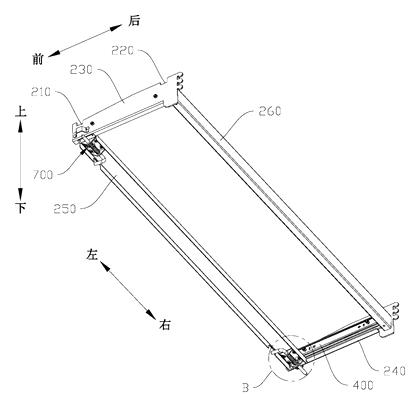
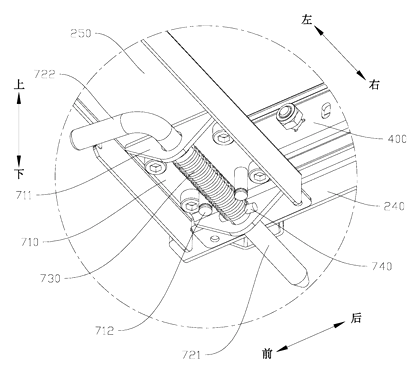
Claim 1 - a telescopic shelf rack comprising a frame body, multiple brackets with adjustable heights on the frame body, and multiple shelves. Each shelf mounts on a bracket through a front-back sliding mechanism so it extends and retracts along the front-back direction. A locking mechanism positions the shelf at the front and back on the bracket. The locking mechanism includes a pressing plate, a rocker and an elastic reset piece. The upper end of the pressing plate is rotatably connected to the front end of the shelf and rotates around the left-right direction. A shifting arm is on the middle section or lower end of the pressing plate. The rocker is rotatably mounted below the shelf, with a clamping head at its front end and a rocker arm at its back end; the clamping head and rocker arm are parallel to each other and perpendicular to the rocker. One end of the rocker arm away from the rocker sits above the rocker. A front positioning notch and a rear positioning notch are on the front and back ends of the bracket. The clamping head lifts alternately from these notches so the shelf can move. The elastic reset piece sits between the shelf and the pressing plate to drive the lower end of the pressing plate back, allowing the clamping head to clamp into either notch alternately to fix the shelf position.
Claim 2 - a limiting plate extends below the shelf with a limiting groove, and a limiting column on the shifting arm extends into the groove to limit the pressing plate’s rotation range. Claim 3 - a hook block at the front of the shifting arm has sides facing left and right and an upward hook portion. A notch groove between the shifting arm and hook block catches the rocker arm. An adjusting plate on the shifting arm rotates to support the rocker arm and adjust its initial position. Claim 4 - an advertising message board is on the front side of the pressing plate. Claim 5 - the pressing plate upper end connects to the shelf front lower surface through a hinge; the elastic reset piece is a torsion spring sleeved on the hinge shaft.
This is a simplified reading for orientation only. The legal scope is defined by the exact claim wording in the official Chinese document.
What this means for US production
This patent was filed only in China and is in force there until at most 2044-06-20 (if annual fees are paid). It has no US or other foreign counterpart. However, because it is active in China, making or selling this exact telescopic shelf rack design in China needs the owner’s permission.
Two points to settle early:
- Other patents may exist. Store shelving with pull-out trays and locking mechanisms is a field with many active designs from global fixture companies, so a freedom-to-operate (FTO) review of the sliding track and rocker-lock arrangement is needed before tooling for the US market.
- Load capacity and material choice. The patent does not specify shelf load ratings or materials. Bracket thickness, sliding mechanism type and rocker dimensions must be set in design and confirmed on prototypes to meet the intended weight class.
Customization and manufacturing
What can be customized
| Area | Options |
|---|---|
| Frame and bracket material | Steel tube, aluminum extrusion or reinforced plastic |
| Shelf material | Sheet metal, wire grid, plastic panel or wood composite |
| Dimensions | Overall height, width and depth to be confirmed in design |
| Sliding mechanism | Roller tracks, ball-bearing slides or low-friction polymer guides |
| Locking mechanism parts | Metal or molded plastic rocker, pressing plate and shifting arm |
| Finish | Powder coating, zinc plating, paint or raw material color |
| Accessories | Advertising message board size and graphics, label holders |
Things to plan for (US market)
- ANSI MH28.1 - industrial steel storage racks standard if used in warehouse settings.
- UL 962 - household and commercial furnishings safety standard for retail display units.
- STURDY Act (16 CFR 1261) - clothing storage units sold in the US must pass stability testing; if the rack is used for apparel, tip-over rules apply.
- California Prop 65 - coatings, plastics and metal finishes must be screened for listed chemicals.
How a project runs
- Inquiry - target application, shelf count, dimensions, load requirements and quantity.
- Design - frame profiles, sliding mechanism selection, rocker geometry and notch placement.
- Prototype - 3D-printed or machined lock components assembled on test brackets for function checks.
- Pilot run - full-scale samples for cycle testing of the sliding and locking action under load.
- Production - frame fabrication, shelf forming, injection molding or stamping of lock parts, finishing and assembly.
Quantities & timeline
The frame and brackets require roll-forming dies, tube-bending tooling or extrusion dies depending on the chosen material. Shelves need stamping dies or injection molds. The locking mechanism parts—pressing plate, rocker, shifting arm, hook block and adjusting plate—are typically injection-molded for volume runs, requiring precision molds for the pivot points and notch engagement surfaces. Torsion springs and hinges are sourced as standard components. Cycle testing of the lock mechanism under repeated loading takes a significant portion of the development schedule. Send us your application details, dimensions, load requirements, material preferences, quantity and target price and we will reply with options.
Patent drawings
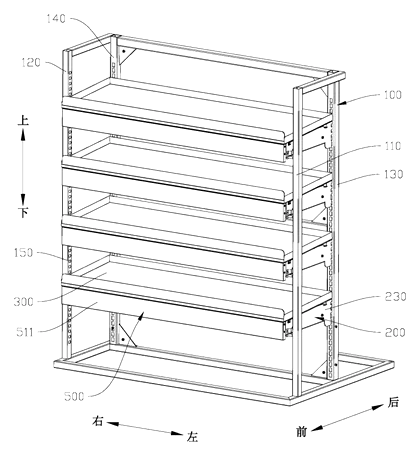
Drawings reproduced from the public patent document for reference.