At a glance
| Patent number | CN118614420B (application CN202410908541) |
| Type | China invention patent (发明专利) - protects product shape, structure and method |
| Original title | Pet dog toy capable of throwing training flying disc for interaction (一种可投放训练飞盘互动的宠物狗玩具) |
| Patent owner | Jiangsu Tongchuang Gift Co ltd |
| Inventors | Du Ping, Chen Junxiang |
| Filing date | 2024-07-08 |
| Grant date | 2024-11-15 |
| Status (China) | In force - In force in China until at most 2044-07-08 (if annual fees are paid) |
| Patent family | Chinese filings only - no US, European, Japanese, PCT or other filings listed |
| Cited by | 0 later documents |
| Source | Google Patents (search for CN118614420B) |
What the claims cover, in plain language
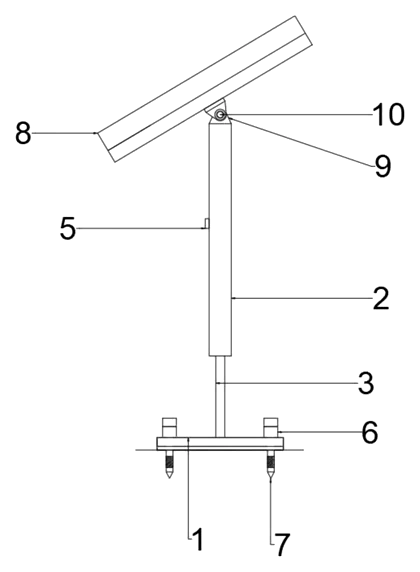
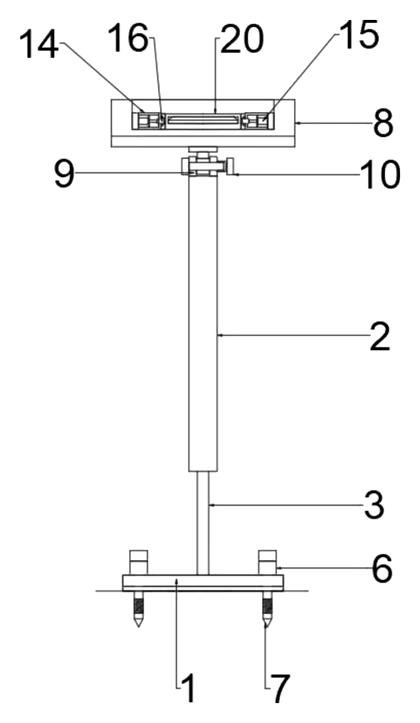
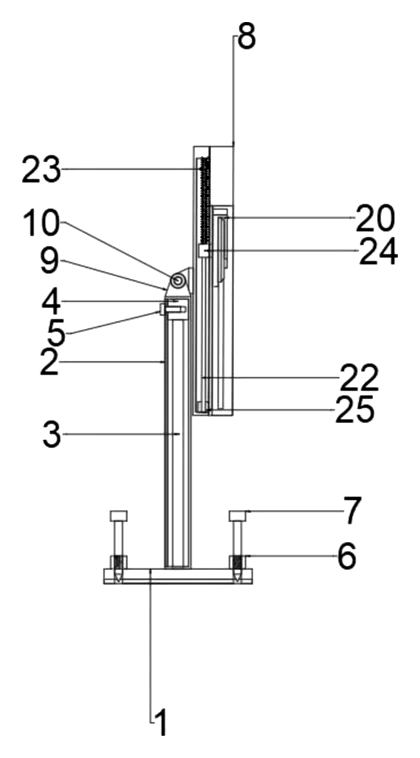
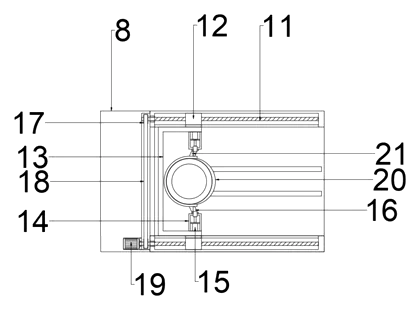
Claim 1 covers the complete launcher assembly: a placement base (1) with a fixed support rod (3) that has a limit sliding block (4) at its top. The block slides inside a support cylinder (2) and is locked by a positioning screw (5). A threaded cylinder (6) on the base accepts a positioning anchor rod (7). A connecting frame (9) links the cylinder to a flying disc launching frame (8) via positioning bolts (10). Inside the launching frame, two ball screws (11) with lead screw nuts (12) connect to positioning frames (13), a placement frame (14), a telescopic cylinder (15) and a limiting block (16). Synchronous wheels (17) on the screws are linked by a synchronous belt (18) and driven by a brake-type stepping motor (19). The flying disc throwing disc (20) has positioning blocks (21) and a positioning slider (24) that moves along limit rods (22) covered by springs (23) inside a device groove in the launching frame.
Claim 2 specifies that the support cylinder has a strip-shaped through hole for the positioning screw to reach the limit sliding block. Claim 3 adds an anti-slip rubber mat fixed to the bottom of the placement base. Claim 4 states the positioning slider has a limiting hole that slides on the limit rod. Claim 5 details a strip-shaped hole in the launching frame for the positioning slider to connect to the throwing disc. Claim 6 adds a protective rubber cushion (25) fixed to one end of the limit rod. Claim 7 continues with further structural details of the launching frame.
This is a simplified reading for orientation only. The legal scope is defined by the exact claim wording in the official Chinese document.
What this means for US production
This patent was filed only in China and is currently in force there. Making or selling this specific mechanical launcher in China needs the owner’s permission. Because no US or other foreign counterpart was filed, the Chinese patent alone does not restrict manufacturing or sales in the United States.
Two points to settle early:
- Other patents may exist. Motorized and spring-loaded pet toy launchers are an active product category with various US and international patents held by different pet product companies. A freedom-to-operate (FTO) review focusing on the ball-screw loading mechanism, synchronous belt drive, and folding base structure is needed before tooling.
- Electrical safety and battery housing. The device uses a brake-type stepping motor. The power source, wiring, and any battery compartment must be designed to prevent access by pets or water ingress during outdoor use.
Customization and manufacturing
What can be customized
| Area | Options |
|---|---|
| Height range | Length of the support rod and cylinder to set minimum and maximum launch heights |
| Frame material | Plastics, aluminum, or steel tubing for the launching frame and base |
| Motor and power | Stepping motor specifications, battery pack capacity, or wired DC adapter |
| Springs | Spring rate and length to determine launch force and disc distance |
| Base footprint | Size and shape of the placement base and thickness of the anti-slip rubber mat |
| Color and finish | Outdoor-grade coatings and plastic colors for consumer retail |
Things to plan for (US market)
- CPSC and ASTM F963 - if the product is marketed for use by children (e.g., children operating the launcher to play with dogs), it may fall under toy safety standards requiring mechanical and physical testing.
- FCC Part 15 - the brake-type stepping motor and any electronic control boards must comply with FCC rules for unintentional radiators if sold in the US.
- UN 38.3 - if the launcher includes a rechargeable lithium battery pack for portability, the cells must pass UN 38.3 transport testing.
- California Prop 65 - plastics, rubber mats, and metal finishes should be screened for listed chemicals.
How a project runs
- Inquiry - target market, desired launch distances, power source preference, and quantities.
- Design - engineering the support cylinder, ball screw pitch, spring selection, and motor torque to match the required performance.
- Prototype - building functional samples to test the folding mechanism, height adjustment, and launch consistency.
- Pilot run - producing a small batch for durability testing, weather exposure, and safety compliance checks.
- Production - injection molding for plastic frames, machining for cylinders and screws, motor integration, and final assembly.
Quantities & timeline
The support cylinder, launching frame, and base require injection molds or metal stamping dies depending on the chosen materials. Ball screws and synchronous wheels involve precision machining. Motor integration and spring calibration take development time to ensure consistent launches. Certification tests for electronics or batteries add to the schedule. Send us your target launch distance, preferred materials, power source, quantity and target price and we will reply with options.
Patent drawings
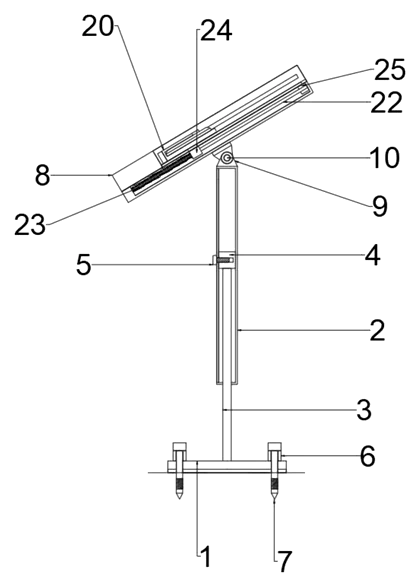
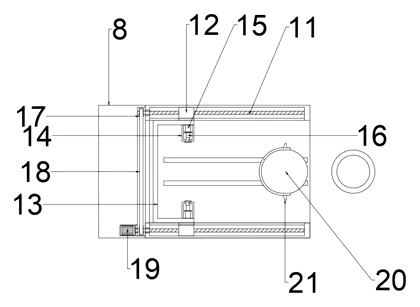
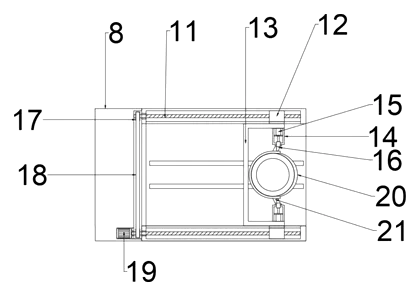
Drawings reproduced from the public patent document for reference.