
Patent CN118949395B
Updated November 3, 2026Mechanical Conway's Game of Life Cellular Automaton Simulator
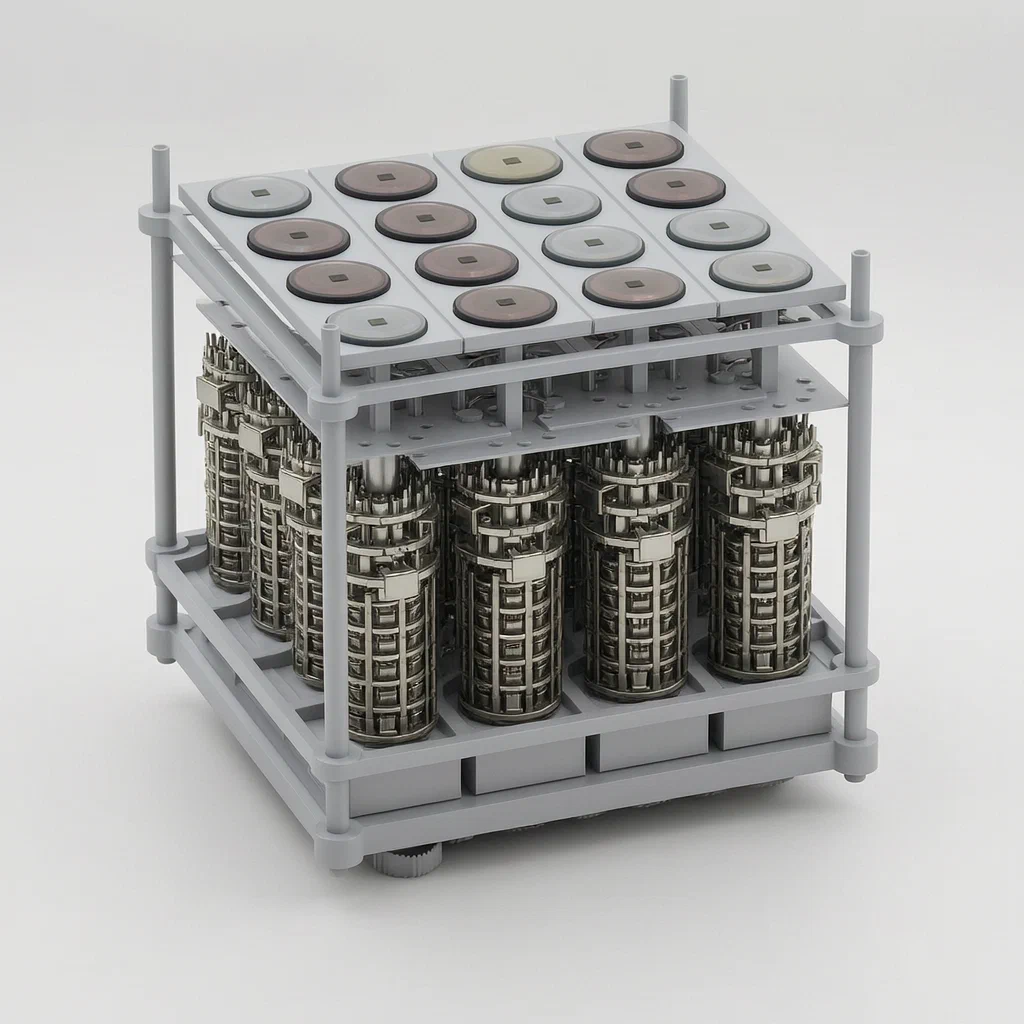
Electronic simulations hide the logic behind code. This device makes it visible. By arranging mechanical counter units in a grid, each with a button and a bistable spring, it physically enacts Conway's Game of Life. When you press reset, the internal mechanisms check how many neighboring buttons are up or down. If the rules say the cell should live, the bistable part stretches to pop the button up; if it should die, it stays compressed. It turns abstract algorithmic steps into tangible clicks and movements, ideal for teaching complex systems without screens.
- China invention patent - active
- No filings outside China
- Educational & Scientific Toys
- Mechanical logic, bistable springs, button arrays
Splat! What let you down?
🔘
Button-State Display
Each cell is a button: up means alive, down means dead. No LEDs or screens needed.
⚙️
Bistable Mechanics
Springs hold the button in one of two stable positions, switching only when forced by the logic.
🔗
Neighbor Linking
Connection rods sense the state of the eight surrounding cells to apply the game rules.
🔄
Global Reset
One action triggers all cells to evaluate their neighbors and update their state at once.
Bring this product to market
- ✓ Patent vetted China-only family and legal status checked
- 2 Product brief · now How it works, uses and options written up
- 3 Prototype First samples for buyers to review
- 4 Pilot run Small first batch for launch customers
- 5 Volume production Repeat orders at scale
Buyer interest
– of 100 buyers needed to start prototyping
One click, no sign-up. Each vote is one real visitor, and products with the most interest go to prototyping first.
Build team: no members yet. Need a partner, co-funding or skills to build this? Join and we introduce the team once it forms.
The problem
Conway’s Game of Life is a popular cellular automaton, but understanding its evolution usually requires software or manual calculation on graph paper. Software hides the underlying logic behind code, making it difficult for students or enthusiasts to grasp how the next generation is derived from the current one. Manual tracking is slow and prone to human error. There is a need for a physical tool that demonstrates these rule-based state transitions visibly and interactively, without relying on electronic computation.
The solution
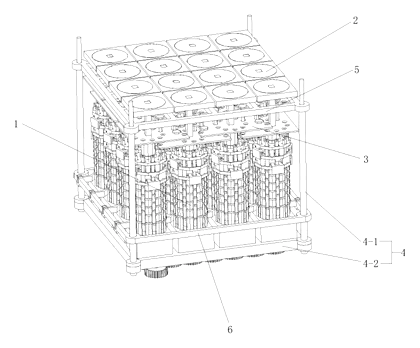
- Counter Units in Array: The device consists of multiple counter units arranged in a rectangular matrix. Each unit represents a single cell in the grid.
- State Representation: Above each counter unit sits a button. The button’s position indicates the cell’s state: an extended (up) button represents a “living” cell (state 1), while a depressed (down) button represents a “dead” cell (state 0).
- Bistable Component: Inside each unit is a bistable component (such as a snap-through membrane or spring). This part locks the button in either the up or down position. It requires specific mechanical force to switch from one stable state to the other.
- Neighborhood Sensing: Each unit has neighborhood state components that connect to the buttons of the eight adjacent cells. These components mechanically read whether those neighbors are up or down.
- Judgment Execution: A judging executing component processes the inputs from the self-state and neighbor-states. It applies the standard Game of Life rules: survival if 2 or 3 living neighbors, birth if exactly 3 living neighbors, death otherwise.
- Synchronized Update: A button resetter allows the user to trigger a global update. During this reset action, the judging components determine the new state for every cell. If a cell should become alive, the mechanism stretches the bistable component to pop the button up. If it should remain dead or die, the component maintains its compressed state.
Who it is for
- STEM Educators: Teachers looking for hands-on tools to demonstrate algorithms, emergent behavior, and cellular automata in math or computer science classes.
- Science Museum Curators: Exhibitors needing durable, screen-free interactive displays that engage visitors with fundamental scientific concepts.
- Puzzle & Toy Manufacturers: Brands developing educational games that offer tactile feedback and logical challenge without batteries or apps.
- University Research Labs: Departments studying complex systems or mechanical computing that require a physical baseline model for rule-based simulations.
How it works
The main parts
| No. | Part | What it does |
|---|---|---|
| 1 | Counter Unit | The basic building block representing one cell. |
| 2 | Button | Visual indicator of cell state (Up=Alive, Down=Dead). |
| 1-1 | Neighborhood State Components | Sensors/links that detect the state of adjacent cells. |
| 1-2 | Self State Component | Detects the current state of the cell itself. |
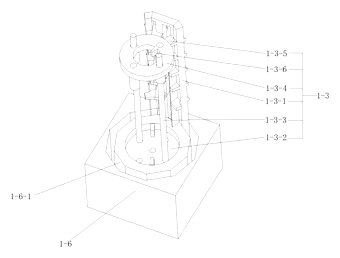
| 1-3 | Judging Executing Component | Applies the rules (e.g., count neighbors) to decide the next state. |
| 1-4 | Bistable Component | Mechanical latch holding the button in place; switches via tension/compression. |
| 3 | Neighborhood Connection | Links between units to transmit state information. |
| 5 | Button Resetter | Global mechanism to initiate the state update cycle. |
Operating Steps
- Setup: Press or release individual buttons to set the initial configuration of living and dead cells.
- Evaluation: The neighborhood state components within each unit register the positions of the 8 surrounding buttons.
- Logic Application: The judging executing component calculates if the current cell meets the survival or birth criteria based on the number of “up” neighbors.
- Update Trigger: The user engages the button resetter.
- State Transition:
- If the logic dictates the cell should be alive, the resetter stretches the bistable component, causing the button to pop up.
- If the logic dictates the cell should be dead, the bistable component remains compressed, keeping the button down.
- Result: All buttons reflect the new generation simultaneously.
Applications
Classroom Demos
Teachers use the device to show how simple local rules create complex global patterns. Students can predict the next state of a small cluster before pulling the reset lever, verifying their understanding of the algorithm.
Museum Interactives
Placed in a science center, the large-scale version invites visitors to play with chaos theory. The tactile nature attracts younger audiences who might ignore digital screens, providing a memorable introduction to computational thinking.
Logic Puzzle Games
As a tabletop game, players compete to stabilize a pattern or achieve a specific goal after several generations. The physical click of the buttons provides satisfying feedback during strategic planning.
Mechanical Computing Prototypes
Engineers exploring non-electronic computing architectures use this as a proof-of-concept for parallel processing. It demonstrates how mechanical links can perform binary logic operations across a grid.
Where it is less suitable
- High-Speed Simulation: Mechanical inertia limits the speed of state updates compared to electronic processors.
- Large Grid Sizes: Scaling to thousands of cells becomes mechanically complex and heavy due to the sheer number of moving parts.
- Variable Rulesets: The hardware is designed specifically for Conway’s rules; changing the logic requires significant mechanical redesign.
Frequently asked questions
Does this device need batteries or electricity?
No. The patent describes a purely mechanical system. The state changes are driven by the physical movement of buttons, springs, and connecting rods. You do not need power to operate the simulation logic.
How do I know which cells are alive?
The buttons themselves indicate the state. According to the patent, a button in the up (extended) position represents a living cell (state 1), and a button in the down (depressed) position represents a dead cell (state 0).
Can I change the rules of the game?
The device is structurally designed to implement the specific rules of Conway’s Game of Life (survival with 2-3 neighbors, birth with 3 neighbors). Changing these rules would require modifying the internal “judging executing components,” which is not a simple user adjustment.
Is it safe for children?
The patent focuses on the mechanical structure. For US sales, the final product must comply with ASTM F963 toy safety standards. Small parts like buttons and springs could pose choking hazards depending on the scale and assembly quality, so age grading and safety testing are required.
How durable are the mechanical parts?
The durability depends on the material choice for the bistable components (springs/membranes) and the plastic used for the buttons. In prototype designs, metal springs and high-grade plastics are recommended to withstand repeated snapping actions. Lifespan is confirmed on prototypes.
Can this design be made and sold in the US?
The patent CN118949395B is currently in force in China but has no US counterpart. Therefore, you are free to manufacture and sell this design in the US without infringing this specific patent. However, because mechanical puzzles are a competitive field, we recommend a freedom-to-operate search to ensure no other US patents cover similar mechanical logic structures.
Are you affiliated with the patent owner?
No. IP2M is an independent design and manufacturing service working from the public patent document.
Request a quote
Click Request a Quote below to see our email address - copy it, or open your email app with a ready-made message. Please mention patent CN118949395B in the subject.
Helpful details to include:
- Your company and channel (educational toy brand, museum exhibit fabricator, STEM kit supplier)
- Grid size (number of rows and columns)
- Target audience (children, adults, classroom, public display)
- Material preferences (plastic types, metal finishes)
- Estimated quantity and target price
- Timeline - when you would like samples and the first shipment
You can also reach us at (332) 203-9997.
Explore this product
Interested in building this?
Tell us your target market, quantity and timeline. We reply with options for prototyping, small-batch runs or volume production.
Send your inquiry to
Please put CN118949395B in the subject line and tell us your company, country, estimated quantity and timeline.
Prefer to talk? Call (332) 203-9997.
More product-ready patents
All Toys & Games patents →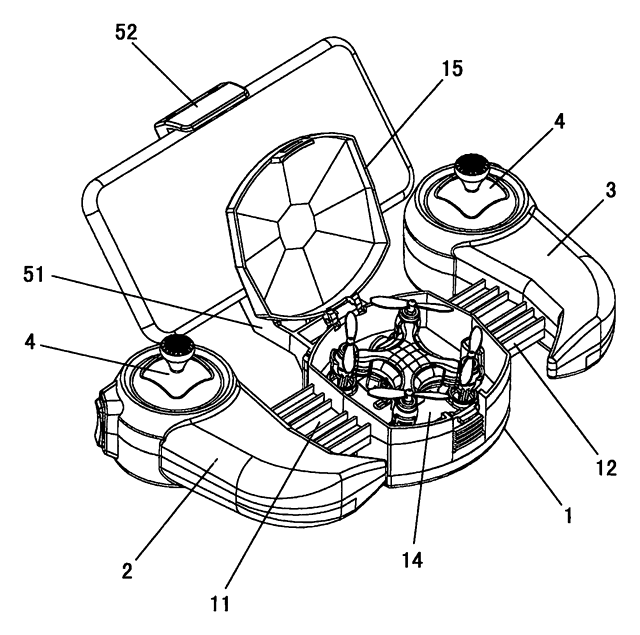
Toys & Games
Stretch-to-Fit Toy Remote with Drone Storage
Toy drone remote with slide-out handles for any hand size, a phone clamp and built-in drone storage.
Patent CN205412243U
Toys & Games
Magnetic Tile Racks for Ultra-Thin Travel Mahjong
Magnetic rack frames that hold ultra-thin mahjong tiles upright and fold into the set's carrying box.
Patent CN207169017U
Toys & Games
X-Braced Square Magnetic Building Tile with Locating-Post Shell
Square magnetic building tile: open X-brace frame, corner-lug magnets, two shells aligned by posts.
Patent CN105963988B
Toys & Games
Card-Thin Magnetic Travel Mahjong and Chess Sets with Magnet Racks
Pocket mahjong and chess sets: thin magnetic-powder tiles, finger magnet picker and fold-out magnetic racks.
Patent CN206896783U
Toys & Games
Inflatable Baby Climbing Mat with a Bumpy Hump and a Ramp Obstacle
Inflatable crawling mat: a bumpy rounded hump and a sloped ramp on a stiffened air base.
Patent CN108905229B
Toys, Games & Puzzles
Ring-Layout Automatic Card Shuffler with Electromagnetic Box Coupling
Ring-layout card shuffler that sweeps stacks between boxes via electromagnetic coupling.
Patent CN209564602U
Browse by category
- Apparel & Accessories (31)
- Baby & Kids (23)
- Bags & Luggage (14)
- Bath & Personal Care (23)
- Car Accessories (19)
- Furniture, Bedding & Storage (17)
- Garden & Outdoor (25)
- Health & Wellness (11)
- Home, Kitchen & Cleaning (36)
- Lighting (18)
- Packaging & Containers (9)
- Pet Products (8)
- Phone & Camera Accessories (7)
- Retail Display (19)
- School, Office & Art (27)
- Sports & Recreation (33)
- Tools & Workshop (41)
- Toys & Games (18)
This page is based on the public patent document CN118949395B, assigned to West Lake Interactive Machine Technology Hangzhou Co ltd / Westlake University. IP2M is an independent manufacturing service and is not affiliated with, endorsed by or licensed by the patent owner. Images marked as concept renderings are illustrations, not photos of an existing product. Patent status information is provided for reference only and is not legal advice; confirm freedom to operate for your market before production. Full disclaimer.