
Patent CN119181176B
Updated November 4, 2026Shared Massage Chair Seat Occupation Preventing Device
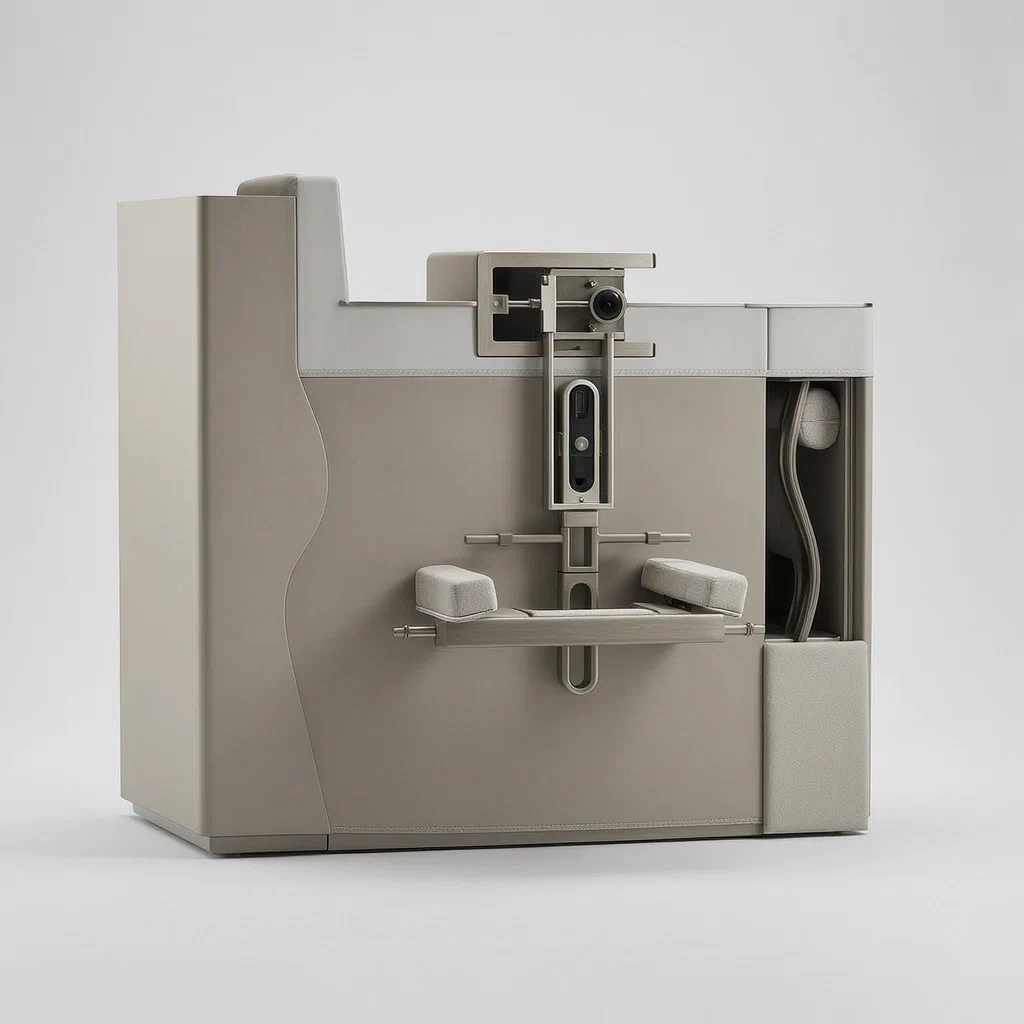
Shared massage chairs in malls and airports often suffer from 'seat squatting'—people sitting without paying, blocking revenue. This patent describes a purely mechanical solution integrated into the chair structure. Two parallel massage plates fold away when not in use or when occupied by unauthorized persons, physically preventing comfortable seating. Once a user scans a code or passes face recognition, the plates retract fully, and an internal mechanism extends a leg-rest cushion outward. This increases the effective seat depth for paying users while simultaneously ejecting loiterers. The design uses robust sliding rails and spring-loaded massage balls, offering a durable alternative to electronic locks.
- China invention patent - active
- No filings outside China
- Mechanical seat retraction
- Face recognition integration
Splat! What let you down?
🔄
Folding Plate Mechanism
Two opposing plates fold via coaxial rods and U-rails to block non-paying users.
📏
Extendable Cushion
Travel amplification pushes an extension cushion out for paying users' comfort.
💆
Elastic Massage Balls
Internal springs and gears drive hammering massage on the extended leg rest.
📷
Automated Control
Integrates with face recognition to verify users before unlocking the seat.
Bring this product to market
- ✓ Patent vetted China-only family and legal status checked
- 2 Product brief · now How it works, uses and options written up
- 3 Prototype First samples for buyers to review
- 4 Pilot run Small first batch for launch customers
- 5 Volume production Repeat orders at scale
Buyer interest
– of 100 buyers needed to start prototyping
One click, no sign-up. Each vote is one real visitor, and products with the most interest go to prototyping first.
Build team: no members yet. Need a partner, co-funding or skills to build this? Join and we introduce the team once it forms.
The problem
Shared massage chairs placed in public spaces like shopping malls, airports, and waiting rooms frequently lose revenue due to “seat squatting.” Individuals who have not paid for a session occupy the chair for rest, blocking access for potential customers. Traditional electronic locks or timers do not physically prevent someone from sitting down; they merely deny power. This leads to wasted space, customer frustration, and reduced operational efficiency for businesses managing these machines. Furthermore, standard fixed-seat designs offer limited comfort adjustment, failing to accommodate different user heights even after payment is made.
The solution
The patented device introduces a mechanical barrier and comfort enhancement system directly integrated into the massage chair’s main body.
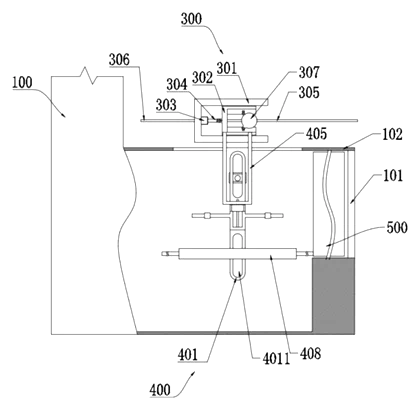
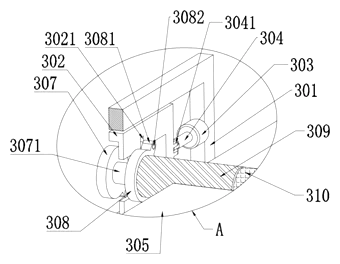
- Seat Occupation Prevention: A folding mechanism located at the top of the seat entering body consists of two parallel massage plates (first and second). These plates are connected to alternating poking rods housed within U-shaped slide rails. When triggered, the mechanism folds the plates upward or inward, creating an uneven, uncomfortable surface that physically prevents a person from sitting normally.
- User Verification and Unlocking: The system works with a barcode scanner or face recognition device. Once a legitimate user pays or is verified, the plates retract completely into the seat body, restoring a flat, comfortable seating surface.
- Comfort Extension: Simultaneously, a travel amplification mechanism pushes an extension cushion out of a groove in the seat base. This extends the seat depth, allowing the user’s legs to be supported more effectively.
- Active Massage: Inside the extension cushion, elastic massage mechanisms with gear-driven sliding seats and spring-loaded balls provide additional massage to the legs during the session.
Who it is for
- Commercial Equipment Operators: Businesses deploying shared massage chairs in high-traffic areas need a way to enforce payment compliance without relying solely on software locks.
- Massage Chair Manufacturers: OEMs looking to differentiate their products with tangible anti-theft/anti-squatting features that improve revenue per machine.
- Facility Managers: Airports, train stations, and mall owners seeking low-maintenance solutions to keep seating areas available for paying customers.
- IoT Integration Specialists: Companies building smart vending systems that require mechanical actuation controlled by digital verification (face ID/scanning).
According to the patent, the spring-loaded massage balls inside the extension cushion are intended to work the legs during a session; this is a description of the patented mechanism, not a medical claim.
How it works
The main parts
| No. | Part | What it does |
|---|---|---|
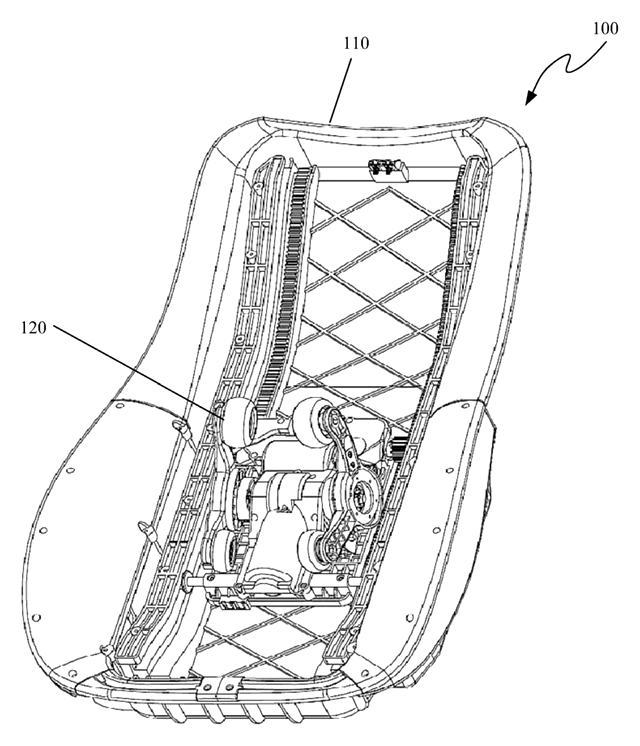
| 100 | Chair Main Body | Base structure housing all mechanisms. |
| 300 | Plate Folding Mechanism | Retracts or blocks the seat using plates and rails. |
| 305, 306 | Massage Plates | Opposing surfaces that fold up to deter sitting. |
| 309, 310 | Poking Rods | Alternating rods driving the plate movement. |
| 301, 302 | U-Shaped Rails | Guide the sliding motion of the mechanism. |
| 500 | Extension Cushion | Slides out to increase seat depth for users. |
| 400 | Travel Amplification | Pushes the cushion out when plates retract. |
| 200 | Elastic Massage Unit | Internal gears and springs for leg massage. |
Operating Steps
- Idle/Deterrent State: The first and second massage plates are partially raised or folded. The surface is irregular, making it difficult to sit comfortably.
- Verification: A user scans a code or passes face recognition. The controller signals the motor or telescopic mechanism.
- Retraction: The poking rods move along the U-shaped rails, causing the plates to fold flat into the seat body.
- Extension: As the plates retract, the travel amplification mechanism activates, pushing the extension cushion forward from its storage groove.
- Session: The user sits on the now-flat, extended seat. The elastic massage units inside the cushion can be activated for leg massage.
Applications
Airport Waiting Lounges
High-turnover environments where travelers often sit for free. The mechanical deterrent ensures that only paid users get the comfortable, extended seating experience.
Shopping Mall Rest Areas
Malls place chairs near food courts or cinemas. This device prevents shoppers from occupying premium massage chairs as regular benches, maintaining revenue streams.
Train Station Hubs
Commuters with long waits may attempt to sleep in chairs. The folding plates make unattended napping uncomfortable, encouraging ticket purchases for short rests.
Gym and Spa Lobbies
Members or guests might linger in relaxation zones. The system allows facility managers to monetize specific relaxation spots while keeping general seating available elsewhere.
Where it is less suitable
- Private Home Use: The complexity and cost of the mechanical retraction system are unnecessary for personal chairs where occupancy is controlled by the owner.
- Outdoor Public Benches: Not designed for weather exposure; the precision rails and electronics require indoor climate control.
- Simple Vending Chairs: Basic coin-operated chairs without IoT connectivity cannot easily integrate the face recognition or complex motorized plate logic.
Frequently asked questions
How does the device stop people from sitting?
It uses a mechanical folding system. Two massage plates rise or fold into an awkward position that makes sitting uncomfortable. Only when a user pays or verifies identity do the plates retract flat into the seat, allowing normal use.
Does it work without electricity?
The core patent describes motorized actuation for the folding plates and extension cushion. However, the mechanical linkages could theoretically be adapted for manual operation, though this would lose the automated anti-squatting benefit.
Is the extension cushion adjustable?
Yes. The travel amplification mechanism allows the cushion to extend out of the seat groove. The extent can be adjusted by controlling the stroke of the reciprocating rod, accommodating different leg lengths.
What materials are used for the moving parts?
The patent mentions sliding rails and rods, typically made from durable plastics like POM or metals like steel/aluminum depending on load requirements. The cushion is likely foam or silicone-based for comfort.
Can I integrate my own payment system?
The design includes provisions for a barcode scanner and face recognition device. You can interface your existing payment gateway to trigger the motor controllers that unlock the seat.
Is it noisy?
Motorized systems generate some noise. The use of lubricated U-shaped rails and quality bearings helps minimize sound. The elastic massage balls inside the cushion operate quietly compared to traditional kneading motors.
Can this design be made and sold in the US?
The patent is filed only in China and is currently in force there. It does not have a US counterpart. Therefore, you can manufacture and sell this design in the US without infringing this specific patent. However, you must conduct a Freedom-to-Operate search for other relevant US patents in the massage chair and automation fields.
Are you affiliated with the patent owner?
No. IP2M is an independent design and manufacturing service working from the public patent document.
Request a quote
Click Request a Quote below to see our email address - copy it, or open your email app with a ready-made message. Please mention patent CN119181176B in the subject.
Helpful details to include:
- Your company and channel (equipment operator, manufacturer, integrator)
- Target dimensions of the chair seat
- Control preference (manual, motorized, face ID integration)
- Material specs for cushion and rails
- Estimated quantity and target price
- Timeline - when you would like samples and the first shipment
You can also reach us at (332) 203-9997.
Explore this product
Interested in building this?
Tell us your target market, quantity and timeline. We reply with options for prototyping, small-batch runs or volume production.
Send your inquiry to
Please put CN119181176B in the subject line and tell us your company, country, estimated quantity and timeline.
Prefer to talk? Call (332) 203-9997.
More product-ready patents
All Health & Wellness patents →
Health & Wellness
Wrist-Mounted Umbrella Stabilizer
Wrist-worn umbrella holder with an anti-shake link; the patent designs it for people with tremor.
Patent CN212545964U
Health & Wellness
Spring-Valve Breath Trainer for Singers
Pocket breath trainer: blow against a spring-loaded valve to practice breath support for singing.
Patent CN207833725U
Health & Wellness
Closed-Loop Nasal Rinse Kit with Collection Bottle
Nasal rinse set: syringe-fed nose plug inside a sealed hood, with used solution drawn into a bottle.
Patent CN208017763U
Health & Wellness
Inflatable Cervical Traction Collar Shaped for a Child's Neck
Child-size three-ring air collar on telescoping shoulder struts, inflated with a hand bulb.
Patent CN208958444U
Massage & Wellness
Pneumatic Multi-Directional Neck Traction Collar
Three-airbag cervical collar that inflates in sequence to guide the head in multiple directions.
Patent CN207202980U
Health & Wellness
Shoulder-Detecting Massage Chair Mechanism with Forked Swing Arms
Massage chair core uses forked swing arms and sensors to detect shoulders and adjust the routine.
Patent CN106618998B
Browse by category
- Apparel & Accessories (36)
- Baby & Kids (25)
- Bags & Luggage (15)
- Bath & Personal Care (25)
- Car Accessories (21)
- Furniture, Bedding & Storage (19)
- Garden & Outdoor (27)
- Health & Wellness (12)
- Home, Kitchen & Cleaning (40)
- Lighting (20)
- Packaging & Containers (10)
- Pet Products (9)
- Phone & Camera Accessories (7)
- Retail Display (21)
- School, Office & Art (30)
- Sports & Recreation (37)
- Tools & Workshop (46)
- Toys & Games (19)
This page is based on the public patent document CN119181176B, assigned to Lemao Technology Service Co Ltd. IP2M is an independent manufacturing service and is not affiliated with, endorsed by or licensed by the patent owner. Images marked as concept renderings are illustrations, not photos of an existing product. Patent status information is provided for reference only and is not legal advice; confirm freedom to operate for your market before production. Full disclaimer.