At a glance
| Patent number | CN119181176B (application CN202411675570) |
| Type | China invention patent (发明专利) - protects product method and structure |
| Original title | Shared massage chair seat occupation preventing device (一种共享按摩椅防占座装置) |
| Patent owner | Lemao Technology Service Co Ltd |
| Inventors | Xie Zhonghui, Wang Huizhan, Tu Zhen |
| Filing date | 2024-11-21 |
| Grant date | 2025-01-28 |
| Status (China) | In force - valid until at most 2044-11-21, provided annual fees are paid |
| Patent family | Chinese filings only - no US, European, Japanese, PCT or other filings listed |
| Cited by | 0 later documents |
| Source | Google Patents (search for CN119181176B) |
What the claims cover, in plain language
Claim 1 defines a shared massage chair device comprising a main body and a massage plate folding mechanism. The mechanism has two parallel plates (first and second) connected to alternating coaxial poking rods. These rods interact with U-shaped slide rails to fold the plates. A travel amplification mechanism is linked to the sliding block, which pushes an extension cushion out of a groove when the plates retract.
Claim 2 details the poking mechanism, specifying inner and outer poking blocks with penetrating shafts that rotate through the rods, guided by symmetrical poking grooves in the U-shaped block.
Claim 3 describes the travel amplification mechanism, including a long slat, rectangular frame, adjusting slide block, and reciprocating rod that controls the extension distance of the cushion.
Claim 4 covers the elastic massage mechanisms inside the extension cushion, featuring primary/secondary sliding seats, gears, racks, motors, and an elastic accumulation mechanism with springs and clamping blocks to drive massage balls.
Claims 5-10 add specifics like rail orientation, telescopic drivers, magnetic attraction in lifting rods, limit nuts, and the integration of a face recognition device on the chair body.
This is a simplified reading for orientation only. The legal scope is defined by the exact claim wording in the official Chinese document.
What this means for US production
This patent was filed only in China and is currently in force. Making, using, or selling this specific mechanical configuration in China requires permission from the patent owner. Since there are no US or other foreign family members, the patent does not currently restrict production or sales in the United States based on this document alone.
Two points to settle early:
- Other patents may exist. The field of automated furniture and massage devices is dense with intellectual property. While this specific combination of folding plates and extending cushions is unique to this filing, related technologies (such as generic reclining mechanisms or specific massage ball drives) may be covered by other US patents. A freedom-to-operate (FTO) review is strongly recommended before launching any US-market version.
- Electronics and Safety. The inclusion of face recognition and motorized components triggers strict US safety standards for electrical appliances and consumer privacy laws, which are separate from patent law but critical for market entry.
Customization and manufacturing
What can be customized
| Area | Options |
|---|---|
| Actuation | Manual lever vs. Motorized (stepper/servo) for plate folding |
| Materials | ABS/POM for rails and gears; Memory foam or silicone for cushions |
| Control Interface | QR scanner, NFC, Face Recognition module (camera + AI edge unit) |
| Extension Range | Adjustable stroke length for the travel amplification mechanism |
| Massage Intensity | Spring rate and gear ratio for the internal elastic massage units |
| Power Supply | Battery pack (Li-ion) vs. Mains adapter with UPS backup |
Things to plan for (US market)
- UL 60335-2-32 - Safety standard for household and similar electrical appliances, specifically for massagers.
- FCC Part 15 - Electromagnetic compatibility for the wireless modules (Wi-Fi/Bluetooth) and cameras used in the control system.
- California Prop 65 - Screening of plastics, adhesives, and solder for hazardous substances.
- CPSC Guidelines - General product safety for moving parts that could pinch fingers (the folding plates).
How a project runs
- Inquiry - Define target dimensions, load capacity, and control preferences (manual/auto).
- Design - CAD modeling of the U-rail kinematics and cushion extension geometry.
- Prototype - 3D-printed housings with off-the-shelf motors and sensors for functional testing.
- Pilot Run - Small batch assembly, durability testing of the folding mechanism, and FCC pre-testing.
- Production - Injection molding of structural parts, silicone molding for cushions, and final assembly.
Quantities & timeline
The complex interplay of rails and rods requires precise tooling. Injection molds for the U-shaped rails and plate carriers are the primary lead time drivers. Electronics sourcing for face recognition modules adds variability. Certification tests for UL and FCC typically take 4-8 weeks. Send us your target quantity, material specs, and feature list and we will reply with options.
Patent drawings
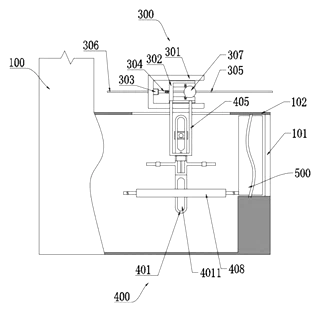
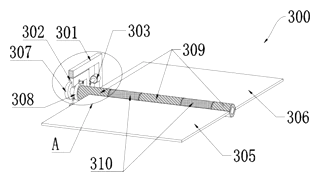
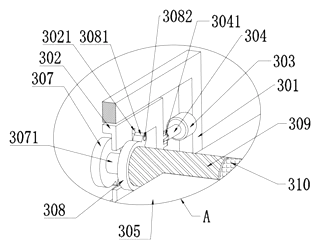
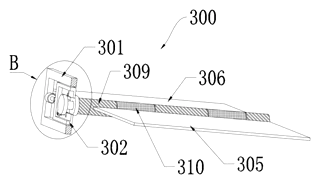
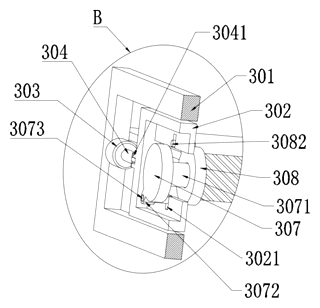
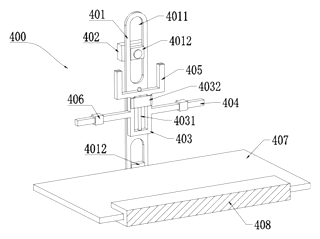
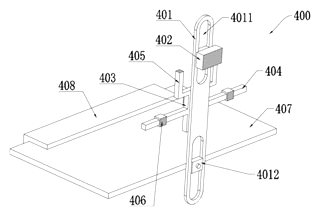
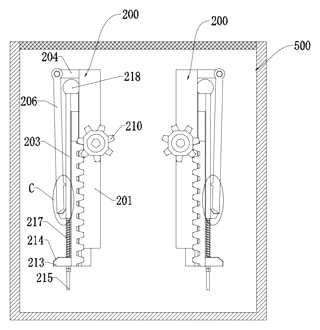
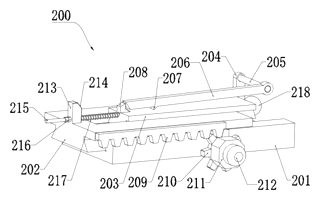
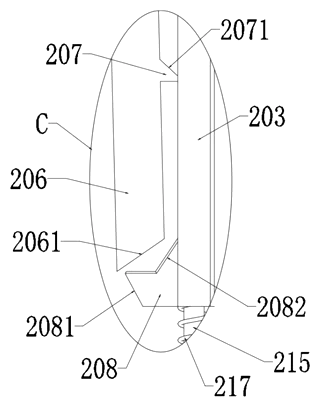
Drawings reproduced from the public patent document for reference.
Production notes
Tooling and process
Injection molding is likely required for the U-shaped slide rails and plate carriers to ensure smooth sliding action. Silicone molding would typically be used for the extension cushion to allow for the necessary flexibility during the travel amplification stroke. Motor assembly involves integrating small DC or stepper motors into the seat base.
Cost drivers
Part count is typically a significant driver due to the multiple rods, blocks, and rails. Skin-contact material grade for the cushion impacts cost if a medical-grade or easy-clean surface is specified. Motor life and battery certification (for portable versions) also influence the bill of materials. Sealing around the moving plates is critical to prevent dust ingress.
Prototyping path
A 3D-printed housing is typically the first step to validate the kinematic fit of the folding plates. Use off-the-shelf motors and batteries for initial function tests. Proceed to thermal and vibration testing to check for heat buildup in the motor compartment. Finally, create a functional sample with machined rails before committing to steel tooling.
What we would change before tooling
Wall thickness and joint design of the plastic rails should likely be reviewed to avoid cracking under repeated folding stress. Magnet grade and retention for the lifting rods need verification to ensure they don’t detach during vibration. Shaft and bearing alignment must be tight to prevent binding in the U-rails.
Common failure points
Hinge boss and pivot wear are typically seen in high-cycle mechanical links. Spring fatigue and rate consistency affect the massage ball performance. Charging safety is a concern if battery packs are used. Cleaning difficulty arises from the gaps between the folding plates and the seat body. Thread engagement and fastener torque must be monitored to prevent loosening from vibration.