At a glance
| Patent number | CN205325538U (application CN201620023145) |
| Type | China utility model (实用新型) - protects product shape and structure |
| Original title | Novel open end wrench (一种新型开口扳手) |
| Patent owner | Individual |
| Inventors | Feng Zhuoxing |
| Filing date | 2016-01-08 |
| Grant date | 2016-06-22 |
| Status (China) | Lapsed - terminated for non-payment of annual fees (recorded 2018-12-25) |
| Patent family | Chinese filings only - no US, European, Japanese, PCT or other filings listed |
| Cited by | 4 later documents |
| Source | Google Patents (search for CN205325538U) |
What the claims cover, in plain language
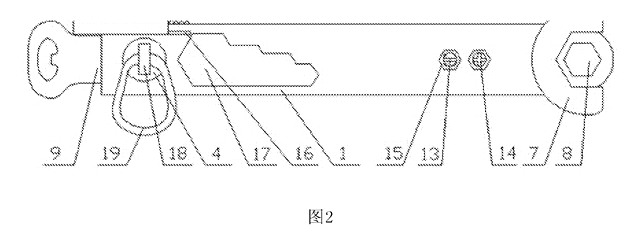
Claim 1 - a novel open-end wrench comprising a handle, a connecting rod, and fastener jaws of different specifications. The handle has an installing hole. The inner end of the connecting rod is detachably inserted into this hole. Each fastener jaw has two snap arms connected to its ends, standing perpendicular to the jaw body, forming a bayonet socket between them for a fastener to pass through. The jaw also has a connecting hole, into which the outer end of the connecting rod is detachably inserted.
Claim 2 - the installing hole includes a first installing hole formed in the sidewall of the handle and a second installing hole formed at the end of the handle. Claim 3 - the handle’s end face has a convex projection, and the second installing hole is formed within this projection, running through its outer and inner faces and extending into the handle. Claim 4 - the fastener jaw includes a segmental arc, with the connecting hole passing through its front and rear faces, and the snap arms perpendicular to the arc’s ends. Claim 5 - the connecting rod connects perpendicular to the fastener jaw. Claim 6 - alternatively, the fastener jaw includes a horizontal segment, with the connecting hole passing through its medial and lateral surfaces. Claim 7 - both the inner and outer ends of the connecting rod feature connection end blocks that insert into the respective holes. Claim 8 - the connection end blocks are square-shaped. Claim 9 - a tapered knob sleeves over the outside of the handle. Claim 10 - the tapered knob is provided with anti-slip veins.
This is a simplified reading for orientation only. The legal scope is defined by the exact claim wording in the official Chinese document.
What this means for US production
This patent was filed only in China and has lapsed due to non-payment of annual fees, so it no longer restricts anyone in China either. It has no US or other foreign counterpart.
Two points to settle early:
- Other patents may exist. Modular hand tools and interchangeable plumbing wrenches are actively patented by major US and international tool brands, particularly regarding quick-release locking mechanisms and specific jaw geometries, so a freedom-to-operate (FTO) review of the square-block connection and dual-hole handle is needed before tooling.
- Material strength. The connecting rod and square end blocks must withstand torsional stress; material grade and heat treatment are critical for safety and durability.
Customization and manufacturing
What can be customized
| Area | Options |
|---|---|
| Jaw sizes | Specific widths to match target market fasteners (e.g., standard plumbing nut sizes) |
| Materials | Carbon steel, chrome vanadium, or stainless steel for jaws and rods |
| Surface finish | Chrome plating, black oxide, nickel plating, or powder coating |
| Handle grip | TPR overmold, knurled metal, or textured polymer sleeve replacing the tapered knob |
| Rod length | Various lengths for different reach requirements |
| End block shape | Square as patented, or hexagonal/splined for higher torque transfer if redesigned |
| Packaging | Retail blister packs with selected jaw assortment, or bulk trays for professional kits |
Things to plan for (US market)
- ASME B107.100 - hand tool standard covering wrench dimensions, torque testing, and hardness requirements for open-end wrenches sold in the US.
- California Proposition 65 - surface treatments like chrome plating must be evaluated for restricted substances, and appropriate warnings applied if necessary.
- ASTM F2848 / general retail packaging - if sold in consumer retail channels, blister packs must meet hang-tab pull tests and child-safe opening considerations where applicable.
How a project runs
- Inquiry - specify target jaw sizes, materials, handle style, and intended application (plumbing, automotive, etc.).
- Design - CAD modeling of the rod-to-jaw and rod-to-handle interfaces, ensuring proper tolerances for the square end blocks.
- Prototype - CNC machined samples to verify fit, torque transmission, and bayonet socket clearance on actual fasteners.
- Pilot run - forging or casting trials, heat treatment validation, and torque cycle testing to confirm the joints do not slip under load.
- Production - die forging or investment casting of jaws, machining of rods and holes, surface finishing, grip assembly, and kitting.
Quantities & timeline
Manufacturing requires forging dies or investment casting molds for each jaw size, precision machining fixtures for the square end blocks and handle holes, and plating or coating lines. Torque testing rigs must be set up to validate the detachable joints. Send us your target jaw sizes, material preferences, finish, estimated quantity and target price and we will reply with options.
Patent drawings
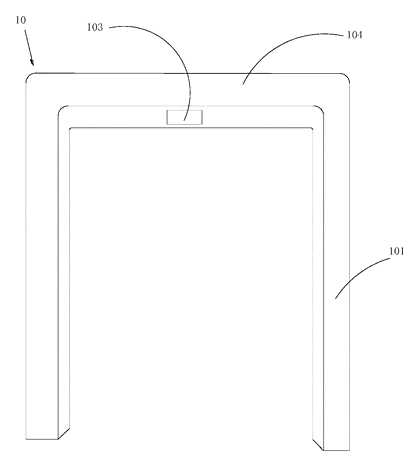
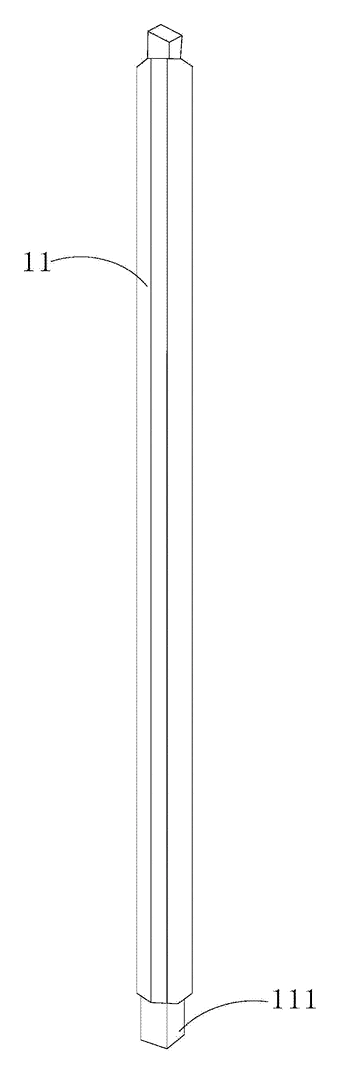
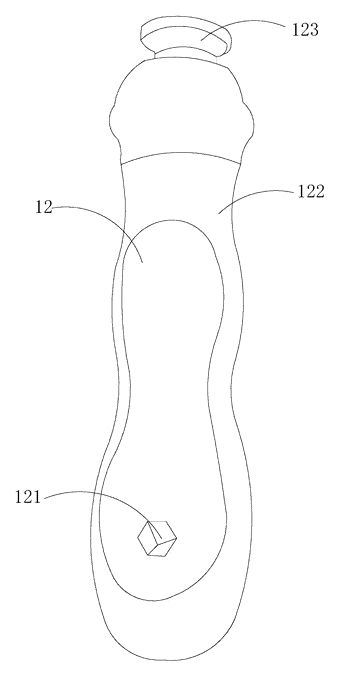
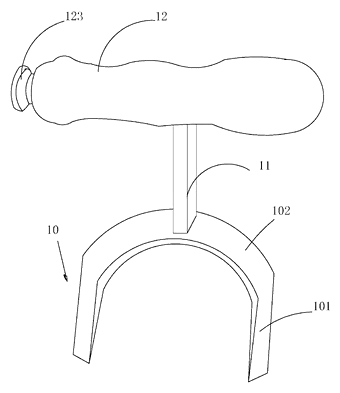
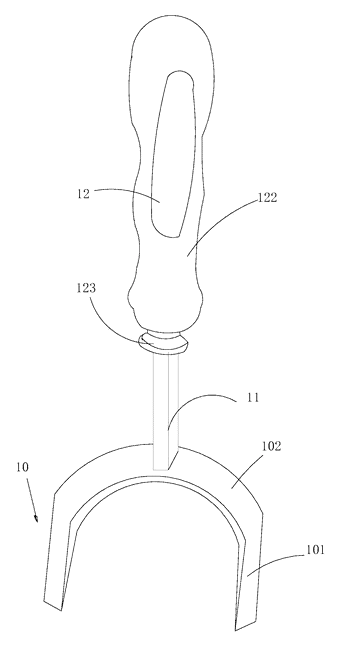
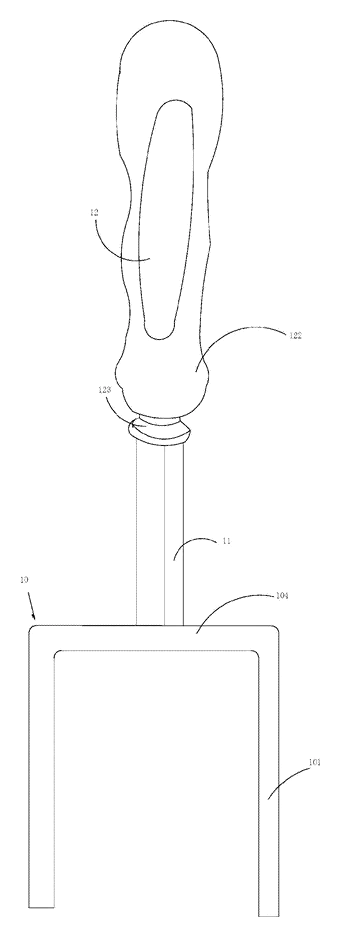
Drawings reproduced from the public patent document for reference.